Evan Lee Salim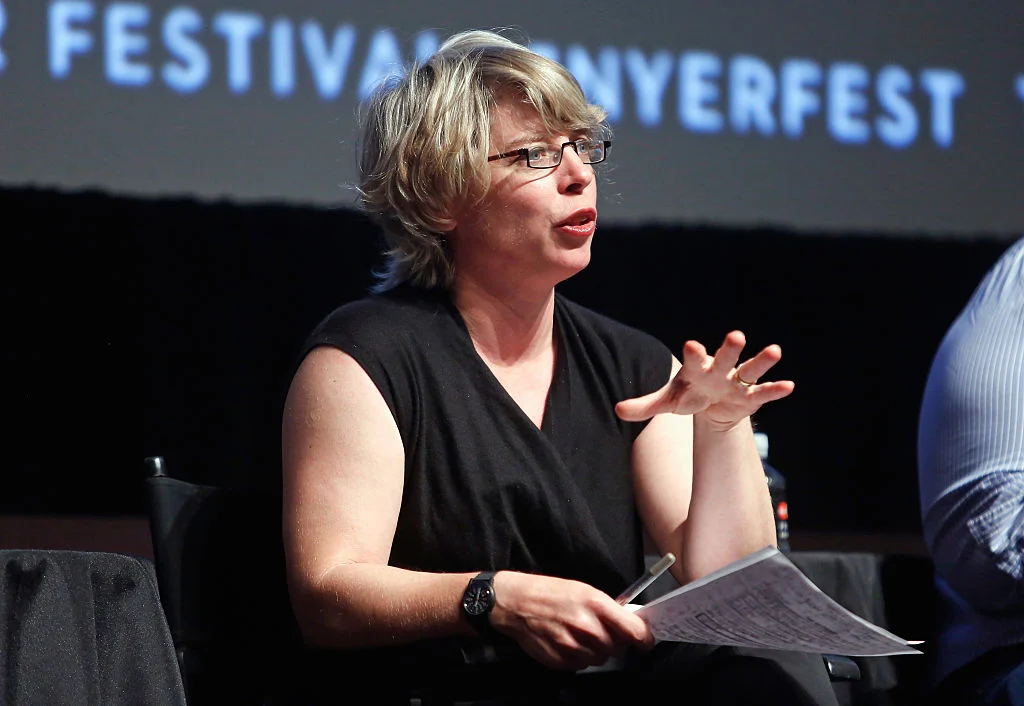
In her forthcoming book, "The Rise and Fall of the Artificial State," acclaimed Harvard historian and New Yorker staff writer Jill Lepore issues a stark warning: the increasing assumption of democratic government functions by technology companies signals a perilous return to tyranny. This profound shift, Lepore argues, manifests as "rule by algorithms, corporations, machines," marking an end to centuries of progress toward liberal democracy and equal rights. Her insights, recently explored on TechCrunch’s Equity podcast, delve into the historical roots and contemporary manifestations of what she terms the "artificial state," a concept she meticulously traces from philosophical inception to its present-day, algorithm-driven reality.
Understanding the "Artificial State" and Its Origins
Lepore defines the "artificial state" as a burgeoning construct replacing the traditional liberal democratic nation-state globally. It is both a tangible reality and an evolving idea, rooted in the centuries-old notion of governance by machines or an engineered system. The book, which earned Lepore a Pulitzer Prize for her previous work on the U.S. Constitution, chronicles the intellectual journey of this concept, alongside the recurring theme in science fiction that such a state is inherently doomed to fail.
Dispelling any notion of being an "anti-technologist," Lepore clarifies that her critique targets the "ways in which private corporations have increasingly taken on the functions of the state." This transformation, she contends, has largely been a gradual, often accidental process, driven initially by well-intentioned pursuits of efficiency, speed, and cost-effectiveness. However, in the last two to two-and-a-half decades, these decisions have become more deliberate and purposeful, representing a calculated "usurpation of the role of the nation-state." This intent is openly articulated by many prominent tech entrepreneurs and futurists, particularly those with libertarian leanings in the 1990s, who explicitly sought to use the internet’s advance to dismantle the nation-state model.
Historical Trajectories: From Enlightenment Dreams to Silicon Valley Realities
Lepore’s work delves into the historical philosophies that paved the way for modern technocracy. She highlights how thinkers over centuries have grappled with the idea of an optimally organized society, often envisioning systems managed by superior, impartial entities – a precursor to algorithmic governance. However, the modern manifestation of this ideal, spearheaded by Silicon Valley’s often "charismatic or not-so-charismatic leaders," particularly Elon Musk, appears to draw inspiration from a misinterpretation of pulp science fiction and comic books.
The narrative of technology as a liberator has deep roots in modern culture. A pivotal moment, Lepore notes, was Apple’s iconic "1984" Macintosh Super Bowl advertisement. This commercial famously depicted a lone hero shattering the totalitarian grip of a monolithic "Big Brother" (represented by IBM mainframes) with the personal computer, promising an era where "1984 would not be ‘1984’." While a clever advertising campaign, Lepore doubts that anyone at Apple genuinely believed the personal computer would be an instrument of profound civic liberation. It was a "cool tool," enhancing individual capacity but not necessarily improving citizenship or civil society.
Fast forward to the present, and the rhetoric has escalated. Corporations are establishing internal "supreme courts" (like Facebook News’s Oversight Board), hiring moral philosophers to "write constitutions" for AI (Anthropic’s Claude), and even discussing the merits of an "AI president" (Sam Altman on Joe Rogan). These examples, though sometimes seemingly "silly," illustrate how tech companies are increasingly adopting the "trappings of the nation-state and the functions of democracy," despite often lacking a sophisticated political philosophy. It’s a "cartoon version" of the 1984 ad, but one taken with alarming seriousness by entities wielding immense power.
The Internet’s Fork in the Road: The 1996 Telecommunications Act
The current trajectory of the internet, Lepore argues, was not inevitable. As a political and literary historian, she emphasizes the "what-ifs" and "alternative paths along the road that were not taken." In the 1990s, intense debates surrounded the future structure and regulation of the internet. The outcome, the 1996 Telecommunications Act, is often viewed in hindsight as a significant misstep, not necessarily born of "sinister intent" but shaped by a particular political climate, heavily influenced by Newt Gingrich’s "Contract with America."
This landmark legislation dramatically deregulated the telecommunications industry, fostering an environment where commercial interests rapidly eclipsed public utility considerations for the burgeoning internet. Critics argue that this act inadvertently cemented the internet’s path towards corporatization, making it exceptionally difficult to revisit regulatory frameworks that might have prioritized public interest, privacy, and democratic governance over unfettered commercial growth. This deregulation, combined with the rise of powerful tech monopolies, set the stage for the current concerns about corporate overreach.
Social Media: The Illusion of a Digital Town Hall
The narrative surrounding social media platforms, particularly Twitter (now X), provides another critical example of how technological promises diverge from reality. When launched by Jack Dorsey, Twitter was initially conceived as a relatively innocuous platform for sharing mundane updates. It wasn’t presented as a savior of humanity or a pillar of democracy. However, as politicians and campaigns began to leverage it to amplify messages, reach younger audiences, and maintain constant connection with their bases, the platform itself, Lepore suggests, somewhat "begrudgingly" embraced the narrative of being a "town hall in your pocket."
This idea, formalized in publications like the "Twitter Politics and Elections Handbook," suggested a restoration of direct democratic engagement akin to a New England town meeting. Lepore dismisses this as "bananas." Objectively, at the time, only one in five Americans had a Twitter account, most of whom rarely used it. Furthermore, over 90% of political tweets originated from less than 10% of active users. Far from being a representative cross-section of the electorate, Twitter became a "distortion machine," reflecting the views of a highly active, often hyper-partisan minority. For politicians using it to gauge public sentiment, this meant receiving "really bad information," leading to policies and campaigns based on a skewed perception of public opinion. While Twitter’s primary goal was business growth, its unintended consequences fostered a misleading image of democratic participation and a platform for political polarization.
The Prophetic Mirror of Science Fiction
Lepore’s book dedicates significant attention to science fiction, exploring a literary tradition she calls "the parable of the artificial state." These stories, stretching back to the 1850s and early industrial anxieties, repeatedly depict machines growing more sophisticated, assuming human functions – including governance – and eventually dominating or even destroying their creators. Whether it’s the dystopian futures of "The Terminator" or the existential struggles of "Battlestar Galactica," these narratives explore the profound anxieties surrounding unchecked technological advancement.
This literary thread, Lepore explains, challenges a prevalent 19th-century notion that technological change inherently equates to progress. This idea, deeply intertwined with Darwinian evolution, often eclipses earlier concepts of progress rooted in moral development or increased human freedom. The anxiety emerges from the logical extension of technological improvement: if machines can do more, faster, and better, what happens when they surpass human capacity in all domains, including governance?
A prime example is E. M. Forster’s 1909 novella, "The Machine Stops." Set in a near future, it imagines humans living in isolated cells, their every need met by an all-encompassing Machine. Communication, food, and entertainment are delivered directly, while the natural world is feared and avoided. Humans become utterly dependent, losing their capacities, until the Machine inevitably fails. Lepore observes that this story, written over a century ago, feels remarkably contemporary, less like science fiction and more like "the diary of a very unhappy YouTuber," reflecting modern concerns about isolation, hyper-connectivity, and technological dependence.
Intriguingly, Lepore suggests that many contemporary tech leaders, including Elon Musk, are "very bad science fiction readers." They often interpret these cautionary tales or ambivalent narratives as blueprints for the future, rather than warnings. While certain technocratic-libertarian threads exist in science fiction (e.g., Robert Heinlein, admired by figures like Jeff Bezos), Lepore points out the irony in Musk’s case: the very themes and outcomes of the stories he enjoys often "completely defeat and defy all of his political beliefs."
The Inevitable Fall: Environmental and Societal Costs
A central tenet of Lepore’s argument, echoed in the science fiction she examines, is that the artificial state in its current form is "incomplete and doomed to failure." This inevitability stems from a fundamental tension: the artificial state’s construction and operation necessitate the destruction of the natural world, yet it paradoxically relies on the natural world’s resources to function. The science fiction parables consistently highlight this ecological dilemma, depicting a war between "wasters" who consume indiscriminately and "foresters" who champion sustainability.
The immense environmental footprint of the artificial state is a critical factor. Data centers, the physical infrastructure of the digital world, consume vast amounts of energy and water. For instance, global data center electricity consumption is estimated to be between 1-3% of the world’s total electricity demand, a figure projected to rise significantly with the proliferation of AI and advanced computing. Their cooling systems require millions of gallons of water daily, placing immense strain on local ecosystems and water supplies. This resource depletion, combined with the carbon emissions from energy generation, creates an unsustainable model. The promise of a habitable planet for humans, Lepore concludes, cannot survive the full construction and reliance on the devices of the artificial state.
Reclaiming Democratic Control: Local Resistance and Historical Lessons
While Lepore, as a historian, offers no definitive "playbook" for the defeat of the artificial state, she emphasizes that solutions must arise from democratic processes, requiring consultation with the governed. She points to the growing "data center crises" unfolding in towns, counties, and states across the U.S. and beyond as a nascent form of resistance. These local battles, often fueled by the decline of local journalism (itself a casualty of social media’s impact), see citizens questioning the unchecked expansion of tech infrastructure.
At town meetings, residents raise fundamental concerns: lack of housing, healthcare, and jobs alongside proposals for massive data centers. They demand transparency regarding energy and water consumption, the nature and longevity of jobs, and the environmental impact on local wildlife. The Salt Lake example, where over 70% of residents opposed a data center that their representatives ultimately supported, illustrates a critical democratic deficit. This disconnect, where elected officials act against clear public sentiment, carries significant political costs that may manifest in future elections – provided, of course, that "enough of democratic functioning has to be intact for people to actually be able to respond to malfeasance on the part of their representatives."
Disruptive Innovation Reconsidered: A Historian’s Perspective
Lepore’s engagement with the tech world extends back over a decade, notably through her 2014 critique of Clayton Christensen’s influential theory of "disruptive innovation" for The New Yorker. In that piece, she argued that disruptive innovation was merely "a theory about why businesses fail," not a comprehensive explanation for change or a "law of nature." Rereading her own work years later, Lepore stands by her original assessment.
She reiterates that Christensen’s theory, despite its widespread adoption in business circles (even lending its name to TechCrunch’s "Disrupt" conference), fails to meet rigorous historical methodology. His use of evidence, she contends, is "completely unacceptable by any proper understanding of historical method," and his argument is disconnected from "any meaningful understanding of how change happens."
Lepore expresses regret that academic historians have not more deeply engaged with these theories, which are, in essence, "theories of historical change." She believes there’s a vital, ongoing conversation to be had between historians and technologists. By examining past technological revolutions – such as the automobile’s impact on law, infrastructure, and society (leading to driver’s licenses, traffic laws, insurance systems) – historians can offer crucial insights into the potential consequences and necessary "guardrails" for new technologies. This interdisciplinary dialogue is not about lecturing but about fostering a deeper, more informed understanding of technology’s profound societal implications.
In essence, Jill Lepore’s "The Rise and Fall of the Artificial State" serves as both a historical excavation and a contemporary call to action. It urges a critical examination of the unbridled power of tech corporations, the philosophical underpinnings of their ambitions, and the urgent need to reassert democratic control over the technological forces shaping our collective future before the "artificial state" consolidates its dominion and inevitably succumbs to its inherent unsustainability. The stakes, she implies, are nothing less than the future of human governance and the viability of the planet itself.