Vera Intan Clara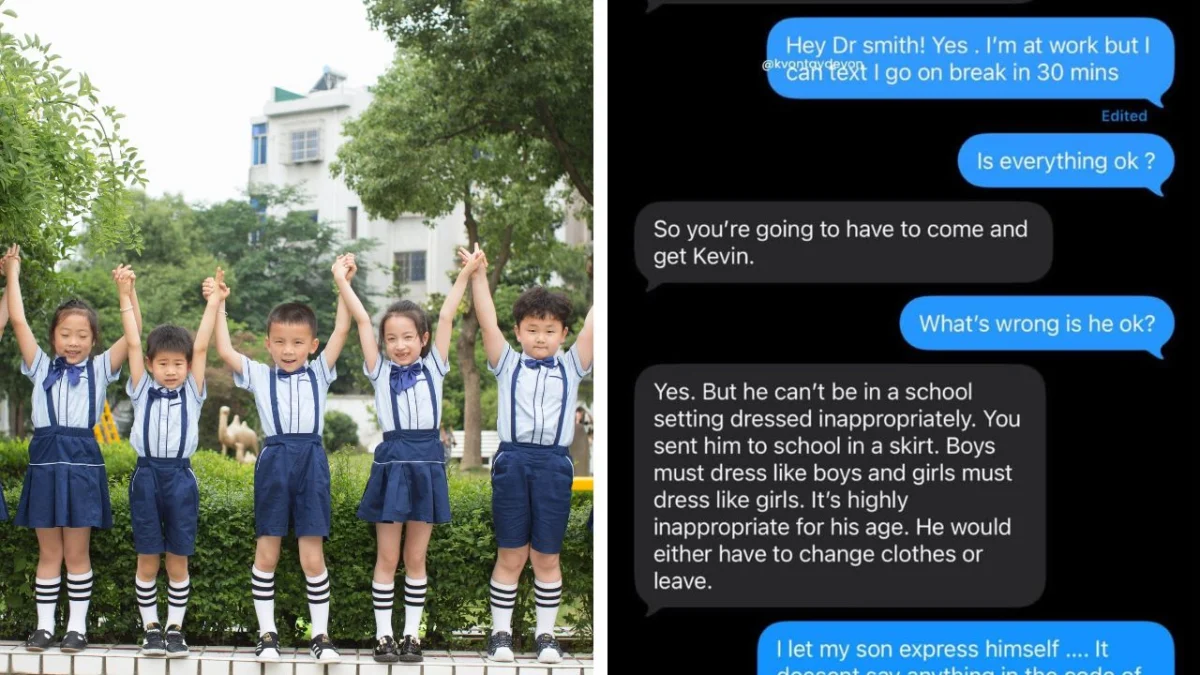
A mother, identified on Facebook as LoveAlwayz Infinity, has publicly shared her profound frustration and intent to pursue legal action after her seven-year-old son was allegedly sent home from his new elementary school on his very first day for wearing a skirt. The incident, which quickly gained traction across social media platforms after screenshots of her Facebook post were shared by @raphousetv2 on X (formerly Twitter), has sparked a contentious debate regarding individual expression, school dress codes, and the evolving understanding of gender identity in educational settings. The core of the dispute centers on the school’s alleged insistence that "boys must dress like boys and girls must dress like girls," a directive the mother vehemently opposes as discriminatory and stifling to her son’s self-expression.
A Mother’s Account: "LoveAlwayz Infinity" Shares Her Story
According to LoveAlwayz Infinity’s Facebook post, her son, a second-grader, began his academic year filled with enthusiasm for his new school environment. This initial excitement, however, was short-lived. Just hours into his first day, the mother reportedly received a message from the school requesting her to pick up her child due to "inappropriate" attire. The mother detailed her dismay, asserting that nothing her son wore violated any stated rule or law within the school’s code of conduct. She emphasized her parenting philosophy, stating, "I let my children express themselves," and expressed her belief that her son "is there for an education not to be judged" and should inherently feel secure and accepted within the school’s confines.
The incident quickly escalated in the mother’s perception, leading her to consider suing the school for discrimination. She articulated a suspicion that the issue may have been fueled by "jealousy" from girls in his class or even his teacher, which she believed ultimately brought the matter to the principal’s attention. This perspective highlights a deeper concern about the potential for gender-based prejudice influencing administrative decisions regarding student appearance.
The Alleged School Communication and Policy Stance
Central to the mother’s public account is a screenshot of a text exchange purportedly between herself and a person identified as "Dr. Smith," who allegedly contacted her from the elementary school. The message from "Dr. Smith" unequivocally stated that the child could not remain at school "dressed inappropriately." The communication reportedly elaborated on the school’s position: "You sent him to school in a skirt. Boys must dress like boys and girls must dress like girls. It’s highly inappropriate for his age." The message then presented an ultimatum, indicating that the child would need to change clothes or leave, with the alternative being in-school suspension.
The mother’s defiant reply, also captured in the screenshot, directly challenged the school’s stance. She reiterated, "I let my son express himself. It doesn’t say anything in the code of conduct of how genders dress. As long as he has on the correct colors." A photograph accompanying her post visually corroborated her statement, showing the child dressed in a tan pleated skirt, a navy polo shirt, and sneakers. The outfit appeared to conform to typical school color schemes and general neatness standards often found in elementary school dress codes, apart from the gendered perception of the skirt itself. This visual evidence underscores the crux of the conflict: the perceived gender appropriateness of the attire, rather than its modesty or adherence to color guidelines.
The Broader Context of School Dress Codes
School dress codes have a long and often contentious history, typically established to ensure a safe and conducive learning environment. Historically, these policies aimed to prevent distractions, promote modesty, ensure safety (e.g., no gang-related attire, appropriate footwear for physical activity), and maintain a professional atmosphere. Many codes specify acceptable lengths for skirts and shorts, prohibit offensive imagery, and dictate appropriate levels of coverage. However, the application and interpretation of these codes have frequently been criticized for being arbitrary, discriminatory, and disproportionately affecting certain student populations, particularly girls and students of color.
In recent decades, there has been a growing movement to challenge traditional, often gendered, dress code policies. Many advocates argue that such policies perpetuate harmful stereotypes, police students’ bodies, and stifle individual expression. For instance, policies dictating that girls’ shoulders must be covered or that skirt hemlines must meet certain lengths have been called out for body-shaming. Similarly, gender-specific rules, like those mandating boys wear trousers and girls wear skirts or dresses, are increasingly viewed as outdated and non-inclusive.
The Evolving Landscape of Gender Expression in Schools
The incident involving LoveAlwayz Infinity’s son is not an isolated occurrence but rather a reflection of a broader societal shift in understanding gender identity and expression. There is increasing awareness and acceptance of gender fluidity, particularly among younger generations. This evolution challenges traditional binary views of gender and, consequently, gender-specific expectations regarding clothing and appearance.
Educational institutions, as microcosms of society, are increasingly grappling with how to accommodate and support students who express their gender in ways that diverge from conventional norms. This includes students who identify as transgender, non-binary, or gender non-conforming, as well as cisgender students who simply wish to express themselves through clothing traditionally associated with another gender. Many school districts across the United States have begun to revise their dress codes to be more gender-neutral and inclusive, recognizing that such policies foster a more welcoming and affirming environment for all students. These updated policies typically focus on principles like safety, modesty, and non-disruptiveness, rather than dictating specific garments based on perceived gender.
Legal frameworks, such as Title IX in the United States, which prohibits sex-based discrimination in federally funded education programs, are also being increasingly invoked in cases related to gender expression. While Title IX traditionally focused on discrimination based on biological sex, its interpretation has expanded in recent years to include gender identity and expression. This provides a legal basis for challenging school policies that discriminate against students based on how they express their gender, including their choice of attire.
Legal and Ethical Considerations: Discrimination Claims
The mother’s intention to sue the school for discrimination introduces significant legal and ethical dimensions to this case. If the allegations are true, the school’s actions could potentially be viewed as discriminatory on the basis of sex or gender expression. Legal challenges to school dress codes have historically centered on issues of free speech, due process, and equal protection under the law.
From a legal standpoint, the mother might argue that the school’s policy, as communicated by "Dr. Smith," constitutes unlawful discrimination. While schools generally have the authority to set dress codes, these codes must be reasonable, clearly defined, and applied consistently and without discrimination. A policy that explicitly states "boys must dress like boys and girls must dress like girls" could be challenged as discriminatory, particularly if it targets a specific form of gender expression. Courts have often scrutinized school policies that restrict student expression unless there is a clear showing of substantial disruption to the educational environment or a legitimate safety concern. In this instance, it would be challenging for the school to argue that a seven-year-old boy wearing a skirt inherently creates a "substantial disruption" without further evidence.
Ethically, singling out a child for their clothing choice, especially when it does not violate general standards of modesty or safety, raises concerns about fostering an inclusive and supportive learning environment. Such actions can have a profound negative impact on a child’s self-esteem, sense of belonging, and willingness to express their individuality. Many educators and child development experts advocate for school policies that affirm student identities and promote self-acceptance, rather than enforcing rigid gender norms.
Public Reaction and Online Discourse
The incident, as shared on X, quickly ignited a vigorous online debate, reflecting the diverse and often polarized views on gender expression and school authority. Commenters weighed in with a range of perspectives, highlighting the complexity of the issue.
One commenter expressed concern for the child’s age and understanding of the situation, writing, "I feel he is too young to understand the world and its illogical views. Wait until he’s old enough to stand his ground in these situations." This viewpoint suggests that while individual expression is important, there might be an age at which children are better equipped to navigate the social implications of non-conforming choices.
Conversely, many users vocally supported the child’s right to express himself. One commenter remarked, "And he looks alright, really good, following school dress code, and if boys are wearing it they’re dressed like boys, schools should teach the truth!!!" This perspective champions the idea that clothing should not be gendered and that schools have a responsibility to educate students about inclusivity and diverse forms of expression.
A third significant segment of the online discourse focused on the authority of public schools and the expectation for families to adhere to established rules. One user contended, "Y’all gotta follow public school rules if you want this then send your kid to a private school that allows it, stop forcing your norms on everyone else." This argument underscores the belief that public institutions have the right to set standards and that parents who disagree should seek alternative educational environments. This perspective often reflects a desire to maintain traditional norms within public education and avoid what some perceive as external pressures to conform to new social ideals.
Implications for Students, Parents, and Educational Institutions
This incident carries significant implications for various stakeholders within the educational ecosystem. For students, being singled out and sent home for their attire can be a deeply humiliating and psychologically damaging experience. It can erode their trust in school authorities, diminish their self-esteem, and create a sense of not belonging. For a seven-year-old on his first day at a new school, such an experience could potentially shape his entire perception of education and his place within it.
For parents, this case exemplifies the challenges of advocating for their children’s individuality and protecting them from perceived discrimination. The mother’s decision to consider legal action reflects a growing trend of parents pushing back against school policies they view as outdated or harmful. This creates a tension between parental rights and school autonomy, forcing institutions to critically re-evaluate their policies in light of evolving societal norms and legal precedents.
For educational institutions, incidents like this serve as a critical reminder of the need for clear, equitable, and non-discriminatory dress code policies. Schools are increasingly expected to foster inclusive environments where all students feel safe, respected, and free to express themselves authentically, provided it does not disrupt the learning environment or compromise safety. This requires ongoing training for staff, regular review of policies, and open communication with parents and the community. The rise of social media means that such incidents can quickly become public, subjecting schools to intense scrutiny and potentially damaging their reputation if not handled with sensitivity and adherence to best practices for diversity and inclusion.
Unverified Details and Journalistic Standards
It is crucial to note that, as stated by The Daily Dot in their original reporting, the identities of the mother, the school, and the person identified as "Dr. Smith" in the screenshots could not be independently verified. Furthermore, the authenticity of the text exchange shown in the screenshots could not be confirmed. The details presented in this article reflect the information as shared on X by @raphousetv2 and the mother’s Facebook post, and should be understood within the context of these unverified claims. The child involved has not been identified by name in this article, upholding privacy standards.
The alleged incident at the elementary school underscores a persistent societal tension between individual expression and institutional norms, particularly within the context of gender and appearance. As discussions around gender identity and inclusivity continue to evolve, schools will undoubtedly face ongoing pressure to adapt their policies and practices to create truly equitable and affirming environments for all students. The outcome of potential legal action or further public discourse stemming from this particular event could significantly influence future approaches to dress codes and student expression in schools nationwide.