
 George Chandra Eka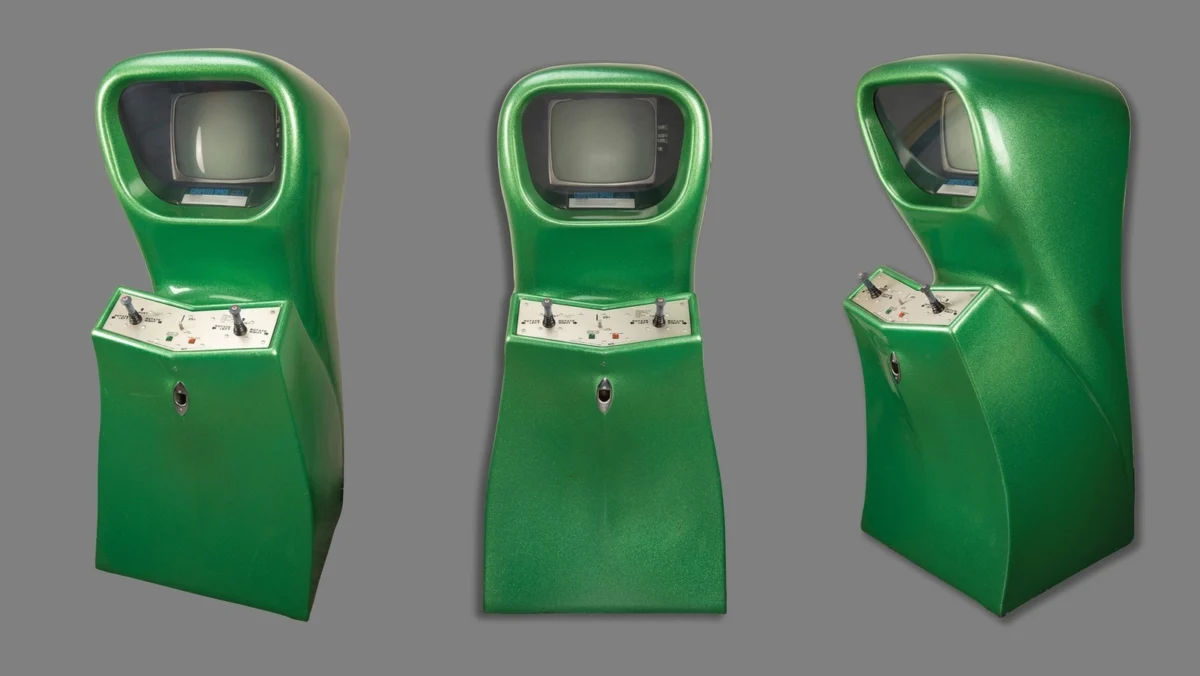
A highly rare two-player Computer Space arcade machine, a pivotal artifact from the dawn of the video game industry, is currently at the center of an intense bidding war at RR Auction. This sparkling emerald cabinet, a significant piece of retro technology and entertainment history, is part of a broader "Steve Jobs & the Computer Revolution" auction, highlighting its foundational role in the technological advancements that would eventually shape Silicon Valley and beyond. The machine, owned by renowned game developer David Perry, represents a crucial link in the evolution from early computer games to the global phenomenon of interactive digital entertainment, attracting bids that underscore its immense historical and cultural value.
The Genesis of Computer Space: A Precursor to Atari’s Empire
Before the ubiquitous presence of Atari and its groundbreaking Pong, the landscape of electronic gaming was being tentatively explored by visionaries like Nolan Bushnell and Ted Dabney. Their company, initially named Syzygy Engineering, laid the groundwork for what would become the arcade video game industry. In late 1971, Syzygy Engineering, in collaboration with Nutting Associates for distribution, released Computer Space, widely acknowledged as the first commercially available arcade video game. This single-player iteration marked a monumental step, translating the concepts of the seminal 1962 PC combat game Spacewar!—developed by Steve Russell and others at MIT—into a coin-operated format accessible to the public.
Computer Space challenged players to pilot a spaceship and engage in dogfights against two flying saucers. The game’s controls were notably distinct for its era, featuring four action buttons but no joystick, a design choice that some critics and players found cumbersome. Housed in a distinct, retrofuturistic fiberglass cabinet often described as resembling a stalagmite, the machine sported a small, bulbous screen encircled by primary colors. Despite its innovative nature, the initial reception for Computer Space was mixed. While it sold over 1,000 units, generating a significant financial return for its creators and distributors, its complex gameplay proved challenging for the average bar or arcade patron accustomed to simpler, more intuitive mechanical games. This complexity limited its broader commercial appeal compared to later, more accessible titles.
From Syzygy to Atari: A Fork in the Road
The financial success, albeit moderate, of Computer Space did not guarantee a continued partnership between Syzygy Engineering and Nutting Associates. The professional collaboration between Bushnell and Dabney and their distributor eventually concluded. This juncture proved to be a pivotal moment in gaming history. Bushnell and Dabney, fueled by their experience with Computer Space and an understanding of the burgeoning market for electronic entertainment, decided to rebrand their company. In 1972, Syzygy Engineering officially became Atari, a name derived from a term in the Japanese board game Go, signaling a new strategic direction.
Atari’s subsequent release in 1972, Pong, dramatically simplified the interactive gaming experience. Its intuitive, two-dimensional table tennis simulation, coupled with straightforward controls, proved to be an immediate and overwhelming success. Pong swiftly captured the public’s imagination, becoming the first truly widespread commercial video game and cementing Atari’s place as a pioneer in the industry. The contrast between the relative complexity of Computer Space and the instant accessibility of Pong offered valuable lessons about user interface and mass market appeal, lessons that would shape the design philosophy of countless games to come.
The Two-Player Evolution and Its Cultural Footprint
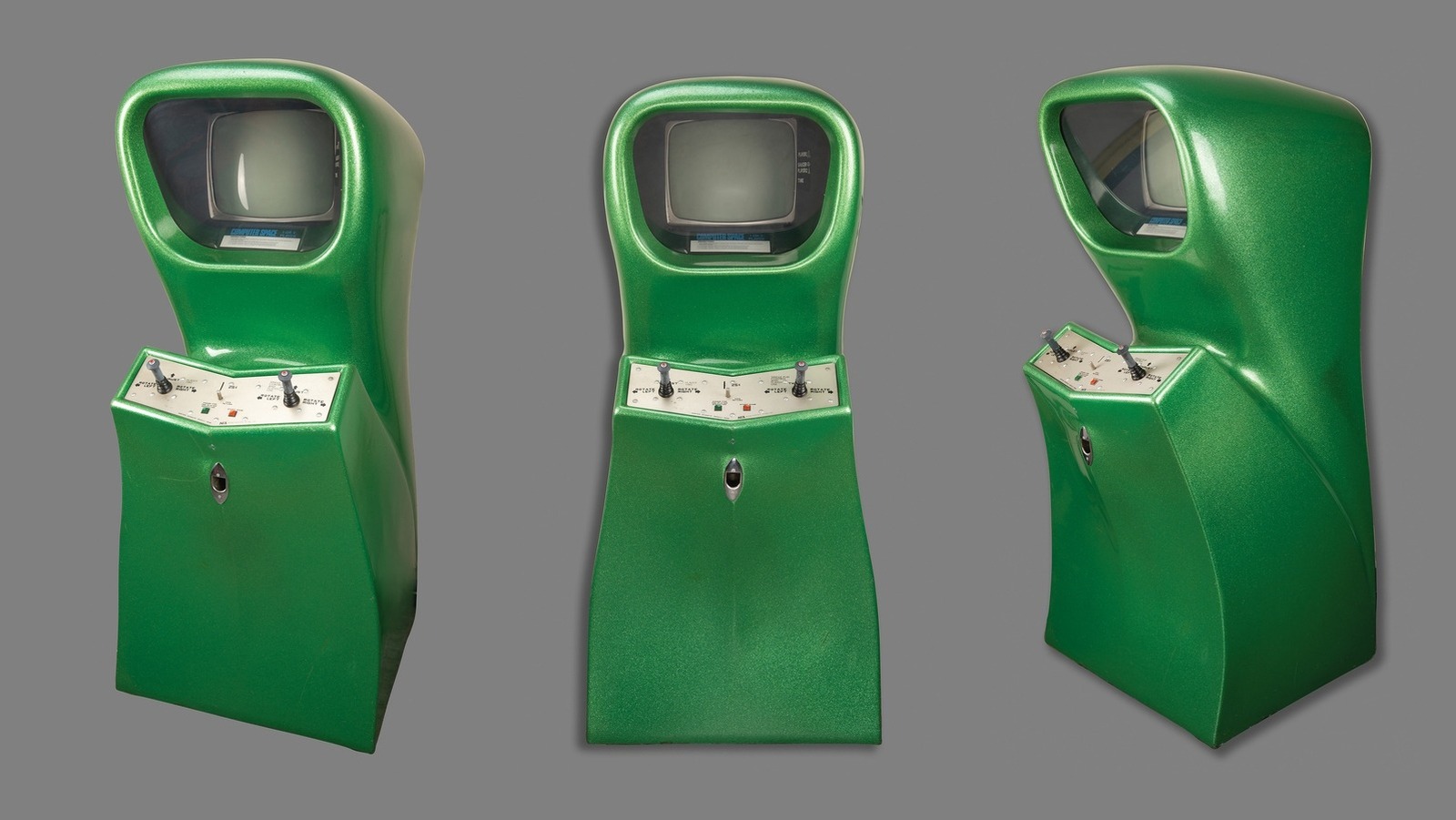
In July 1973, Nutting Associates, without the direct involvement of Bushnell or Dabney, released a second iteration of the Computer Space arcade machine. This version addressed one of the limitations of the original by introducing two-player gameplay, a significant enhancement for social interaction and competitive play. Crucially, it also incorporated two joysticks, a design choice that offered a more intuitive and engaging control scheme compared to the button-only interface of its predecessor. This two-player model, distinctively housed in a sparkly green cabinet, maintained the quarter-per-round pricing of the original and sought to capitalize on the growing interest in arcade gaming. The particular machine currently under auction is one of these rare two-player emerald beauties, representing a brief but important chapter in the game’s development.
Beyond its technical innovations, Computer Space also made an indelible mark on popular culture. It holds the distinction of being the first video game to appear in a Hollywood motion picture. A custom white Computer Space cabinet was prominently featured in the 1973 sci-fi classic Soylent Green, adding a futuristic touch to the dystopian setting and subtly introducing the concept of interactive digital entertainment to a mainstream audience. Its cinematic appearances didn’t stop there; sharp-eyed viewers can also spot a yellow version of the machine in an arcade scene from Steven Spielberg’s iconic 1975 thriller, Jaws. These early film cameos underscored the nascent cultural impact of video games, signaling their gradual integration into the fabric of everyday life and media. Despite this exposure, Nutting Associates eventually ceased operations in 1976, unable to sustain its business in the rapidly evolving arcade market. In stark contrast, Atari, though undergoing various corporate transformations, continues to exist as a brand today, a testament to the enduring legacy initiated by Bushnell and Dabney’s early ventures.
David Perry’s Prized Possession: The Auction Details
The specific two-player Computer Space arcade machine currently attracting significant attention belongs to David Perry, a highly respected figure in the video game industry. Perry is celebrated for his programming work on the critically acclaimed 1994 platformer Earthworm Jim and as the co-founder of Gaikai, a pioneering cloud gaming company acquired by Sony Interactive Entertainment. His decision to part with such a significant piece of gaming history has drawn considerable interest from collectors and enthusiasts worldwide.
Perry articulated his reasons for the sale on social media, stating, "I ran out of space and am selling my Computer Space arcade machine at auction (two-player). It’s probably the rarest arcade game in existence, found in museums." This statement highlights both the practical constraints faced by even avid collectors and the profound rarity of the item. Indeed, fully functional two-player Computer Space cabinets are exceedingly scarce, often residing in private collections or institutional exhibits dedicated to preserving gaming’s heritage.
The RR Auction listing provides a detailed description of the item, emphasizing its exceptional condition and originality. The front control panel of the machine features the original 25-cent quarter slot, a coin return button, a red "Start Game" button, a green "Two Player Operation" button, and the crucial dual rotational joysticks, each topped with a red "Fire Missile" button. The description notes that "The cabinet is in fine condition, with some slight scuffing and scratching to the body; the machine itself lights up, and the screen is functional." The auction house further underscores the item’s scarcity: "Original working 2-player Computer Space arcades are practically unobtainable and very rarely offered for public sale, with this example all the more impressive for its immaculate cabinet and original parts."
The auction for this extraordinary piece of history commenced on July 24 and is slated to conclude on August 20 at 7 PM ET. As of August 12, the bidding had already reached $6,748 across 12 bids, with RR Auction estimating a final sale price exceeding $20,000. The competitive nature of such high-profile auctions often sees a dramatic surge in bids during the final hours. To participate in the concluding round, prospective buyers must place their bids by 6 PM ET on the final day. Following the 7 PM ET deadline, a dynamic 30-minute extension period allows participants to challenge the current top bid, with the timer resetting after each new high bid. This tension-filled system is designed to maximize the final sale price, creating an exciting climax that, fittingly, echoes the competitive spirit of the space combat sims it helped to inspire.
The Broader "Steve Jobs & The Computer Revolution" Auction
The sale of the two-player Computer Space arcade machine is a prominent feature within RR Auction’s larger "Steve Jobs & the Computer Revolution: The Apple 50th Anniversary Auction Part Two." This extensive auction is a curated collection of early-tech memorabilia, celebrating the pioneers and products that defined the digital age. While Computer Space predates Apple’s founding, its inclusion is significant, positioning it as a foundational artifact of the "computer revolution" that Steve Jobs and Apple would later profoundly impact. The auction aims to encapsulate the spirit of innovation and entrepreneurship that characterized the early days of personal computing and digital entertainment.
The diverse array of items available in this auction speaks to the breadth of technological advancements being celebrated. Enthusiasts and collectors can find a wealth of historically significant objects, including personal belongings of Steve Jobs himself, offering intimate glimpses into the life of the tech icon. Also featured are signed photographs of other notable CEOs and industry leaders, an Atari Video System X ‘All Black’ Prototype Console (further illustrating the lineage from Computer Space to Atari’s later dominance), and a variety of vintage Apple computers, iPods, and iPhones. This comprehensive collection underscores the interconnectedness of these early innovations, demonstrating how seemingly disparate advancements contributed to a shared technological trajectory. The auction, a veritable museum of digital history, provides a unique opportunity for collectors to own a tangible piece of the era that shaped the modern world. All bidding for these historic items concludes simultaneously with the Computer Space machine at 7 PM ET on August 20.
The Enduring Legacy and Market Value of Retro Tech
The fervent bidding for the two-player Computer Space machine reflects a growing trend in the collectibles market: the escalating value and recognition of vintage technology and video game artifacts. These items are no longer merely nostalgic relics; they are increasingly viewed as cultural heritage, significant historical documents, and valuable investment pieces. The scarcity of original, functional machines like the Computer Space cabinet ensures their premium status. Many early arcade machines were subjected to harsh commercial use, often discarded, modified, or simply left to decay, making surviving examples in good condition exceptionally rare.
Furthermore, the provenance of an item, such as its ownership by a prominent figure like David Perry, significantly enhances its appeal and market value. Collectors are not just acquiring a machine; they are acquiring a piece of an evolving narrative, a tangible link to the pioneers and pivotal moments that forged the interactive entertainment industry. The historical significance of Computer Space as the first arcade video game cannot be overstated; it is a direct ancestor to every console, PC game, and mobile app enjoyed today. Its existence marks the critical transition from academic computer experiments to mass-market commercial entertainment, democratizing access to interactive digital experiences.
The "Steve Jobs & the Computer Revolution" auction itself exemplifies the convergence of technology, history, and finance. It highlights how the artifacts of innovation, once purely functional, transform into treasured objects that tell the story of human ingenuity. The high bids for items like the Computer Space machine are not just about rarity; they are about acknowledging the profound impact these early inventions had on society, paving the way for the ubiquitous digital world we inhabit. As the digital revolution continues to unfold, the foundational pieces of its genesis, such as this iconic arcade game, will likely continue to appreciate in value, solidifying their place not just in museums, but also in the portfolios of discerning collectors who recognize their enduring legacy. The closing of this auction will undoubtedly set new benchmarks for the vintage tech market, further cementing the historical importance and financial viability of preserving these vital pieces of our technological past.







