Clarissa Hana
A critical security vulnerability affecting a widely deployed residential router model from Calix, a prominent supplier to numerous U.S. broadband providers, has been publicly disclosed. The flaw, designated CVE-2026-75501, allows unauthenticated remote attackers to establish port-forwarding rules, effectively bypassing Network Address Translation (NAT) and exposing internal network devices to the public internet without any authentication. This oversight could potentially grant malicious actors unfettered access to sensitive devices within home networks, ranging from security cameras and Network Attached Storage (NAS) devices to administrative interfaces and Internet of Things (IoT) appliances.
The affected device, identified as the Calix GS7 XGS (GS5239XG) residential router, also marketed under the GigaSpire 7u10txg designation, is a premium gateway device integrating Wi-Fi 7 capabilities with an XGS-PON fiber terminal. Its deployment by major U.S. broadband providers such as Cox Communications, Brightspeed, ALLO, CityFibre, and Conexon means a significant number of households could be at risk. The vulnerability stems from the device’s firmware, specifically versions EXOS/6.6.47, which exposes the MiniUPnPd control endpoint on the Wide Area Network (WAN) interface via TCP port 5000 without any access controls.
Discovery and Disclosure Timeline
The discovery of CVE-2026-75501 is credited to independent security researcher Brian Khan Quintana. His initial attempts to notify Calix directly about the critical flaw on June 7th proved unsuccessful, prompting him to escalate the matter. Following the lack of response from the vendor, Quintana reported the vulnerability to the Carnegie Mellon CERT Coordination Center (CERT/CC) on June 14th. CERT/CC, a recognized authority in coordinating vulnerability disclosures, then engaged with Calix. After multiple unsuccessful attempts to solicit a response and a period of coordination with the researcher, CERT/CC proceeded with a public disclosure of the vulnerability on August 24th. This coordinated disclosure ensures that end-users are made aware of the risks and potential mitigation strategies while providing vendors with ample opportunity to address the issue. Quintana subsequently published detailed technical findings and a proof-of-concept demonstration on his personal GitHub repository, further illuminating the technical aspects of the exploit.
Technical Underpinnings of the Vulnerability
The root cause of CVE-2026-75501 lies in the way the affected Calix router firmware handles the Universal Plug and Play (UPnP) protocol. Specifically, the UPnP WANIPConnection SOAP service is bound to the public WAN interface on TCP port 5000. UPnP is designed to simplify network device configuration by allowing devices to automatically discover each other and establish necessary network rules, such as port forwarding. However, in this instance, the implementation on the Calix router lacks the necessary authentication mechanisms to verify the legitimacy of incoming requests on this port.

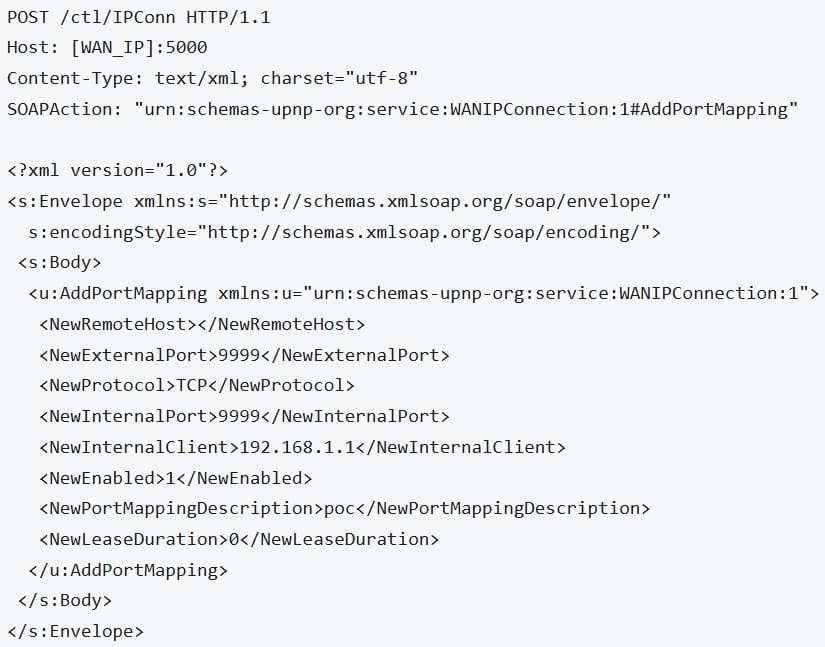
According to CERT/CC’s advisory, this oversight permits any attacker on the public internet to send unauthenticated SOAP requests to the router. These requests can be used to add, delete, or enumerate port mappings, effectively manipulating the router’s forwarding table. Furthermore, attackers can query the router for its external IP address, providing them with crucial information for targeting.
"In affected firmware versions, the router binds its UPnP WANIPConnection SOAP service to the public WAN interface on TCP port 5000," CERT/CC warns in its advisory (ID 756733). This exposes a critical management function to the open internet, effectively turning the router’s protective NAT layer into a potential gateway for attackers.
Exploitation and Potential Impact
The implications of this vulnerability are significant. By exploiting CVE-2026-75501, an attacker can bypass the router’s built-in NAT and firewall protections. This bypass allows them to directly map a public IP address and port to a specific device and port on the internal home network. Quintana’s research highlights the alarming ease with which this can be achieved.
"One unauthenticated request from anywhere in the world is enough to open a permanent hole through the router’s firewall to any device inside the house. No password. No prompt. Nothing on screen. The rule survives a reboot," Quintana stated in his technical disclosure. This means that once a port mapping is established, it can persist even after the router is power cycled, making the exposed device continuously vulnerable.
The types of devices that can be exposed are diverse and often contain sensitive information or provide critical functionality:

- Security Cameras: Compromised indoor or outdoor security cameras could allow attackers to spy on occupants, monitor activities, or gain unauthorized access to sensitive areas.
- Network Attached Storage (NAS) Devices: NAS devices often store personal files, backups, financial documents, and other sensitive data. Exposure could lead to data theft, ransomware attacks, or data manipulation.
- Administrative Interfaces: Exposing the web-based administrative interfaces of various devices could allow attackers to reconfigure settings, disable security features, or deploy malware.
- IoT Appliances: A wide array of smart home devices, from smart thermostats to voice assistants and smart locks, could be targeted. Exploitation could lead to disruption of services, data exfiltration, or even physical security breaches if smart locks are involved.
- Gaming Consoles and PCs: While often less critical from a data-privacy perspective, exposing these devices could lead to unauthorized access, malware installation, or participation in botnets.
Quintana provided a proof-of-concept demonstration, showcasing an HTTP/SOAP request sent from outside his home network that successfully created a port mapping to an internal device. Crucially, this mapping remained active even after the router was power cycled, underscoring the persistence of the exploit. The ease of the attack, requiring only a single unauthenticated request, makes it a prime candidate for automated scanning and exploitation by malicious actors.
Mitigation and User Recommendations
As of the time of this report, Calix has not released a patch for CVE-2026-75501, leaving users of the affected devices vulnerable. In the absence of a vendor-supplied fix, Brian Khan Quintana recommends that users of the vulnerable Calix GS5239XG router (GigaSpire 7u10txg) disable UPnP through the device’s administrative interface. The recommended path for disabling UPnP is typically found under "Advanced" > "Security" > "UPnP."
Disabling UPnP is a widely recognized security best practice when not strictly necessary. While UPnP offers convenience by automating port forwarding for certain applications, particularly online gaming, its automatic nature can be exploited. Disabling it forces users to manually configure port forwarding for any services that require external access, a process that is generally more deliberate and less prone to accidental exposure. However, Quintana acknowledges that this workaround may impact the functionality of some online games that rely on UPnP for automatic port opening.
CERT/CC further advises that in some instances, the UPnP setting may be locked by the Internet Service Provider (ISP). In such cases, users who are unable to disable UPnP through their router’s administrative interface are encouraged to contact their ISP and request that UPnP functionality be deactivated on their behalf. This collaborative approach between users and ISPs is crucial for ensuring network security at the consumer level.
Vendor Response and Broader Implications
BleepingComputer reached out to Calix for comment regarding the vulnerability, the specific device models impacted, and their plans for a firmware patch. As of the publication of this article, no response had been received from Calix. This lack of immediate public comment from the vendor raises concerns about the urgency with which they are addressing this critical security flaw.
The implications of this vulnerability extend beyond the immediate risk to individual households. Calix’s significant presence in the U.S. broadband market means that a large number of critical infrastructure points – the gateways into millions of homes – are potentially compromised. A widespread exploitation of this flaw could have cascading effects, potentially enabling large-scale denial-of-service attacks, facilitating widespread data breaches, or creating vast botnets composed of compromised home networks.
The fact that the vulnerability was discovered on a relatively new, premium device like the GigaSpire 7u10txg, which boasts advanced Wi-Fi 7 capabilities, is also noteworthy. It suggests that even cutting-edge networking equipment can harbor fundamental security weaknesses. This underscores the ongoing challenge of securing the ever-expanding landscape of connected devices and the critical importance of robust security testing throughout the product development lifecycle.
The incident also highlights the critical role of independent security researchers and organizations like CERT/CC in identifying and publicizing vulnerabilities that vendors may overlook or fail to address promptly. The coordinated disclosure process, while sometimes leading to public awareness of risks before a patch is available, is designed to balance the need for transparency with the goal of mitigating harm.
As consumers increasingly rely on home networks for work, communication, entertainment, and smart home management, the security of their gateway devices becomes paramount. The CVE-2026-75501 vulnerability serves as a stark reminder that even seemingly robust network infrastructure can be susceptible to sophisticated attacks, necessitating continuous vigilance from both manufacturers and users. The absence of a timely fix from Calix leaves a significant portion of the U.S. broadband user base exposed, emphasizing the urgent need for vendor accountability and prompt security remediation.