Sisilia Frederika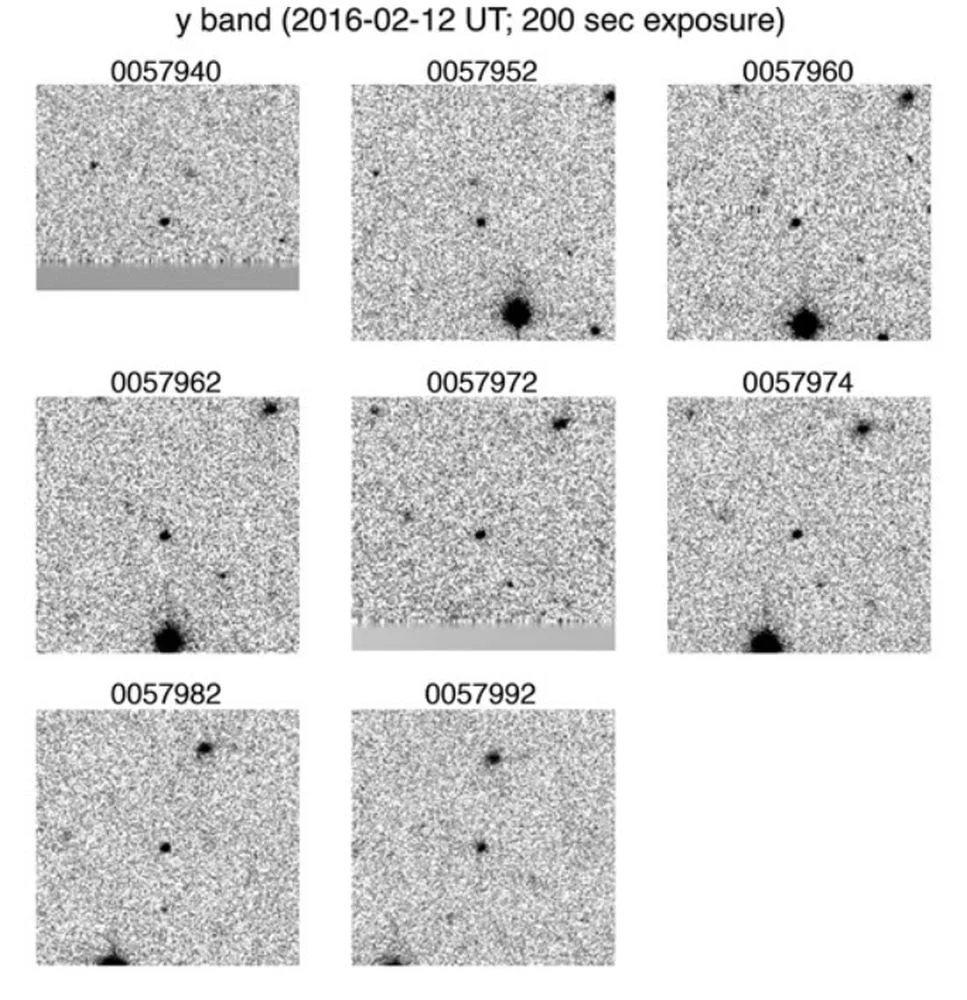
A team of Japanese researchers led by Takafumi Ootsubo from the Planetary Exploration Research Center at the Chiba Institute of Technology has utilized the extensive data archives of the Subaru Telescope to uncover critical details regarding the physical structure of Comet 28P/Neujmin. By analyzing images captured at distances where the comet is effectively "naked"—devoid of the obscuring gas and dust known as a coma—the team has provided new evidence that challenges the traditional distinctions between icy comets and rocky asteroids. The findings, published in the Publications of the Astronomical Society of Japan, suggest that while Comet 28P/Neujmin shares spectral similarities with primitive D-type asteroids, its surface microstructure remains uniquely "fluffy" and loosely packed, offering a glimpse into the divergent evolutionary paths of small bodies in our solar system.
The Challenge of Cometary Observation and the Subaru Solution
Observing the nucleus of a comet is one of the most difficult tasks in observational astronomy. Comets are most visible when they approach the Sun, as solar radiation causes volatile ices to sublimate, creating a brilliant coma and a trailing tail. While this makes the comet easy to find, the dense shroud of gas and dust acts as a veil, preventing telescopes from seeing the solid nucleus within. To understand the actual surface of a comet, astronomers must observe it when it is far from the Sun—typically beyond the "frost line"—where the temperatures are low enough that the comet remains dormant.
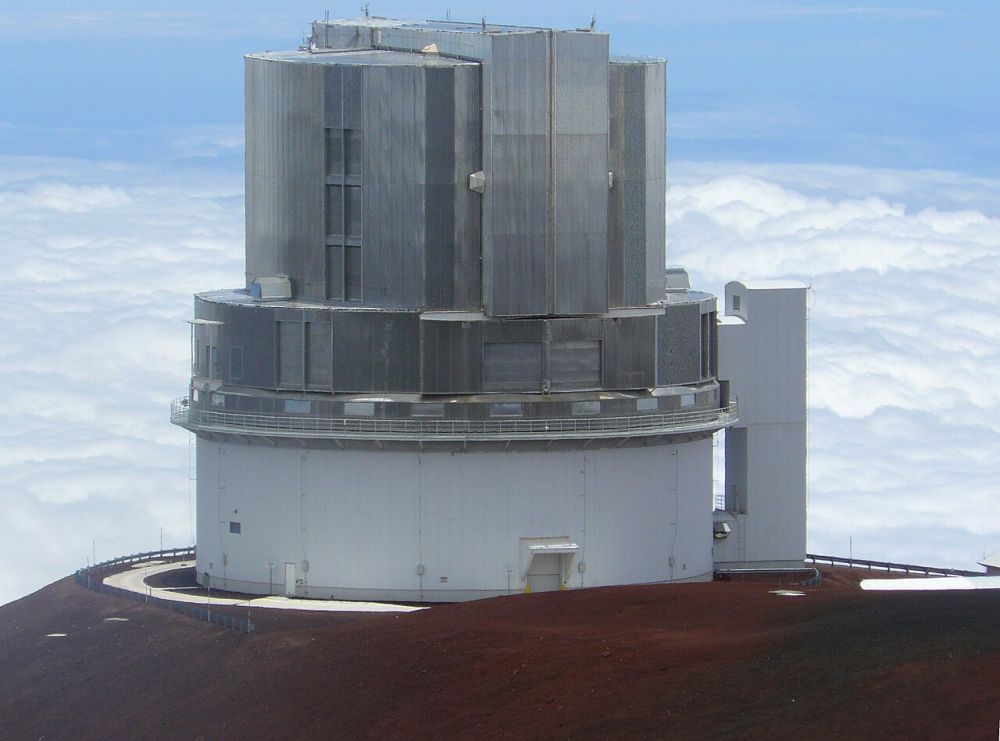
At these extreme distances, comets are incredibly faint, requiring massive apertures and sensitive instrumentation. The Subaru Telescope, operated by the National Astronomical Observatory of Japan (NAOJ), is uniquely suited for this task. Located at the 4,205-meter summit of Mauna Kea in Hawaii, the Subaru Telescope features an 8.2-meter primary mirror. Since its completion in 1998, it has been a cornerstone of deep-space observation. Its Subaru Prime Focus Camera (Suprime-Cam) and the more recent Hyper Suprime-Cam (HSC) provide a wide field of view and high resolution, allowing researchers to scan large swaths of the sky for faint, moving objects.
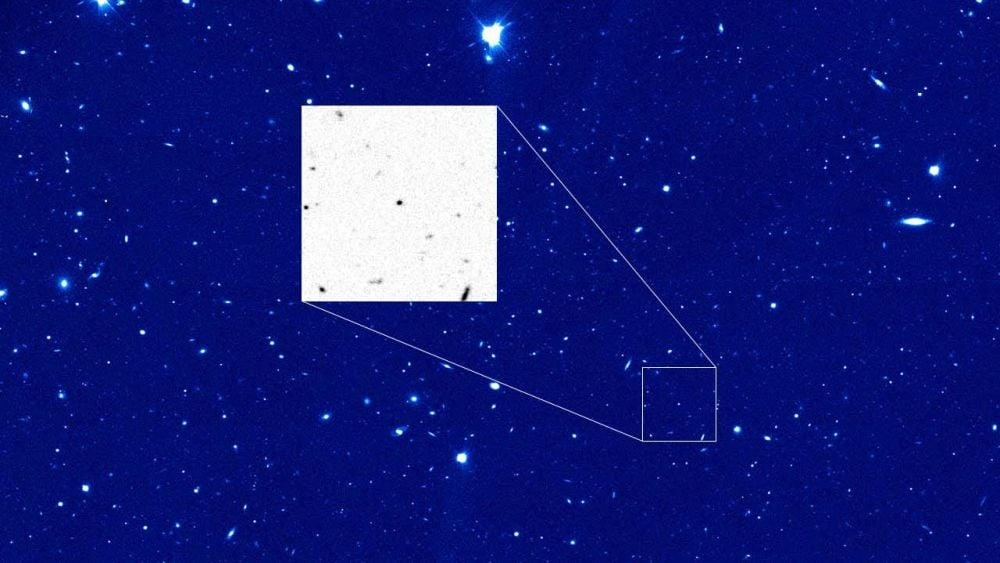
The research team led by Ootsubo did not conduct new observations but instead performed a "digital excavation" of the Subaru Telescope’s vast data archives. By searching for historical images of Comet 28P/Neujmin taken when it was more than 10 astronomical units (AU) from the Sun—roughly the distance of Saturn—they were able to isolate the light reflecting off the nucleus itself, free from the contamination of a coma.
Comet 28P/Neujmin: A Giant Among Jupiter-Family Comets
Comet 28P/Neujmin is an object of significant interest due to its unusual characteristics. Discovered in 1913 by Grigory Neujmin, it belongs to the Jupiter-family comets (JFCs), a group of short-period comets whose orbits are heavily influenced by the gravity of the gas giant Jupiter. With an orbital period of approximately 18.2 years, 28P/Neujmin is notable for its size. Measuring approximately 21 kilometers in diameter, it is one of the largest known nuclei in its class.
Most JFCs are small and highly active, but 28P/Neujmin is famously "low-activity." Even during its perihelion (closest approach to the Sun), it displays very little coma compared to other comets of its size. This "naked" quality makes it an ideal laboratory for studying cometary geology and the relationship between comets and asteroids. The research focused on observations taken when the comet was at a heliocentric distance exceeding 10 AU, ensuring that the data reflected the true state of the nucleus surface.
Analyzing the Opposition Effect
The primary metric used by the researchers was the "opposition effect" (OE). This is a phenomenon where an airless body shows a dramatic surge in brightness when it is observed at a very small phase angle—meaning the observer is positioned almost directly between the object and the light source (the Sun).
When an object is in opposition, shadows cast by surface irregularities are hidden from the observer’s perspective. This "shadow hiding" causes the object to appear much brighter than it would at even a slightly different angle. Additionally, a process called coherent backscattering—where light waves interfere constructively as they reflect off microscopic grains—contributes to this brightness surge.
By plotting the magnitude-phase curve (the relationship between brightness and the angle of observation), the team could infer the physical properties of the comet’s surface. Factors such as albedo (reflectivity), grain size, and porosity all influence the shape of this curve. The Subaru HSC data provided high-precision measurements that allowed the team to compare 28P/Neujmin’s surface to various taxonomic groups of asteroids.
Blurring the Lines: Comets vs. D-Type Asteroids
For decades, planetary science operated under a binary classification: asteroids were rocky bodies formed in the inner solar system, and comets were icy bodies formed in the outer solar system. However, recent missions and advanced observations have blurred this line. We now know that some asteroids contain water ice and hydrated minerals, while some comets show signs of rocky, silicate-rich surfaces.
The Subaru observations revealed that Comet 28P/Neujmin has a color profile very similar to D-type asteroids. D-type asteroids are typically found in the outer asteroid belt and among the Jupiter Trojans. They are characterized by very low albedos and a reddish spectrum, which is thought to be caused by the presence of organic compounds or carbon-rich materials.
However, the opposition effect data revealed a crucial distinction. While the color of 28P/Neujmin matches D-type asteroids, its surface structure does not. The magnitude-phase curve suggested that the comet’s surface is significantly more porous and loosely packed than that of C-type or D-type asteroids. This "fluffiness" implies that although the comet and certain asteroids may have formed from similar raw materials in the early solar nebula, their internal structures and evolutionary histories have diverged.
Chronology of Research and Data Integration
The study of 28P/Neujmin represents a long-term effort in cometary science. The following timeline highlights the key phases leading to the current discovery:
- 1913: Discovery of Comet 28P/Neujmin by Grigory Neujmin at the Simeiz Observatory.
- 1998: Completion of the Subaru Telescope on Mauna Kea, beginning a new era of deep-field imaging.
- Early 2000s: Initial spectroscopic studies suggest 28P/Neujmin may be a "transition object" between comets and asteroids.
- 2013-2023: The Subaru Hyper Suprime-Cam (HSC) conducts wide-field surveys, inadvertently capturing Comet 28P/Neujmin during its quiet phase in the outer solar system.
- 2024: The research team led by Ootsubo analyzes the archived HSC data, focusing on observations taken at distances greater than 10 AU.
- 2025: Publication of the findings in the Publications of the Astronomical Society of Japan, detailing the opposition effect and surface porosity.
Scientific Implications and Broader Impact
The discovery that Comet 28P/Neujmin has a "fluffy" surface despite its asteroid-like appearance has significant implications for our understanding of the early solar system’s formation. It suggests that cometary nuclei have preserved a level of primordial porosity that even the most primitive asteroids have lost, perhaps due to different thermal histories or collision frequencies.
If comets and D-type asteroids are indeed "siblings" born in the same region of the outer solar system, the differences in their current structures provide a roadmap for how these bodies were distributed during the migration of the giant planets—a period described by models such as the "Nice Model." In this scenario, many objects that formed in the Kuiper Belt were scattered inward; some became comets, while others were captured as Jupiter Trojans or settled into the outer asteroid belt.
Furthermore, this research underscores the immense value of astronomical archives. As telescopes like Subaru continue to generate petabytes of data, many discoveries may already be sitting on hard drives, waiting for the right question to be asked. The ability to conduct "observational" science through data mining is becoming as vital as the act of pointing a telescope at the sky.
Future Outlook in Small-Body Research
The findings of the Chiba Institute of Technology team pave the way for future missions and observations. The upcoming Vera C. Rubin Observatory in Chile, which will conduct the Legacy Survey of Space and Time (LSST), is expected to discover millions of new asteroids and comets. With its ability to scan the entire visible sky every few nights, the LSST will provide a massive dataset that will allow astronomers to apply the "opposition effect" analysis to thousands of comets, not just a handful.
Moreover, the structural differences identified in 28P/Neujmin highlight the need for "sample return" missions to D-type asteroids and cometary nuclei. Understanding the "fluffiness" of these bodies is not just a matter of academic curiosity; it is essential for planetary defense. If a comet or a porous asteroid were to ever pose an impact threat to Earth, knowing its internal structure—whether it is a solid rock or a loosely bound "rubble pile"—would be critical for designing a successful deflection mission.
As Takafumi Ootsubo and his colleagues conclude, the distinction between "rocky" and "icy" is no longer sufficient to describe the complexity of the solar system. Instead, scientists are moving toward a more nuanced view where the physical structure, chemical composition, and orbital history all play roles in defining these ancient travelers. With the help of "naked" comets like 28P/Neujmin and the powerful archives of the Subaru Telescope, the history of our cosmic neighborhood is slowly coming into focus.