Vera Intan Clara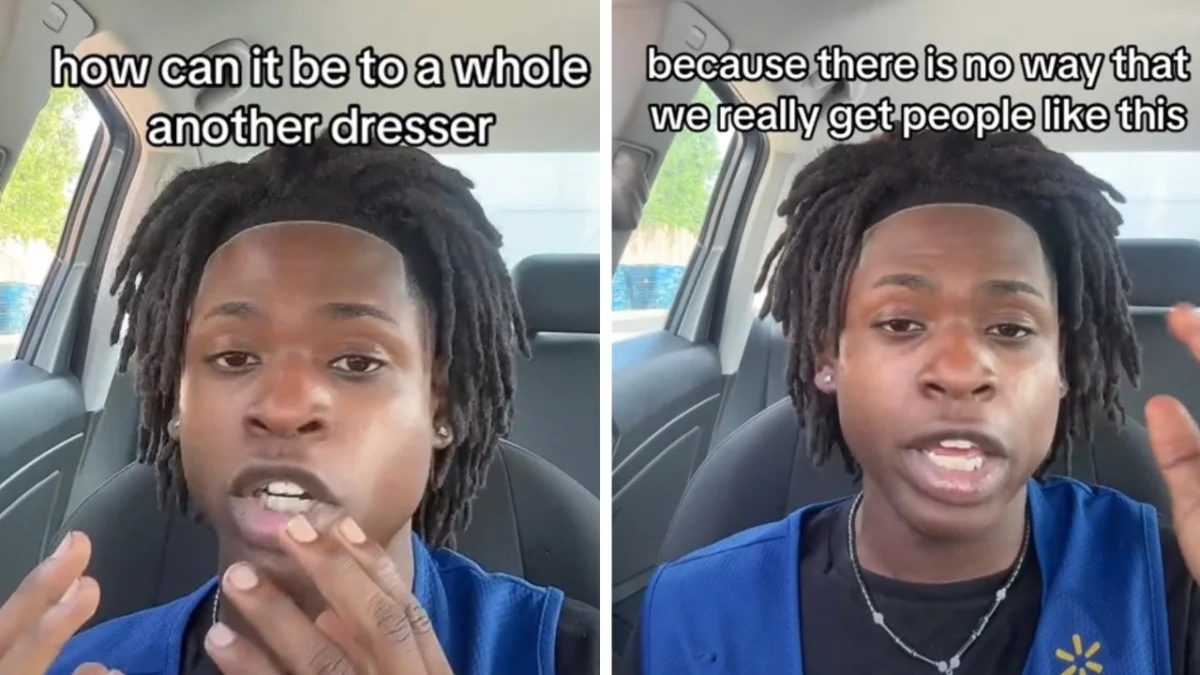
A recent incident at a Walmart store, documented by an employee on TikTok, has brought into sharp focus the recurring challenges faced by frontline retail staff when confronting customer disputes over product pricing, particularly concerning misplaced merchandise and ambiguous clearance signage. The encounter involved a customer who insisted a $149 dresser should be sold for $75, basing his claim on a nearby clearance sign that, upon inspection, pertained to a different item. This scenario, which quickly garnered significant attention online, serves as a microcosm of broader issues within the retail sector, encompassing consumer psychology, operational complexities, and the often-strained dynamics between shoppers and store associates.
The Origin of the Dispute: A Misplaced Item and a Misread Sign
The incident, as recounted by the Walmart employee, who posts under the handle @skylouieeeee on TikTok, began with a customer seeking assistance for a boxed dresser he had located in an aisle. The item lacked a visible price tag, a common occurrence in large retail environments where merchandise is frequently moved, either by staff during stocking or by customers browsing. The employee, adhering to standard procedure, used a work-issued mobile device to scan the dresser’s barcode. The scan unequivocally displayed a price of $149.
This initial price revelation immediately triggered a challenge from the customer. He asserted that the dresser should cost only $75, claiming to have found it adjacent to a clearance sign bearing that lower price. The employee, seeking to resolve the discrepancy and provide clarity, requested that the customer lead them back to the exact location where the dresser was discovered. This step is crucial in verifying potential pricing errors or identifying misplaced items, a distinction that often dictates how a dispute is handled.
Upon returning to the aisle, the employee observed the dresser situated near a sign indeed marked $75. However, a closer examination revealed that this particular sign was not intended for the dresser. Instead, it clearly indicated a clearance price for a different product positioned further down the same aisle. The employee diligently explained this critical distinction to the customer, clarifying that the $75 tag applied to another item, not the dresser in question. Despite this direct clarification and visual evidence, the customer reportedly maintained his insistence that the dresser should be priced at $75.
Escalation and Employee Frustration
The customer’s continued refusal to accept the scanned price prompted a request for a re-scan. The employee complied, performing a second scan of the dresser’s barcode. Predictably, the price remained $149. Undeterred, the customer then shifted his line of questioning, challenging whether the correct product had even been scanned, inquiring about the dresser’s specific name and color. The employee, who had directly scanned the barcode affixed to the dresser’s box, expressed their mounting frustration with the persistence of the customer’s challenge. For the employee, the direct barcode scan from the item’s packaging was the definitive arbiter of its price.
The employee’s TikTok storytime resonated deeply with a broad audience, particularly current and former retail workers, many of whom recognized the frustrating familiarity of the situation. Numerous commenters posited that the customer’s tenacious argument might have been a deliberate strategy to secure an unauthorized discount. Theories ranged from outright manipulation—suggesting the customer intentionally moved the dresser to exploit the nearby sign—to the hope that sheer persistence might wear down the employee into overriding the price. One commenter succinctly summarized this sentiment: "He knew, 100%, he was just hoping y’all would be annoyed enough."
However, other viewers offered alternative perspectives, acknowledging that such situations are not always born of malice. Some suggested that customers genuinely struggle to "fathom that other people might have moved the item," leading to sincere confusion rather than deliberate deception. This viewpoint highlights the common challenge of maintaining merchandise integrity in high-traffic retail environments, where items can easily be displaced by shoppers or even inadvertently by staff.
Broader Context: Retail Pricing Dynamics and Customer Expectations
This incident underscores several systemic aspects of modern retail. Clearance sections, for instance, are dynamic environments designed to liquidate excess or seasonal inventory. Their effectiveness relies on clear, accurate signage that precisely matches the intended products. However, in the hustle and bustle of daily operations, items can be moved, signs can be misplaced, or customers might intentionally or unintentionally create ambiguity.
From a consumer perspective, the allure of a bargain is powerful. The concept of "getting a deal" can be a significant motivator, and the perception of a mispriced item—especially one appearing cheaper—can trigger a strong desire to honor that lower price. This is further amplified by a growing "honor system" expectation among some consumers, where an item found near a lower price tag, regardless of its true intent, should be sold at that perceived bargain price. This expectation often collides with strict store policies and inventory management systems designed to ensure accurate pricing and prevent financial losses.
Moreover, the rise of digital tools and online information has empowered consumers to be more informed about product prices. While beneficial, this can also lead to increased instances of price comparisons and challenges when in-store prices do not align with external information or, as in this case, perceived in-store deals.
Challenges for Frontline Retail Employees
The employee’s frustration, widely echoed by fellow retail workers online, highlights the significant emotional and operational challenges faced by frontline staff. These employees are often caught between competing demands: upholding company policy, ensuring accurate transactions, and striving for customer satisfaction, all while navigating potentially confrontational situations. Their discretion to override prices is typically limited, requiring adherence to established protocols that prioritize scanning accuracy.
Retail workers frequently report dealing with similar pricing disputes on a daily basis. The pressure to de-escalate conflicts while maintaining store integrity can be immense. The mental load of consistently explaining policies, verifying information, and managing customer expectations contributes to high levels of stress and burnout in the sector. Training for these employees often includes conflict resolution and adherence to pricing policies, but the human element of persistent disagreement can be taxing.
Inferred Corporate Stance and Operational Best Practices
While Walmart, like most major retailers, does not comment on specific customer interactions, their general operating principles would likely emphasize the scanned price as the correct price for an item. Retailers invest heavily in barcode scanning technology precisely to ensure pricing accuracy and streamline checkout processes. Policies typically distinguish between legitimate pricing errors—such as a misprinted tag directly affixed to an item—and situations involving misplaced merchandise or general signage that does not specifically apply to the item in question. In cases of genuine store error, most retailers have protocols to honor the lower price. However, for items merely found near an unrelated clearance sign, the default is usually the scanned price.
To mitigate such disputes, retailers often implement several best practices:
- Regular Aisle Audits: Staff routinely check aisles to ensure merchandise is correctly placed and signs are accurate.
- Clear Signage: Emphasizing product-specific tags and clear descriptions on clearance signs to avoid ambiguity.
- Employee Training: Equipping staff with clear guidelines on how to handle pricing disputes, differentiate between types of errors, and escalate complex situations to management.
- Digital Price Checkers: Providing in-store kiosks or mobile app functionality for customers to independently verify prices.
Despite these measures, the sheer volume of merchandise and customer traffic in large stores like Walmart makes it virtually impossible to eliminate all instances of misplaced items or potential misunderstandings.
The Amplifying Role of Social Media
The fact that this incident was shared on TikTok, and subsequently went viral, underscores the growing influence of social media platforms in shaping public discourse around everyday retail experiences. Employees now have a direct channel to share their workplace realities, often finding solidarity and validation from a global audience. For retailers, these viral moments can be a double-edged sword: they can humanize the challenges faced by their staff, but they also expose individual interactions to public scrutiny, potentially impacting brand perception.
The comments section of the employee’s video became a forum for diverse interpretations, reflecting a spectrum of experiences and opinions regarding customer conduct and retail policies. This public dialogue, while not establishing definitive facts about the customer’s intentions, undeniably highlights the prevalence of such pricing disagreements and the varied ways in which both consumers and employees navigate them.
Implications for Customer Service and the Retail Landscape
The Walmart dresser incident, though seemingly minor, encapsulates a broader narrative about the evolving landscape of retail and customer service. It speaks to:
- The need for clear communication: Retailers must continuously strive for unambiguous pricing and merchandising.
- The human element: Despite technological advancements, customer service remains a deeply human interaction, prone to misunderstandings, frustration, and occasional conflict.
- Employee support: Recognizing and addressing the psychological toll on frontline staff is crucial for retention and service quality.
- Consumer education: Encouraging customers to verify prices independently and understand store policies can reduce disputes.
In conclusion, the Walmart employee’s viral TikTok post serves as a poignant illustration of the everyday challenges inherent in retail operations. The persistent pricing dispute over a misplaced dresser, exacerbated by a nearby clearance sign, is not an isolated incident but a common occurrence that highlights the complex interplay between store policies, consumer expectations, and the vital role of frontline employees in mediating these dynamics within the fast-paced environment of modern commerce. While the specific intentions of the customer remain unverified, the incident unequivocally demonstrates the ongoing need for clear communication, robust operational procedures, and empathetic customer service training in the retail sector.