Vera Intan Clara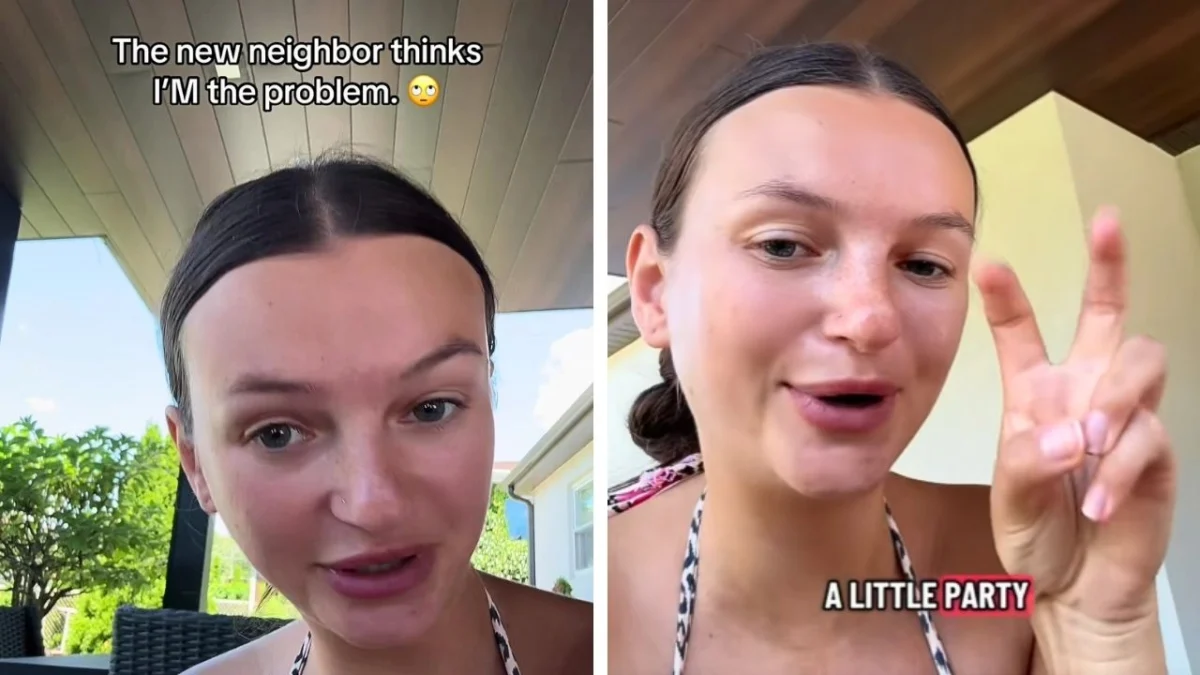
A recent incident in a residential neighborhood, widely disseminated through a viral TikTok video, has brought to light the complexities of neighborly conduct, property rights, and the unique dynamics within specialized communities. The dispute, which unfolded in a self-identified "upside down pineapple community," involves a new resident’s demand for a long-term homeowner to cease sunbathing by her private pool, citing "common courtesy" due to her husband’s proximity. The homeowner, known as Tink (@spicygirlypop_) on TikTok, publicly challenged this request, revealing her neighborhood’s distinct reputation for consensual non-monogamy, which subsequently fueled significant online discussion regarding privacy, lifestyle acceptance, and communal living expectations.
The Initial Confrontation and Digital Dissemination
The catalyst for the public discussion originated from a TikTok video shared by Tink on June 12, which quickly garnered substantial attention, accumulating approximately 88,400 likes at the time of initial publication. In the video, Tink detailed an unusual interaction with her new neighbor, who had reportedly moved into the community just three days prior. The neighbor initiated contact via text message, requesting that Tink refrain from sunbathing by her pool when the neighbor’s husband was present. The rationale provided was that the husband had a "direct view" of Tink’s backyard and pool area from the kitchen window. The neighbor concluded her message with the phrase, "It’s called common courtesy."
Tink’s response, as articulated in her viral video, was a firm refusal to alter her behavior on her own property. She highlighted her status as a mortgage-paying homeowner, asserting her right to utilize her amenities as she saw fit. She further suggested that if the view from the kitchen window posed an issue for the new couple, they had the option to implement their own solution, such as covering the window. This exchange set the stage for a revelation that transformed a seemingly ordinary neighborly squabble into a broader commentary on community identity and personal freedoms.
A Community’s Distinct Identity: The ‘Upside Down Pineapple’ Symbolism
The unexpected turn in the narrative came when Tink disclosed the unique characteristic of her residential area: it is known as an "upside down pineapple community." This designation is a widely recognized, albeit subtle, symbol within certain subcultures, indicating that residents are involved in swinging or consensual non-monogamous (CNM) lifestyles. Such communities often foster an environment of openness and mutual understanding regarding these relationship structures, frequently organizing social events tailored to their shared interests. In Tink’s neighborhood, this includes regular adults-only gatherings held every Wednesday, serving as a social hub for like-minded individuals.
Understanding Consensual Non-Monogamy (CNM) and Lifestyle Communities
Consensual non-monogamy encompasses various relationship models where all partners agree to engage in multiple romantic, sexual, or intimate relationships. This includes practices such as swinging, where couples engage in sexual activities with other couples; polyamory, which involves having multiple romantic relationships simultaneously; and open relationships. Research indicates a growing prevalence and acceptance of CNM in Western societies. A 2016 study published in the Journal of Sex & Marital Therapy estimated that approximately one in five adults in the United States has engaged in CNM at some point in their lives. While often stigmatized, proponents argue that CNM can promote honesty, communication, and personal growth within relationships.
"Lifestyle communities" or "intentional communities" are residential developments designed to cater to specific interests, demographics, or philosophies. These can range from age-restricted senior communities to eco-villages, artistic enclaves, or, as in Tink’s case, neighborhoods where a particular social or sexual lifestyle is openly embraced. The shared values and activities within such communities are often a primary draw for residents, fostering a sense of belonging and mutual support. The existence of these communities underscores a societal trend toward self-selection in living environments, where individuals seek to align their residential context with their personal values and preferred social interactions.
The History and Evolution of the ‘Upside Down Pineapple’ Symbol
The "upside down pineapple" as a clandestine symbol for swinging or CNM gained traction within the subculture due to its discreet nature. While its exact origin is debated, it emerged as a way for individuals to signal their lifestyle to others in public settings without explicitly stating it. A regular pineapple, when placed right-side up, can symbolize hospitality or welcome. Inverting it subtly alters this meaning, signifying a ‘secret welcome’ or an ‘open invitation’ within the swinging community. This symbol can be displayed in various forms, from a small pin or a piece of jewelry to a decorative item outside a home or even a temporary tattoo at specific events. Its effectiveness lies in its dual meaning: innocuous to the uninitiated, yet clear to those within the know. The use of such symbols highlights the historical need for discretion within these communities, often due to societal judgment or legal ambiguities that have historically surrounded non-traditional relationships.
Chronology of Events
The sequence of events unfolded rapidly, beginning with the new neighbor’s arrival and culminating in a public declaration of the neighborhood’s unique social fabric.
The Neighbor’s Arrival and Immediate Concerns
The new neighbor reportedly moved into the community just three days before sending the text message to Tink. This suggests a swift assessment of the immediate surroundings and a quick decision to voice a concern regarding perceived breaches of privacy or decorum. The timing indicates a potential lack of prior research into the community’s established character or an underestimation of its unique social norms. The neighbor’s immediate focus on the visual aspect from her kitchen window suggests a prioritization of traditional domestic privacy expectations.
Tink’s Stance and the Community’s Unanimous Response
Upon receiving the text, Tink did not merely dismiss it privately. She chose to share the message within her neighborhood’s private community group chat. According to Tink, the reaction from her fellow residents was overwhelmingly supportive and, in her words, "they [expletive] lost it." This collective response underscores the strong sense of solidarity and shared identity within the "upside down pineapple community." Members of the chat reportedly engaged in humor, with some joking about inviting the new neighbor to their next Wednesday adults-only gathering, a clear indication of their playful defiance and an implicit invitation to understand or even join their lifestyle. This immediate rallying around Tink reinforced her position and signaled to the new neighbor that her request ran contrary to the community’s established ethos.
Following the initial text exchange and the community’s reaction, Tink made a point to demonstrate her adherence to her own rights. In her TikTok video, she explicitly mentioned that even as she recorded, she was sitting by her pool in a bathing suit, directly in front of the kitchen window, while the neighbor’s husband was doing dishes. She noted that the husband himself had never voiced any complaint, humorously adding, "The real victim here, though, is the kitchen window, that’s for sure." This act served as a visible reassertion of her right to enjoy her property without yielding to what she perceived as an unreasonable demand. Tink concluded her video by stating that the new neighbor couple would receive "a proper welcome" at the neighborhood’s upcoming Wednesday party, hinting at the community’s intention to engage with the newcomers on their own terms, perhaps in an attempt to introduce them to the local culture.
The Role of Social Media in Amplifying Local Disputes
The incident gained significant traction primarily due to its dissemination on TikTok, a platform renowned for its ability to transform localized anecdotes into viral content. TikTok’s algorithm prioritizes engaging, short-form videos, often propelling personal narratives into the public consciousness at an unprecedented pace. Tink’s video, by combining elements of relatable neighborly conflict, unexpected cultural revelation, and a touch of defiance, resonated with a broad audience.
Viral Content and Public Commentary
The comments section of Tink’s video quickly became a lively forum for public opinion. Many commenters expressed solidarity with Tink, defending her right to privacy and self-expression on her own property. One user pointedly asked, "The real question you should be asking is how did she get your number to begin with," highlighting a common concern about unsolicited contact from neighbors. Another commenter encapsulated the collective fascination, writing, "I’m invested in this tea," a popular phrase signifying deep interest in a unfolding drama. The consistent requests for updates from the TikTok creator underscore the audience’s engagement and desire to follow the resolution of the dispute, further demonstrating the platform’s power in creating ongoing narratives.
This phenomenon illustrates how social media platforms serve as modern-day town squares, where private disputes can quickly become public spectacles, inviting global commentary and fostering rapid community formation among viewers who share similar sentiments or curiosities. The ease of sharing and the instant feedback loop of comments and likes amplify the reach and impact of such stories, often influencing the participants’ actions and perceptions.
Navigating Property Rights and Social Etiquette in Modern Communities
The core of this neighborly dispute lies at the intersection of established legal property rights and the more fluid, often unwritten, rules of social etiquette in residential areas. While Tink legally holds the right to enjoy her property, including sunbathing by her pool, the neighbor’s request appeals to a sense of "common courtesy" that often dictates how residents interact.
The Legal Framework of Private Property
In most jurisdictions, homeowners possess significant rights regarding the use and enjoyment of their private property. These rights typically include the freedom to engage in activities within one’s own yard, provided they do not violate local ordinances (e.g., noise restrictions, public nudity laws, or zoning regulations) or create a nuisance that infringes upon a neighbor’s reasonable enjoyment of their property. Generally, simply being visible from a neighbor’s window while engaging in a lawful activity on one’s private property does not constitute a legal nuisance or a violation of privacy. The expectation of privacy within one’s own home does not automatically extend to dictating what neighbors can do in their private, visible outdoor spaces.
The Unwritten Rules of Neighborly Conduct
Beyond legal statutes, residential communities are often governed by an intricate web of unwritten social rules and expectations of neighborly conduct. These can include considerations for noise levels, shared fence maintenance, and, pertinently, visual privacy. What one neighbor considers "common courtesy" can vary wildly depending on cultural background, personal values, and the specific dynamics of a neighborhood. In more traditional communities, a request like the one made by Tink’s neighbor might be viewed as a reasonable appeal for discretion. However, in communities with distinct social identities, such requests can clash with established norms and expectations. The neighbor’s use of "common courtesy" as justification highlights a fundamental disconnect in understanding what is considered appropriate or respectful behavior between these two households.
Implications for Community Cohesion and Lifestyle Acceptance
The incident in Tink’s "upside down pineapple community" carries broader implications for community cohesion, the integration of new residents, and the ongoing societal discourse surrounding diverse lifestyles.
Bridging the Gap Between Lifestyles
This situation vividly illustrates the challenges that can arise when individuals from different social backgrounds or with differing lifestyle expectations move into a pre-established, niche community. The new neighbor’s request suggests an expectation of conventional modesty and privacy, likely stemming from a mainstream perspective. In contrast, Tink’s community openly embraces a lifestyle that challenges these conventional norms, operating under a different set of social contracts and understandings. The incident underscores the importance of due diligence for prospective homeowners, particularly when considering communities known for specific characteristics or lifestyles. The onus often falls on newcomers to understand and adapt to the prevailing culture of their chosen neighborhood, or at least to approach differences with an open mind and a willingness to communicate.
The Challenge of Integration in Niche Neighborhoods
For niche communities like "upside down pineapple" neighborhoods, the integration of new residents who may be unaware of or unaccustomed to the local culture can be a delicate process. While the community members’ reaction to Tink’s video was one of solidarity and humor, it also highlights a potential for friction. The suggested "proper welcome" at the Wednesday gathering could be an opportunity for education and integration, or it could further solidify a divide if not handled with mutual respect. These situations can test the inclusivity of such communities and their capacity to absorb and educate new members about their unique social fabric.
Societal Perception and the Normalization of Diverse Lifestyles
The viral nature of this dispute also contributes to the broader public discourse on consensual non-monogamy and alternative lifestyles. By bringing the "upside down pineapple community" into mainstream awareness, Tink’s video inadvertently serves as a form of public education, demystifying aspects of CNM for a wider audience. While some reactions may be judgmental, others express curiosity or support, contributing to a gradual normalization of diverse relationship structures in society. The Daily Dot’s inability to verify whether the neighbor was aware of the community’s reputation before moving there adds a layer of uncertainty to the narrative, prompting questions about disclosure, research, and personal responsibility in selecting a living environment.
In conclusion, the sunbathing dispute in the "upside down pineapple community" transcends a mere neighborly squabble. It serves as a compelling case study on the collision of individual property rights, evolving social etiquettes, and the dynamics of specialized communities in an increasingly interconnected and digitally transparent world. As the neighborhood prepares for its next Wednesday gathering, the incident remains a potent reminder of the complexities inherent in coexisting amidst diverse personal choices and lifestyles.