Evan Lee Salim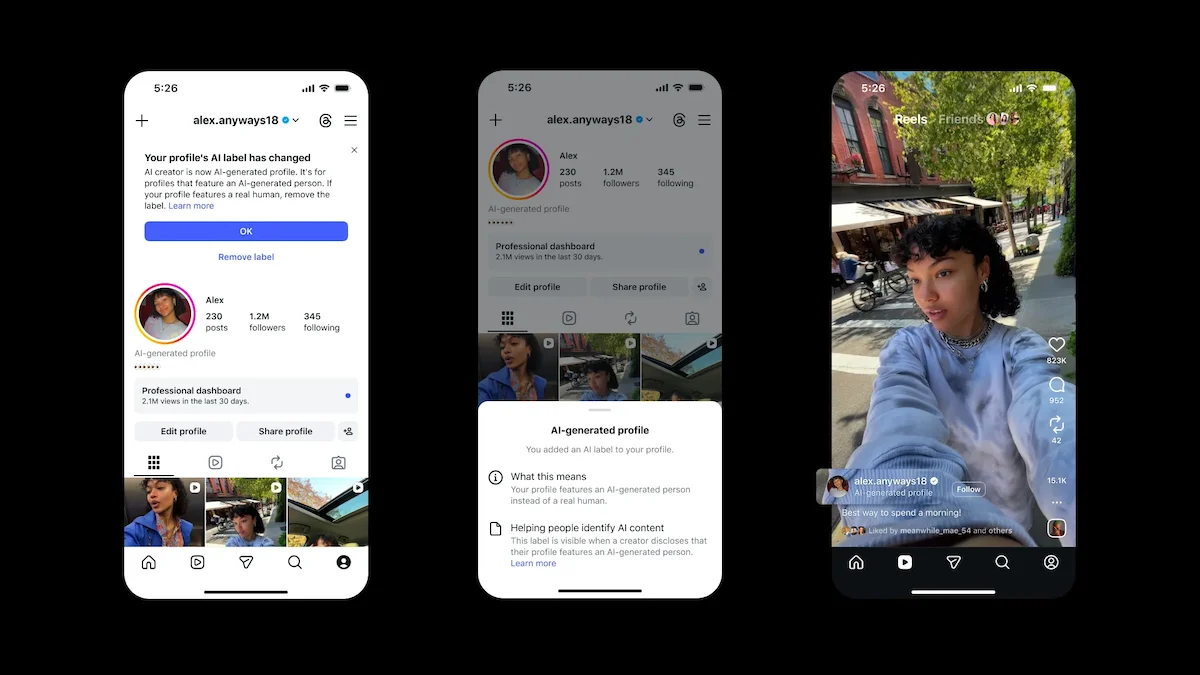
Instagram, a flagship platform under Meta, announced a significant policy update on Monday aimed at increasing transparency around artificial intelligence-generated profiles. The social media giant will now rename its existing "AI creator" label to "AI-generated profile" and, critically, will begin limiting the reach of accounts that feature AI-generated individuals without proper disclosure. This move signals a growing industry-wide effort to address the burgeoning presence of synthetic media and its implications for user trust and content authenticity.
The core of the new policy revolves around clarity and user awareness. Instagram states that the rebranded "AI-generated profile" label is designed to be more intuitive, explicitly informing users when the person depicted on a profile has been entirely generated or substantially created using AI technologies. This distinction is crucial, as it differentiates between profiles that leverage AI for their central persona and those that merely employ AI for minor enhancements or background elements.
Under the updated guidelines, creators who fail to appropriately label an AI-generated profile face potential algorithmic penalties, specifically a reduction in their content’s reach. Conversely, creators who proactively use the new label will not be penalized solely for featuring an AI-generated person as their profile’s subject. This creates a clear incentive for transparency, aligning with Instagram’s stated goal of fostering a more honest digital environment. The platform clarified that this specific label is not intended for every instance of AI usage. Creators utilizing AI for routine photo edits, caption refinement, graphic design, or other non-central creative tweaks are exempt from applying the "AI-generated profile" label. The focus remains squarely on the authenticity of the profile’s perceived human subject.
Driving Force Behind the Change: User Experience and Trust
Instagram’s decision comes in direct response to increasing user feedback and growing discomfort. The platform acknowledged that a significant number of users have expressed frustration and a sense of deception upon discovering that profiles appearing to feature real people were, in fact, entirely AI-generated. "As generative AI becomes a bigger part of how people create, we’ve heard that people don’t like seeing a profile that seems human, only to find out later that the person featured is AI-generated," Instagram stated, emphasizing the desire among its community to be informed when interacting with synthetic personas. This sentiment underscores a broader societal shift where the rapid advancement of AI necessitates clearer boundaries and disclosures from technology platforms.
The digital landscape has witnessed an explosion in generative AI capabilities over the past few years. Tools that once required specialized knowledge are now readily accessible, enabling individuals and brands to create highly realistic images, videos, and even full-fledged virtual characters with unprecedented ease. This democratization of AI creation, while innovative, has also introduced complex ethical challenges, particularly concerning authenticity and potential deception.
The Surging Tide of AI-Generated Content and Influencers
The timing of Instagram’s announcement is particularly pertinent given the exponential rise of AI-generated content and, specifically, AI influencers across social media platforms. What began as novelty projects like Lil Miquela, a virtual influencer who debuted in 2016 and has since amassed millions of followers and lucrative brand deals, has evolved into a burgeoning industry. The global virtual influencer market, though still nascent, is projected to reach billions of dollars within the next decade, with some estimates placing its current valuation in the hundreds of millions. Reports suggest that as many as 10,000 to 20,000 AI-generated influencers could exist across various platforms, engaging with audiences and promoting products.
This proliferation has blurred the lines between human and machine-generated content, raising questions about trust, authenticity, and the very nature of digital interaction. Users, increasingly accustomed to curated realities on social media, are now confronted with entirely fabricated personas that mimic human appearance, behavior, and even emotional expression. While some AI influencers are openly declared as such, many operate in a grey area, leaving users to question the veracity of the content they consume.
Past Incidents and Growing Concerns
Several high-profile incidents have underscored the urgency of Instagram’s new policy. Earlier this year, the gay dating app Goose became the subject of a detailed investigation by Wired magazine. The report uncovered a network of seemingly AI-generated male influencers promoting the app on Instagram. Wired’s findings indicated over two dozen accounts featuring AI-created personas, some of whom reportedly engaged in direct messaging with potential users to encourage sign-ups. Such instances highlight the potential for AI-generated profiles to be used not just for entertainment or brand promotion, but also for more deceptive or manipulative purposes.
Another deeply concerning trend, reported by The New York Times in July, involved the discovery of hundreds of AI-generated doctors, healers, and wellness personalities on various social media platforms. These synthetic figures were found to be promoting health supplements and making unsubstantiated health claims to unsuspecting users. The potential for misinformation and harm, particularly in sensitive areas like health and finance, amplifies the need for clear labeling and platform accountability. The lack of transparency in such cases can erode public trust in online information and potentially endanger users who may act upon misleading advice from non-existent experts.
Beyond influencers, the broader issue of deepfakes—AI-generated media that convincingly alters or fabricates a person’s likeness or voice—has fueled anxieties about misinformation, reputational damage, and even electoral interference. While Instagram’s new policy specifically targets AI-generated profiles, it is part of a larger conversation around the responsible deployment of generative AI technologies.

Meta’s Broader AI Strategy and Challenges
Instagram’s policy shift is not an isolated event but rather a component of Meta’s evolving strategy for integrating and regulating artificial intelligence across its ecosystem. Meta has invested heavily in AI research and development, seeing it as foundational to its future, including the metaverse. However, this ambition has not been without its challenges.
Just weeks prior to this announcement, Instagram faced significant backlash over an AI tool that allowed users to generate images using other people’s likenesses. The feature, which reportedly did not require explicit opt-in from users whose public content was used for training or generation, drew widespread criticism from privacy advocates and users concerned about their digital autonomy. In response to the outcry, Meta promptly removed the controversial feature, demonstrating a willingness to adjust its AI implementation based on user sentiment and ethical considerations.
This episode, along with the recent $18 billion settlement Meta reached with U.S. states over allegations concerning the effects of Facebook and Instagram on children and teenagers, underscores the intense scrutiny under which major social media platforms operate. As part of that settlement, Meta agreed to introduce sweeping changes to restrict children’s access to its apps, including a default two-hour daily usage limit for teens, a "Night Mode" block, and muted notifications during school hours. While distinct from AI policy, these actions collectively reflect a broader commitment by Meta to address user safety, platform integrity, and responsible digital citizenship. The AI-generated profile policy can be seen as another layer in this evolving framework of digital governance.
Navigating the Regulatory Landscape and Digital Ethics
The push for AI transparency on platforms like Instagram also reflects a growing global regulatory trend. Governments worldwide are grappling with how to legislate artificial intelligence, particularly concerning issues of bias, privacy, and accountability. The European Union, for instance, is in the advanced stages of implementing its landmark AI Act, which seeks to establish a comprehensive legal framework for AI, categorizing systems by risk level and imposing strict requirements for high-risk applications, including transparency obligations. While platforms are not explicitly regulated by the Act for every AI feature, the spirit of transparency and user protection is consistent with Instagram’s new policy. In the United States, various legislative proposals and discussions are underway to address AI’s impact, focusing on consumer protection and ethical guidelines.
Digital ethics experts consistently advocate for clear labeling of AI-generated content. Organizations like the Partnership on AI have developed frameworks and best practices for synthetic media, emphasizing the importance of provenance and disclosure to maintain trust and prevent misuse. Instagram’s move aligns with these recommendations, signaling an industry shift towards self-regulation in anticipation of, or alongside, external mandates.
Implications for Creators, Users, and the Platform
The new policy carries significant implications across the Instagram ecosystem:
- For Creators: AI creators will now face a clearer set of rules. Those who wish to maintain their reach and avoid penalties will need to adopt transparent practices, actively labeling their AI-generated profiles. This could lead to a bifurcation of the AI influencer space: those who embrace overt AI identity and those who attempt to pass as human, with the latter facing algorithmic disadvantages. It also challenges creators to be more innovative within transparent boundaries, focusing on the unique appeal of virtual personas rather than relying on deception.
- For Users: The most immediate benefit for users is enhanced clarity and improved trust. The "AI-generated profile" label will empower users to make informed decisions about the content they consume and the profiles they engage with. This transparency is crucial for maintaining a healthy digital environment, reducing the potential for misinformation, and fostering more genuine interactions, even with synthetic entities.
- For Instagram/Meta: By implementing this policy, Instagram aims to reinforce its platform’s integrity and mitigate risks associated with deceptive AI content. This proactive step could help the platform build user trust, differentiate itself from competitors that may be slower to adopt such measures, and potentially pre-empt future regulatory interventions. It positions Instagram as a responsible player in the rapidly evolving AI landscape.
The Path Forward: Challenges and Opportunities
While a significant step, the implementation and enforcement of this new policy will not be without challenges. Accurately detecting AI-generated profiles at scale remains a complex technical hurdle. The sophistication of generative AI continues to advance rapidly, making it increasingly difficult to distinguish between human and synthetic creations. Instagram will need robust AI detection systems, and the definition of "substantially created with AI" may evolve over time. There will also be a learning curve for creators to understand and comply with the new guidelines, and for users to adapt to the new labeling system.
However, this policy also presents opportunities. It encourages a more thoughtful and ethical approach to AI content creation, pushing the boundaries of what is possible within a transparent framework. It opens up avenues for new forms of digital artistry and storytelling that are openly virtual. As AI becomes an indispensable part of digital life, clear and consistent policies are essential for ensuring that innovation serves users responsibly.
Instagram’s decision to mandate transparency for AI-generated profiles marks a critical juncture in the platform’s evolution and the broader discourse around artificial intelligence in social media. By prioritizing user trust and explicit disclosure, Instagram is taking a definitive stand in an increasingly complex digital world, setting a precedent that other platforms may soon follow as the line between reality and simulation continues to blur. The journey towards responsible AI integration is ongoing, but this latest policy represents a clear commitment to navigating it with greater clarity and accountability.