George Chandra Eka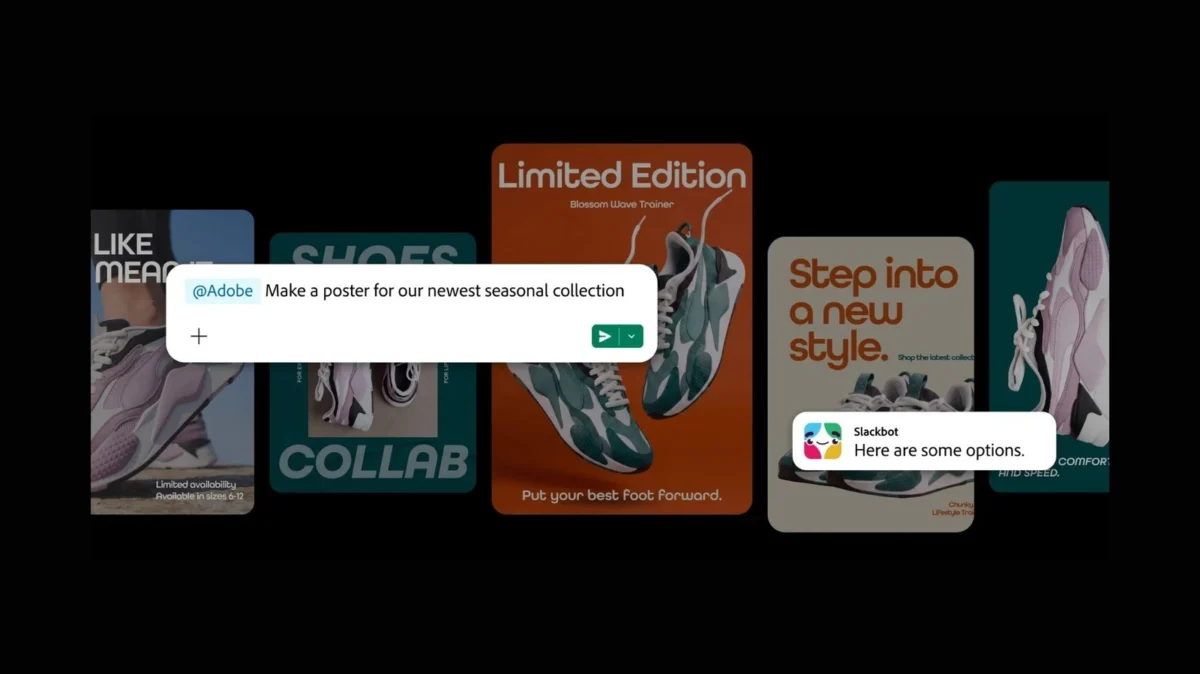
Adobe has unveiled a significant new integration with Slack, embedding more than 70 essential tools from its renowned creative and productivity applications directly into the communication service. This strategic move aims to fundamentally transform how professionals interact with their creative assets and workflows, enabling a vast array of tasks to be completed without ever leaving the Slack environment. The comprehensive suite of capabilities now accessible through Slackbot spans critical Adobe applications including Adobe Firefly, Adobe Express, Photoshop, Premiere, Acrobat, InDesign, Illustrator, Stock, and Lightroom, marking a pivotal moment in the convergence of creative and collaborative platforms.
The integration is immediately available for Slack Business+ and Enterprise+ customers across web, mobile, and desktop versions of Slack, signaling a clear focus on empowering large organizations and creative teams. This development underscores a growing industry trend towards minimizing context switching and fostering a more seamless, integrated digital workspace. By leveraging Slackbot as an intelligent intermediary, users can initiate complex creative and document-related tasks through natural language commands, drawing upon content from Slack channels, Canvases, and existing Adobe Creative Cloud assets.
Understanding the Integration: A Deep Dive into Functionality
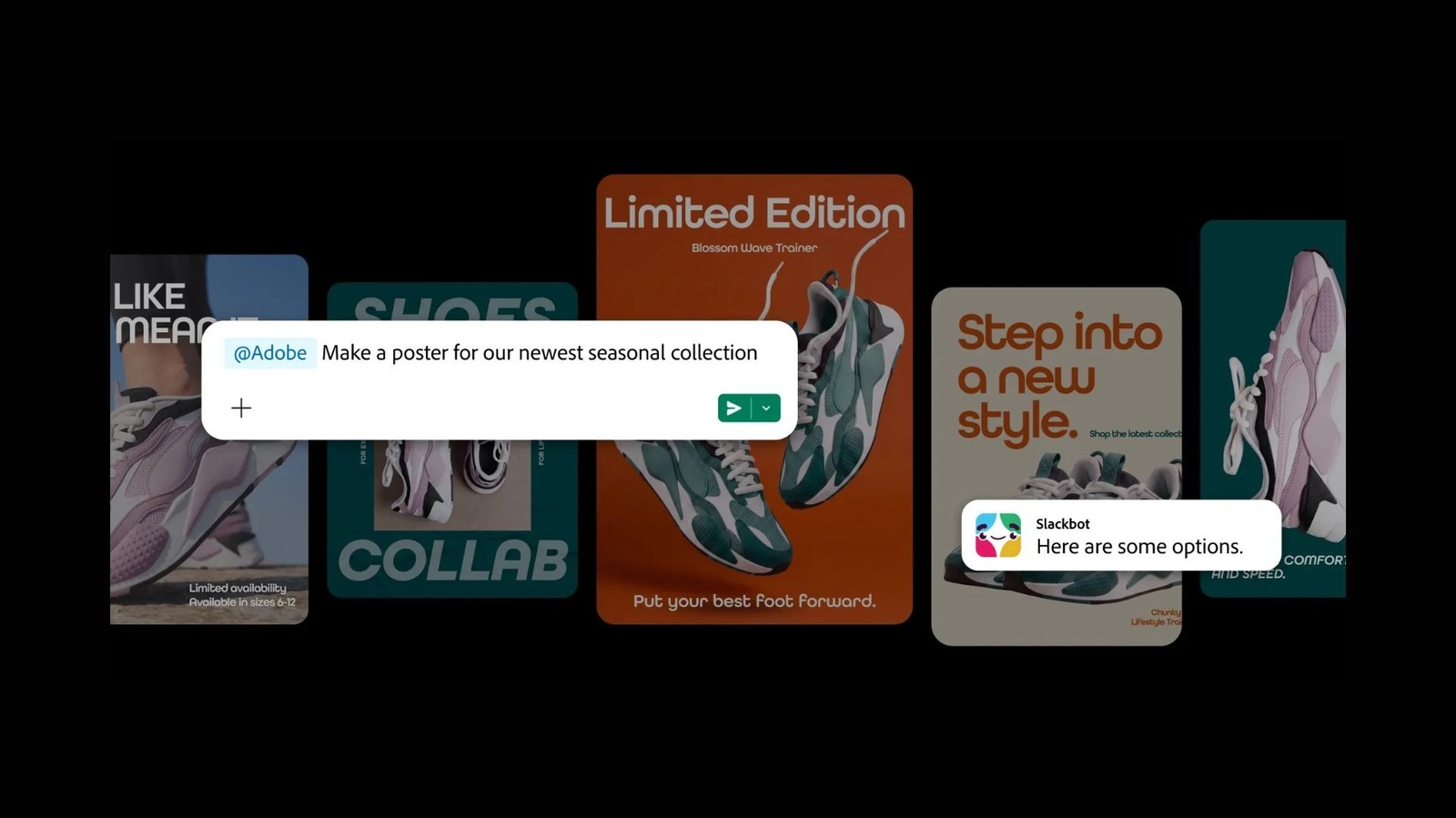
At the heart of this integration lies Slackbot’s enhanced intelligence, powered by Slack’s Model Context Protocol (MCP). This protocol allows Slackbot to understand and execute sophisticated commands by interfacing directly with the Adobe ecosystem. Users are no longer required to switch between applications to perform common creative and document management tasks. Instead, they can simply message Slackbot with a request, and the chatbot will intelligently select and apply the most relevant Adobe tools to fulfill the assignment.
Consider the diverse range of scenarios this integration addresses:
- Visual Content Generation and Enhancement: Marketing teams can request Slackbot to "create a social media post for our new product launch" from a text brief within a Slack channel. Slackbot, leveraging Adobe Express and Firefly, can then generate multiple design options using branded templates, suggest appropriate imagery from Adobe Stock, or even create unique visuals based on text-to-image prompts. Designers can ask for "bulk resizing of these 20 product images for web and mobile" directly within a project channel, with Photoshop or Lightroom executing the task automatically.
- Document Management and Collaboration: Professionals frequently handle PDFs and other document formats. With Adobe Acrobat integration, users can ask Slackbot to "convert this Slack Canvas into a PDF," "merge these three sales reports into a single document," or "extract key data points from this PDF attachment." The ability to annotate, edit, and share documents without leaving the communication thread significantly streamlines review cycles and information dissemination.
- Brand Consistency and Asset Management: Ensuring brand guidelines are met across all communications is paramount for enterprises. Users can instruct Slackbot to "apply our corporate branding to this presentation draft" using InDesign or Express templates, or "find all approved logo variations" from Creative Cloud Libraries. This reduces the risk of off-brand content being circulated and centralizes asset access.
- Basic Video and Rich Media Tasks: While not intended for complex video editing, the integration allows for quick tasks such as "trim this video clip to 15 seconds for an Instagram story" using Premiere capabilities or "create a GIF from this short video snippet." This democratizes basic media creation, enabling more team members to contribute rich content.
- Data Visualization: A common challenge in business is transforming raw data into digestible visual formats. Users can now direct Slackbot to "turn this spreadsheet data into an infographic" or "generate a chart from these quarterly sales figures," leveraging tools like Adobe Express or Illustrator to create compelling visual representations.
- Access to Adobe Stock: Searching for and integrating high-quality stock photography, vectors, and videos becomes instantaneous. A user can simply ask Slackbot to "find images of sustainable energy solutions" and browse results directly within Slack, facilitating rapid content development.
The profound impact of these capabilities lies in their ability to eliminate the friction associated with switching applications, logging into different services, and manually transferring files. It positions Slack as a central hub where creative ideation, execution, and collaboration can all occur in a unified flow.
The Strategic Rationale: Why Adobe and Slack Are Converging
This integration is not merely a feature update; it represents a significant strategic alignment driven by evolving market demands and competitive pressures. Both Adobe and Slack (and its parent company, Salesforce) stand to gain substantially.
The Productivity Imperative and Minimizing Context Switching
In today’s fast-paced business environment, productivity is paramount. Studies consistently show that excessive context switching – the act of moving between different applications, interfaces, and tasks – significantly diminishes focus and efficiency. A report by the University of California, Irvine, found that it can take an average of 23 minutes and 15 seconds to return to a task after an interruption. By bringing creative and document tools directly into Slack, Adobe and Salesforce are directly addressing this pain point. Teams can stay within their primary communication channel, reducing mental overhead and accelerating project timelines. This fosters a "flow state" where creative and collaborative work can coexist seamlessly.
Adapting to Hybrid Work Trends
The global shift towards hybrid and remote work models has amplified the need for robust, integrated digital collaboration tools. Dispersed teams require platforms that can bridge geographical distances and facilitate effective teamwork across various functions. A project involving designers, marketers, sales teams, and legal reviewers, each using different specialized software, often becomes a logistical challenge. By centralizing creative tasks within Slack, the integration simplifies coordination, ensures everyone is working from the latest versions of assets, and streamlines feedback loops. This is particularly critical for enterprises managing complex projects with diverse stakeholders.
Strengthening Slack’s Ecosystem and Competitive Stance
For Slack and Salesforce, this integration is a powerful differentiator in a highly competitive market dominated by giants like Microsoft Teams and Google Workspace. Microsoft, in particular, offers a deeply integrated ecosystem with Office 365 applications, making it a compelling choice for many enterprises. By partnering with Adobe, a leader in creative software, Slack significantly enhances its value proposition, especially for organizations with a strong creative or marketing footprint. It positions Slack not just as a communication tool, but as a comprehensive work hub capable of supporting end-to-end creative workflows. This strengthens Salesforce’s vision of Slack as the "digital HQ" for businesses.
Adobe’s Ecosystem Strategy: Democratizing Creativity
For Adobe, the move represents a continuation of its strategy to expand its reach beyond traditional creative professionals to a broader audience of business users. While Photoshop and Illustrator remain the domain of experts, tools like Adobe Express and Firefly are designed for accessibility, enabling anyone to create compelling visuals. Embedding these capabilities within Slack democratizes creative power, allowing marketing managers, sales representatives, and even general business users to quickly generate, edit, or customize content without needing extensive design training or dedicated software installations. It also strategically positions Adobe’s AI capabilities, particularly Firefly, at the forefront of enterprise productivity, demonstrating its practical applications in everyday business contexts. This strategy aligns with Adobe’s broader push to embed its AI models into diverse platforms, making creativity more pervasive and integrated into the fabric of daily work.
Market Dynamics: Combating App Fatigue
The modern enterprise employee often juggles dozens of applications daily, leading to "app fatigue." The desire for consolidated workflows and fewer disparate tools is a powerful market force. This integration directly responds to that desire, offering a more streamlined experience that reduces the cognitive load on users and potentially increases the adoption and utility of both Slack and Adobe products within organizations.
A Timeline of Integration: Slack’s Evolving Ecosystem
The journey towards this deep integration between Adobe and Slack is part of a broader evolution in how enterprise software platforms interact and a specific strategic path taken by Slack.
- 2009-2013: Adobe’s Cloud Transition and Creative Cloud Launch. Adobe began its pivotal shift from perpetual licenses to a subscription-based Creative Cloud model. This move laid the groundwork for flexible, API-driven access to its tools and assets, making integrations like the one with Slack technically feasible years later.
- 2013: Slack’s Emergence. Slack launched as a revolutionary team communication platform, quickly gaining traction for its intuitive interface, channel-based organization, and extensive integration capabilities with other third-party services. From its inception, Slack was designed to be a hub, rather than a standalone application.
- 22nd July 2020: Adobe’s Figma Acquisition Attempt (and subsequent termination). While ultimately terminated due to regulatory concerns, Adobe’s attempt to acquire Figma highlighted its recognition of the growing importance of collaborative design tools and its desire to integrate such functionalities more deeply into its ecosystem. This period likely spurred internal discussions about deeper integration strategies.
- 1st December 2020: Salesforce Announces Acquisition of Slack. Salesforce’s acquisition of Slack for $27.7 billion was a landmark event, signifying Salesforce’s ambition to create a powerful "digital HQ" for enterprises. This acquisition brought Slack into a larger ecosystem with a strong focus on CRM and business processes, paving the way for more robust enterprise-level integrations.
- June [Year]: Introduction of Model Context Protocol (MCP) to Slackbot. This was a critical precursor to the Adobe integration. Slack’s Model Context Protocol (MCP) was introduced to significantly enhance Slackbot’s capabilities, allowing it to understand more complex, conversational commands and interact more intelligently with integrated applications. Prior to this, Slackbot’s functions were more rigid and command-based. The MCP fundamentally transformed Slackbot from a simple bot into a more sophisticated AI assistant.
- June [Year]: Initial Integrations with Canva and Figma. Following the MCP rollout, Slack quickly demonstrated its potential by integrating with popular design and collaboration tools like Canva and Figma. These integrations allowed users to create and share designs directly within Slack, providing a proof of concept for the deeper creative integrations to follow. This set a clear precedent for the type of creative workflow consolidation Slack envisioned.
- Prior to Slack Integration: Adobe’s ChatGPT Plugin. Adobe previously announced a ChatGPT plugin that provided access to "more than 70 tools across Adobe’s creative and productivity suites." The striking similarity in the number of tools and the "near-identical" implementation between the ChatGPT plugin and the Slack integration suggests a standardized API layer and integration strategy developed by Adobe. This approach indicates a concerted effort by Adobe to make its powerful toolset accessible through leading AI and collaboration platforms.
- [Date of Article Publication]: Adobe for Slack Launch. The culmination of these developments is the official launch of Adobe for Slack, bringing a vast array of creative and productivity tools directly into the enterprise communication platform.
This chronology illustrates a deliberate progression, with Slack strategically enhancing its platform and Adobe methodically expanding its reach through AI-powered integrations.
Supporting Data and Market Context
The scale of this integration is best understood within the context of the respective market leadership of both Adobe and Slack.
- Slack’s Enterprise Footprint: Slack boasts millions of daily active users, with a significant presence in the enterprise sector. As of recent reports, Slack serves a substantial portion of Fortune 100 companies, with many relying on it as their primary internal communication platform. Its integration into Salesforce’s vast CRM ecosystem further solidifies its position in the enterprise market, offering a comprehensive solution for sales, service, marketing, and now creative collaboration.
- Adobe’s Creative Dominance: Adobe remains the undisputed leader in creative software. Its Creative Cloud suite, encompassing applications like Photoshop, Illustrator, Premiere Pro, and InDesign, is the industry standard for professionals worldwide. The company consistently reports strong subscription growth, indicating the enduring demand for its powerful tools. By extending these tools to a broader user base within Slack, Adobe can further entrench its ecosystem and potentially attract new users to its subscription services.
- The Booming Productivity Software Market: The global market for productivity software is experiencing rapid growth, driven by digital transformation initiatives and the demands of hybrid work. Reports estimate this market to be worth hundreds of billions of dollars, with integration and AI-powered automation being key drivers of innovation. The Adobe-Slack integration positions both companies to capture a larger share of this expanding market by offering a compelling, integrated solution.
- The Rise of AI in Enterprise Applications: Artificial intelligence is rapidly being embedded across all layers of enterprise software. From customer service chatbots to predictive analytics in CRM, AI is enhancing efficiency and automating routine tasks. Adobe’s Firefly, a generative AI model, is a prime example of this trend within the creative space. Its integration into Slack highlights the growing expectation that AI will facilitate more intelligent and intuitive interactions with software, making complex tasks more accessible to non-specialists.
Statements and Reactions
While specific, verbatim statements from Adobe and Slack executives might not be publicly available for a concise news snippet, we can infer the likely messaging and reactions from related parties based on their strategic objectives.
From Adobe (Inferred Statement):
"This deep integration with Slack marks a pivotal moment in our mission to empower creativity and productivity for everyone, everywhere," a spokesperson from Adobe might highlight. "By bringing over 70 of our most beloved tools – from the generative AI power of Firefly and the accessibility of Adobe Express to the precision of Photoshop and Acrobat – directly into Slack, we are meeting users where they work. Our focus is on eliminating friction, streamlining workflows, and democratizing access to powerful creative capabilities, allowing teams to collaborate more effectively and bring their ideas to life faster, without ever leaving their primary communication hub."
From Slack/Salesforce (Inferred Statement):
"Our commitment at Slack and Salesforce is to build the most robust and intelligent digital HQ for our customers," a representative from Slack might emphasize. "The integration with Adobe is a testament to that vision. By embedding industry-leading creative and document tools directly into Slack, we are significantly enhancing the productivity of our Business+ and Enterprise+ users. This move reduces context switching, accelerates creative cycles, and enables a seamless flow of work from ideation to execution, all within a unified platform. It reinforces Slack’s role as the central nervous system for modern enterprises, bringing disparate tools and teams together."
From Industry Analysts (Inferred Assessment):
Industry analysts are likely to view this integration as a strategic win for both Adobe and Slack. "This is a significant move that addresses a critical pain point in enterprise workflows," noted one hypothetical industry analyst. "For Adobe, it’s about expanding its reach and making its powerful AI and creative tools accessible to a broader business audience beyond professional designers. For Slack, it’s a strong counter-move against competitors like Microsoft Teams, enhancing its value proposition for creative and marketing-intensive organizations. The emphasis on AI-powered assistance via Slackbot suggests a future where even complex creative tasks become more accessible and automated within collaborative platforms." Another analyst might add, "The similarity to Adobe’s ChatGPT plugin indicates a standardized approach to AI integrations, which will likely see Adobe’s capabilities appearing in more enterprise platforms, further solidifying its ecosystem leadership."
Broader Implications and Future Outlook
The Adobe-Slack integration carries significant implications for how businesses operate, how creative work is performed, and the future trajectory of enterprise software.
Impact on User Experience and Efficiency
The most immediate impact will be on the daily routines of millions of users. Marketing teams will experience faster content creation cycles, designers will face fewer interruptions, and general business users will gain access to tools previously considered specialized. This will likely lead to:
- Accelerated Project Timelines: Faster feedback loops and reduced manual transfers of assets will shorten project delivery times.
- Enhanced Collaboration: Teams can iterate on designs and documents in real-time within a shared communication space, fostering a more fluid collaborative environment.
- Democratization of Creative Tasks: Non-designers can perform basic creative tasks, freeing up professional designers for more complex, high-value work.
- Reduced Training Burden: The intuitive, conversational interface of Slackbot simplifies access to powerful Adobe features, potentially reducing the need for extensive training on each individual Adobe application for basic tasks.
Enterprise Adoption and Ecosystem Lock-in
For enterprises already heavily invested in Adobe Creative Cloud, this integration makes Slack an even more attractive proposition, potentially driving increased adoption of Slack Business+ and Enterprise+ tiers. It creates a stronger "ecosystem lock-in," making it harder for companies to switch to competing communication platforms that lack such deep integration with critical creative tools. Conversely, for Adobe, it solidifies its position as an indispensable partner for enterprise productivity, extending its influence beyond the creative department into broader business functions.
The "Super App" Trend and Competition
This move further propels Slack towards becoming a "super app" for the enterprise – a central hub where a multitude of business functions can be initiated and managed. This trend is a direct response to the fragmented nature of enterprise software. By integrating deeply with a powerhouse like Adobe, Slack is making a strong play against Microsoft Teams, which leverages its own comprehensive suite of Office 365 applications and the burgeoning Copilot AI assistant. The battle for the "digital HQ" is intensifying, with integrations like these becoming critical differentiators. Adobe’s strategy, in turn, allows it to integrate its AI and creative capabilities across multiple "super apps," ensuring its presence regardless of which platform an enterprise chooses.
Adobe’s AI Strategy and Future Integrations
The prominent role of Adobe Firefly and the underlying AI capabilities in this integration underscores Adobe’s aggressive push into generative AI. By making these tools accessible through conversational interfaces, Adobe is not only showcasing the power of its AI but also gathering valuable usage data that will inform future AI development. This could lead to even more sophisticated AI-driven functionalities, potentially automating more complex creative tasks in the future. We can also anticipate further integrations from Adobe into other leading enterprise platforms, continuing its strategy of meeting users where they are and embedding its AI across the digital landscape.
Potential Challenges
Despite the numerous benefits, potential challenges exist. Users may face an initial learning curve in understanding the full scope of Slackbot’s new capabilities and how to phrase commands effectively. Ensuring data security and privacy, especially when creative assets and sensitive documents are being processed across platforms, will remain a paramount concern for IT departments. Furthermore, while democratizing creative tasks, there is a risk of overwhelming users with too many options or generating "good enough" content that lacks the polish of a professional designer, potentially leading to brand inconsistency if not managed properly.
In conclusion, Adobe’s integration of over 70 creative and productivity tools into Slack is a monumental step that redefines the intersection of collaboration and creativity in the enterprise. It signifies a future where context switching is minimized, creative workflows are streamlined, and artificial intelligence empowers a broader spectrum of users to contribute to content creation and document management, all within the familiar confines of their communication platform. This strategic alignment between two industry giants is poised to reshape enterprise productivity and accelerate the digital transformation journey for businesses worldwide.