Clarissa Hana
Attackers are actively exploiting CVE-2026-9586, an unauthenticated SQL injection vulnerability in the Sangoma Switchvox VoIP platform that can lead to remote code execution. Security researchers at Horizon3 have issued a stark warning, indicating that a significant portion of internet-exposed Switchvox systems have either already fallen victim to this exploit or are on the verge of being compromised. The vulnerability, discovered as part of a broader investigation into 12 security flaws affecting the platform, presents a critical pathway for malicious actors to gain unauthorized access and control over business communication infrastructures.
The Nature of the Threat: CVE-2026-9586 Unveiled
At the heart of this escalating security incident lies CVE-2026-9586, an unauthenticated SQL injection vulnerability present in the /pa HTTP endpoint of the Sangoma Switchvox platform. Switchvox, a widely adopted enterprise Voice over Internet Protocol (VoIP) management system, plays a crucial role in configuring, monitoring, and managing the telephone systems of businesses across various sectors. Its ability to streamline and control business communications makes it a valuable asset, but also a prime target for cyber adversaries.
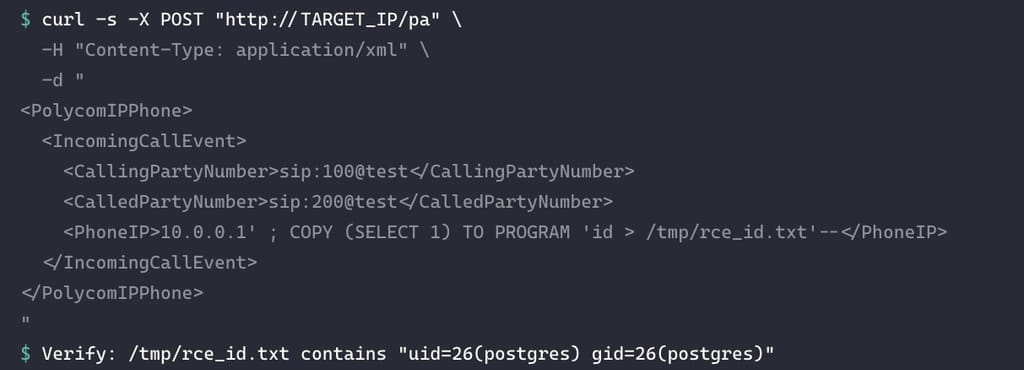
The vulnerability, as detailed by Horizon3, stems from how the /pa endpoint processes incoming XML messages. This endpoint is exposed to the internet and is designed to parse XML data containing specific key-value pairs. When Switchvox receives a request to relay information to another phone system – a common occurrence during incoming or outgoing call events – it extracts a field labeled PhoneIP. The critical flaw lies in the direct concatenation of this PhoneIP value into an unparameterized SQL query. This direct insertion, without proper sanitization or parameterization, opens the door for SQL injection attacks.
Attackers can craft malicious XML requests containing specially designed PhoneIP values. These values are not merely IP addresses but are injected with SQL commands. When the Switchvox system processes these commands, it executes them as if they were legitimate database queries. Horizon3 researchers have successfully demonstrated that this SQL injection can be leveraged remotely to execute arbitrary operating-system commands. This is achieved by sending a carefully constructed XML request, often facilitated by tools like curl, to the vulnerable endpoint. The consequence of such an exploit is profound: it allows attackers to bypass authentication and gain a foothold within the Switchvox system, paving the way for further malicious activities, including the deployment of reverse shells.
A Chronology of Exploitation and Discovery
The discovery of CVE-2026-9586 was not an isolated event. Security researchers at Horizon3 identified a total of 12 vulnerabilities within the Sangoma Switchvox platform. They promptly reported these findings to Sangoma on April 10, initiating a coordinated disclosure process. Sangoma responded by developing and releasing a patch, version 8.4.0.2, on July 14, effectively addressing all 12 reported vulnerabilities.
However, the timeline took a concerning turn in late August. On August 30, Horizon3’s sophisticated honeypot systems, designed to detect and analyze cyber threats, observed a surge of malicious activity. Multiple Switchvox systems were targeted in rapid succession, all originating from a single, identifiable IP address: 176.65.148.184. This concentrated wave of attacks was a clear indicator of active exploitation of the CVE-2026-9586 vulnerability.
The primary objective of these observed attacks was to establish a reverse shell. A reverse shell is a type of shell session where the compromised system initiates a connection back to the attacker’s machine, effectively reversing the typical client-server relationship. This allows attackers to maintain persistent access and control over the victim’s system. In the observed attacks, the malicious actors successfully executed an initial payload on the compromised Switchvox systems. Following this, they proceeded to gather intelligence about the top running processes on the affected systems. This collected data was then transmitted to a remote server, encoded in a base64 format for obfuscation.
The rapid and coordinated nature of these attacks, emanating from a single source IP and targeting multiple systems, led Horizon3 to issue a strong advisory. Their analysis suggests that the exploitation is widespread and aggressive.
Supporting Data and Scope of the Threat
The scale of the potential compromise is significant, particularly considering the widespread adoption of the Sangoma Switchvox platform. According to Horizon3’s research, Shodan, a search engine for Internet-connected devices, has identified approximately 4,000 Switchvox devices that are currently exposed to the public internet. A substantial portion of these devices are located within the United States, highlighting the potential impact on North American businesses.
The researchers emphasized that the observed exploitation was specifically targeting CVE-2026-9586. They have not observed any active exploitation attempts related to the remaining 11 vulnerabilities they discovered. This singular focus on the SQL injection flaw suggests that it is the most readily exploitable and perhaps the most valuable vulnerability for attackers seeking immediate access.
Official Responses and Mitigation Strategies
In light of the active exploitation of CVE-2026-9586, Sangoma, the vendor of the Switchvox platform, has provided a clear directive to its users. System administrators are strongly urged to upgrade their Switchvox installations to version 8.4.0.2 or a later release as soon as possible. This patch contains the necessary fixes to close the vulnerability and prevent further exploitation.
Beyond immediate patching, Horizon3 has also provided guidance for system administrators to detect potential compromises that may have already occurred. Organizations are advised to meticulously examine their system logs, specifically looking for suspicious entries within the /var/log/switchvox/db-quirks.log file. Additionally, network administrators should monitor for any unusual network connections originating from or destined for the observed attacker IP address (176.65.148.184), particularly on port 39323, which appears to be associated with the reverse shell communication.
Broader Impact and Implications for Business Communications
The active exploitation of CVE-2026-9586 carries significant implications for businesses that rely on Sangoma Switchvox for their communication infrastructure. The ability for attackers to gain remote code execution through an unauthenticated SQL injection vulnerability means that even systems without strong administrative passwords could be compromised.
The deployment of reverse shells allows attackers to maintain a persistent presence within the network, enabling them to:
- Exfiltrate sensitive data: Business communications, including customer information, proprietary discussions, and financial details, could be stolen.
- Conduct further reconnaissance: Attackers can use the compromised Switchvox system as a pivot point to explore other internal network resources, identify further vulnerabilities, and escalate their privileges.
- Launch further attacks: The compromised system could be used to launch phishing campaigns, spread malware, or conduct denial-of-service attacks against other organizations.
- Disrupt business operations: Attackers could disable or manipulate the phone system, leading to significant downtime and financial losses for the affected business.
The fact that this vulnerability is unauthenticated is particularly concerning. It means that an attacker does not need any prior credentials or knowledge of the system’s internal workings to initiate the attack. This significantly lowers the barrier to entry for malicious actors.
The rapid exploitation observed by Horizon3 suggests that threat actors are actively scanning for and targeting vulnerable systems. This underscores the critical importance of timely patching and robust security monitoring. Organizations that have not yet upgraded their Switchvox systems are at immediate risk. The continuous monitoring of network traffic and system logs for indicators of compromise is no longer just a best practice; it has become an essential defensive measure in the face of such active and widespread threats.
The discovery and responsible disclosure of these vulnerabilities by researchers like Horizon3 are invaluable in protecting organizations from cyber threats. However, the speed at which these vulnerabilities are being weaponized and exploited highlights the persistent cat-and-mouse game between cybersecurity professionals and malicious actors. Businesses must remain vigilant, proactive, and committed to maintaining a strong security posture to safeguard their critical communication systems and sensitive data. The incident serves as a potent reminder that even seemingly niche enterprise software can be a critical point of failure if not adequately secured and maintained.