Vera Intan Clara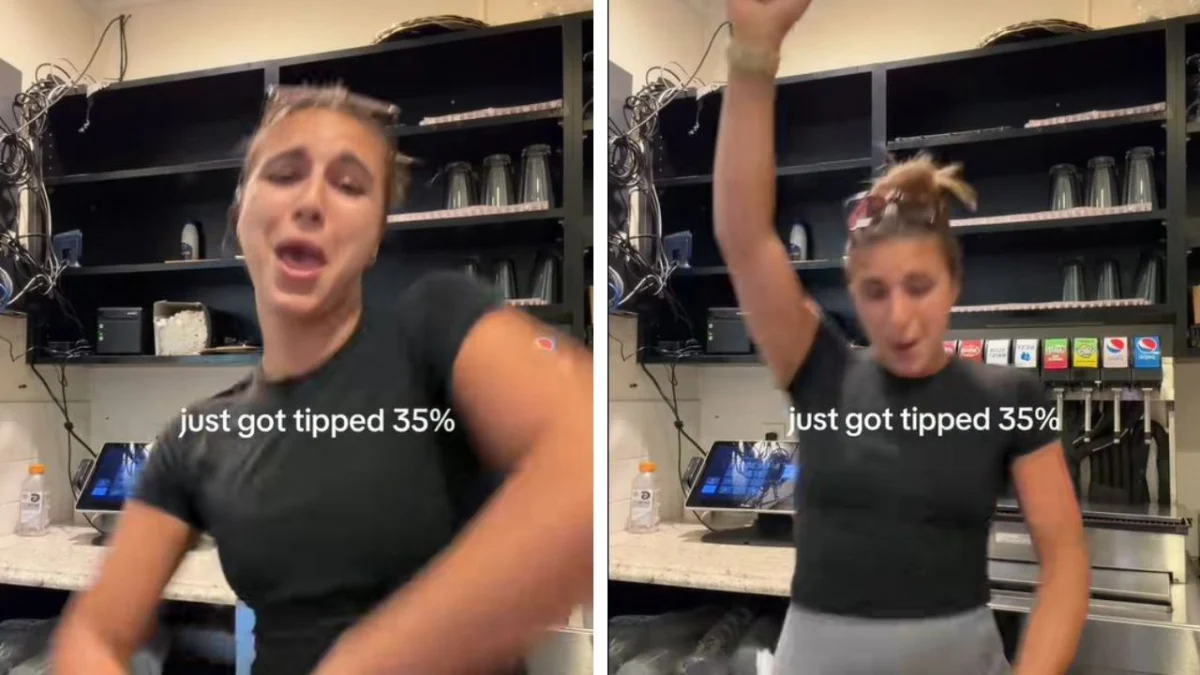
A celebratory TikTok video, originally posted by creator @itsalliebrown, rapidly garnered over 310,000 views and more than 2,600 comments, transcending its initial depiction of a server’s elation over a generous 35% tip to ignite a far broader and often contentious national conversation about the sustainability and fairness of American tipping norms. The video, showing a server dancing jubilantly in a restaurant kitchen, became a digital touchstone, drawing a diverse array of reactions that echoed growing frustrations and confusion surrounding the increasingly complex landscape of gratuities in the United States. This public discourse highlights a palpable tension between the economic realities faced by service industry workers and a burgeoning sense of "tipping fatigue" among consumers, prompting a critical examination of whether the practice has shifted from a discretionary reward for exceptional service to an implicit, mandatory charge.
The Genesis of a Viral Discussion
The initial TikTok post by @itsalliebrown, captured a moment of pure, unadulterated joy. The video showcased a server’s spontaneous dance of celebration, an authentic reaction to receiving a substantial 35% tip—a figure significantly higher than the widely accepted 15-20% standard. This public display of gratitude and relief quickly resonated with viewers, many of whom initially shared in the server’s happiness. However, as the video’s reach expanded across social media platforms, the tone in the comment section began to shift. What started as an affirmation of generous patronage quickly evolved into a forum for a much larger, more systemic critique of tipping culture itself. Commenters began to question the underlying expectations, the pressure felt by diners, and the economic structures that necessitate such reliance on tips for service industry professionals.
America’s Unique Tipping Conundrum: A Historical and Economic Perspective
To understand the intensity of the current debate, it is crucial to delve into the historical and economic foundations of tipping in the United States. While tipping has roots in medieval Europe, where servants were given small sums for good service, its widespread adoption in America post-Civil War took on a distinct character. Many historians point to its origins in the Pullman Company, which employed formerly enslaved individuals as porters and waiters, paying them very little and encouraging passengers to tip. This practice, initially resisted by some Americans who viewed it as undemocratic, gradually became ingrained, particularly in the hospitality sector.
Crucially, the American system differs starkly from many other parts of the world due to the existence of a "tipped minimum wage." Federally, the minimum wage for tipped employees has been $2.13 per hour since 1991. Employers are permitted to pay this reduced wage as long as an employee’s tips, combined with their direct wage, meet or exceed the standard federal minimum wage, currently $7.25 per hour. If tips do not make up the difference, the employer is legally obligated to cover it. However, this system places the primary burden of ensuring a living wage for service staff directly onto the consumer, rather than solely on the employer. This economic reality is the bedrock of the argument that tipping in the U.S. functions more like a "hidden tax" or an obligatory surcharge than a genuine expression of appreciation.
One commenter on @itsalliebrown’s video articulated this sentiment clearly, stating, "i dont get americas tipping culture, is it like a tax now and not a tip? no i meant some americans think its mandatory to tip and if they dont tip theyll be mad as hell so they act like its a tax" [sic]. This observation highlights the social pressure diners often feel, where not tipping, or tipping below a perceived standard, can lead to discomfort, judgment, or even confrontation, regardless of service quality. Another echoed this, asserting, "pretty much, yes. its is expected and stupid. there is no reason it has to be this way other than greed" [sic], pointing a finger at the system itself and the businesses that benefit from it by externalizing wage costs.
Recent Flashpoints: Incidents Fueling the Debate
The discussion ignited by @itsalliebrown’s video is not an isolated incident but rather the latest in a series of public confrontations and viral moments that have brought America’s tipping practices under intense scrutiny. These incidents serve as poignant illustrations of the deep divisions and frustrations among consumers, workers, and businesses.
The Taverna Opa Orlando Controversy: Earlier this year, an employee from Taverna Opa Orlando shared their frustration in a separate video that quickly went viral. The server recounted an experience where a party of 15 arrived just 15 minutes before closing, incurring a $700 bill, yet left only a $50 tip. This amounted to a meager 7% tip, significantly below industry standards, especially for a large party requiring extensive service. The server’s impassioned plea, "For those who don’t tip, don’t go out," encapsulated the exasperation felt by many service professionals who depend heavily on tips to make ends meet. This incident highlighted the financial vulnerability of servers and the perceived disrespect from some diners who fail to acknowledge the effort involved in hospitality work.
Burdell Restaurant’s Mandatory Service Charge: Last winter, a Reddit post concerning Burdell, a restaurant in Oakland, California, sparked a similar wave of public frustration. Burdell implemented a mandatory 20% service charge on all bills, a policy designed to ensure fairer wages for all staff, including kitchen and back-of-house employees who typically do not receive tips. While some diners and commenters supported this move as a transparent way to pay workers a living wage, others viewed it as an unwelcome and confusing additional cost, arguing that it eroded the traditional concept of tipping as a reward for good service. The debate centered on whether businesses or customers ultimately bear the responsibility for ensuring service workers are compensated fairly, and whether mandatory charges are a justifiable solution or simply another "hidden tax." This move represents a growing trend among restaurants attempting to move away from the traditional tipping model.
These events, alongside the constant stream of comments on viral videos like @itsalliebrown’s, underscore a significant societal friction. They reveal a landscape where consumer expectations, worker compensation, and business models are increasingly at odds, making the future of tipping in the U.S. uncertain.
The Economic Realities and Broader Implications
The financial implications for tipped workers are stark. As one commenter on the viral TikTok noted, "’tipping culture’ doesn’t apply to severs btw! because they get paid like 3 dollars an hour, so they are depending on your tips!" [sic]. This highlights the critical dependency of servers on customer gratuities. Many service professionals view tips not as extra income but as their primary wage, essential for covering basic living expenses. The instability of this income, which can fluctuate wildly based on customer generosity, economic conditions, and even the time of year, adds a significant layer of stress and precarity to their livelihoods.
Supporting Data and Trends:
- Average Tip Percentages: While the standard pre-pandemic tipping rate hovered around 15-20%, data from various payment processors like Square and Toast indicates an upward creep in average tip percentages. In 2022, the average tip percentage at full-service restaurants across the U.S. reportedly reached 19.6%, a slight increase from previous years. However, this average masks significant variations and the growing consumer resistance.
- "Tip Creep" Beyond Restaurants: The expansion of tipping requests to new sectors, often dubbed "tip creep," has further exasperated consumers. Requests for tips at coffee shops, self-checkout kiosks, and even for services like picking up takeout orders have become increasingly common, leading to confusion about when and how much to tip. A 2023 Bankrate survey found that 66% of U.S. adults have a negative view of tipping, with 30% saying tipping culture has gotten "out of control."
- Impact of Inflation: The current inflationary environment exacerbates the problem from both sides. For workers, rising costs of living mean they need higher tips to maintain their standard of living. For consumers, increased prices for goods and services, including restaurant meals, make them more sensitive to additional costs, including tips, leading to a feeling of being squeezed.
Perspectives from Stakeholders:
- Servers: For most servers, tips are not discretionary bonuses but a fundamental component of their income. They advocate for higher tipping percentages and consistent gratuities, often feeling that customers do not fully grasp the financial implications of low tips or the physical and emotional demands of their work. They also face the burden of "wage theft" if employers do not make up the difference when tips fall below the minimum wage.
- Restaurant Owners: Many restaurant owners operate on razor-thin margins. The tipping system allows them to keep menu prices relatively lower than they might be if they paid all staff a full minimum or living wage, which could deter customers. However, some forward-thinking owners are experimenting with service charges or higher base wages to create more equitable pay structures and reduce reliance on unpredictable tips, even if it means raising menu prices.
- Customers: A significant portion of the public expresses "tipping fatigue." They desire transparency in pricing and fairness, feeling increasingly pressured to subsidize worker wages rather than rewarding exceptional service. There is also confusion about appropriate tip amounts, especially with varying expectations across different types of establishments.
Global Comparisons and Alternative Models
The American tipping system stands in stark contrast to practices in many other countries, offering insights into potential alternative models. The commenter from Australia highlighted this difference, stating, "whats the normal tipping amount? I’m Australian and we pay servers a livable wage so tipping is non existent the closest you’d get is rounding up a bill by like, 2 bucks."
- Australia: In Australia, hospitality workers are paid a relatively high minimum wage (e.g., around AUD $23.23 per hour as of July 2023 for adults), ensuring they earn a living wage regardless of tips. Consequently, tipping is not expected and is rare, typically limited to rounding up a bill or leaving a small token of appreciation for truly outstanding service.
- Europe: Many European countries, such as France, Germany, and Italy, often include a service charge directly in the bill, or have higher base wages for service staff. Tipping, when it occurs, is usually a small, discretionary amount (e.g., 5-10% or simply rounding up) for exceptional service, and is not a primary component of a worker’s income.
- Japan: In Japan, tipping can even be considered an insult, as excellent service is considered part of the job and is compensated by a fair wage.
These global examples demonstrate that successful hospitality industries can thrive without relying on a system where customer gratuities form the bulk of a worker’s pay. While adopting such models in the U.S. would involve significant economic and cultural shifts, they provide a framework for discussions about ensuring fair compensation for service workers without placing the entire burden on the consumer.
Implications and the Path Forward
The ongoing debate spurred by viral moments like @itsalliebrown’s video has profound implications for the future of the American service industry.
- For the Industry: Restaurants may increasingly explore alternative compensation models, such as mandatory service charges, higher base wages with no tipping, or tip pooling systems that distribute gratuities more equitably among all staff, including kitchen and support staff. These shifts could lead to higher menu prices but potentially offer greater wage stability for workers and more transparent pricing for consumers.
- For Workers: A move away from the traditional tipping model could provide workers with more stable and predictable income, reducing their vulnerability to the whims of customers or fluctuations in business. However, some high-performing servers who currently earn significantly above minimum wage through tips might see a reduction in their overall income.
- For Consumers: Consumers are increasingly demanding transparency and clarity. A shift to service charges or higher base wages could alleviate "tipping fatigue" and confusion, allowing diners to understand the full cost of their meal upfront without feeling pressured to calculate additional gratuities.
- Legislative and Policy Considerations: The debate also highlights the need for potential legislative action. Advocates for workers’ rights continue to push for an end to the federal sub-minimum wage for tipped workers, arguing that all employees should earn at least the full minimum wage before tips. This would fundamentally alter the economic landscape of the service industry.
The server’s celebratory dance over a generous tip, captured and shared on TikTok, has inadvertently become a microcosm of a much larger, deeply entrenched societal and economic issue. It underscores the precarious balance between the financial needs of service workers, the operational demands of businesses, and the evolving expectations and frustrations of consumers. As the conversation intensifies, it points towards an undeniable need for a comprehensive reevaluation of America’s tipping culture, potentially paving the way for systemic changes that could redefine how hospitality workers are valued and compensated in the future. The question is no longer merely how much to tip, but whether the very system of tipping is still fit for purpose in the 21st century.