Chandra Wibowo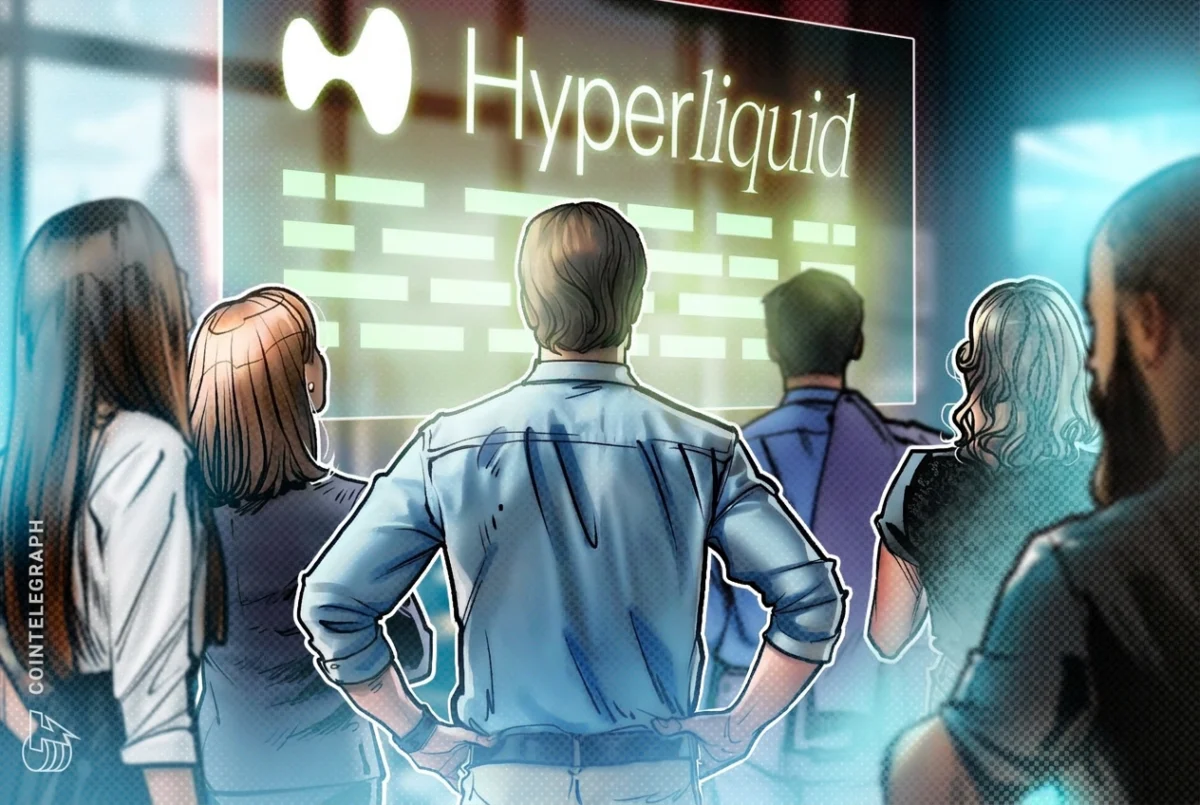
The rapid ascent of decentralized exchanges (DEXs) like Hyperliquid, a layer-1 blockchain platform renowned for its perpetual futures trading, has brought to the forefront a critical question: how will regulatory bodies navigate this burgeoning sector? Ran Neuner, founder of Crypto Banter, has pinpointed regulatory ambiguity as the most significant risk facing Hyperliquid, forecasting an inevitable increase in government oversight for decentralized platforms. His insights, shared on Cointelegraph’s Chain Reaction podcast, highlight a growing concern within the crypto industry as regulators worldwide begin to formalize frameworks for centralized entities.
Neuner’s perspective suggests a predictable trajectory for regulatory action. "The governments have just started to regulate centralized exchanges," he stated, referencing initiatives like the Markets in Crypto-Assets (MiCA) regulation in Europe. "There’s MiCA licensing, et cetera, et cetera. And I think that when that’s done, they come in for the decentralized exchanges." This phased approach implies that as the rules for traditional crypto intermediaries solidify, the focus will inevitably shift to the more complex and arguably less regulated decentralized ecosystem. The core of Neuner’s concern lies in the current "unknowns" surrounding how these decentralized autonomous organizations (DAOs) and their underlying protocols will be classified and governed.
Hyperliquid, in particular, has captured significant market attention. As of recent data, it leads the decentralized perpetual futures exchange sector, boasting an impressive trading volume of approximately $223 billion over the preceding 30 days, according to analytics from DeFiLlama. This substantial market presence underscores its importance within the DeFi landscape and, consequently, its potential as a target for regulatory scrutiny. The platform’s success is built upon its innovative technology and the network effects it has cultivated, attracting a large user base seeking efficient and liquid trading environments.
The Unfolding Regulatory Landscape
The current regulatory environment for cryptocurrencies is characterized by fragmentation and evolution. While some jurisdictions have moved towards comprehensive frameworks, others are still in the early stages of defining their approach. The implementation of MiCA in the European Union, for instance, aims to establish a harmonized set of rules for crypto-asset service providers, bringing greater clarity and consumer protection. However, the United States, a major hub for financial innovation and cryptocurrency adoption, has a more complex regulatory patchwork, with various agencies like the Securities and Exchange Commission (SEC) and the Commodity Futures Trading Commission (CFTC) asserting jurisdiction over different aspects of the digital asset market.
Neuner’s prediction that decentralized exchanges will be the next frontier for regulators is not without precedent. Historically, financial innovation often outpaces regulatory frameworks. As new technologies emerge and gain traction, governments typically respond by seeking to adapt existing laws or create new ones to mitigate risks related to financial stability, investor protection, and illicit activities. The decentralized nature of DEXs, with their peer-to-peer trading mechanisms and often pseudonymous operators, presents unique challenges for traditional regulatory approaches that rely on identifying and licensing central intermediaries.
The implications of increased regulation for platforms like Hyperliquid could be far-reaching. Depending on the nature of the regulations, it could involve requirements for Know Your Customer (KYC) and Anti-Money Laundering (AML) compliance, capital reserves, or even restrictions on the types of financial products that can be offered. For a truly decentralized protocol, implementing such measures without compromising its core principles of decentralization and user privacy could prove to be a significant technical and operational hurdle.

Competitive Moat: Network Effects and Liquidity
Despite the looming regulatory uncertainties, Neuner expressed a more optimistic outlook regarding Hyperliquid’s competitive resilience. He argued that the platform’s success is not merely a product of its technological architecture but also a consequence of powerful network effects. These effects, akin to those seen in established tech giants like Uber, create a virtuous cycle where more users attract more liquidity, which in turn attracts even more users.
"You can’t copy a network," Neuner emphasized, drawing a parallel to the ride-sharing industry. "There can be a thousand competitors to Uber. How many of them are going to succeed? Hardly any." This analogy underscores the idea that while competitors can replicate the underlying technology of a decentralized exchange, they struggle to replicate the established ecosystem of users, liquidity providers, and market participants that give a platform its competitive edge.
For trading platforms, this translates directly to liquidity. Deeper liquidity means that traders can execute large orders without significantly impacting the market price, and they can enter and exit positions with greater ease and at more favorable rates. This is particularly crucial for perpetual futures trading, where high leverage and frequent trading are common. As Neuner explained, "When something is a network, naturally users will flock to the busiest or the best node." Hyperliquid, by attracting a critical mass of traders and liquidity, has thus created a strong barrier to entry for newcomers.
The data from DeFiLlama, showing Hyperliquid’s dominance in perpetual futures trading volume, supports this assertion. This high volume is a direct indicator of deep liquidity, attracting more sophisticated traders and further solidifying the platform’s position. The challenge for competitors is not just to build a functional DEX but to bootstrap sufficient liquidity and user adoption to rival Hyperliquid’s established network.
A Glimmer of US Market Access?
Intriguingly, while Neuner voiced concerns about global regulatory trends, there have been recent developments suggesting a potential pathway for Hyperliquid to gain compliant access to the United States market. In August, remarks attributed to former President Donald Trump indicated that CFTC Chair Michael Selig was actively working to facilitate Hyperliquid’s entry into the US in a "fully compliant and legal fashion."
This development sent ripples through the market, with the HYPE token, the native token of the Hyperliquid ecosystem, experiencing a notable surge of approximately 20% in the 24 hours surrounding these remarks. At that time, HYPE was trading around $70. The announcement, however, lacked specific details regarding the proposed regulatory framework, whether a formal application had been submitted to the CFTC, or the timeline for a potential launch of a compliant service. Neither the CFTC nor Hyperliquid had released a formal proposal or detailed explanation of how US access would function.
This potential US market entry represents a complex duality for Hyperliquid. On one hand, it could unlock a massive and lucrative market, significantly expanding its user base and trading volume. On the other hand, it would necessitate adherence to stringent US financial regulations, potentially impacting the platform’s decentralized ethos and operational model. The success of this endeavor would depend heavily on the specific terms of compliance and Hyperliquid’s ability to adapt without alienating its existing community.

As of the time of reporting, the HYPE token has continued its upward trajectory. Trading around $82, it has demonstrated remarkable year-to-date growth of over 220%, according to CoinGecko. Its market capitalization stands at approximately $18.2 billion, with a fully diluted valuation nearing $78.4 billion. This robust performance suggests strong investor confidence in Hyperliquid’s long-term prospects, even amidst the prevailing regulatory uncertainties.
Broader Implications for the DeFi Sector
The situation with Hyperliquid serves as a microcosm of the broader challenges and opportunities facing the decentralized finance (DeFi) sector. As DeFi continues to mature and attract substantial capital, regulatory bodies worldwide are grappling with how to integrate these novel financial systems into existing legal and economic structures. The core tension lies between the decentralized, permissionless, and often pseudonymous nature of DeFi and the regulatory imperative for transparency, accountability, and consumer protection.
Neuner’s assessment highlights that the regulatory focus is likely to escalate. The progress made in regulating centralized crypto exchanges provides a blueprint, albeit an incomplete one, for how regulators might approach decentralized platforms. The key will be whether regulators can develop frameworks that are both effective in mitigating risks and adaptable enough not to stifle innovation.
The concept of "network effects" as a competitive differentiator is also a crucial takeaway. In the digital age, genuine network effects are incredibly difficult to replicate. For blockchain protocols and decentralized applications, building a thriving ecosystem of users, developers, and service providers is often more valuable than the underlying technology itself. Hyperliquid’s success in this regard positions it favorably against many nascent competitors, provided it can navigate the regulatory landscape.
The potential for Hyperliquid to secure a compliant path into the US market, if realized, could set a precedent for other decentralized platforms seeking to engage with major regulated economies. It would signal a growing maturity in regulatory approaches, moving beyond outright bans to more nuanced forms of integration. However, the specifics of such a pathway will be critical. A regulatory framework that demands excessive centralization or compromise of core DeFi principles could prove detrimental.
In conclusion, Ran Neuner’s insights underscore the critical juncture at which Hyperliquid and the broader DeFi sector find themselves. While technological innovation and strong network effects provide a solid foundation for growth, the evolving regulatory environment represents the most significant challenge. The coming months and years will likely see increased dialogue and action from regulators, forcing platforms like Hyperliquid to adapt, innovate, and potentially redefine their operational models to coexist within the established financial order, all while striving to maintain the decentralized ethos that underpins their appeal. The outcome of these efforts will have profound implications for the future trajectory of decentralized finance globally.