Clarissa Hana
Google has issued an urgent security alert, announcing the release of an update for its Chrome browser to patch a critical, high-severity zero-day vulnerability within the V8 JavaScript and WebAssembly engine. This flaw, designated CVE-2026-85046, has reportedly been actively exploited in the wild, prompting Google to expedite the release of a fix. The update also addresses eleven additional security vulnerabilities, underscoring the ongoing battle against sophisticated cyber threats targeting widely used software.
The newly identified vulnerability, CVE-2026-85046, is categorized as a "type confusion" flaw. This type of vulnerability arises when software incorrectly interprets one data type as another. In the context of a web browser engine like V8, this misinterpretation can lead to memory corruption, a common precursor to more severe security breaches. The discovery and responsible disclosure of this critical issue are credited to independent security researcher Salvatore Gulizia, who is known in cybersecurity circles by the online alias "Serotav." His timely report allowed Google to develop and deploy a patch before the vulnerability could be more widely weaponized.
Google’s advisory, published on September 1, 2026, explicitly states, "Google is aware that an exploit for CVE-2026-85046 exists in the wild." This admission highlights the immediate threat posed by the vulnerability. While Google has confirmed the existence of exploitation, the company has deliberately refrained from disclosing specific technical details or exploitation methods. This strategic silence is a common practice among cybersecurity vendors when addressing zero-day exploits. By withholding detailed information, Google aims to prevent potential attackers from refining their methods or discovering similar vulnerabilities in other systems before the majority of users can apply the security update. This approach allows users and developers of dependent software projects sufficient time to implement the necessary patches, thereby minimizing the window of opportunity for malicious actors.
The V8 engine is a cornerstone of Chrome’s functionality, responsible for compiling and executing JavaScript and WebAssembly code that powers the vast majority of modern websites. A type confusion vulnerability within V8 can therefore be triggered through a specially crafted HTML page containing malicious JavaScript. Successful exploitation could potentially grant attackers the ability to execute arbitrary code remotely within Chrome’s sandboxed renderer process. While the sandbox is designed to isolate browser processes and limit the damage an attacker can inflict, compromising it can still lead to significant security breaches, including data theft, system compromise, and the deployment of further malware.
Beyond the critical CVE-2026-85046, the latest Chrome update, version 152.0.7977.82/.83 for Windows and macOS, and 152.0.7977.82 for Linux, also resolves eleven other security vulnerabilities. Among these are nine classified as high-severity. These include a range of common but dangerous security weaknesses such as "use-after-free" and "out-of-bounds memory" errors. These types of memory corruption vulnerabilities can allow attackers to access or modify data that should be inaccessible, leading to crashes, unexpected behavior, or, in the worst cases, remote code execution. The affected components include Crash Reporting, Network, Compositing, WebGL, CacheStorage, DevTools, and Skia, a graphics library used by Chrome. A race condition in the V8 engine was also patched, indicating ongoing efforts to secure the browser’s core components.
This latest zero-day marks the sixth actively exploited vulnerability that Google has had to address in Chrome since the beginning of 2026. This statistic underscores a concerning trend of increasing zero-day exploitation attempts against major software platforms. While the specific details of the previously patched zero-days are not listed in the immediate report, their recurring nature highlights the persistent and evolving threat landscape. Cybersecurity firms consistently monitor for such vulnerabilities, and the regularity of these high-severity patches serves as a stark reminder of the need for vigilance.
The implications of actively exploited zero-day vulnerabilities extend far beyond individual users. For businesses, such attacks can lead to significant financial losses due to data breaches, operational downtime, and reputational damage. In the case of CVE-2026-85046, the ability to execute remote code within the browser could be leveraged to infiltrate corporate networks, steal sensitive customer data, or deploy ransomware. Given the widespread adoption of Chrome, with its market share consistently hovering around 60% globally for desktop browsing, a successful exploit could have a broad impact.
Timeline and Chronology of the Vulnerability and Patch

The timeline of events surrounding CVE-2026-85046, while not fully detailed by Google, can be inferred from standard cybersecurity incident response protocols.
- Discovery: Security researcher Salvatore Gulizia ("Serotav") likely discovered the type confusion vulnerability within Chrome’s V8 engine. The exact date of discovery is not publicly available.
- Disclosure to Google: Gulizia reported the vulnerability to Google’s security team through their vulnerability reward program or a direct reporting channel. This is a crucial step in the responsible disclosure process.
- Verification and Analysis: Google’s security engineers would have immediately begun verifying the vulnerability, analyzing its potential impact, and developing a patch. This phase often involves replicating the exploit and understanding its root cause.
- Exploitation in the Wild: During or shortly after the verification process, Google became aware that the vulnerability was actively being exploited by malicious actors. This confirmation elevates the urgency of the situation.
- Patch Development and Testing: Google rapidly developed a fix for CVE-2026-85046 and the other eleven identified vulnerabilities. This patch would undergo rigorous internal testing to ensure its efficacy and to prevent introducing new issues.
- Advisory and Release: On September 1, 2026, Google issued an official security advisory confirming the actively exploited zero-day and announced the release of Chrome version 152.0.7977.82/.83. This version addresses the vulnerability.
- Gradual Rollout: The update is being deployed through a gradual rollout process. This means not all users will receive the update simultaneously. The rollout strategy is designed to mitigate the risk of a widespread failure of the update itself and to allow Google to monitor its deployment.
- User Action Required: Chrome users are strongly advised to apply the update as soon as it becomes available to them.
Background: The Evolving Threat Landscape of Zero-Day Exploits
Zero-day vulnerabilities are flaws in software that are unknown to the vendor and for which no patch exists. Attackers who discover these vulnerabilities can exploit them to compromise systems before the vendor is aware of the issue, making them particularly dangerous. The term "zero-day" refers to the fact that the vendor has "zero days" to prepare a defense once the vulnerability is known to attackers.
The increasing frequency of actively exploited zero-days in major software like Chrome is a cause for concern within the cybersecurity community. Several factors contribute to this trend:
- Sophistication of Attackers: State-sponsored hacking groups and advanced persistent threat (APT) organizations possess significant resources and technical expertise, allowing them to discover and weaponize zero-day vulnerabilities.
- Monetization of Exploits: The cybercrime underground has developed a robust market for zero-day exploits, with prices ranging from tens of thousands to millions of dollars, depending on the severity and target.
- Targeting of Widely Used Software: Browsers, operating systems, and popular applications are prime targets because a successful exploit can provide access to a vast number of potential victims.
- Increased Bug Bounty Programs: While programs like Google’s are designed to incentivize researchers to find and report vulnerabilities, they also reveal the existence of such flaws. The challenge lies in patching them quickly enough.
The V8 engine, being a complex piece of software that handles dynamic code execution, is a common area for security research and potential vulnerabilities. Its role in processing web content means it is constantly exposed to untrusted code from the internet.
Supporting Data and Broader Impact
The cybersecurity landscape is characterized by an arms race between defenders and attackers. According to various industry reports, the number of discovered zero-day vulnerabilities has been on an upward trend over the past decade. For instance, Mandiant’s M-Trends report, a widely cited annual publication, has consistently documented the increasing use of zero-day exploits by sophisticated adversaries. While specific numbers for 2026 are still being compiled, the trend suggests a continued escalation.
The implications of this latest Chrome vulnerability are multifaceted:
- User Data Protection: A successful remote code execution attack could lead to the theft of sensitive user data, including login credentials, financial information, and personal correspondence stored or accessed through the browser.
- Network Infiltration: For corporate environments, a compromised browser could serve as an entry point for attackers to gain a foothold within the network, potentially leading to broader data breaches or ransomware attacks.
- Ecosystem Impact: Chrome is the foundation for many other Chromium-based browsers, such as Microsoft Edge, Brave, Opera, and Vivaldi. While these browsers have their own security teams and may implement fixes independently, they often rely on upstream Chrome updates. This means users of these browsers are also at risk until their respective vendors integrate the patches. Google acknowledges this by recommending similar actions for users of Chrome-based browsers, noting that fixes may take a few extra days to arrive.
- Trust and Security: The continuous discovery of actively exploited vulnerabilities can erode user trust in software. Prompt and transparent communication from vendors like Google is crucial in maintaining that trust.
Official Responses and User Recommendations
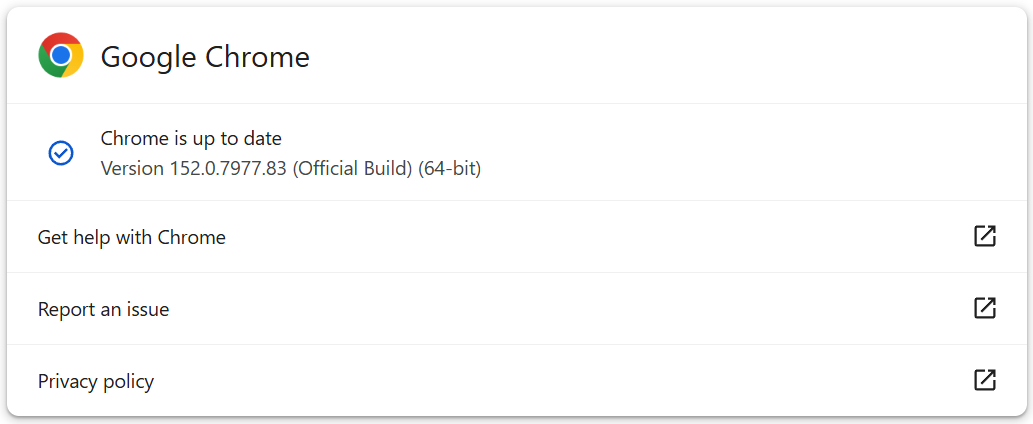
Google’s response to CVE-2026-85046 exemplifies their established security protocol: rapid patching and clear communication to users. The company’s advisory, though brief, conveys the seriousness of the threat and the immediate need for action.
The primary recommendation for all Chrome users is to update their browser as soon as possible. The update process is straightforward:
- Navigate to Settings within the Chrome browser.
- Select the About Chrome option.
- The browser will automatically check for updates. If an update is available, it will begin downloading and installing.
- A browser restart is required for the security patches to be fully applied.
For users of Chrome-based browsers like Microsoft Edge, Brave, Opera, and Vivaldi, the recommendation is to follow similar update procedures provided by those browser vendors. While the underlying vulnerabilities are often shared due to the Chromium codebase, the implementation and release of patches may differ slightly.
The fact that this is the sixth actively exploited zero-day in Chrome this year raises questions about the effectiveness of current security development lifecycles and vulnerability management practices. While Google invests heavily in security, the persistent emergence of these critical flaws suggests that attackers are continuously finding new avenues of attack. The cybersecurity industry continues to explore more advanced security measures, including the use of artificial intelligence and machine learning for threat detection and prevention, and enhanced secure coding practices.
Analysis of Implications
The ongoing wave of zero-day exploits targeting widely used software like Chrome signifies a maturing and increasingly dangerous cyber threat landscape. For the average internet user, this means that simply using a browser and keeping it updated is no longer a guarantee of absolute security. The sophistication of attackers necessitates a layered security approach, including the use of reputable antivirus software, being cautious about suspicious links and downloads, and employing strong, unique passwords with multi-factor authentication.
For organizations, the implications are even more profound. The reliance on web browsers for critical business functions means that browser security must be a top priority. This includes implementing robust endpoint security solutions, regularly patching all software, conducting security awareness training for employees, and having a well-defined incident response plan in place. The swiftness with which attackers can leverage zero-day vulnerabilities means that organizations must be prepared to react to threats not just as they are publicly known, but also in anticipation of novel attack vectors.
The continuous cycle of discovering and patching vulnerabilities, particularly zero-days, highlights the dynamic nature of cybersecurity. It underscores the need for ongoing research, development, and collaboration between security researchers, software vendors, and cybersecurity professionals to stay ahead of evolving threats. As technology advances, so too do the methods used by those who seek to exploit it for malicious purposes. The battle for digital security is a perpetual one, demanding constant vigilance and adaptation.