Sisilia Frederika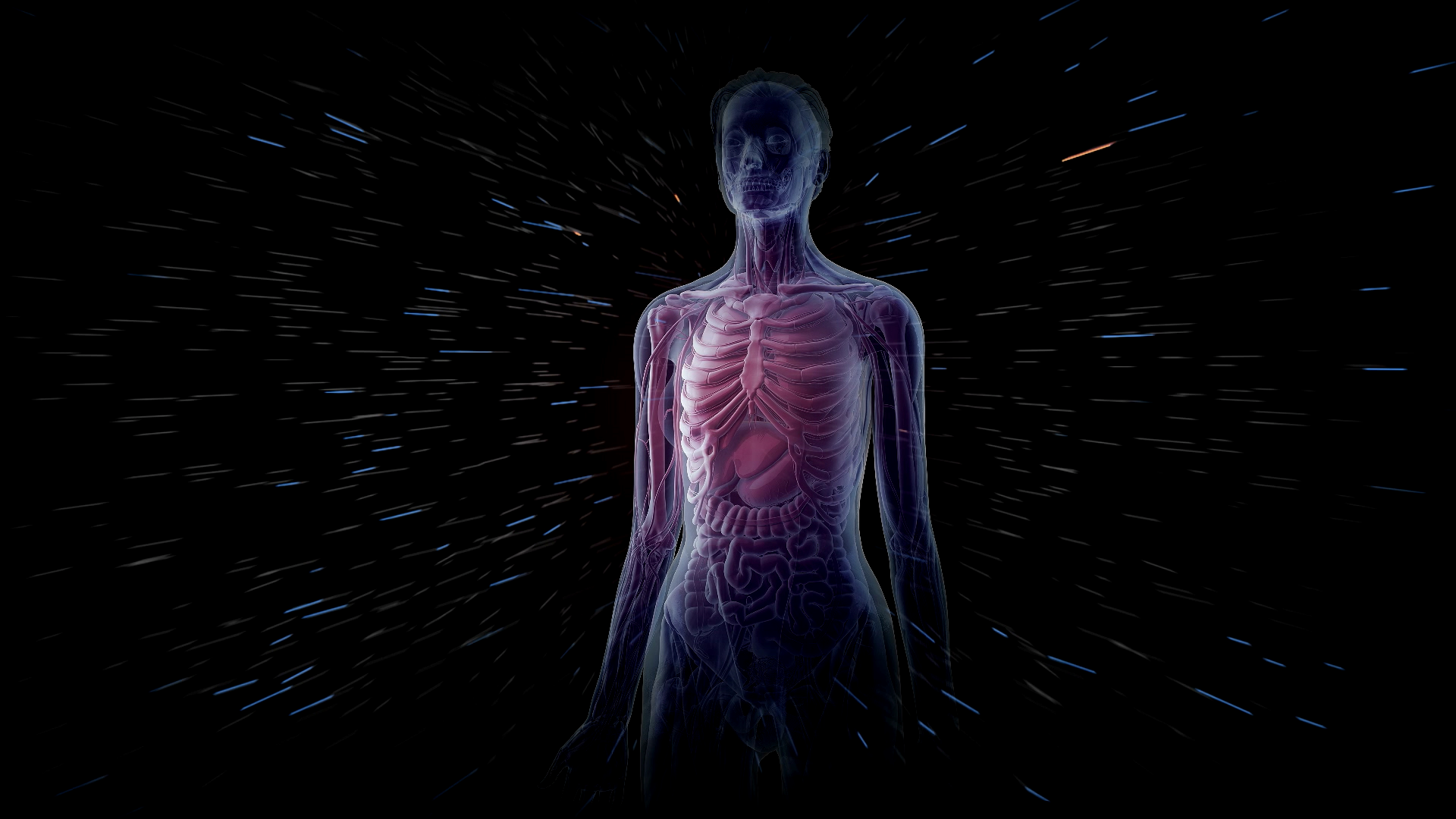
The ambition of sending humans to Mars and beyond faces a silent, microscopic adversary that physical shielding alone may not be able to defeat. A comprehensive new study led by researchers from Oklahoma State University and the University of Texas Health Science Center has illuminated a critical biological phenomenon known as the "radiation-induced bystander effect." This process allows high-energy cosmic radiation to damage cells that were never even touched by a radioactive particle, significantly increasing the risk of cancer and systemic organ failure during long-duration spaceflight. By identifying the specific chemical signaling pathways—namely the NF-κB and TNF-α loops—the research team has provided a potential roadmap for pharmacological countermeasures that could protect the next generation of explorers.
The Lethal Physics of Deep Space: Galactic Cosmic Rays
Deep space is not a true void; it is a high-energy environment saturated with Galactic Cosmic Rays (GCRs). These are not rays in the traditional sense, like light or radio waves, but rather atomic nuclei that have been stripped of their electrons and accelerated to relativistic speeds—approaching the speed of light—by the massive shockwaves of distant supernovae. While Earth’s atmosphere and magnetosphere provide a protective blanket equivalent to several meters of lead, astronauts venturing beyond Low Earth Orbit (LEO) are exposed to the full brunt of this ionizing radiation.
The primary concern for NASA and other space agencies is a specific subset of GCRs known as HZE ions (High-atomic number, High-Energy ions). Among the most destructive of these is the iron-56 (Fe-56) ion. Unlike X-rays or gamma rays, which may pass through biological tissue with relatively sparse interactions, an HZE ion like iron acts as a microscopic "bowling ball." As it traverses a human body, it leaves a dense, continuous trail of ionization. This path of destruction is capable of inducing complex double-strand DNA breaks that are often beyond the cell’s ability to repair correctly, leading to mutations or cell death.
Calculations derived from the Mars Science Laboratory’s Radiation Assessment Detector (RAD), which measured the environment during the Curiosity rover’s journey to Mars, suggest that on a typical three-year round trip, roughly 3% of an astronaut’s cells would be directly struck by an iron ion. While 3% may initially seem manageable, the research published by N. Aravindan and colleagues demonstrates that the damage is far more widespread due to the "bystander effect," where the 3% of "hit" cells communicate their distress to the remaining 97%.
Deciphering the Bystander Effect: The Inflammatory Cascade
To investigate how radiation damage spreads through a biological system, the research team conducted experiments at the NASA Space Radiation Laboratory (NSRL) located within the Brookhaven National Laboratory. They utilized human aortic endothelial cells—the specialized cells that line the interior of blood vessels—and subjected them to controlled beams of Fe-56 ions.
The findings revealed that cells directly struck by these ions do not simply expire or repair themselves in isolation. Instead, the trauma triggers a persistent inflammatory signaling cascade. The primary driver of this response is a transcription factor known as Nuclear Factor kappa-light-chain-enhancer of activated B cells (NF-κB). NF-κB is a central regulator of the human immune response, typically activated during infections or injuries to promote inflammation and cellular survival.
However, in the context of HZE ion exposure, the activation of NF-κB leads to the production of Tumor Necrosis Factor-alpha (TNF-α), a potent inflammatory messenger molecule. The researchers discovered an "autocrine loop" where the TNF-α secreted by the damaged cell binds back to its own surface receptors. This binding reinforces the activation of NF-κB, creating a self-sustaining cycle of inflammatory signaling that can last for several days.
The Mechanism of Contagion: From Endothelial to Epithelial Cells
The most alarming aspect of the study involves how this inflammatory signal "infects" healthy, non-irradiated cells. To demonstrate this, the scientists designed a "transwell" experiment. They placed irradiated endothelial cells in a porous mesh hovering above a population of healthy, non-irradiated epithelial cells (the type of cells that line the lungs and other organs). The two cell populations did not touch, but they shared a common liquid medium through which chemical signals could travel.
Despite the lack of direct radiation exposure, the healthy epithelial cells began to exhibit severe signs of distress. The TNF-α drifting from the irradiated cells triggered a "paracrine" response in the neighbors. These "bystander" cells suffered from:
- Free Radical Spikes: A massive surge in reactive oxygen species that damage cellular structures.
- DNA Damage: A significant increase in double-stranded DNA breaks, identical to the damage seen in cells directly hit by radiation.
- Bypassing Apoptosis: Under normal circumstances, a cell with significant DNA damage undergoes "apoptosis" or programmed cell death—a biological "kill switch" that prevents the cell from becoming cancerous. The incoming TNF-α signals suppressed this kill switch by activating anti-death genes and growth signals.
Essentially, the inflammatory signals from the 3% of hit cells instructed the healthy 97% to ignore their internal safety protocols, allowing potentially cancerous mutations to survive and replicate.
Validation Through Mouse Models and Astronaut Data
To confirm that this cellular behavior translates to complex living organisms, the researchers moved to mouse models. They took the "bystander" epithelial cells—cells that had only been exposed to the chemical signals of irradiated neighbors, never the radiation itself—and implanted them into mice. The result was the growth of substantive tumors. This provided definitive proof that the bystander effect is not just a laboratory curiosity but a viable pathway for oncogenesis (the formation of cancer).
Further validation came from the "Space Omics and Medical Atlas" (SOMA), a massive data set compiled from the SpaceX Inspiration4 mission in 2021. Though Inspiration4 was a short-duration mission (three days) and remained in Earth’s orbit, it reached an altitude of approximately 585 kilometers, higher than the International Space Station (ISS).
Analyses of blood samples and tissue biopsies from the Inspiration4 crew revealed systemic spikes in TNF-α and heightened activity in the same anti-death genes identified in the lab. This suggests that even brief exposure to the space environment begins to trigger the inflammatory cascade that leads to the bystander effect, underscoring the urgency of the issue for multi-year missions to Mars.
A Timeline of Space Radiation Research
The understanding of space radiation has evolved significantly over the last six decades, moving from a focus on immediate radiation sickness to the long-term risks of chronic exposure:
- 1960s (Apollo Era): NASA focused on Solar Particle Events (SPEs). The concern was "solar flares" that could cause acute radiation poisoning. Apollo missions were short enough that GCR exposure was considered a secondary risk.
- 1970s-1990s (Skylab and Shuttle): Research began to look at the cumulative effects of radiation in Low Earth Orbit. The "ALARA" (As Low As Reasonably Achievable) principle was adopted for astronaut safety.
- 2000s-2010s (ISS and Curiosity): Long-duration stays on the ISS and the RAD instrument on the Curiosity rover provided the first high-fidelity data on the GCR environment in deep space.
- 2020s (Artemis and Beyond): The focus has shifted to the molecular biology of radiation. Modern research, such as the Oklahoma State and UT Health study, looks at how radiation interacts with the human genome and immune system.
Strategic Countermeasures: Chemical and Physical Shielding
The identification of the NF-κB and TNF-α pathway provides a "silver lining" for mission planners. If the chemical signaling pathway for the bystander effect is known, it can be interrupted. In their laboratory trials, the researchers successfully broke the cascade by using inhibitors to block TNF-α receptors and halt the activation of NF-κB. This intervention prevented the healthy bystander cells from undergoing cancerous transformations.
This suggests that future astronauts may be prescribed a regimen of "radioprotective" drugs. These would not replace physical shielding but would act as a second line of defense—a biological shield.
On the physical side, the research reinforces the need for advanced materials. Traditional shielding like lead or aluminum is effective against X-rays but can actually be counterproductive against HZE ions. When a heavy iron ion hits a dense metal shield, it can shatter the atoms of the shield itself, creating a "secondary radiation" shower of neutrons and protons that is more dangerous than the original ion.
Current engineering solutions focus on hydrogen-rich materials, which are better at slowing down and absorbing HZE ions without causing secondary spallation. Potential solutions include:
- Water Walls: Surrounding the crew quarters with the ship’s water supply.
- Polyethylene and Polystyrene: Hydrogen-dense polymers that serve as effective, lightweight shielding.
- Active Shielding: The theoretical use of superconducting magnets to create an artificial magnetosphere around a spacecraft, deflecting charged particles away from the hull.
Implications for the Future of Space Exploration
The implications of this research are profound for both government space agencies and the burgeoning commercial spaceflight industry. As companies like SpaceX and Blue Origin aim to make space travel more common, the "flight surgeon" of the future will need to account for the systemic inflammatory effects of GCRs.
The study also has potential "spin-off" benefits for Earth-based medicine. The bystander effect is a known complication in cancer radiotherapy, where healthy tissue surrounding a tumor can become damaged or secondary cancers can form. Understanding how to inhibit the TNF-α cascade could lead to more effective and safer cancer treatments on the ground.
As NASA prepares for the Artemis missions, which will return humans to the lunar surface and eventually establish a base there, the biological risks of radiation remain the "long-pole in the tent" for Mars exploration. This new research suggests that the path to the Red Planet will be paved not just with better rockets, but with a deeper understanding of the chemical conversations occurring between our cells. By silencing the "distress signals" of irradiated cells, humanity may finally be able to endure the long journey through the radiative void of deep space.