Vera Intan Clara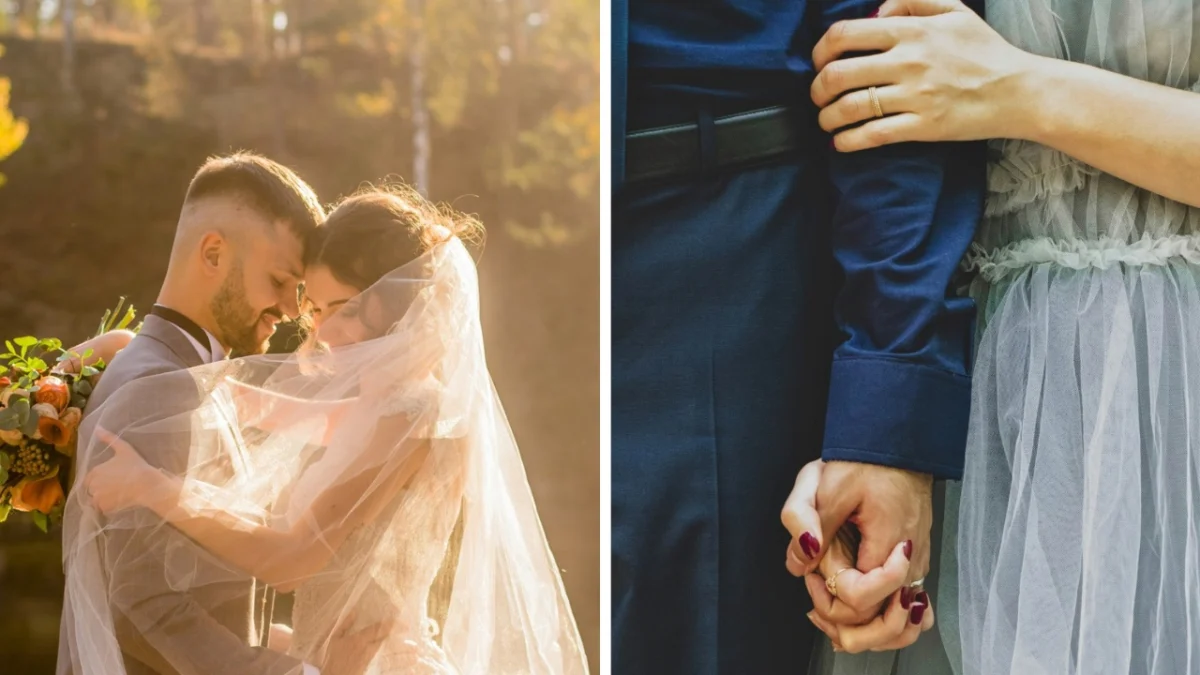
The extraordinary journey of Laura and Brayden Faganello, a couple who navigated the profound complexities of memory loss to fall in love and marry a second time, has once again captivated a global audience, drawing renewed attention after a Reddit post on the r/BeAmazed subreddit brought their unique narrative back into the public consciousness. The post, detailing their improbable romance, swiftly garnered over 10,000 upvotes, sparking widespread discussion about love, resilience, and the very essence of identity. Their story, initially documented by Church News in 2019, offers a compelling exploration of commitment in the face of an unforeseen and devastating personal tragedy.
A Love Interrupted: The Initial Courtship and Unforeseen Tragedy
Laura and Brayden Faganello’s initial romance blossomed like any other, culminating in their marriage in 2017. Their union marked the beginning of a shared life, filled with the usual hopes and dreams of newlyweds. However, their nascent marital bliss was tragically cut short just nine months later when Laura suffered a severe accident. In a life-altering incident, a steel pole struck her head, resulting in a traumatic brain injury that would fundamentally alter the landscape of her memory. The immediate aftermath of the accident left Laura with significant retrograde amnesia, a condition characterized by the loss of memories formed prior to the event. According to the 2019 Church News report, Laura’s memory loss was so profound that she believed herself to be 17 years old, effectively erasing years of her life, including her relationship with Brayden, their courtship, and their wedding day.
For Laura, the man she had married had become an absolute stranger. All shared experiences, intimate moments, and the emotional tapestry woven between them were entirely absent from her consciousness. This sudden void presented an unimaginable challenge, not only for Laura, who found herself disoriented in her own life, but also for Brayden, who was confronted with the agonizing reality of being forgotten by the person he loved most. The psychological and emotional toll of such an event cannot be overstated. Traumatic brain injuries (TBIs) like Laura’s can have wide-ranging effects, impacting not just memory but also personality, cognitive function, and emotional regulation. While physical recovery is often prioritized, the invisible wounds of memory loss can be far more complex and enduring, reshaping personal identity and interpersonal relationships.
Brayden’s Unwavering Commitment: A Path Forged in Empathy
Faced with this heartbreaking reality, Brayden Faganello made a decision that epitomized extraordinary love and patience. Rather than pressuring Laura to recall their shared past, a strategy often counterproductive in cases of amnesia, he chose a path of profound empathy and unconditional support. Understanding that forcing memories could induce stress and further hinder her recovery, Brayden moved into a separate room, creating a physical and emotional space that allowed Laura to heal without feeling overwhelmed by a past she could not access. This act of selflessness was crucial; it acknowledged Laura’s new reality and prioritized her emotional well-being above his own understandable desire for their shared history to be restored.
Laura, grappling with a marriage that felt "dishonest" without the accompanying memories, eventually removed her wedding rings. This was not a rejection of Brayden as a person, but rather an honest reflection of her internal state, a struggle to reconcile her present lack of recollection with the symbolic weight of her marital vows. It was after this difficult but necessary step that she approached Brayden with a proposition that would redefine their relationship: she asked if they could start over. This request, born from a place of vulnerability and a nascent curiosity about the kind stranger who was so devoted to her, set the stage for an unprecedented second courtship.
The Second Courtship: Rebuilding Love from the Ground Up
The decision to "start over" meant embarking on a journey of rediscovery, a conscious effort to rebuild a relationship from its very foundations. Laura and Brayden began dating anew, approaching each encounter with the fresh perspective of two individuals getting to know each other for the first time. They engaged in the rituals of courtship: going on dates, engaging in long conversations, and gradually uncovering each other’s personalities, interests, and values. This period was not merely a repetition of their past; it was a unique evolution, allowing Laura to experience Brayden’s character without the pre-existing framework of their initial relationship. It was an opportunity for her to fall in love with the man he was, independent of the memories that had been lost.
This process required immense patience and vulnerability from both parties. For Brayden, it meant revisiting shared experiences and stories as if they were new, sharing anecdotes of their past without expectation of recognition, and trusting that Laura would, on her own terms, develop feelings for him again. For Laura, it was a journey of trust and exploration, allowing herself to be open to a man who, despite being a stranger, exhibited unwavering kindness and devotion. Slowly, organically, Laura began to fall in love with Brayden a second time. The connection, though initially devoid of historical context, deepened through shared present moments and a growing understanding of each other’s characters. This phenomenon speaks to the idea that love can transcend memory, rooted perhaps in compatibility, shared values, and an inherent resonance between two individuals.
The Second Vows: A Testament to Enduring Love
The culmination of this extraordinary second courtship was Brayden’s second proposal. This time, it was not merely a reaffirmation of vows but a declaration of a love rediscovered and intentionally chosen anew. Laura, having genuinely fallen for Brayden once more, accepted. The couple then held a second wedding ceremony, a powerful symbol of their unique journey and an affirmation of their enduring bond. This second marriage, unlike the first, was built on a foundation of present-day love and a conscious choice to commit, made after overcoming an almost insurmountable obstacle. It stands as a testament to the idea that love can be a conscious act, a choice made daily, even when the past has been erased.
The story of the Faganellos resonates deeply because it challenges conventional notions of love and memory. In a society where shared history often forms the bedrock of relationships, their experience demonstrates that the essence of connection can persist and even flourish under the most challenging circumstances. It highlights the profound power of patience, unconditional love, and the human capacity for resilience.
Public Fascination and Digital Discourse
The resurfacing of the Faganellos’ story on platforms like Reddit ignited a fervent online discussion, illustrating the universal appeal of narratives that explore the depths of human emotion and commitment. Users on r/BeAmazed were particularly struck by the "unusual second romance," with many expressing awe and admiration. Comments poured in, reflecting a spectrum of emotions from wonder to skepticism, yet predominantly leaning towards heartfelt appreciation.
One widely upvoted comment encapsulated the general sentiment, stating, "The patience to have the same courtship again is astounding." This reaction speaks to the extraordinary selflessness displayed by Brayden, and the immense emotional labor involved in re-establishing intimacy and trust. Another user offered a more poetic interpretation: "the brain forgets but the heart remembers," suggesting a deeper, perhaps unconscious, recognition between the couple that transcended explicit memory. Other users expressed hypothetical readiness to embrace such a challenge, with one writing, "I’d absolutely take it," indicating a shared human desire for enduring love even against incredible odds.
The narrative also drew comparisons to popular culture, with several users likening it to films and television shows that explore themes of memory loss and romance, such as "50 First Dates," albeit with the crucial distinction of being a real-life account. This comparison underscores the archetypal nature of their story, touching upon universal human fascinations with destiny and true love.
While the overwhelming response was positive, the nature of online forums also brought initial questions regarding the story’s veracity. One Reddit user initially voiced skepticism about the lack of immediate sourcing, a common and healthy practice in online discourse. However, after further investigation and the discovery of additional reports, including the original 2019 Church News article, the commenter edited their post to acknowledge the story’s authenticity, further solidifying its impact.
Beyond the Faganellos’ specific experience, the discussion extended to personal anecdotes. One user shared a poignant story about a partner who also lost years of memories following an accident, noting that while the relationship undeniably changed, the underlying love persisted. Such personal testimonials amplify the relatability of the Faganellos’ journey, demonstrating that while extreme, their situation touches upon universal themes of navigating life-altering events within a partnership.
Medical and Psychological Perspectives on Amnesia
Laura’s condition, retrograde amnesia, is a complex neurological phenomenon often resulting from traumatic brain injury. Unlike anterograde amnesia, where new memories cannot be formed, retrograde amnesia involves the loss of memories acquired before the onset of the amnesia. The extent and duration of memory loss can vary greatly, ranging from a few moments to decades, and can be partial or complete. In Laura’s case, the loss was significant, impacting her autobiographical memory, which includes personal experiences and facts about her own life.
Medical science acknowledges that while physical recovery from a TBI can be managed, the rehabilitation of cognitive functions, especially memory, is often a protracted and challenging process. Therapies typically involve cognitive rehabilitation, memory strategies, and emotional support. However, spontaneous recovery of extensive lost memories is not guaranteed, and in many cases, some degree of memory impairment may be permanent.
The Faganellos’ story provides a compelling, albeit anecdotal, insight into the non-cognitive aspects of recovery. While Laura’s explicit memories of her initial marriage were gone, her ability to form a new emotional bond with Brayden suggests that underlying compatibility and perhaps a subconscious recognition or comfort level played a role. Psychologists often discuss the concept of "implicit memory," which includes procedural memory (how to do things) and emotional memory (feelings associated with experiences), which can remain even when explicit, declarative memories (facts and events) are lost. It’s plausible that an implicit connection or a fundamental resonance between their personalities contributed to their ability to reconnect.
The Resilience of Human Connection: Broader Implications
The Faganellos’ narrative transcends a mere news item; it serves as a profound meditation on the nature of love, identity, and commitment. It poses a fundamental question: Can one choose the same partner, fall in love with the same person, without the scaffolding of shared history? For Laura and Brayden, the answer was a resounding yes. Their journey suggests that love is not solely predicated on a cumulative record of past events, but can also be an emergent quality, continually forged in the present through shared experiences, mutual respect, and unwavering dedication.
Their story offers valuable insights into the resilience of human connection. In an era often characterized by fleeting relationships and the rapid dissolution of partnerships, the Faganellos exemplify a profound commitment that transcends even the most devastating personal setbacks. It highlights the importance of empathy, patience, and the willingness to adapt and redefine a relationship in the face of unforeseen challenges.
Moreover, it touches upon the philosophical concept of identity. If one’s memories are erased, does one remain the same person? Laura’s journey suggests a continuity of self that exists beyond explicit recollection, allowing her to make new choices and forge new connections based on her present experiences and character. Brayden’s commitment, in turn, demonstrates a love that extends beyond the person he married, embracing the evolving individual she became after the accident.
Ultimately, the story of Laura and Brayden Faganello is a powerful testament to the enduring human spirit and the extraordinary capacity for love to not only survive but to flourish anew, even after being seemingly erased by tragedy. Their unique path, from initial vows to devastating loss, and then to a conscious, courageous choice to rebuild and remarry, continues to inspire and provoke reflection on the true meaning of partnership and the unwavering power of the human heart. Their tale, revisited years later, serves as a timeless reminder that some bonds are simply meant to be, capable of transcending even the deepest fractures of memory.