Galang Taruna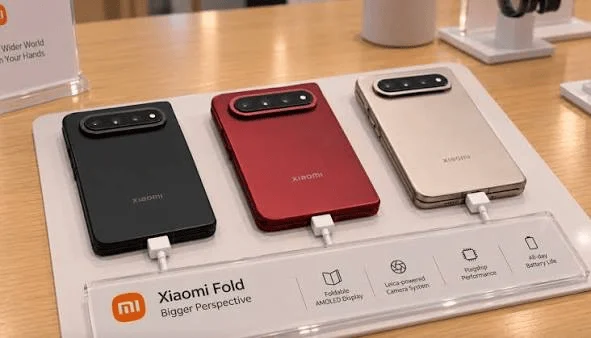
On Monday, September 7th, Xiaomi hosted its highly anticipated "Fall Flagship Launch Event," broadcast live to a global audience from 1:00 PM French time. The event served as a powerful declaration of intent, showcasing not only a new generation of flagship devices but also a profound strategic shift towards proprietary silicon and an audacious expansion into the electric vehicle market. At the heart of the announcements were the groundbreaking Xiaomi 18 Fold, a new flagship tablet in the form of the Xiaomi Pad 9 Pro Max, and, most significantly, the debut of the Xring O3, Xiaomi’s internally developed System-on-Chip (SoC) designed to challenge industry giants like Qualcomm and Apple. The Chinese tech giant also made waves with the unveiling of its new SkyNomad series of range-extended SUVs, signaling a broad and aggressive diversification of its product ecosystem.
The Dawn of a New Era: Xiaomi’s Xring O3 Processor

The highlight of the event, and arguably Xiaomi’s most strategic announcement, was the official introduction of the Xring O3, its latest high-end proprietary SoC. This chip represents a significant leap forward for Xiaomi’s in-house silicon development, underscoring the company’s long-term vision to reduce its reliance on third-party suppliers and exert greater control over the performance and integration of its devices. Lei Jun, Xiaomi’s founder, wasted no time in presenting the Xring O3 alongside two other specialized chips, emphasizing their role as the foundational hardware for the company’s burgeoning AI functionalities across its diverse product range.

The Xring O3 is fabricated using an advanced 3-nanometer process, packing an impressive 24 billion transistors—a 26% increase over its predecessor, the Xring O1. Occupying a die area of 133 square millimeters, this SoC is engineered for raw power. Xiaomi proudly showcased its performance metrics, claiming an unprecedented score of 5.22 million points on AnTuTu v11, which further escalated to 5.61 million points with the more recent AnTuTu v12 benchmark. These figures, if independently verified, would position the Xring O3 as the most powerful mobile processor currently available, significantly surpassing leading Snapdragon chips that typically hover around the 4 million mark.

Beyond raw benchmarks, Xiaomi detailed substantial generational improvements in both CPU and GPU performance and efficiency. The Xring O3 retains a 10-core CPU architecture but boasts a remarkable 60% increase in multi-core performance compared to the Xring O1, achieving 15,221 points on Geekbench 6.5. This directly challenges Apple’s A19 Pro, which typically scores around 10,500 points. Crucially, Xiaomi also claims a 25% reduction in power consumption under low to intermediate loads, promising enhanced battery life.

The GPU, featuring a 16-core design, exhibits an even more dramatic improvement, with an asserted 85% performance boost while simultaneously reducing power consumption by 64%. Such substantial gains across both CPU and GPU are critical for sustaining high-performance tasks like gaming, AI processing, and complex multitasking without excessive thermal throttling or rapid battery drain. Xiaomi further highlighted the Xring O3 as the first mobile SoC to support LPDDR6 memory, developed in collaboration with CXMT—a significant achievement for Chinese memory technology in mass production. This integration reportedly slashes memory access latency to an impressive 82 nanoseconds, a figure Xiaomi asserts surpasses Apple’s A19, attributing this to extensive internal architectural optimizations, including novel metallic routing and "data overpasses" designed to shave off an additional 15 nanoseconds of latency.

Xiaomi’s "all-in AI" architecture philosophy was also a central theme. The company emphasized that AI acceleration isn’t solely confined to a dedicated Neural Processing Unit (NPU); rather, the entire SoC – CPU, GPU, and other blocks – is designed to contribute to AI processing. This integrated approach aims to ensure that all AI functionalities across Xiaomi’s devices benefit from optimized performance and efficiency.

Further reinforcing its chip strategy, Xiaomi introduced two additional specialized processors: the Xring O100 and Xring D1. The Xring O100 is described as a high-bandwidth AI accelerator, featuring a world-first 6nm process with wafer-on-wafer 3D stacking. This innovative vertical logic architecture aims to overcome traditional "memory walls" by enabling near-memory computing and dramatically increasing the density of vertical interconnections (over 2.58 million channels), ultimately promising exceptionally high bandwidth for AI operations. The Xring D1, a 3nm chip, is specifically designed for intelligent driving applications, boasting a 20-core CPU, 16 NPUs, and up to 160GB of unified memory, capable of running local AI models with up to 200 billion parameters. These developments underline Xiaomi’s commitment to a vertically integrated hardware strategy, mirroring the successful model adopted by Apple. The company has already invested over 21 billion yuan out of a planned 50 billion yuan over ten years into its chip development program, a clear indicator of its long-term ambition.

Redefining Foldables: The Xiaomi 18 Fold

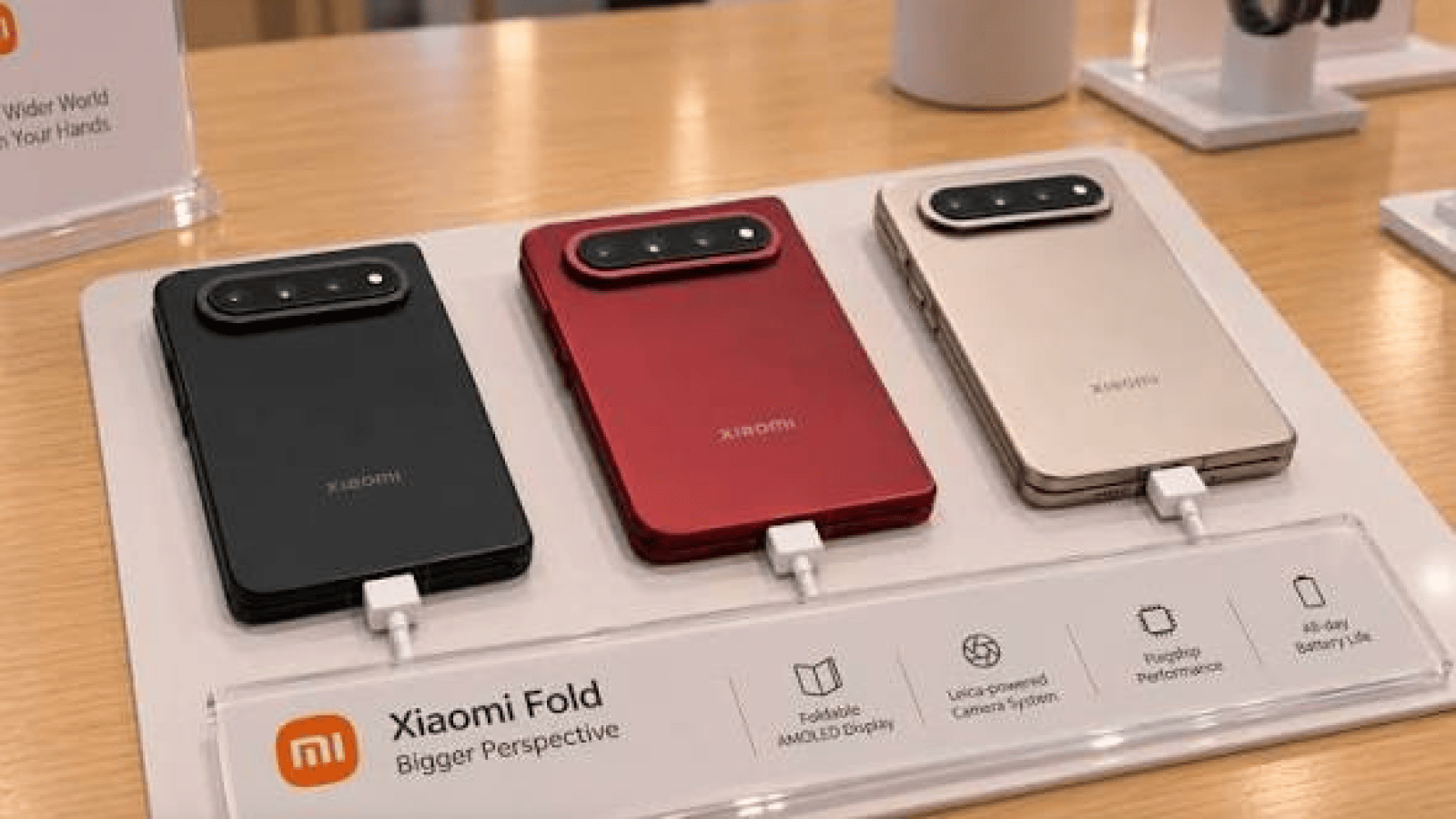
The Xiaomi 18 Fold made its official debut, positioned as a premium "mid-fold" smartphone that seeks to strike a unique balance between the larger book-style foldables and the compact flip-style devices. Xiaomi revealed that the project, two years in the making with 20 months of intensive development, represents its most high-end smartphone to date. The device’s "passport format" is defined by its exterior 5.38-inch display and a larger 7.58-inch internal screen when unfolded. Both displays adhere to a ≈2:1 aspect ratio, similar to A4 and A5 paper, ensuring consistent and ergonomic proportions whether the device is open or closed, particularly optimizing for reading.

Both panels feature Xiaomi’s "Super Pixel" technology, which promises a visual fidelity comparable to a 2K display but with the energy efficiency of a 1.5K panel. Xiaomi highlighted the device’s compact footprint, measuring just 5.02mm thick per half (10.68mm when folded) and weighing a mere 219 grams—reportedly less than an iPhone Pro Max. This compact design is compared to a passport or a small compact camera, emphasizing its portability.

Durability, often a concern for foldable devices, was a key focus. The 18 Fold incorporates a new generation "Dragonbone" hinge, utilizing a three-stage mechanism to create a waterdrop-shaped fold that better protects the internal screen. The chassis is constructed from a reinforced aluminum alloy, complemented by Xiaomi Shield Glass 3.0 on both the front and back. Xiaomi’s rigorous testing regime involved over 80,000 drop tests on more than 1,500 devices, leading to 492 design modifications. This included simulating drops from 253 angles and conducting 12,180 total simulations to identify 178 high-risk angles, which were then physically reproduced using 3D capture systems and high-speed cameras (up to one million frames per second) to observe deformations as minute as 0.01mm.

The internal screen’s durability has been enhanced with a double-layer Ultra-Thin Glass (UTG) structure, combining a 50-micrometer layer with a 30-micrometer layer for a claimed 29% increase in resistance. The tactile layer was also revamped, replacing rigid materials with a flexible organic material offering six times greater elongation capacity, primarily aimed at mitigating localized damage and preventing black spots after impacts. These advancements, Xiaomi asserts, elevate the foldable’s drop resistance to the level of a conventional smartphone.

Powering the 18 Fold is the Xring O3 SoC and LPDDR6 memory. Despite its compact form factor, it integrates a 6,000 mAh battery using stacked cells, boasting a volumetric density of 920 Wh/L. Xiaomi compared its battery life directly to flagship smartphones like the iPhone Pro Max. Enhanced connectivity, including improved reception across different device orientations and announced roaming support in over 220 countries with more than 20 operators, suggests potential global availability.

The camera system is equally impressive, featuring a triple-lens setup co-engineered with Leica. This includes a 200-megapixel main sensor and a 3.5x periscopic telephoto lens. Xiaomi emphasized the system’s wide dynamic range and the ability to crop images significantly while maintaining detail on the large internal screen. The foldable design itself enhances photography, allowing the main screen to serve as a large viewfinder while the external screen provides a live preview for the subject. Multitasking capabilities allow users to capture photos while simultaneously engaging with other apps in split-screen mode, showcasing the device’s versatility.

On the software front, the Xiaomi 18 Fold runs on HyperOS 4, offering advanced multitasking features. Users can display three applications side-by-side, with support for up to six simultaneous applications plus a floating window. The "Super Xiao Ai Inspiration Ball" AI assistant allows users to interact with on-screen elements through voice commands for tasks like asking questions, getting directions, or editing photos. Xiaomi also highlighted the 18 Fold’s suitability for professional use, including presentations, document editing, and video editing, positioning the large internal screen as a productivity tool.

The Xiaomi 18 Fold is available for pre-order in China, with sales commencing on September 10th. Pricing starts at 10,999 yuan (approx. €1,410) for the 12GB + 256GB model, escalating to 14,999 yuan (approx. €1,925) for the 16GB + 1TB LPDDR6 variant. A limited "ceramic" special edition (1,500 units) with 16GB + 1TB storage is priced at 15,999 yuan (approx. €2,050). It is crucial to note that these are direct conversions of Chinese pricing and do not account for potential European taxes or market-specific pricing strategies.

Beyond Smartphones: The Xiaomi Pad 9 Pro Max Tablet

Xiaomi also unveiled the Pad 9 Pro Max, a 13-inch tablet designed to blur the lines between a traditional tablet and a PC. Powered by the Xring O3 SoC, this device achieved an AnTuTu score of 5.61 million points, with Xiaomi asserting its multi-core CPU performance rivals that of computer chips and its GPU performance approaches that of Apple’s M5. The company demonstrated the tablet’s capability to handle demanding tasks, such as processing a million-row Excel file or exporting a 1,000-page PowerPoint to PDF at speeds comparable to a laptop equipped with an M5 chip.

A standout feature of the Pad 9 Pro Max is its DP-IN (DisplayPort Input) support via USB-C, a rarity in tablets. This allows it to function as a secondary touchscreen for a PC, a graphics tablet with a stylus for creative professionals, or even an external monitor for portable gaming consoles, receiving a direct video feed rather than relying on wireless streaming.

The tablet is equipped with a massive 12,000 mAh battery, promising up to 3.9 hours of gaming at 3.2K resolution and 120 frames per second with interpolation, and still retaining 34% charge after eight hours of intensive work. Running HyperOS 4, the Pad 9 Pro Max features several applications adapted for a PC-like user experience. Design-wise, it measures a slim 5.67mm in thickness and weighs 645g, incorporating an enhanced cooling system that boasts an 11% increase in heat dissipation capacity and a reduction of up to 11°C at the chip level.

Pricing for the Pad 9 Pro Max in China starts at 4,799 yuan (approx. €615) for the 8GB + 256GB model, reaching up to 7,899 yuan (approx. €1,010) for the 16GB + 1TB version with a matte screen.

Entering the Automotive Arena: The SkyNomad SUVs

In a bold move that underscores its extensive diversification strategy, Xiaomi officially introduced its new automotive family, the SkyNomad, built upon the Kunlun architecture. The first model presented was the SkyNomad N90, a large range-extended SUV. Xiaomi described it as a "house on wheels," highlighting its modular interior designed for family, professional, or camping use.

The N90 boasts substantial dimensions, measuring 5.285 meters long, 1.998 meters wide, and 1.825 meters high, with a 3.08-meter wheelbase, available in five or seven-seat configurations. The Max version combines two electric motors delivering 310 kW (approximately 422 hp) with a 76 kWh battery and a 1.5-liter petrol engine acting as a range extender. Xiaomi announced an impressive total range of up to 1,700 kilometers for the N90 during the presentation.

More appealing to European markets, the SkyNomad N70 was also unveiled. While still a substantial SUV, it is more compact than the N90, measuring 4.96 meters long, 1.998 meters wide, and featuring a 2.95-meter wheelbase, limited to five seats. This makes it 32.5 cm shorter than the N90, aligning it more with the dimensions of large SUVs sold in Europe. Two configurations are planned for the N70: a base model with a 210 kW electric motor and a 52 kWh LFP battery, and the N70 Max with two motors (310 kW total) and a 76 kWh battery. Both versions utilize the 1.5-liter petrol engine as a generator.

Xiaomi emphasized the N70’s dynamic styling, featuring a slightly sloping roofline, an inclined D-pillar, frameless rearview mirrors, and a LiDAR sensor integrated into a subtle roof protrusion. The brand also highlighted its "Dragonfly" headlights, boasting an impressive range of up to 624 meters. The introduction of the SkyNomad N90 illustrates Xiaomi’s ambition in the XXL family SUV segment, while the N70 signals a more pragmatic approach for potential European market entry, indicating Xiaomi’s consideration of adapting its automotive range for different regional preferences.

Broader Implications and Market Outlook

Xiaomi’s Fall Flagship Launch Event was more than just a product showcase; it was a strategic manifesto. The aggressive push into proprietary chip development with the Xring O3, O100, and D1 chips demonstrates a clear intention to gain technological independence and exert greater control over the performance, efficiency, and AI capabilities of its devices. This strategy directly challenges the established dominance of Qualcomm in the Android ecosystem and positions Xiaomi as a more direct rival to Apple’s vertically integrated model. The claims of outperforming Apple’s A19 Pro and M5 chips, while needing independent verification, signal a formidable ambition.

The Xiaomi 18 Fold, with its unique "mid-fold" design, enhanced durability, and comprehensive feature set, seeks to carve out a distinct niche in the burgeoning foldable market. Its robust engineering and advanced camera system aim to overcome previous compromises often associated with thin foldable devices, potentially driving broader adoption of the form factor. The Pad 9 Pro Max’s PC-like capabilities, especially its DP-IN feature, suggest a concerted effort to expand the utility of tablets beyond mere consumption devices.

Perhaps the most audacious move is Xiaomi’s full-scale entry into the automotive sector with the SkyNomad SUVs. This diversification is a massive undertaking, requiring substantial investment and expertise, and positions Xiaomi as a comprehensive tech conglomerate, much like Huawei, Samsung, or even Apple’s rumored car project. The focus on range-extended hybrids is a pragmatic approach for many markets, promising long-distance travel without range anxiety.

While many of these initial product launches, particularly the automotive offerings and specific configurations, are currently targeted at the Chinese market, Xiaomi’s emphasis on global roaming capabilities for the 18 Fold and the "European-friendly" design of the N70 hint at broader international aspirations. The success of these ventures will depend not only on the technological prowess demonstrated but also on Xiaomi’s ability to scale production, manage complex supply chains, and adapt its offerings to diverse global consumer preferences and regulatory environments. This event unequivocally cemented Xiaomi’s position as a multifaceted technology giant, poised to disrupt multiple industries beyond its traditional smartphone stronghold.