Vera Intan Clara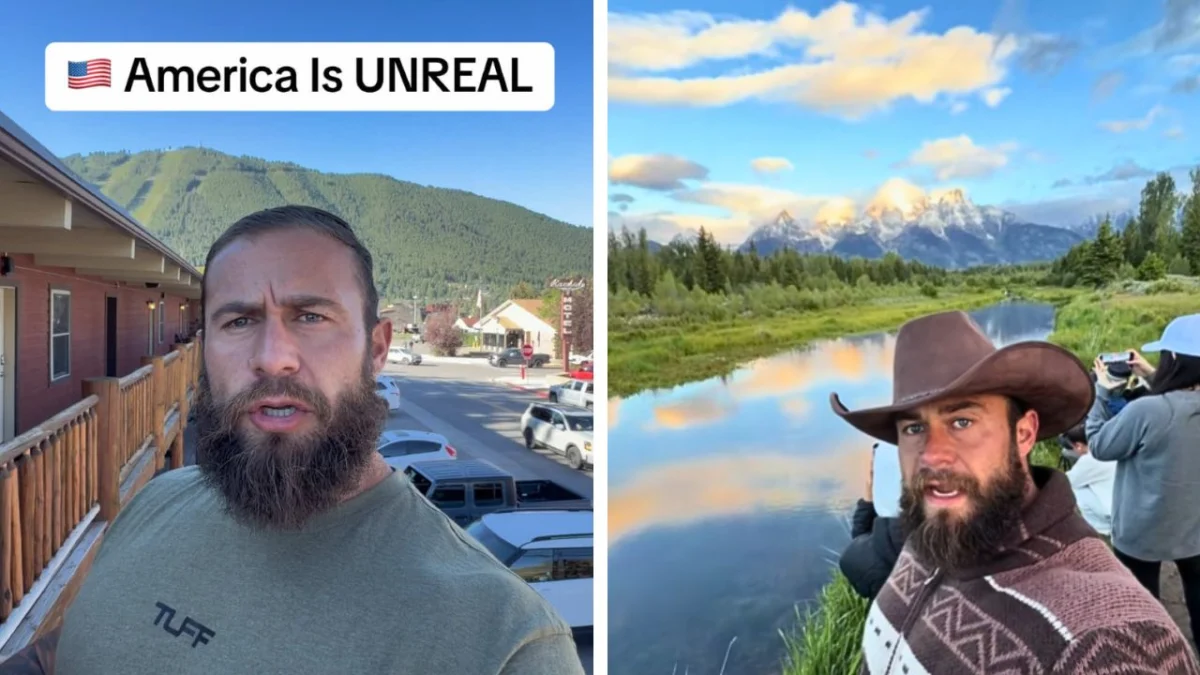
On June 30, a video posted by TikTok user James Khan, known as @jamesatkhanfitness, from Grand Teton National Park in Wyoming, rapidly went viral, sparking a significant online discussion regarding the United States’ most beautiful natural attractions. The post, which featured Khan expressing awe at the scenery with the overlaid text "America is unreal," garnered approximately 255,000 likes and generated a comment section brimming with competing recommendations for the nation’s most spectacular destinations. This digital phenomenon underscores the powerful role of social media in shaping public perception of travel destinations and catalyzing widespread engagement on matters of national beauty and tourism.
The Viral Catalyst: Grand Teton’s Digital Spotlight
The video, filmed against the stunning backdrop of Grand Teton National Park, captured Khan’s evident admiration for the natural environment. He openly acknowledged that his opinion might be perceived as controversial, subsequently inviting viewers to name another country that could rival the spectacular view he was experiencing. Khan also detailed the early morning effort required to witness the vista, noting that he and his friends woke at 4 a.m. only to find the popular spot already crowded—a common experience in highly sought-after national parks. His direct query to his American audience, "Now, Americans, what state should we visit next?" served as a direct invitation for engagement, propelling the video into a dynamic forum for domestic travel recommendations.
Grand Teton National Park itself is a jewel in the crown of America’s public lands. Located in northwestern Wyoming, it encompasses the major peaks of the Teton Range as well as the northern part of Jackson Hole valley. Established in 1929 to protect the Teton Range and its immediate surroundings, and later expanded to include Jackson Hole in 1950, the park is renowned for its pristine alpine terrain, lush valley floors, and abundant wildlife, including bison, elk, moose, and grizzly bears. Its dramatic peaks, notably Grand Teton, rise abruptly from the valley floor without foothills, creating an iconic, instantly recognizable skyline that draws millions of visitors annually. In 2023, Grand Teton National Park welcomed over 3.4 million recreation visits, marking it as one of the most popular units within the National Park System. The park’s allure lies not only in its visual grandeur but also in its extensive opportunities for hiking, climbing, wildlife viewing, and water activities on its glacial lakes. The park’s proximity to Yellowstone National Park further enhances its status as a cornerstone of American natural tourism, making it a natural choice for a video aiming to highlight the nation’s unparalleled beauty.
Chronology of Digital Engagement and Public Response
The video’s posting on June 30 marked the beginning of its rapid ascent to viral status. Within days, its view count soared into the millions, and the likes accumulated rapidly, indicating a broad resonance with Khan’s sentiment. The comment section, the primary arena for the ensuing debate, quickly filled with thousands of user-generated recommendations. Rather than challenging Khan’s initial claim about America’s unique beauty, the vast majority of replies pivoted to a collective endeavor: offering diverse suggestions for other must-see destinations within the United States. This communal sharing of travel insights transformed the post from a simple statement into a comprehensive, crowdsourced guide to American natural wonders. The ongoing discussion reflects the sustained public interest in domestic travel and the exploration of the nation’s varied landscapes, fueled by readily accessible social media platforms like TikTok.
A Nation’s Natural Wonders: The Public’s Curated Recommendations
The recommendations flooding Khan’s comment section offered a panoramic view of America’s diverse natural landscapes, highlighting both iconic national parks and lesser-known regional treasures. This digital compilation serves as an informal yet extensive travel guide, shaped by the collective experiences and preferences of thousands of social media users.
-
Alaska’s Untamed Frontier: Alaska emerged as a particularly popular choice, with numerous commenters simply noting the state’s name, while others elaborated, describing its landscapes as appearing "as if from a postcard." Alaska’s appeal lies in its vast, untamed wilderness, encompassing towering mountain ranges like the Alaska Range (home to Denali, North America’s highest peak), expansive glaciers, fjords, and a rugged coastline teeming with marine life. Its national parks, such as Denali, Kenai Fjords, and Glacier Bay, offer unparalleled opportunities for wildlife viewing, mountaineering, and exploring truly pristine environments, making it a quintessential destination for those seeking grand, epic natural beauty.
-
Colorado’s Rocky Majesty: Colorado garnered substantial support, with specific mentions of the Rocky Mountains, the picturesque town of Telluride, the historic mining town of Leadville, the unique geological formations of Red Rocks Park and Amphitheatre, and the dramatic sandstone spires of Garden of the Gods. The state’s draw is largely attributed to its majestic Rocky Mountain range, which offers world-class skiing, hiking, and mountaineering. The varied topography, from alpine tundras to high desert plateaus, provides a rich tapestry of natural beauty, attracting millions of outdoor enthusiasts annually.
-
California’s Diverse Grandeur: Fans of California enthusiastically recommended a range of the state’s iconic locations, including the crystalline waters of Lake Tahoe, the towering granite cliffs and ancient sequoias of Yosemite National Park, the dramatic coastal cliffs of Big Sur, and the state’s expansive coastline. California’s geographic diversity is unparalleled, boasting everything from deserts and volcanic landscapes to redwood forests and pristine beaches. Yosemite, a UNESCO World Heritage site, is particularly noted for its breathtaking waterfalls, deep valleys, and ancient giant sequoias, attracting over 3.8 million visitors in 2023 and cementing its status as a global natural icon.
-
Midwestern and Southern Charms: The recommendations extended well beyond the American West. Sleeping Bear Dunes National Lakeshore in Michigan was cited, celebrated for its immense freshwater sand dunes that rise hundreds of feet above Lake Michigan, offering panoramic views and unique ecological habitats. Others highlighted Big Bend National Park in Texas, a remote park known for its dramatic desert landscapes, deep canyons, and diverse biological richness along the Rio Grande. The Tennessee mountains, particularly during the vibrant fall foliage season, and the Great Smoky Mountains National Park (the most visited national park in the U.S., exceeding 13 million visits in 2023), were also popular, lauded for their ancient mountains, abundant biodiversity, and picturesque vistas. Mammoth Cave National Park in Kentucky, the world’s longest known cave system, presented a different kind of natural wonder, emphasizing subterranean beauty and geological marvels.
-
Northeastern and Other Regional Gems: The Adirondack Mountains in New York, a vast protected wilderness area larger than many national parks, were recommended for their serene lakes, dense forests, and numerous hiking trails. West Virginia’s mountains and waterfalls showcased the rugged beauty of the Appalachian region. The Upper Peninsula of Michigan, with its vast forests, pristine lakes, and access to the Great Lakes, was also highlighted. New Mexico’s Taos and Santa Fe, while known for their cultural heritage, were implicitly recognized for their surrounding high desert landscapes and mountain views. South Dakota received multiple mentions for the Black Hills, a sacred mountain range, and the Badlands National Park, famous for its dramatically eroded buttes, pinnacles, and spires, along with a rich fossil bed. Crater Lake in Oregon, formed in the caldera of a collapsed volcano and renowned for its deep blue water and dramatic cliffs, was another notable recommendation.
-
Epic Road Trips: Beyond specific locations, some commenters suggested iconic American road trips. Driving along Highway 1 on the West Coast, famed for its breathtaking ocean views and winding coastal roads, was a popular choice. Another suggestion was driving through Montana to visit Glacier National Park, often referred to as the "Crown of the Continent" for its pristine forests, alpine meadows, rugged mountains, and spectacular lakes, carved by ancient glaciers.
Beyond Borders: Global Perspectives and Nuanced Views
While the primary focus of the discussion remained on American locations, some commenters offered a broader, international perspective. These individuals maintained that other countries also possess equally remarkable scenery, citing examples such as Canada, Switzerland, Mexico, Australia, and New Zealand. This comparative aspect added a layer of global context to the debate, suggesting that while America’s natural beauty is undeniable, it exists within a world rich with diverse and equally stunning landscapes.
Furthermore, a significant number of people offered a more nuanced perspective on the subject, emphasizing that beauty can be found in every corner of the nation. "Every state has something to see, and they’re all beautiful," one commenter remarked, encapsulating a sentiment that celebrates the inherent value and unique characteristics of each state’s natural offerings, regardless of their viral appeal or iconic status. This perspective encourages a more localized exploration of beauty, moving beyond headline-grabbing destinations to appreciate the subtle charm of regional landscapes. As of publication, James Khan had not responded to individual comments, allowing the decentralized, user-driven conversation to continue organically.
The Power of User-Generated Content in Travel
The viral success of Khan’s video exemplifies the profound impact of user-generated content (UGC) on the modern travel industry. Platforms like TikTok have transformed how destinations are discovered, evaluated, and shared. A single authentic post from an influencer or an everyday traveler can reach millions, generating significant interest and driving real-world tourism.
- Influence on Travel Decisions: UGC often carries more weight than traditional advertising because it is perceived as authentic and relatable. Travelers are increasingly turning to social media for inspiration and recommendations, valuing the firsthand experiences shared by others. Khan’s video, with its genuine expression of awe, served as a powerful testimonial for Grand Teton National Park and, by extension, for the broader category of American natural wonders.
- Democratization of Travel Recommendations: Social media platforms democratize travel recommendations, allowing a diverse range of voices to contribute. This creates a rich tapestry of suggestions that can cater to various interests, budgets, and travel styles, moving beyond the curated lists of travel magazines or tour operators. The sheer volume and variety of recommendations in Khan’s comment section underscore this democratic power.
- Challenges for Park Management and Overtourism: While beneficial for raising awareness, such viral content can also exacerbate challenges related to overtourism. Popular spots, as Khan himself noted, can become crowded, straining infrastructure, natural resources, and visitor experiences. National Park Service (NPS) units, already grappling with increasing visitation numbers—total NPS visitation reached 325.5 million in 2023—must balance promotion with preservation. Strategies like timed entry systems, shuttle services, and educational campaigns are often employed to manage visitor flow and minimize environmental impact.
- Economic Benefits for Local Communities: Increased interest in destinations translates directly into economic benefits for local communities. Tourism supports jobs in hospitality, retail, transportation, and recreation. A viral video can provide an unexpected boost to regional economies, encouraging travelers to explore areas they might not have considered previously.
National Parks and Public Lands: A Contextual Overview
The discussion ignited by Khan’s video is deeply intertwined with the history and ongoing significance of America’s national parks and public lands. The National Park Service, established in 1916, manages 429 units across the United States, encompassing over 85 million acres. These parks are not merely tourist attractions; they are critical natural laboratories, sanctuaries for endangered species, and places of profound cultural and historical significance.
The concept of protecting vast natural landscapes for public enjoyment and future generations originated in the U.S. with the establishment of Yellowstone National Park in 1872, the world’s first national park. This pioneering act set a precedent for conservation that has since been emulated globally. The parks serve multiple functions:
- Conservation: Protecting biodiversity, ecosystems, and geological features.
- Recreation: Providing opportunities for outdoor activities and public enjoyment.
- Education: Offering educational programs and fostering an appreciation for nature.
- Economic Impact: Generating substantial economic activity through tourism, supporting local businesses and communities. In 2022, visitors to national parks spent an estimated $23.9 billion in local gateway communities, supporting 378,400 jobs nationwide.
The viral TikTok video, by shining a spotlight on specific parks and regions, inadvertently contributes to the NPS’s mission of connecting people with these invaluable resources, even as it highlights the ongoing challenge of sustainable tourism.
Future Implications for Domestic Tourism
The widespread engagement with Khan’s video suggests a strong and sustained interest in domestic travel within the United States. As global travel patterns continue to evolve, influenced by factors such as sustainability concerns, economic shifts, and ease of access, the appeal of exploring one’s own country remains robust. This type of user-generated content acts as a powerful, free marketing tool for states and regions, encouraging Americans to rediscover the natural wonders within their own borders. It also emphasizes the importance of digital presence for tourism boards and park services, who can leverage these conversations to strategically promote diverse destinations, manage visitor expectations, and educate the public on responsible travel practices. The collective conversation initiated by a single TikTok post serves as a testament to the enduring allure of America’s landscapes and the dynamic ways in which modern media shapes our engagement with the natural world.
The Daily Dot was unable to independently verify the comment figures or the specific recommendations cited above. The details above reflect the video as shared on TikTok by @jamesatkhanfitness and the comments on that post, contextualized with generally available public information regarding U.S. national parks and tourism trends.