admin
admin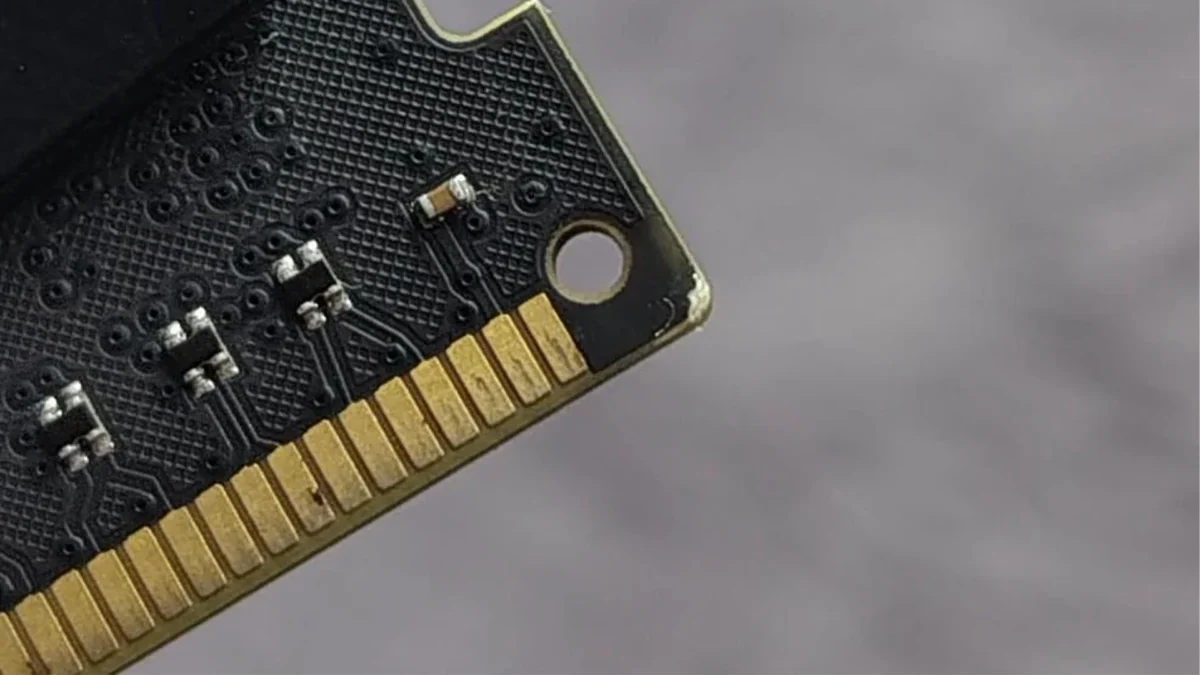
The landscape of computer hardware warranties has long been a complex terrain for enthusiasts and professional builders alike, but a recent incident involving G.SKILL, a leading manufacturer of high-performance memory modules, has reignited a heated debate over the boundaries of "acceptable" damage. A Reddit user, identified as Prestigious-Tea-8244, recently shared a frustrating experience in which a Return Merchandise Authorization (RMA) claim for a failing memory kit was summarily rejected. The grounds for the rejection were not related to the functional failure of the DRAM chips themselves, but rather a minute, seemingly inconsequential nick on the edge of the printed circuit board (PCB). This case highlights the rigid, often unforgiving nature of corporate warranty policies and serves as a cautionary tale for consumers operating within the high-stakes environment of PC component maintenance.
The Anatomy of the RMA Rejection
The incident began when the user noticed instability in their system, eventually tracing the fault to a specific stick of G.SKILL RAM. Following standard procedure, the consumer initiated an RMA request, expecting the lifetime warranty—a major selling point for G.SKILL products—to cover the replacement of the defective hardware. However, upon receiving and inspecting the module, G.SKILL’s technicians identified a small amount of physical damage on the corner of the PCB.

Photographic evidence provided by the user shows a negligible "nick" on the fiberglass substrate of the memory module. Crucially, the gold contact pins, which facilitate the electrical connection between the RAM and the motherboard, appeared entirely unscathed. Furthermore, the damage was located on a portion of the PCB that does not house any electrical traces or critical components. In the eyes of the consumer, the damage was a "nothingburger"—a cosmetic blemish that occurred during the routine installation or removal of the part and had no bearing on the internal electronic failure of the memory.
G.SKILL’s response was definitive. The company issued a formal rejection, citing their policy regarding physical damage. According to the communication received by the user, any form of mechanical alteration or external damage to the PCB renders the warranty void, regardless of whether that damage is the root cause of the functional defect. This "zero-tolerance" approach is common in the industry but remains a significant point of contention for users who feel that manufacturers use minor cosmetic issues as a "get out of jail free" card to avoid fulfilling warranty obligations.
A Chronology of Consumer Hardware Warranty Evolution
To understand the current friction between G.SKILL and its customer base, it is necessary to examine the evolution of RMA policies over the last decade. Historically, hardware manufacturers were more lenient with "wear and tear." During the early 2000s, it was not uncommon for companies to replace parts that showed signs of heavy use, provided the internal components failed due to manufacturing defects.

However, as the PC hardware market matured and profit margins on components like DRAM tightened, policies began to harden. The rise of the "enthusiast" market led to more frequent hardware swapping, increasing the likelihood of minor handling damage. In response, manufacturers standardized their exclusion clauses. By 2015, most major players, including G.SKILL, Corsair, and Kingston, had refined their warranty language to specifically exclude any product that showed signs of "misuse, neglect, or accidental damage."
The current DRAM market conditions have further complicated this dynamic. Between 2021 and 2024, the industry has faced various supply chain disruptions, often referred to as the "DRAM shortage." During periods of low supply and high demand, manufacturers face increased costs for replacement units. This economic pressure can lead to a stricter interpretation of existing policies, as companies seek to minimize the overhead associated with servicing lifetime warranties.
Technical Analysis: The Significance of PCB Integrity
From a technical standpoint, the manufacturer’s refusal is rooted in the structural complexity of modern multi-layer PCBs. While a nick on the edge of a board may look harmless to the naked eye, modern RAM modules utilize high-density interconnects and multiple layers of internal circuitry. Even a small impact can, in theory, cause micro-fractures that propagate through the fiberglass layers, potentially severing a microscopic copper trace.

However, the specific damage in the G.SKILL case appears to be located on the "tab" or the outer perimeter of the board, an area typically reserved as a buffer zone for manufacturing cuts. Industry experts note that damage in this region is almost never the cause of a "dead" stick of RAM unless the impact was severe enough to dislodge an SMD (Surface Mount Device) component like a capacitor or a resistor. By sticking to a binary "damaged/undamaged" checklist, G.SKILL avoids the costly process of performing deep-level forensic analysis on every returned module to determine if a scratch is truly benign.
Industry Standards and Legal Protections
The G.SKILL incident raises questions about the legality of such rejections under consumer protection laws. In the United States, the Magnuson-Moss Warranty Act of 1975 governs consumer product warranties. One of the core tenets of the Act is that a warrantor cannot tip the scales unfairly against a consumer. Specifically, the "Tie-In Sales" provision and various interpretations by the Federal Trade Commission (FTC) suggest that a manufacturer cannot deny a warranty claim based on a factor that did not cause the actual failure, unless they can prove the unauthorized repair or damage led to the defect.
Despite this, "Warranty Void if Removed" stickers and "Physical Damage" clauses remain a staple of the industry. Many companies rely on the fact that the average consumer does not have the resources to legally challenge a rejected $100 RAM kit. In recent years, the "Right to Repair" movement has gained significant traction, pushing for legislation that would force manufacturers to be more transparent and reasonable with their RMA criteria. The FTC has recently begun cracking down on companies that use overly broad exclusion clauses to deny service, though the impact on the PC component industry is still unfolding.

Comparative Policies: How Other Manufacturers Respond
G.SKILL is not alone in its strictness, but other manufacturers have occasionally demonstrated more flexibility. For instance, EVGA (prior to its exit from the GPU market) was renowned for its "consumer-first" RMA process, often honoring warranties even if users had installed aftermarket water blocks, provided the original PCB was not physically broken. In contrast, companies like ASUS and MSI have faced similar social media backlashes for rejecting RMAs over minor scratches or slightly bent heatsink fins.
The Reddit community’s reaction to the G.SKILL case was characteristically polarized. Some users defended the company, arguing that a line must be drawn to prevent users from returning hardware they accidentally dropped or mishandled. Others argued that the policy is anti-consumer, noting that if the RAM failed due to a faulty memory controller or a "binning" error, a small nick on the PCB edge should be irrelevant to the claim.
Strategies for Consumers and Best Practices
For enthusiasts, the G.SKILL rejection serves as a reminder of the importance of documenting hardware condition. Industry veterans recommend the following steps when dealing with high-end components:

- Unboxing Documentation: Take high-resolution photos or a video of the product immediately after opening the box. This provides proof that any cosmetic defects were present upon arrival.
- Pre-RMA Inspection: Before shipping a part back to the manufacturer, photograph it from every angle. This prevents disputes over damage that may have occurred during shipping.
- Third-Party Returns: If a product fails within the initial return window (usually 30 days), it is almost always better to return it to the retailer (such as Amazon, Newegg, or Micro Center) rather than the manufacturer. Retailers generally have more lenient "no-questions-asked" return policies.
- Escalation: If an RMA is rejected for a minor issue, consumers should politely ask to speak with a supervisor or a "customer advocacy" representative. Companies often have the discretion to make "one-time exceptions" for loyal customers to maintain brand reputation.
The Broader Impact on Brand Loyalty
The long-term implications for G.SKILL remain to be seen. While the company maintains a stellar reputation for the performance and aesthetic of its Trident Z and Ripjaws series, incidents like these can erode brand equity. In an era where social media can amplify a single negative experience to millions of potential buyers, the "cost" of rejecting a $100 warranty claim might far exceed the price of simply replacing the module.
As hardware becomes more expensive and systems more complex, the relationship between the manufacturer and the consumer is increasingly defined by the quality of post-purchase support. If G.SKILL and its competitors continue to prioritize rigid policy adherence over common-sense technical assessment, they may find that enthusiasts migrate toward brands perceived as more "user-friendly."
Ultimately, the G.SKILL RMA rejection is a symptom of a larger industry trend toward risk mitigation. While the company is within its legal rights according to its posted terms of service, the court of public opinion often operates on a different set of rules—one where the spirit of the warranty is just as important as the letter of the law. For now, PC builders are advised to handle their memory modules with surgical precision, as even the smallest "nothingburger" of a scratch could prove to be a very expensive mistake.