Sisilia Frederika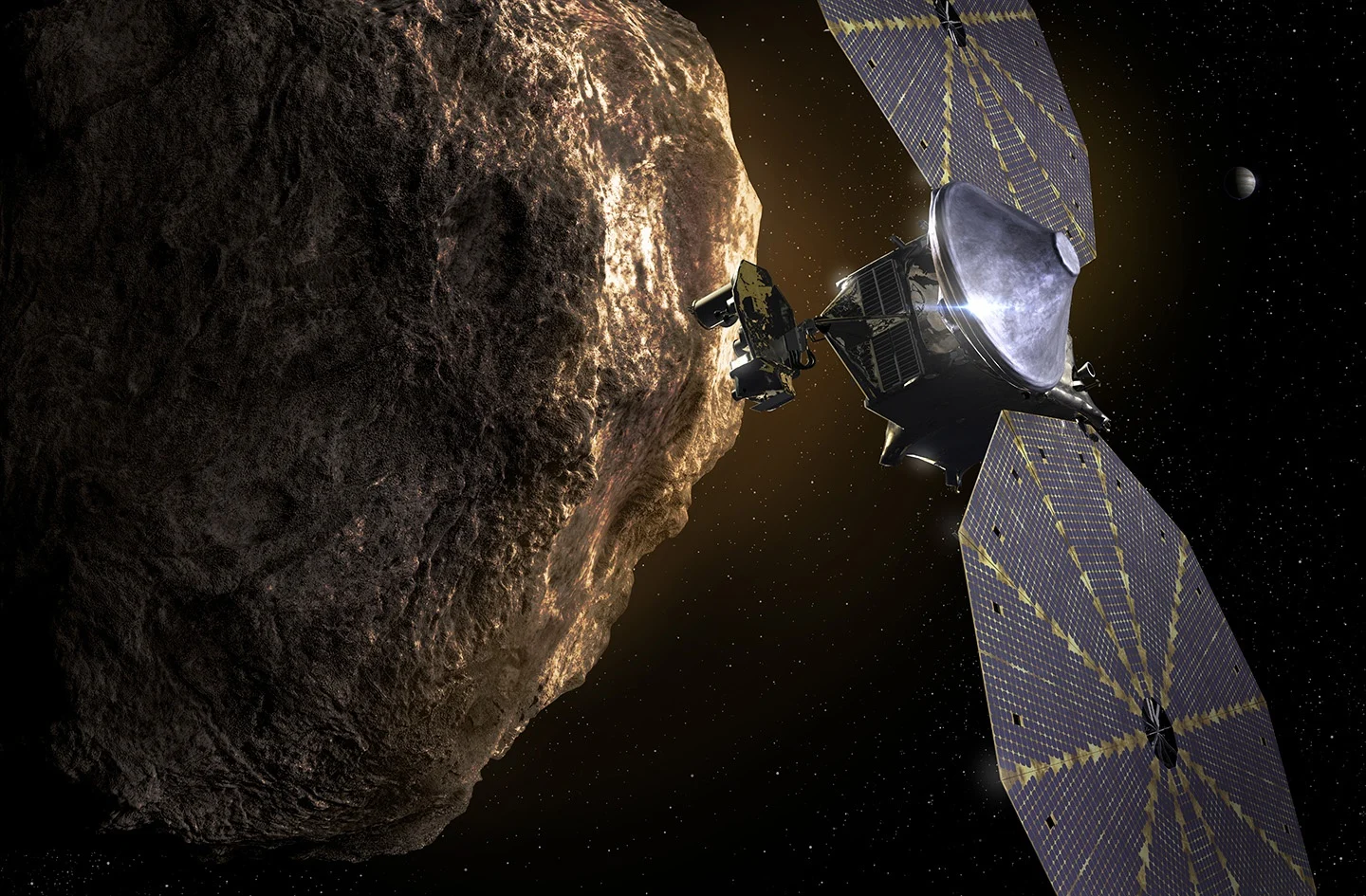
The mystery surrounding the origins of our solar system often leads astronomers to the most remote and enigmatic corners of the celestial neighborhood. Among the most significant of these "cosmic laboratories" are the Jupiter Trojan asteroids, two vast swarms of rocky debris that share the gas giant’s orbit, positioned at the stable L4 and L5 Lagrange points. For decades, these objects have been viewed as pristine "time capsules," potentially holding the chemical signatures of the early solar system. However, a long-standing observation has puzzled the scientific community: larger Trojan asteroids are distinctly divided into two color-coded populations, categorized as "red" and "less red." A groundbreaking study conducted by researchers in Japan, utilizing the final observations of the Subaru Telescope’s Suprime-Cam, has now challenged the prevailing theories regarding this color bifurcation by examining the smallest members of these asteroid swarms.
The findings, recently published in The Astronomical Journal, reveal that while larger Trojans exhibit a clear split in spectral characteristics, smaller asteroids—those ranging from 3 to 16 kilometers in diameter—do not follow this pattern. This discovery not only complicates the existing "collisional evolution model" but also forces a re-evaluation of how these bodies formed and migrated during the chaotic infancy of the solar system.
The Spectrographic Divide: Reds and Less Reds
To understand the significance of the Japanese study, one must first understand the classification of Trojan asteroids. Since the mid-20th century, spectroscopic analysis has allowed astronomers to categorize these bodies based on the "slope" of their reflected light. Larger Trojans generally fall into two categories: D-type and P-type (with some C-type) asteroids.
D-type asteroids, the "red" group, are characterized by a steep spectral slope and very low albedo, meaning they are exceptionally dark. Scientists believe this reddish hue is caused by a thick layer of complex organic molecules, such as tholins, which form when ultraviolet radiation interacts with simple compounds like methane or ethane. These objects are thought to have originated in the cold, outer reaches of the solar system, possibly beyond the orbit of Neptune.
P-type and C-type asteroids, the "less red" group, exhibit a shallower spectral slope. While still dark, they lack the intense reddish tint of their D-type counterparts. This color difference has traditionally been interpreted as a sign of different compositional origins or varying degrees of space weathering and thermal processing. For years, the leading hypothesis was that these two groups represented two distinct populations of planetesimals that were captured by Jupiter’s gravity during its migration through the protoplanetary disk.
Technical Challenges in Observing Small Trojans
While larger asteroids are relatively easy to study due to their brightness and size, smaller Trojans present a formidable challenge. Most asteroids with diameters under 20 kilometers are too faint for standard telescopic surveys. Furthermore, smaller asteroids tend to rotate much more rapidly than their larger counterparts. This rapid rotation creates a significant hurdle for spectrographic analysis.
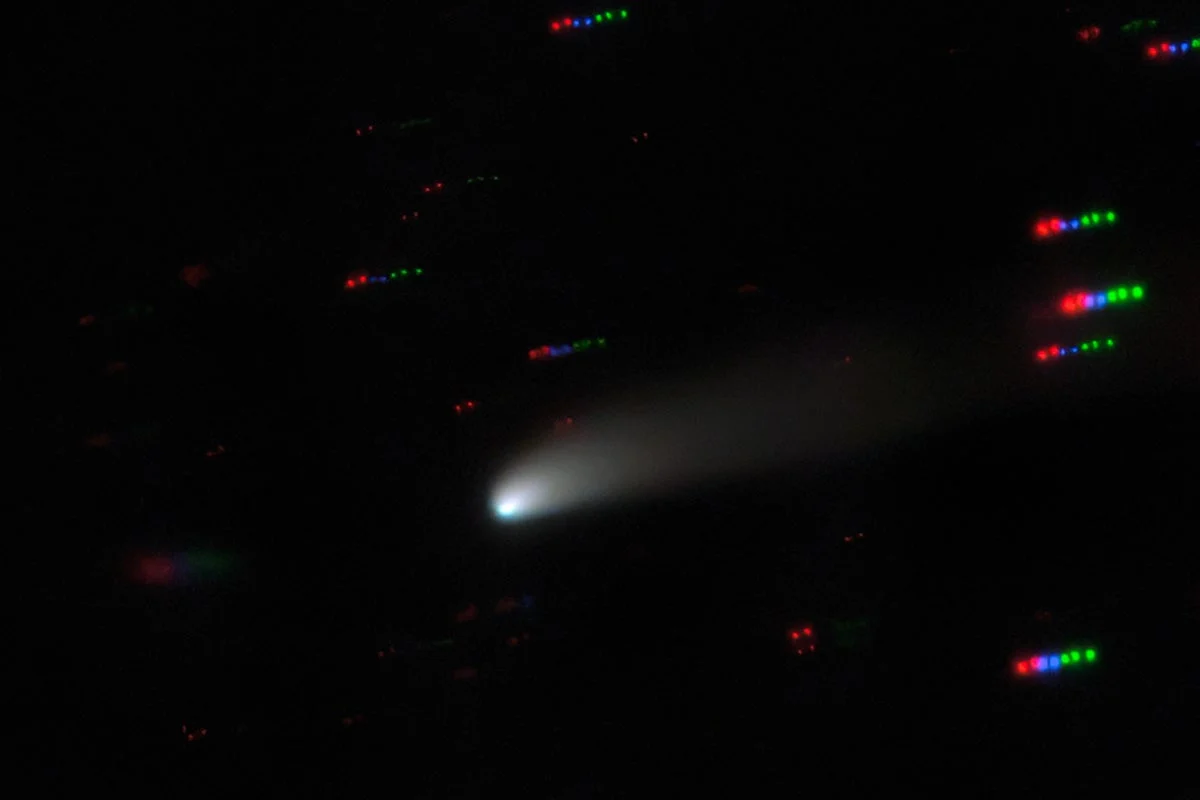
To determine an asteroid’s color, astronomers must take multiple images through different color filters. If an asteroid rotates significantly between the time the first filter is used and the second, the telescope captures different faces of the object. Since an asteroid’s shape and surface composition may vary across its different sides, this "light curve" effect can lead to inaccurate color readings.
To overcome this, the research team—led by Fumi Yoshida from the Planetary Exploration Research Center at the Chiba Institute of Technology and Tsuyoshi Terai of the National Astronomical Observatory of Japan—utilized the Suprime-Cam (Subaru Prime Focus Camera) on the 8.2-meter Subaru Telescope atop Mauna Kea in Hawaiʻi. The Suprime-Cam possessed a unique advantage over more modern instruments: it could cycle through filters with remarkable speed. By capturing data rapidly, the researchers could "average out" the rotation of the asteroids, ensuring that the spectral data reflected the true nature of the objects rather than mere rotational artifacts.
Methodology and Key Findings
During the final observing run of the Suprime-Cam, the team identified 120 small Trojan asteroids. From this group, they selected 44 unbiased samples for intensive study. These objects ranged in size from approximately 3 kilometers to 16 kilometers. By cycling through filters in under an hour, the team obtained high-fidelity spectral data for these diminutive bodies.
The results were unexpected. Unlike the larger Trojan population, which shows a "bimodal" distribution—meaning there are two distinct peaks on the color graph with a clear gap between them—the smaller Trojans showed a continuous distribution. There was no bifurcation. Instead of two separate groups of "red" and "less red," the smaller asteroids displayed a broad spectrum of colors that filled the gap seen in larger objects.
Furthermore, the researchers found that the ratio of red to less-red objects remained relatively constant across the size range of their sample. This lack of color-coding in smaller bodies directly contradicts the "collisional evolution model," which has been a cornerstone of Trojan theory for years.
Debunking the Collisional Evolution Model
The collisional evolution model was proposed to explain why two color groups exist. The theory suggests that all Trojans may have started as "red" D-type objects. Over billions of years, catastrophic collisions would have shattered these bodies. According to the theory, the intense heat or the exposure of internal, volatile-poor materials during a collision would strip away the reddish organic crust, leaving the resulting fragments "less red."
If this model were accurate, the laws of physics dictate that smaller asteroids—which are more likely to be fragments of larger bodies—should be predominantly "less red." However, the Subaru Telescope data shows that red and less-red objects exist in roughly equal proportions among small Trojans. The absence of a "less red" majority in smaller sizes suggests that collisions are not the primary driver of color variation in these asteroid swarms.
"This is a significant blow to the idea that color is simply a byproduct of impact history," noted one researcher associated with the study. "It suggests that the color properties of these asteroids might be more fundamental, perhaps tied to their original location of formation or a different, yet-to-be-identified surface process."
A Timeline of Trojan Exploration
The study of Jupiter’s Trojans has evolved significantly since their discovery, and the Subaru findings represent the latest chapter in a century-long investigation:
- 1906: German astronomer Max Wolf discovers 588 Achilles, the first known Trojan asteroid, located at Jupiter’s L4 point.
- 1970s-1980s: Ground-based spectroscopy begins to reveal the low albedos and reddish hues of the larger Trojans, leading to the D-type and P-type classifications.
- 2005: The "Nice Model" of solar system evolution is proposed, suggesting that the Trojans are captured objects from the primordial Kuiper Belt, dragged into Jupiter’s orbit during a period of planetary migration.
- 2010s: Surveys by the WISE satellite and the Sloan Digital Sky Survey confirm the bimodal color distribution in larger Trojans but leave the smaller population unmapped.
- 2021: NASA launches the Lucy mission, the first dedicated spacecraft to visit the Trojans.
- 2024: The publication of the Subaru Telescope study reveals the lack of color bifurcation in small Trojans, challenging established collisional models.
Broader Implications for Solar System History
The implications of this research extend far beyond the classification of rocks in space. If the color of Trojan asteroids is not determined by collisions, it must be determined by their origins. This supports the idea that the Trojan swarms are a "mishmash" of objects that formed in different regions of the solar nebula.
The lack of bifurcation in smaller objects might suggest that the smaller Trojans are not fragments of the larger ones, but rather a separate primordial population that has remained largely intact since the beginning of the solar system. This would mean that the "red" and "less red" larger bodies might have different physical strengths or internal structures that caused them to behave differently over eons, whereas the smaller bodies represent a more blended, original state of the material that existed in the outer solar system.
This discovery also impacts our understanding of the distribution of organic molecules. If D-type asteroids are indeed rich in complex organics, understanding why some are redder than others could provide clues about how the building blocks of life were distributed throughout the early solar system before being delivered to the inner planets like Earth.
Looking Forward: The Lucy Mission
While the Subaru Telescope has provided a vital piece of the puzzle, the scientific community is now looking toward NASA’s Lucy mission for definitive answers. Launched in October 2021, Lucy is currently on a 12-year trajectory that will take it to both the L4 and L5 swarms.
Beginning in 2027, Lucy will conduct flybys of several major Trojans, including Eurybates (a C-type), Polymele (a P-type), Leucus (a D-type), and Orus (a D-type). In 2033, it will visit the binary pair Patroclus and Menoetius. By capturing high-resolution imagery and taking direct spectral readings of these objects, Lucy will be able to determine if the "red" and "less red" labels hold up under close scrutiny or if human instruments have been oversimplifying a much more complex geological reality.
The Subaru Telescope’s Suprime-Cam has now been retired, replaced by the more powerful Hyper Suprime-Cam. However, its final contribution to science has ensured that its 18-year legacy ends on a high note. By identifying a new mystery just as a multi-billion dollar space mission prepares to investigate, the researchers in Japan have set the stage for a decade of discovery that may finally reveal the true face of the solar system’s most ancient relics.
As we wait for Lucy’s first close-up images, the "color mystery" of the Trojans remains a testament to the complexity of our cosmic origins. For now, the reds and less-reds of Jupiter’s orbit continue to guard their secrets, reminding us that in science, every answer often brings a more profound and difficult question.