Sisilia Frederika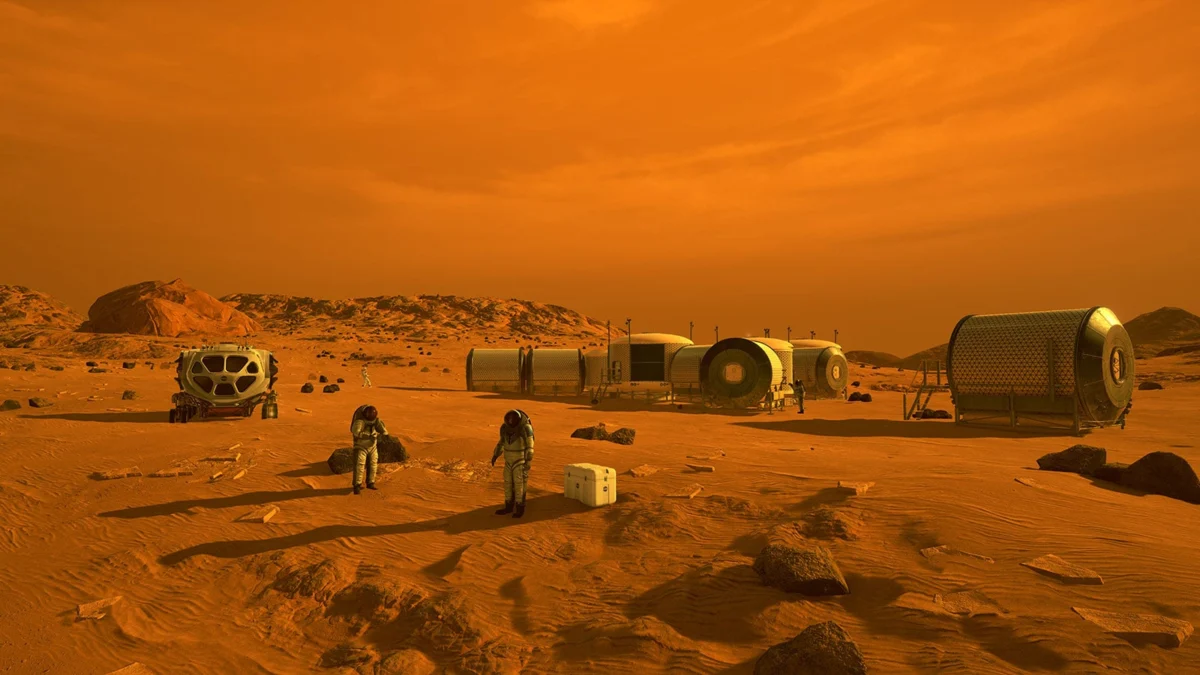
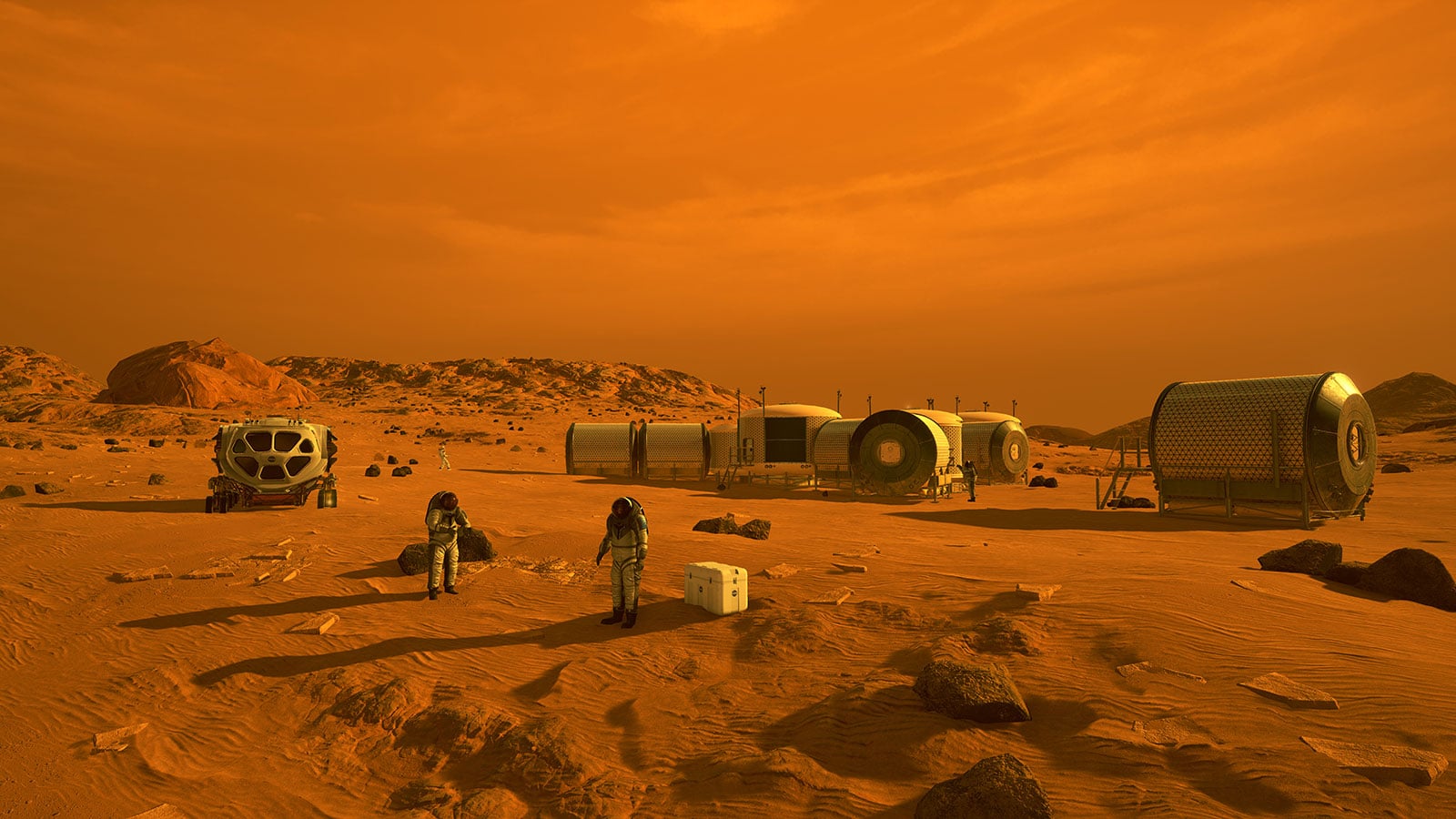
As the global space race shifts its focus toward the red sands of Mars, a formidable biological hurdle remains: the preservation of the human body in environments where Earth’s gravitational pull is absent or significantly reduced. NASA and the China National Space Agency (CNSA) have both signaled intentions to land humans on Mars as early as the 2030s, a mission that would require astronauts to endure months of transit in microgravity followed by extended stays in Martian gravity, which is only 38% of Earth’s (approximately 0.38 g). To address these risks, an international consortium of researchers has published a landmark study in the journal Science Advances, identifying the precise levels of artificial gravity required to prevent skeletal muscle atrophy—a discovery that could fundamentally reshape the design of future deep-space vessels.
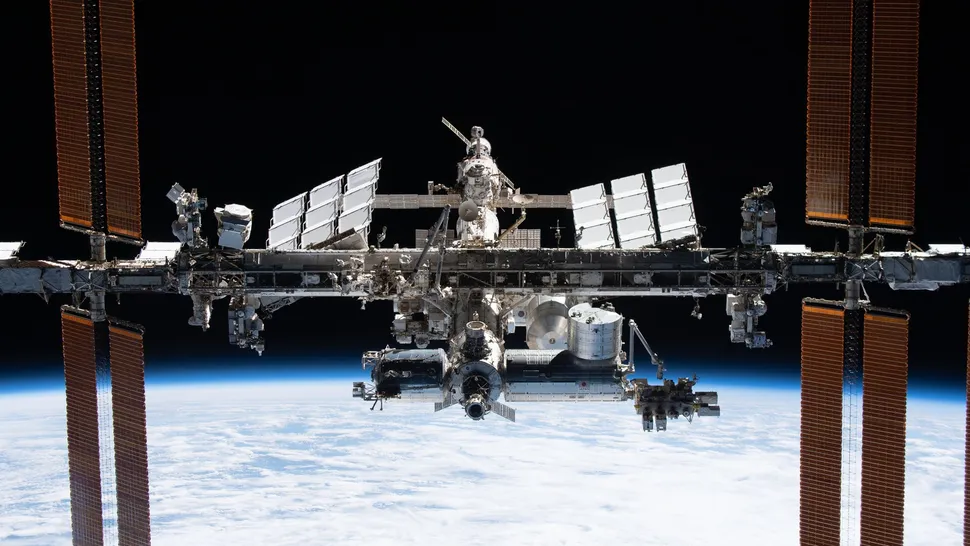
The study, led by scientists from the University of Tsukuba, the University of Rhode Island (URI), and the Japan Aerospace Exploration Agency (JAXA), utilized a sophisticated centrifuge system aboard the International Space Station (ISS) to observe how different gravitational loads affect mammalian physiology. Their findings suggest that while Martian gravity offers some protection against muscle loss, a higher threshold of 0.67 g is necessary to maintain full muscle performance and structural integrity. These results provide a vital roadmap for mission planners who must now decide whether future spacecraft will require rotating sections to generate artificial gravity to ensure the long-term health of their crews.
The Physiological Challenge of Deep Space Exploration
The human body is a product of Earth’s 1-g environment. Every biological system, from the cardiovascular network to the skeletal framework, has evolved to function under the constant pull of Earth’s gravity. When this stimulus is removed, the body undergoes rapid and detrimental adaptations. Skeletal muscle, which constitutes more than 40% of total body mass, is among the most sensitive tissues to these changes. It is not merely a tool for locomotion; it is a metabolic engine essential for glucose regulation and overall systemic health.
In microgravity, the lack of mechanical loading causes muscle fibers to shrink, a process known as atrophy. This is accompanied by a shift in fiber types and a reduction in mitochondrial efficiency. While astronauts currently combat these effects through rigorous exercise regimens—often spending two hours a day on specialized treadmills and resistance devices—these measures are not entirely effective and may be difficult to sustain during a three-year round-trip mission to Mars. Furthermore, the transition from the microgravity of transit to the partial gravity of the Martian surface presents a secondary challenge: will 38% gravity be enough to stop the decline, or will astronauts continue to weaken once they arrive?
The MARS Centrifuge: A Laboratory in Orbit
To answer these questions, the research team utilized the Multiple Artificial-gravity Research System (MARS), developed by JAXA and housed within the Kibo experimental module on the ISS. Unlike previous studies that compared only microgravity to Earth-normal gravity, this experiment sought to map a "gravitational continuum."
The team sent 24 mice to the ISS, where they were divided into four groups and subjected to varying levels of centrifugal force for a 28-day period. These levels were:
- Microgravity (0 g): Serving as the baseline for spaceflight-induced decay.
- 0.33 g: A level closely approximating the 0.38 g found on Mars.
- 0.67 g: An intermediate level to test the dose-response relationship.
- 1.0 g: A control group providing Earth-equivalent gravity in orbit.
By utilizing this range, the researchers could pinpoint exactly where the "tipping point" for muscle health lies. Professor Marie Mortreux, lead of the Metabolism and Muscle Biology Lab at URI, emphasized the importance of this methodology, noting that ground-based simulations on Earth—such as bed rest studies or rodent hindlimb suspension—cannot perfectly replicate the complex, multi-systemic effects of a true space environment.
Key Findings: The 0.67 g Threshold
The results of the post-flight analysis, conducted at NASA’s Kennedy Space Center and the University of Rhode Island, revealed a clear correlation between gravitational load and muscle retention. The analysis focused on weight, muscle mass, and grip strength, as well as cellular-level changes.
The data indicated that 0.33 g—the Mars-analog group—provided a significant "mitigation" effect. The mice in this group lost substantially less muscle mass than those in the microgravity group. However, mitigation is not the same as prevention. The 0.33 g group still exhibited signs of atrophy and a decrease in muscle performance compared to the 1-g controls.
The breakthrough came with the 0.67-g group. At this level of artificial gravity, muscle atrophy was almost entirely prevented. Using Electrical Impedance Myography (EIM), a technique that measures the flow of electrical current through muscle tissue to assess health and quality, the researchers found that 0.67 g was sufficient to maintain muscle performance at levels nearly identical to those found on Earth.
"Our findings for the 0.33-g group can be translated into actions to enable Mars exploration," said Professor Mortreux. "But the fact that 0.67 g acted as a critical threshold suggests that we may need to aim higher than Martian gravity to keep astronauts in peak physical condition during the long months of transit."
Metabolic Biomarkers: An Early Warning System
Beyond physical measurements, the study delved into the chemical composition of the mice’s blood plasma. The researchers identified 11 specific metabolites that showed "gravity-dependent changes." These metabolites are biological signatures that fluctuate in direct response to the level of gravitational loading the body experiences.
The identification of these biomarkers is a significant step forward for space medicine. In the future, instead of waiting for physical symptoms of muscle wasting to appear, flight surgeons could monitor an astronaut’s blood chemistry. If these 11 metabolites shift beyond a certain threshold, it would serve as an early warning that the current gravity or exercise protocol is insufficient, allowing for real-time adjustments to the mission’s health regimen.
International Collaboration and Historical Context
The success of this study is rooted in over a decade of collaborative research between institutions in Japan and the United States. Dr. Mary Bouxsein of Harvard Medical School, a co-author of the study, was instrumental in developing the initial ground-based mouse models for partial gravity in the early 2010s. Professor Mortreux later expanded this work by developing rat models at Harvard before moving to URI.
The integration of JAXA’s advanced hardware with the metabolic and musculoskeletal expertise of the American teams allowed for a level of precision previously unattainable. "Working with an international team was challenging and exciting," Mortreux noted, highlighting how her previous experience in Europe and the U.S. prepared her for the large-scale logistical coordination required to sync launches, orbital experiments, and post-flight sampling.
Implications for Spacecraft Design and NAUTILUS-X
The revelation that 0.67 g is the optimal threshold for muscle maintenance has profound implications for the engineering of future deep-space habitats. If 0.38 g (Mars gravity) is insufficient to fully protect the human body, then the transit vehicle itself may need to provide the missing gravitational force.
This lends significant weight to concepts like the NAUTILUS-X (Non-Atmospheric Universal Transport Intended for Lengthy United States Exploration). Proposed by NASA’s Technology Applications Assessment Team, the NAUTILUS-X is a modular spacecraft design that includes a rotating torus—a large, inflatable ring that spins to create artificial gravity through centrifugal force.
If a spacecraft can be designed to spin at a rate that generates at least 0.67 g, astronauts could arrive at Mars with their muscle strength and metabolic health fully intact. This would eliminate the "recovery period" currently needed for astronauts returning from the ISS, allowing Mars explorers to begin scientific operations and habitat construction immediately upon landing.
Broader Impact and Future Research
The study’s impact extends beyond the niche of space exploration. Understanding how gravity influences muscle metabolism and aging can provide insights into sarcopenia (age-related muscle loss) and muscle-wasting diseases on Earth. The same EIM technology and metabolic biomarkers used in the MARS experiment could eventually be adapted for clinical use in hospitals to monitor patients with limited mobility.
Looking ahead, the research team plans to investigate how these gravitational thresholds affect other systems, such as the cardiovascular system and the central nervous system. There is also the question of Lunar gravity (0.16 g). With NASA’s Artemis program aiming for a sustained human presence on the Moon, understanding the long-term effects of even lower gravity than Mars is the next logical step in the chronology of space life sciences.
As humanity stands on the precipice of becoming a multi-planetary species, the bridge between Earth and Mars is being built not just with rockets and fuel, but with a deep, data-driven understanding of the human machine. The work of Mortreux, Bouxsein, and their international colleagues ensures that when the first boots hit the Martian dust, the muscles inside them will be strong enough to take the next giant leap.