Vera Intan Clara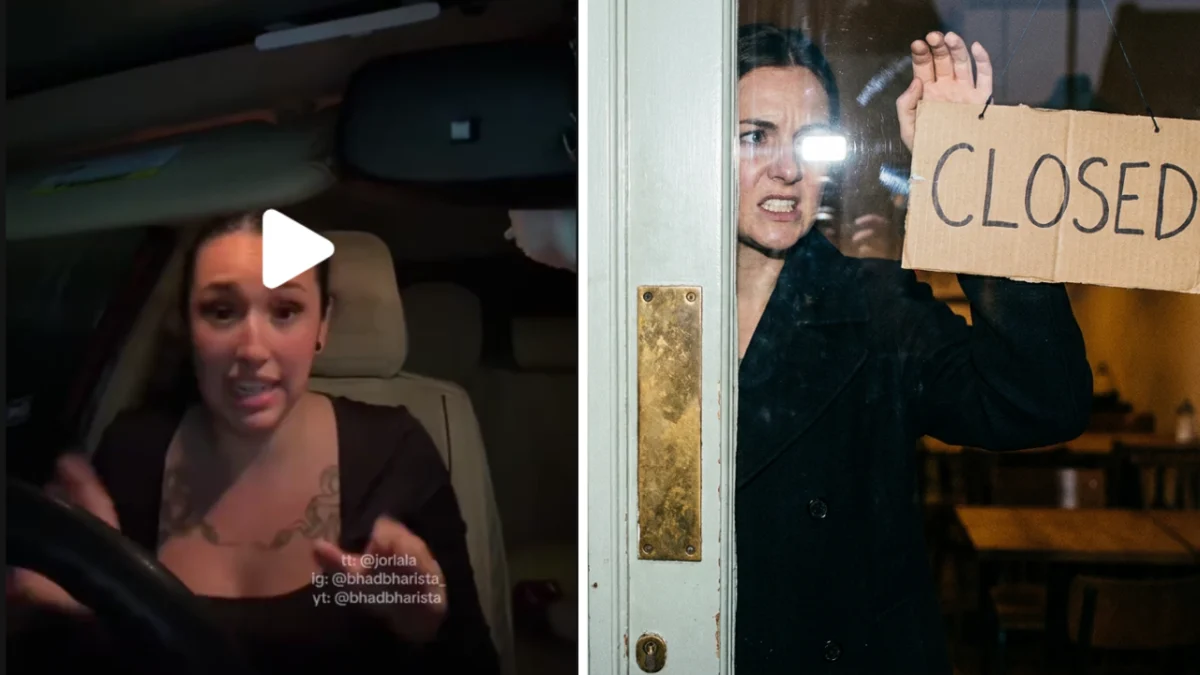
A recent video posted by TikTok creator @jorlala, identified as Jordan, has garnered significant global attention, accumulating over 5.5 million views and more than 7,300 comments since its publication. The footage captures a tense moment where Jordan, a café employee, described the ordeal of hiding inside a closed establishment and extinguishing the lights while a customer relentlessly pounded on the entrance door. The video graphically depicts Jordan squatting low, striving to remain unseen by the customer who, she stated, arrived after the official closing time to retrieve a pre-ordered item. This incident has sparked a wide-ranging discussion across social media platforms regarding the boundaries of customer service, employee safety protocols, and the burgeoning trend of workplace narratives going viral.
The Incident Unfolds: A Detailed Chronology
The unsettling encounter, according to Jordan’s account, transpired around 7 p.m., precisely when the café concluded its daily operations. Earlier in the day, the customer had placed an order via phone. Jordan recalled explicitly informing the customer that the order was prepared and available for pickup, emphasizing the crucial detail that collection needed to occur before the café’s 7 p.m. closing time. This communication, a standard procedure in retail and food service, aims to manage customer expectations and ensure smooth end-of-day operations.
As the clock neared 7 p.m., Jordan positioned herself near the main entrance, performing a final check and waiting for the customer’s arrival. Despite her diligence, the customer did not appear by the stipulated closing time. Adhering to established protocols, Jordan proceeded to secure the premises, locking the doors and commencing the standard closing routines for the day. However, the momentary tranquility was shattered almost immediately. As she transitioned to the back area of the café, the distinct and jarring sound of loud banging reverberated from the front door.
Reacting swiftly to the unexpected and escalating situation, Jordan advised her fellow staff members to vacate the main customer floor. Her directive was clear: retreat to the rear of the café, switch off all visible lights, and create the illusion that the establishment was entirely deserted. The intent was to de-escalate the situation by signaling that no one was available to serve, thus hoping the customer would eventually depart. Yet, the individual outside proved to be remarkably persistent, refusing to be easily deterred by the apparent lack of activity within.
Behind the Counter: Employee Safety and Workplace Stress
The incident underscores a growing concern within the service industry regarding employee safety and the psychological toll of demanding customer interactions, especially outside of regular business hours. For retail and food service workers, the closing process is often a vulnerable period. Staff members are typically engaged in tasks like cleaning, cash reconciliation, and preparing for the next day, often with reduced staffing levels. An unexpected or aggressive presence at the door can significantly heighten feelings of insecurity and potential threat.
During the prolonged period of banging, Jordan reported that the customer simultaneously initiated a barrage of calls to the café’s phone line, ringing back-to-back. Despite the staff’s concerted effort to maintain the pretense of an empty establishment, the customer’s persistence intensified. The banging on the door reportedly grew louder and more aggressive, a sustained auditory assault that lasted for approximately 10 minutes. The palpable tension and fear experienced by the staff during this period are evident in the video Jordan recorded, where the jarring sounds of the insistent knocking can be clearly heard from within the café’s dimly lit interior. Ultimately, when no staff members emerged or responded, the customer finally abandoned their efforts and left the premises.
This type of encounter, while perhaps an outlier in its intensity, is not entirely isolated. Reports from various industry bodies, such as the National Retail Federation and the National Restaurant Association, frequently highlight an increase in aggressive customer behavior, particularly since the onset of the COVID-19 pandemic. Workers often face verbal abuse, threats, and in some cases, physical altercations, leading to elevated stress levels and a pervasive sense of insecurity in their workplaces.
The Digital Echo Chamber: TikTok’s Role in Workplace Narratives
The rapid virality of Jordan’s video is a testament to TikTok’s significant role as a platform for sharing personal workplace experiences. The platform offers an immediate and unfiltered conduit for employees to document and disseminate their daily challenges, frustrations, and triumphs. This trend has democratized the narrative around customer service, giving a voice to front-line workers who might otherwise feel unheard. Videos depicting customer entitlement, unreasonable demands, or unsafe working conditions often resonate deeply with a broad audience, many of whom are either service workers themselves or have witnessed similar behaviors.
The comment section of Jordan’s video quickly became a lively forum for debate, with thousands of users weighing in on the incident. A significant portion of commenters expressed strong support for Jordan’s actions, commending her quick thinking and decisive decision-making under duress. Many highlighted the fundamental principle that customers bear the responsibility for adhering to specified pickup times. This sentiment reflects a broader societal recognition of the need for mutual respect in commercial transactions.
Customer Expectations vs. Business Boundaries
The incident brings into sharp focus the evolving dynamic between customer expectations and the operational boundaries of businesses. In an era dominated by instant gratification and 24/7 online access, some customers may develop an expectation of perpetual availability, blurring the lines between stated business hours and personal convenience. While most businesses strive for excellent customer service, there are inherent limits dictated by operational realities, employee safety, and legal requirements.
The scenario described by Jordan highlights a critical juncture where customer convenience clashed with established business protocols. The café had communicated its closing time, and Jordan had reinforced the need for timely pickup. The customer’s failure to adhere to this agreement placed the business and its employees in a difficult, potentially compromising situation. This type of interaction can significantly impact employee morale, leading to burnout and a sense of vulnerability if not properly managed and supported by management.
Legal and Ethical Considerations: Trespassing and Harassment
Beyond the immediate customer service dilemma, the persistent banging on a locked door after business hours raises significant legal and ethical questions, particularly regarding trespassing and potential harassment. Several commenters on TikTok articulated these concerns, with one arguing that the customer’s attempt to gain entry after hours could legally be construed as trespassing. They wrote, "Acting like that is inexcusable. People saying ‘just give her the bag’ no after hours it’s no longer safe. After hours it’s trespassing. See how she’s acting banging on the door? Who’s to say what she’d do inside the store."
This perspective underscores a crucial point: once a business is closed and secured, the perimeter becomes a private space, even if accessible during open hours. Unauthorized attempts to enter or persistent disturbance can indeed cross the line into illegal activity. For employees inside, such aggressive behavior can feel like a direct threat, impacting their sense of security.
Another commenter echoed this sentiment, firmly placing the onus of responsibility on the customer for their tardiness. They stated, "She was told what time she needed to be there and showed up late. That’s on the customer, not the business. There is no logical reason to be banging on locked doors over an order she failed to pick up on time." This reflects a widely held view that while businesses have obligations, customers also have a responsibility to respect operating procedures and communicated terms.
From a broader perspective, prolonged, aggressive banging and repeated phone calls, especially when the intent to deny entry is clear, could potentially be interpreted as a form of harassment, depending on local laws and the specific context. Businesses typically have policies to address such situations, prioritizing the safety of their staff above all else.
Industry Standards and Best Practices for Closing Procedures
In light of such incidents, industry standards and best practices for closing procedures often emphasize employee safety above all else. Many establishments train staff on protocols for handling after-hours disturbances, which frequently include:
- Never opening the door: Staff are typically advised not to engage with individuals outside after hours, especially if they are exhibiting aggressive behavior.
- Securing the premises: Ensuring all doors and windows are locked and secured.
- Maintaining a low profile: Turning off lights and moving away from windows to avoid drawing attention.
- Contacting management or security: Reporting the incident to a supervisor or, if the situation escalates or feels threatening, to local law enforcement.
- Documentation: Recording details of the incident, including time, description of the individual, and duration of the disturbance.
These protocols are designed not only to protect employees from potential harm but also to mitigate legal risks for the business. The decision by Jordan and her colleagues to remain hidden and not engage aligns perfectly with many of these recommended safety measures.
The Broader Implications for the Service Sector
The viral spread of Jordan’s video serves as a powerful reminder of the often-unseen challenges faced by workers in the service sector. It highlights the need for clear communication from businesses regarding operating hours and pickup policies, robust safety protocols for employees, and a renewed emphasis on respectful customer conduct.
For businesses, such incidents can prompt a review of their closing procedures, staff training, and external communication strategies. Ensuring that customers are fully aware of pickup windows and the consequences of missing them can prevent similar situations. Furthermore, fostering a culture where employee safety is paramount, and workers feel empowered to disengage from potentially threatening situations, is crucial for retention and morale.
For consumers, the video is a stark illustration of the human element behind every transaction. It encourages reflection on the impact of their actions and expectations on the individuals serving them. In an increasingly digital world where interactions can sometimes feel impersonal, this incident grounds the discussion back to fundamental principles of courtesy, respect, and adherence to agreed-upon terms.
While The Daily Dot, like many news outlets, was unable to independently verify every detail of the events described in the video—the account being solely based on @jorlala’s version shared on TikTok—the incident nonetheless provides a compelling case study into the contemporary landscape of customer service, employee vulnerability, and the powerful, immediate reach of social media in shaping public discourse around these critical issues. It reinforces that even in seemingly mundane commercial interactions, unforeseen challenges can arise, demanding both resilience from workers and understanding from the public.