Vera Intan Clara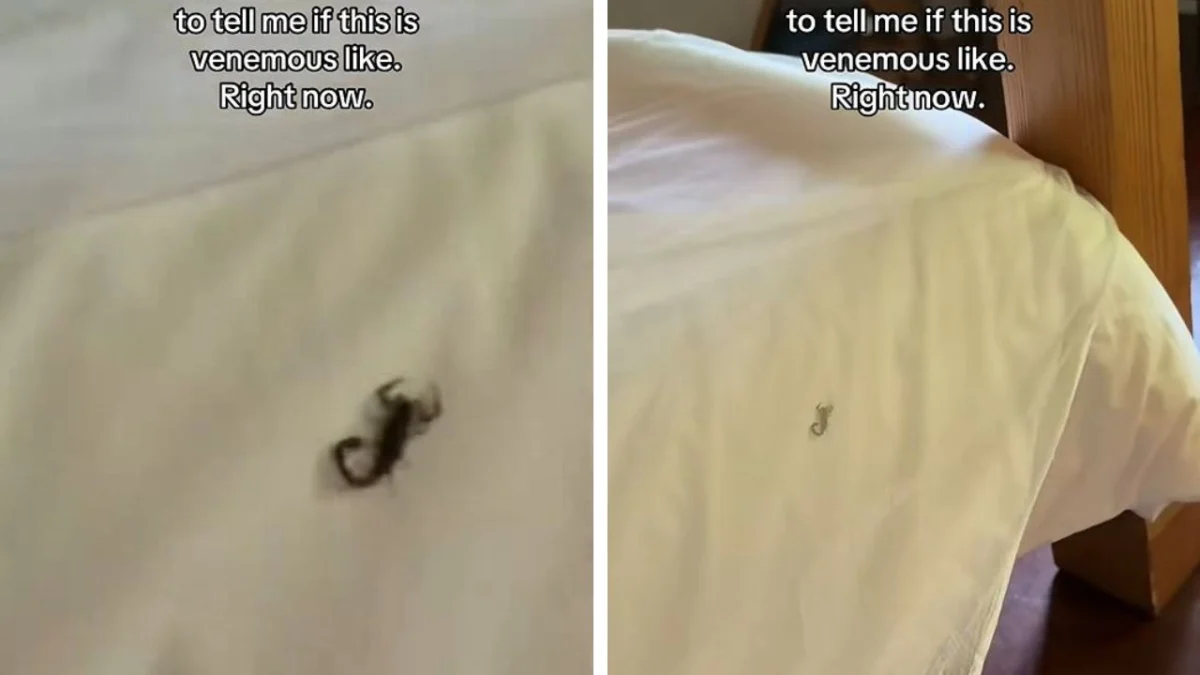
The captivating saga of Alex Blumenfeld, a former New York City banking professional who traded the urban jungle for the literal wilds of Zimbabwe, continues to enthrall a global audience as her latest wildlife encounter—a live scorpion discovered crawling in her bed—rocketed to viral status on TikTok. Posted by Blumenfeld under the handle @alexblumy, the video quickly garnered over 99,200 likes and 2,426 comments as of publication, igniting widespread discussion about the perils and unique realities of living in close proximity to nature. This incident is not an isolated event but rather the latest in a series of extraordinary wildlife interactions that have characterized Blumenfeld’s dramatic career and lifestyle pivot, drawing significant attention to both her personal journey and the critical work of wildlife conservation.
A Radical Transformation: From Wall Street to Zimbabwean Wilderness
Alex Blumenfeld’s journey from the high-stakes financial district of New York City to the rugged terrain of a Zimbabwean wildlife conservation reserve represents a profound and increasingly common re-evaluation of career and life priorities. Disillusioned with the relentless pace and perceived lack of intrinsic purpose in her banking role, Blumenfeld sought a more meaningful existence, ultimately finding it in the challenging yet rewarding field of wildlife conservation. Her decision resonates with a growing global trend, sometimes dubbed "the great resignation" or "the great reshuffle," where individuals are actively pursuing careers aligned with their values, even if it means sacrificing conventional comforts and financial security.
In her current role, Blumenfeld is instrumental in the operational backbone of the conservation reserve, focusing on fundraising and digital outreach. These functions are critical for the sustained success of any conservation initiative, particularly in regions facing constant threats from poaching, habitat encroachment, and climate change. Fundraising ensures the financial viability of anti-poaching units, wildlife monitoring programs, and community engagement projects, while digital work leverages the power of social media and online platforms to raise global awareness, attract donors, and educate the public about the urgent need for wildlife protection. Her unique position allows her to bridge the gap between the remote, on-the-ground realities of conservation and a global audience increasingly connected through digital media, making her personal experiences a potent tool for advocacy.
A Chronicle of Unconventional Encounters: Life in the Wild
Blumenfeld’s transition to life in Zimbabwe has been anything but mundane, marked by a series of dramatic and often startling encounters with the local fauna. Her initial viral moment, widely covered by outlets including the Daily Dot, occurred when she discovered a python had taken up residence in her ceiling. This incident, while alarming, served as an early indicator of the immersive and unpredictable nature of her new environment. It also established her pattern of candidly documenting these experiences, transforming personal anecdotes into compelling narratives that highlight the realities of human-wildlife coexistence.
Since then, her social media feeds have become a digital diary of life on the reserve, showcasing an array of encounters that underscore the rich biodiversity and inherent wildness of the region. These have included observations of spitting cobras, known for their defensive ability to project venom, and regular nocturnal visits from hyenas, whose distinctive calls and scavenging habits are a common feature of the African night. Each post serves not only as a personal recount but also as an informal educational piece, demystifying the wild for her predominantly urban audience and offering a glimpse into the daily challenges faced by those dedicated to conservation.
The most recent incident, captured in her TikTok video posted on July 15, 2026, vividly illustrates the intimate proximity to danger that defines her daily life. Waking up to find a live scorpion crawling in her bed, Blumenfeld’s immediate reaction of disbelief, articulated through repeated exclamations of "Are you kidding?", resonated deeply with viewers. The video’s raw authenticity, combined with her urgent plea in the caption for viewers to help identify the scorpion’s species and venomous potential, quickly propelled it into viral circulation. This direct, unvarnished portrayal of a perilous moment tapped into universal fears while simultaneously drawing attention to the specific challenges of living in such an environment.
The Scorpion’s Sting: Discerning Venom Potency and Public Wisdom
The discovery of a scorpion in one’s bed immediately raises critical questions about its venomous nature and the potential threat it poses. Scorpions, ancient arachnids with a global distribution, are universally venomous to some degree, utilizing neurotoxins to immobilize prey or defend themselves. However, the potency of their venom varies dramatically between species, ranging from a mild, bee-sting-like irritation to a potentially lethal neurotoxic shock. This crucial distinction was at the heart of the intense discussion that unfolded in the comments section of Blumenfeld’s viral video.
Commenters offered a diverse array of advice and warnings, reflecting both general scorpion knowledge and specific regional insights. A recurring theme was the common understanding that "all scorpions are venomous to some degree," a foundational truth in toxicology. More specific advice emerged regarding the relationship between a scorpion’s physical characteristics and the strength of its venom. One commenter posited a widely held belief: "The smaller they are, the stronger the venom." This observation is often linked to the idea that smaller scorpions, lacking robust pincers for subduing prey, rely more heavily on potent venom for hunting and defense.
This anecdotal wisdom finds support in scientific research. A study published in the journal Toxins in 2022 by scientists at the University of Galway meticulously examined 36 scorpion species and found a consistent pattern: smaller scorpions possessing narrower pincers tended to exhibit more potent venom compared to larger species with more robust, muscular claws. The rationale behind this evolutionary trade-off is often attributed to predatory strategy; scorpions with large, powerful pincers can physically crush and dismember their prey, thus having less need for highly potent venom. Conversely, species with slender pincers rely on rapid venom injection to quickly incapacitate their prey. Another commenter in Blumenfeld’s thread echoed this, offering a slightly different nuance to the rule of thumb: "The golden rule with scorpions. Is not their size. But, the size of the pincers." This emphasizes that while overall body size can be a proxy, the relative size and morphology of the pincers are often a more direct indicator of venom potency.
The discussion also highlighted critical regional safety advice. Given Zimbabwe’s diverse scorpion population, with several species capable of delivering medically significant stings, local knowledge is paramount. One commenter, drawing on personal experience, emphasized a crucial precaution: "As someone who has family in Zimbabwe PLEASE always shake out sneakers/closed toe shoes before putting them on! These things notoriously love to hide in shoes!" This practical advice underscores the secretive nature of scorpions, which seek dark, secluded spaces, making footwear and bedding common hiding spots.
While much of the advice was helpful, some commenters conveyed more alarming, though unverified, claims regarding the specific scorpion in the video. Assertions such as "Very poisonous a scorpion if it stings u u dead in a few minute’s," while reflecting a legitimate fear, could not be independently substantiated by the Daily Dot. Such claims underscore the challenge of verifying information in a fast-paced social media environment, where genuine concern can sometimes blend with hyperbole or misinformation. The specific species of the scorpion in Blumenfeld’s video, and thus its precise danger level, remains unconfirmed, underscoring the universal advice to treat any unknown scorpion with extreme caution and seek immediate medical attention if stung.
Living on the Edge: Navigating Wildlife in a Conservation Zone
Life within a wildlife conservation reserve in Zimbabwe, while deeply fulfilling for individuals like Alex Blumenfeld, inherently involves navigating a unique set of challenges and risks. These reserves are not zoos; they are dynamic ecosystems where humans coexist, albeit carefully, with wild animals in their natural habitats. The constant proximity to potentially dangerous wildlife – from scorpions and snakes to large predators like lions, leopards, and hyenas – necessitates an acute awareness of one’s surroundings and strict adherence to established safety protocols.
For residents and staff of these reserves, vigilance becomes a second nature. Daily routines are punctuated by specific precautions designed to minimize human-wildlife conflict and ensure personal safety. Beyond shaking out shoes, common practices include:
- Inspecting bedding and clothing: Before use, items left outdoors or on the floor are routinely checked for insects, arachnids, or small reptiles.
- Keeping doors and windows sealed: Especially at night, to prevent entry by nocturnal creatures.
- Carrying a flashlight at night: To illuminate pathways and identify potential hazards.
- Awareness of surroundings: Constantly scanning the environment, listening for unusual sounds, and recognizing animal tracks or droppings.
- Understanding animal behavior: Learning to identify warning signs from animals and knowing how to react appropriately, such as making oneself appear larger to a hyena or freezing in the presence of a snake.
- Maintaining a clean living space: Reducing attractions for rodents and insects, which in turn can attract snakes and scorpions.
The philosophy underpinning life in these reserves is one of human-wildlife coexistence, where the imperative is to protect the wildlife while also safeguarding human life. This delicate balance requires continuous education, robust infrastructure, and a deep respect for the natural world. Conservation staff are often trained in wildlife first aid and emergency response, equipped to handle incidents ranging from snakebites to encounters with large mammals. The presence of creatures like scorpions in residential areas within a reserve serves as a constant, tangible reminder of the untamed nature of the environment and the ongoing commitment required to live harmoniously within it.
The Digital Echo Chamber: Social Media, Awareness, and Verification
Alex Blumenfeld’s viral content exemplifies the dual nature of social media platforms like TikTok in the context of news and awareness. On one hand, these platforms are powerful tools for rapid information dissemination and community engagement. Blumenfeld’s ability to instantly share her experience and solicit advice from a global audience demonstrates TikTok’s capacity to foster real-time, participatory dialogue. Her posts serve as a unique form of citizen journalism, bringing remote realities directly into the feeds of millions, thereby raising awareness about wildlife, conservation, and the unconventional lives led by those working in these fields. The immediate and overwhelming response, evident in the thousands of likes and comments, underscores the platform’s potential to amplify niche stories and spark widespread interest.
However, the rapid-fire, often unmoderated nature of social media also presents significant challenges, particularly concerning information accuracy and verification. As seen in the comments section, while much of the advice was helpful and fact-based, some claims were alarming and unsubstantiated. The Daily Dot’s inability to independently verify the species or danger level of the scorpion highlights a critical limitation: while social media excels at sharing experiences, it often falls short on authoritative verification. This necessitates a cautious approach from both content creators and consumers, encouraging users to cross-reference information and media outlets to apply rigorous journalistic standards when reporting on viral content.
Despite these challenges, the broader impact of Blumenfeld’s viral encounters is largely positive. Her candid documentation demystifies life in a wildlife reserve, showcasing both its beauty and its inherent dangers. This raw honesty can inspire greater public empathy for conservation efforts and potentially encourage support for organizations working in challenging environments. By putting a human face on the daily realities of conservation, Blumenfeld bridges the gap between abstract environmental issues and relatable personal experiences, making the cause more tangible and urgent for a global audience.
Broader Implications: Conservation, Career Shifts, and Remote Living
Alex Blumenfeld’s narrative extends beyond a series of thrilling wildlife encounters; it encapsulates several significant contemporary trends and implications. Firstly, her story serves as a powerful testament to the ongoing importance of wildlife conservation. By bringing the wild directly into people’s homes, she subtly underscores the fragility of these ecosystems and the tireless work required to protect them. The constant presence of diverse wildlife, from scorpions to pythons, reinforces the message that these are living, breathing habitats under constant threat, necessitating sustained global attention and resources. Her digital outreach directly supports the financial and operational needs of the reserve, demonstrating the tangible link between personal storytelling and impactful conservation funding.
Secondly, her radical career shift from a high-paying banking job to a conservation role highlights a growing societal inclination towards purpose-driven work and lifestyle changes. In an era marked by increasing awareness of global challenges, many professionals are seeking careers that offer greater personal fulfillment and contribute positively to the world, even if it means stepping outside traditional career paths and comfort zones. Blumenfeld’s journey inspires others to consider alternative life choices and to pursue passions that might initially seem unconventional or risky.
Finally, her experience sheds light on the evolving landscape of remote living and the documentation of unique lifestyles. With advancements in technology, individuals are increasingly able to live and work in remote locations, sharing their experiences with a global audience. This trend brings remote issues, like human-wildlife conflict and conservation challenges, to the forefront of global consciousness. However, it also places a responsibility on content creators to portray these realities accurately and ethically, balancing personal storytelling with the need to respect sensitive ecological environments and the communities within them.
Alex Blumenfeld’s continuing saga in Zimbabwe, marked by startling encounters and unwavering dedication, offers a compelling glimpse into a life lived truly on the edge. Her viral moments, from a python in the ceiling to a scorpion in the bed, are more than just dramatic anecdotes; they are vivid illustrations of the intricate dance between humanity and the wild, underscoring the critical work of conservation, the courage of personal transformation, and the powerful, albeit complex, role of digital media in bringing these stories to the world. As she continues to document her life, her experiences serve as a potent reminder of the untamed beauty and inherent challenges of our planet’s wild spaces, and the unwavering commitment required to protect them.