Vera Intan Clara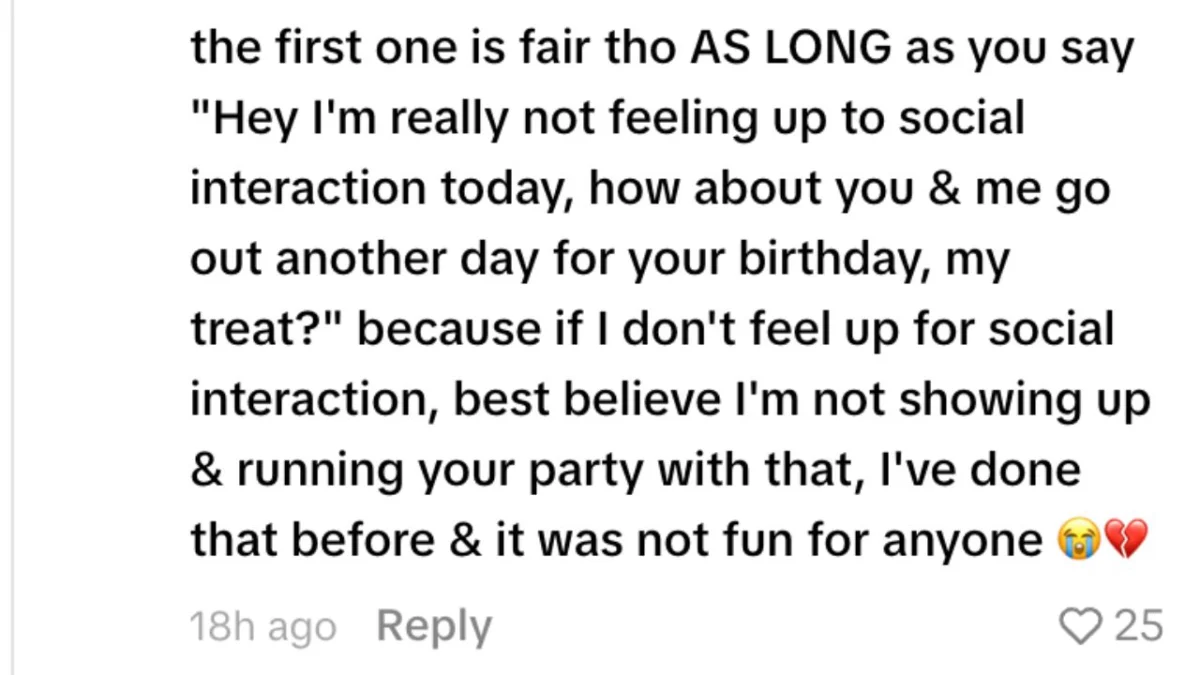
A recent video posted by TikTok user @teaguzzles has ignited a significant online discourse regarding the fundamental nature of friendship, particularly the expectation of mutual inconvenience. The user’s assertion that a "good friend" must be willing to inconvenience themselves for another has resonated with hundreds of thousands, prompting a deep dive into the evolving dynamics of social bonds in the digital age. The discussion, characterized by a mix of agreement, disagreement, and nuanced perspectives, underscores a societal introspection into the effort, sacrifice, and reciprocity inherent in truly supportive friendships.
The Genesis of the Debate: @teaguzzles’ Core Argument
The viral video, which has garnered over 205,600 views, 43,900 likes, and nearly 500 comments since its publication, posited a clear, uncompromising definition of friendship. At its core, @teaguzzles argued, "the one thing I could not stand was someone who will not inconvenience themselves for the sake of a friendship." This statement served as the bedrock for several illustrative examples, designed to clarify the often-unspoken rules of modern social engagement.
The TikTok user initiated her argument by addressing geographical effort: "If you are only willing to hang out with your friend when they make the drive to you and you never make the drive to see them, I don’t think you are a good friend." This point highlights a common friction point in friendships, particularly in sprawling urban or suburban landscapes where travel can be a significant commitment of time and resources. The implication is that a one-sided expectation of travel burden signifies a lack of equitable investment in the relationship.
Further illustrating her perspective, @teaguzzles presented a hypothetical scenario involving a friend’s birthday: "I know it’s your birthday and I said I would come. But I’m just really tired and not feeling it. I don’t have the energy to be social. So I’m not gonna be there." This example targets the issue of commitment to significant life events, suggesting that genuine friendship often requires pushing past personal comfort or temporary fatigue for the sake of another’s milestone. It implies that a pattern of prioritizing personal convenience over a friend’s important moments can erode trust and perceived value within the bond.
Another example delved into practical assistance: "Super busy day today. My friend called me up and said she needs a ride from the mechanic. I technically do have time, but I don’t want to. You’re not a good friend." This scenario directly addresses acts of service, positing that a true friend should be willing to offer tangible help even when it disrupts their own schedule or preferences. The underlying principle is that friendships are not merely for leisure but also for mutual support during times of need. The user explicitly stated that a friendship existing "only on one person’s most convenient, perfect terms" is inherently flawed.
While advocating for inconvenience, @teaguzzles acknowledged that "things happen," such as illness, which legitimately necessitate plan cancellations. However, she emphasized that such instances should be exceptions, not the rule, and that individuals "should be characterized by being willing to inconvenience yourself for your friend." Crucially, she balanced this by asserting that this effort must be reciprocal. "You’re the one going out of your way, and they are never willing to do that for you. That is not a healthy friendship," she concluded, stressing that "you guys should both be willing to inconvenience yourselves for each other." This call for mutual effort and sacrifice resonates with fundamental sociological theories of reciprocity in social exchange.
The Nuance of Financial Etiquette in Friendships
Beyond the realm of time and effort, @teaguzzles also touched upon the often-delicate subject of financial dynamics within friendships. She made a significant exception for individuals who are "actually broke," stating, "If you’re actually broke, do what you gotta do to keep the lights on." This pragmatic approach acknowledges the harsh realities of economic hardship and prioritizes essential needs over social obligations, demonstrating a level of empathy that many viewers appreciated.
In her discussion of shared expenses, the TikTok user advocated for generosity and flexibility. She advised against "Venmo request[ing] them $7 for their share of the Uber, unless you actually really need that 7." This piece of advice speaks to the potential for petty financial transactions to strain friendships, suggesting that small gestures of generosity can often outweigh the precise accounting of every shared cost. However, she quickly qualified this by stating, "Of course, if someone is miserly and never ever pays you back for anything that they should pay you back for, don’t maintain that friendship." This highlights the importance of overall financial reciprocity and fairness, distinguishing between occasional generosity and chronic exploitation. She concluded this segment by encouraging generosity over miserliness in friendships, advocating for a balanced approach where both parties take turns covering costs.
The Digital Echo Chamber: Public Reaction and Sociological Context
The video’s rapid dissemination across TikTok’s platform triggered a robust public debate, reflecting diverse interpretations of friendship obligations. The comments section quickly became a forum for agreement, counter-arguments, and shared experiences. One commenter strongly affirmed the principle of effort beyond driving, writing, "Even if you don’t drive. You can’t tell me that you can’t take the train or the bus for 1 day??? Or take an Uber???" This perspective reinforces the idea that the mode of transport is secondary to the willingness to make an effort to connect. Another commenter echoed the call for mutual effort, stating, "I always say that in a relationship and friendship, both people work together to keep the friendship/relation going, and I stand by it." This comment aligns perfectly with the sociological concept of social exchange theory, which posits that relationships are sustained by a reciprocal exchange of resources, whether tangible or intangible.
However, not all reactions were in full agreement. A dissenting voice offered a different perspective: "I’m not always going to inconvenience myself, and if you expect your friends to always inconvenience themselves for you then you aren’t a good friend." This counter-argument introduces a crucial element of balance, suggesting that an overly demanding expectation of inconvenience can itself be a sign of an unhealthy dynamic. It implies that genuine friendship also involves understanding and respecting a friend’s boundaries and limitations, acknowledging that everyone has finite resources of time, energy, and money. This perspective highlights the complexity of relational ethics, where the line between reasonable expectation and excessive demand can be subjective.
The virality of @teaguzzles’ video underscores the ongoing societal conversation about the state of modern friendships. In an increasingly fast-paced, individualized, and digitally connected world, the traditional definitions of friendship are constantly being re-evaluated. Sociologists and psychologists often point to the concept of "friendship recession," a phenomenon suggesting a decline in close friendships, particularly among adults. Factors contributing to this include increased work demands, geographical mobility, and the superficiality of some online interactions. Against this backdrop, a video that directly addresses the "cost" of friendship—in terms of effort and inconvenience—taps into a deep-seated desire for authentic, reciprocal connections.
Psychological and Sociological Underpinnings of Friendship Reciprocity
The debate sparked by @teaguzzles’ video is deeply rooted in established psychological and sociological theories of human relationships. The core concept of "willingness to inconvenience oneself" is a practical manifestation of reciprocity, a fundamental principle in social psychology. Reciprocity suggests that people tend to respond to a positive action with another positive action, and vice versa. In friendships, this translates to a mutual give-and-take of support, effort, and care. When this reciprocity is perceived as unbalanced, it often leads to resentment and the eventual dissolution of the friendship. Studies on social support networks consistently show that relationships characterized by mutual support and perceived equity are more durable and satisfying.
Furthermore, the concept touches upon social exchange theory, which posits that human relationships are formed and maintained through a process of weighing rewards and costs. While the "rewards" of friendship include emotional support, companionship, and shared experiences, the "costs" include the time, energy, and resources (like driving an hour) expended. A healthy friendship, according to this theory, exists when both parties perceive the rewards to outweigh the costs, and importantly, when the cost-benefit ratio feels equitable for both individuals. The TikTok user’s argument essentially calls for a re-evaluation of what constitutes an acceptable "cost" in a friendship, asserting that a certain degree of inconvenience is a necessary investment.
The examples provided also illustrate altruism and empathy within friendships. Driving a friend from a mechanic, despite a busy day, is an act of altruism—a selfless concern for the well-being of others. The expectation that friends demonstrate such acts reflects a desire for a deeper, more empathetic bond where individuals are genuinely concerned for each other’s welfare, even when it demands a personal sacrifice.
Broader Implications: Social Media’s Role in Defining Relationship Norms
The widespread engagement with @teaguzzles’ video highlights the powerful role of social media platforms like TikTok in shaping and reflecting contemporary social norms. What once might have been a private conversation between friends or a topic for a self-help book is now instantly broadcast to a global audience, allowing for collective deliberation and the co-creation of relationship expectations. This phenomenon democratizes the discussion of interpersonal dynamics but also carries the risk of oversimplifying complex human interactions.
While the video offers a strong, opinionated stance, real-life friendships are inherently nuanced and context-dependent. Factors such as individual personality, life stage, cultural background, and specific circumstances (e.g., a friend dealing with chronic illness or a demanding job) all play a role in defining what constitutes "reasonable" inconvenience. The value of this TikTok discussion, however, lies in its ability to provoke self-reflection among viewers, prompting them to assess their own friendships and their willingness to invest in them.
In an era where digital connections can sometimes feel superficial, the demand for "inconvenience" in friendship serves as a potent reminder of the tangible, often challenging, effort required to cultivate and maintain deep, meaningful bonds. It encourages individuals to look beyond the convenience of a screen and engage in the messy, imperfect, but ultimately rewarding work of genuine human connection. The debate initiated by @teaguzzles is not just about specific actions like driving or paying for an Uber; it’s about the underlying values of commitment, reciprocity, and empathy that define the enduring strength of true friendship in the 21st century. As society continues to navigate the complexities of modern life, these discussions remain vital for fostering healthier, more resilient personal relationships.