Sisilia Frederika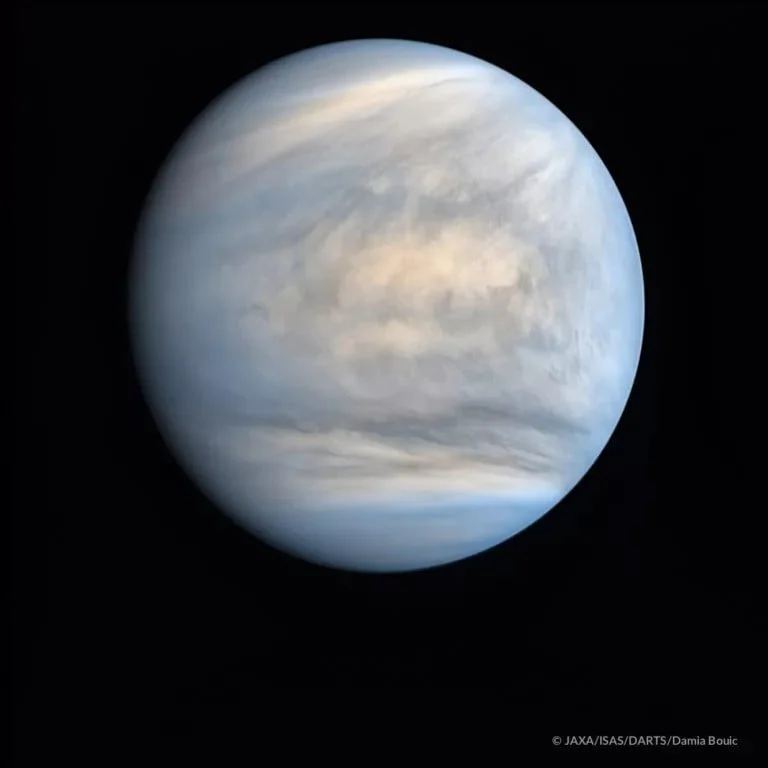
The planet Venus has long occupied a unique position in the collective consciousness of the scientific community, often characterized as Earth’s "evil twin" due to its similar size and composition but radically different environmental evolution. Shrouded in a thick, opaque atmosphere that defies traditional optical observation, the Venusian surface remained a mystery until the advent of radar mapping. While Saturn’s moon Titan shares this atmospheric opacity, the two worlds represent opposite ends of the thermal spectrum. Titan is a cryogenic laboratory of organic chemistry, whereas the surface of Venus is a high-pressure furnace, boasting temperatures capable of melting lead and atmospheric pressures equivalent to being 900 meters underwater on Earth. However, as new research from the Massachusetts Institute of Technology (MIT) suggests, the narrative of Venus as a sterile wasteland may be incomplete. By shifting the focus from the planet’s hellish surface to its temperate cloud decks, an international team of researchers has provided evidence that the building blocks of life—specifically peptides—can survive and even maintain complex structures in the highly acidic environment of the Venusian atmosphere.
A New Paradigm in the Search for Extraterrestrial Life
For decades, the search for life beyond Earth has been guided by the "follow the water" mantra. Astrobiologists have prioritized planets and moons where liquid water is stable, as water serves as the universal solvent for all known biological processes. However, the recent study published in the Proceedings of the National Academy of Sciences (PNAS) challenges this Earth-centric view. The MIT-led team, headed by Dr. Sara Seager, a Professor of Planetary Science and a leading figure in the study of exoplanets, posits that non-Earth-like environments could be viable hosts for life.
The study specifically investigates the stability of peptides in concentrated sulfuric acid. Peptides are short chains of amino acids linked by peptide bonds. In terrestrial biology, these chains fold into complex proteins that perform a vast array of functions, from catalyzing chemical reactions to providing structural support for cells. Previously, the scientific consensus was that the harsh, acidic conditions of Venus would immediately hydrolyze—or break apart—the chemical bonds of any organic molecules. The new findings suggest that this assumption may have been premature.
Experimental Methodology: Probing the Acidic Frontier
To test the resilience of organic molecules in a Venusian-like environment, the researchers conducted laboratory simulations using 98 percent sulfuric acid, mirroring the concentration found in the Venusian cloud layers. The primary tool for this investigation was nuclear magnetic resonance (NMR) spectroscopy. This analytical technique allows scientists to observe the physical and chemical properties of atoms and the molecules in which they are contained by exploiting the magnetic properties of certain atomic nuclei.
During the experiments, the team observed three specific peptides and their behavior over several weeks. Contrary to expectations, the peptides did not degrade. Instead, they remained stable and, more importantly, maintained their folded structures. In biological terms, folding is not a mere structural curiosity; it is a functional necessity. For a protein or peptide to perform a specific biological task, it must "latch onto" a target molecule, a process that requires a highly specific three-dimensional shape.
The stability of these peptides was attributed to the lack of water in the system. On Earth, water is essential for life, but it is also a potent agent of hydrolysis. In the anhydrous (water-free) environment of concentrated sulfuric acid, the chemical bonds of the peptides remained intact. This discovery suggests that if life were to exist in the clouds of Venus, it would not necessarily be "water-based" in the traditional sense, but could instead utilize sulfuric acid as a solvent, provided the biochemistry evolved to handle such conditions.
Historical Context: From 1950s Speculation to Modern Inquiry
The hypothesis that Venus could harbor life is not a modern invention. It has a rich history that spans over seven decades, evolving alongside our technological ability to probe the planet.
- 1950: German physicist Heinz Haber published "Epitome of Space Medicine," in which he first proposed that life could exist within the clouds of Venus. Haber noted that while the surface was likely too hot, the upper atmosphere offered more moderate temperatures.
- 1967: Renowned astronomers Harold Morowitz and Carl Sagan published a landmark paper in Nature. They argued that the Venusian atmosphere, specifically at altitudes where temperature and pressure are Earth-like, could theoretically support an ecosystem of "isopycnic" (buoyant) organisms.
- 1970s-1980s: The Soviet Venera missions and NASA’s Pioneer Venus project provided the first direct data on the atmosphere, confirming the presence of concentrated sulfuric acid and revealing the extreme conditions of the surface.
- 2020: A team led by Jane Greaves announced the detection of phosphine gas in the Venusian clouds. On Earth, phosphine is a byproduct of biological activity or extreme industrial processes. While the discovery remains controversial and debated, it reignited global interest in Venusian astrobiology.
- 2023: Dr. Sara Seager and her colleagues published a study demonstrating that nucleic acid bases (the building blocks of DNA and RNA) are stable in sulfuric acid, setting the stage for the current peptide research.
The Atmospheric "Sweet Spot" of Venus
To understand why researchers are focused on the clouds rather than the surface, one must look at the vertical profile of the Venusian atmosphere. The surface temperature of Venus averages around 464 degrees Celsius (867 degrees Fahrenheit), with a surface pressure of 92 bars. However, as one ascends, the conditions change dramatically.
At an altitude of approximately 48 to 60 kilometers (30 to 37 miles) above the surface, the environment becomes surprisingly hospitable. In this region, the atmospheric pressure is roughly 1 bar—identical to sea level on Earth. The temperatures in this zone range from 0 to 50 degrees Celsius (32 to 122 degrees Fahrenheit). It is within this specific "temperate" layer that the thick clouds of sulfuric acid reside.
While the acidity presents a significant chemical challenge, the physical parameters (pressure and temperature) are the most Earth-like of any environment in the solar system, excluding Earth itself. This has led scientists to speculate that the clouds could serve as a refugium for life-forms that may have originated on the surface billions of years ago, before a runaway greenhouse effect transformed the planet.
Implications for Future Exploration and the Morning Star Missions
The results of the MIT study provide a critical scientific foundation for upcoming robotic missions. Dr. Seager is currently the Principal Investigator for the "Morning Star Missions to Venus," a series of privately funded endeavors aimed at searching for signs of life and habitability in the Venusian atmosphere.
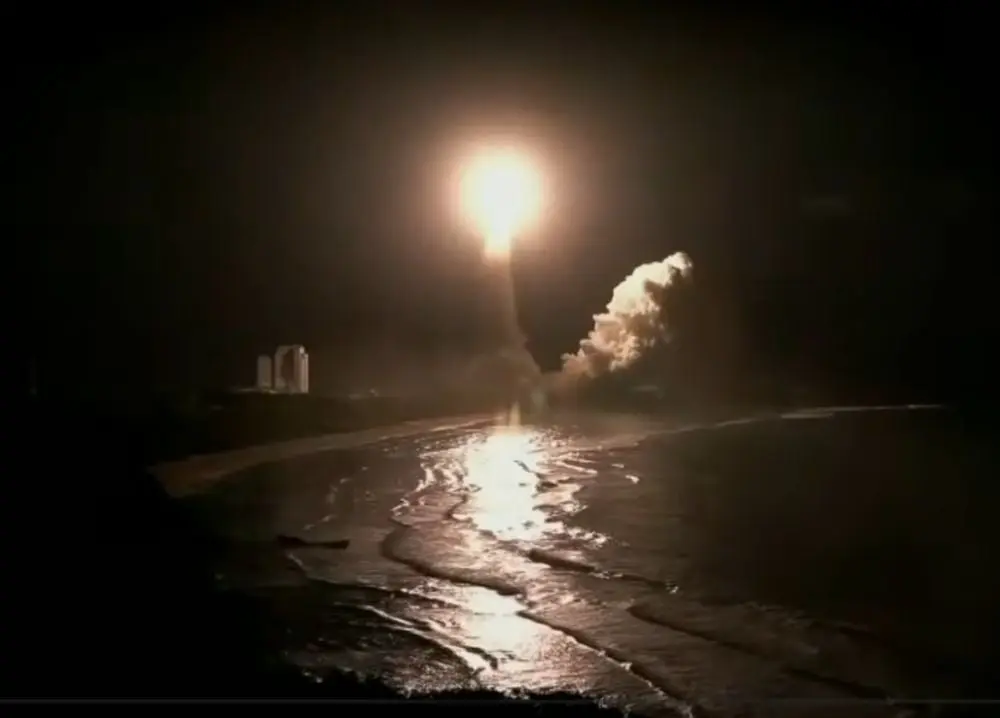
The first of these missions, developed in collaboration with Rocket Lab, is scheduled to launch in the mid-2020s. It will deploy a small probe designed to spend approximately five minutes descending through the cloud layers. During this brief window, the probe will use a dynamic nephelometer (an instrument that measures suspended particles) to search for organic molecules.
"Before this, people thought that peptides couldn’t survive in sulfuric acid," Dr. Seager noted in a statement. "Showing peptides are not only stable, but also fold, is a really big deal." This shift in understanding allows mission planners to broaden their search parameters, looking for complex biological structures that were previously thought impossible in an acidic medium.
Broader Impact on Astrobiology and Exoplanetary Science
The implications of this research extend far beyond our neighbor planet. In the study of exoplanets—planets orbiting other stars—astronomers typically look for "Earth 2.0" candidates: rocky planets in the habitable zone of their parent stars where liquid water can exist.
However, if the MIT study’s conclusions are correct, the definition of a "habitable zone" may need to be expanded. If life can thrive in concentrated sulfuric acid or other non-aqueous solvents, then planets previously dismissed as "Venus-like" or "hostile" could be viable candidates for biosignature searches. The James Webb Space Telescope (JWST) is currently capable of analyzing the atmospheric compositions of exoplanets, and this research provides a new set of chemical markers for scientists to monitor.
Furthermore, the study highlights a crucial aspect of chemical evolution: the role of the solvent. On Earth, water’s ability to break bonds is a double-edged sword; it facilitates metabolism but also necessitates complex cellular mechanisms to prevent the degradation of genetic material. In a sulfuric acid environment, the relative lack of water might actually facilitate the long-term stability of certain organic structures, potentially allowing for a different, yet equally complex, form of "acidic life."
Conclusion: A Shift in the Scientific Horizon
The study of peptides in sulfuric acid represents a milestone in planetary science. It moves the conversation from theoretical speculation to empirical evidence, demonstrating that the fundamental components of life are more resilient than previously imagined. While the discovery of stable peptides is not a direct detection of life, it removes a significant chemical barrier to the possibility of a Venusian biosphere.
As the scientific community prepares for a new decade of Venusian exploration—including NASA’s DAVINCI and VERITAS missions and the European Space Agency’s EnVision—the focus has shifted. Venus is no longer just a cautionary tale of climate change or a dead volcanic rock; it has become a primary laboratory for testing the limits of biology. The coming years will determine whether the "mischievous" clouds of Venus hide a secret that could fundamentally alter our understanding of life’s place in the universe. In the words of the research team, this is why we pursue science: to challenge assumptions and to keep looking up, even at the most unlikely of candidates.