Sisilia Frederika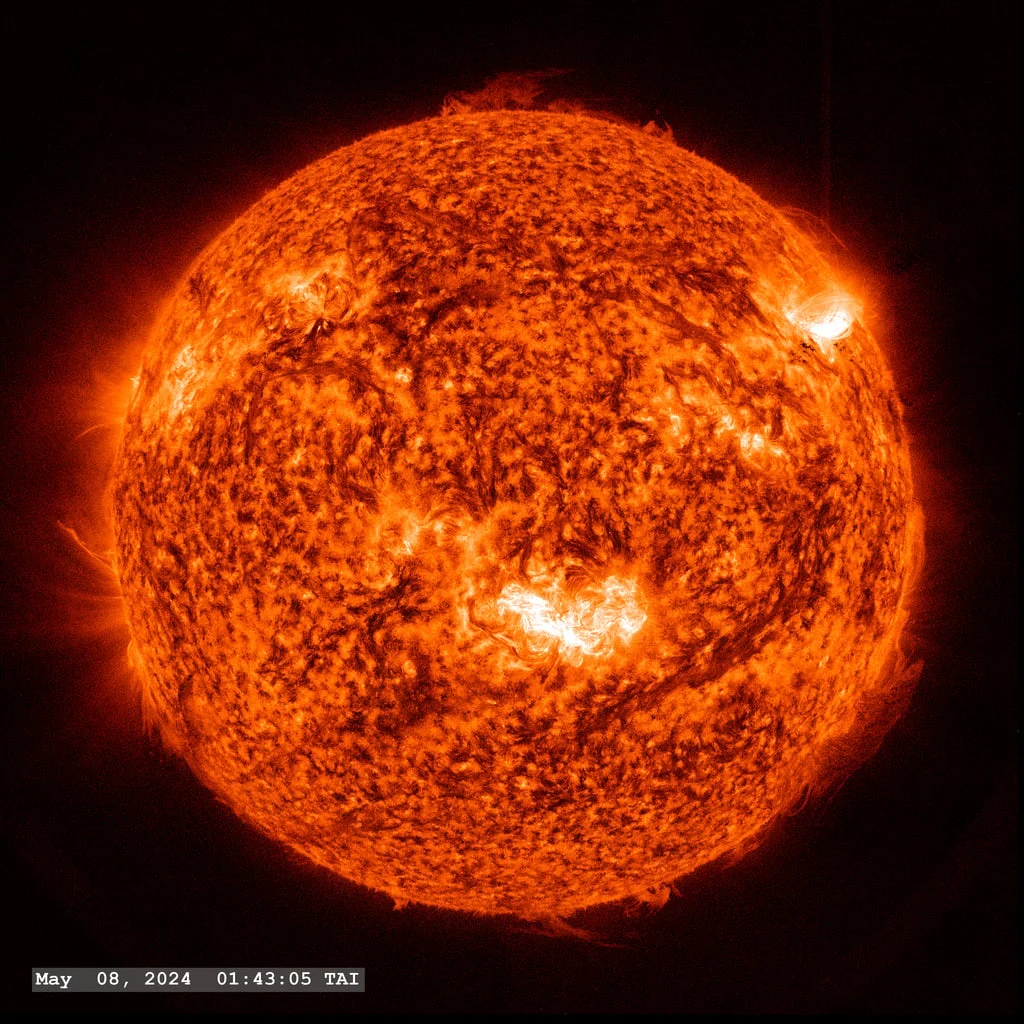
Space weather remains one of the most volatile and least understood frontiers of modern astrophysics, yet its impact on terrestrial technology and infrastructure is profound. At the heart of this discipline lies the study of active regions (ARs), which are localized areas of the Sun’s photosphere characterized by intense magnetic activity. These regions serve as the primary conduits for solar flares and coronal mass ejections (CMEs), phenomena capable of disrupting satellite communications, global positioning systems, and power grids on Earth. While many active regions emerge and dissipate within days, a subset known as Long-Lived Active Regions (LLARs) persists for multiple solar rotations, presenting a unique challenge for researchers. A recent study by Emily Mason and Kara Kniezewski, published in The Astrophysical Journal, has provided a groundbreaking statistical overview of these persistent solar features, uncovering their disproportionate role in generating high-energy solar events and highlighting the systemic difficulties in tracking them across the Sun’s rotating surface.
The Mechanics of Solar Tracking and the Carrington Rotation
To comprehend the significance of the Mason and Kniezewski study, one must first understand the complexities of solar observation. Since 1972, the National Oceanic and Atmospheric Administration (NOAA) has maintained a standardized system for identifying sunspots and active regions. Each identified region is assigned a sequential five-digit number. However, this system is inherently limited by the Sun’s physical properties. Unlike the Earth, which rotates as a solid body, the Sun is composed of plasma and exhibits differential rotation. This phenomenon, known as Carrington rotation, results in the solar equator rotating significantly faster than the polar regions.
This differential rotation creates a "tracking gap." When an active region is located on the side of the Sun facing Earth, it can be monitored with high precision using instruments like those aboard the Solar Dynamics Observatory (SDO). However, as the Sun rotates, these regions eventually move toward the western limb and disappear from view. A robust active region may survive its journey across the solar farside—a transit that takes approximately two weeks—before reappearing on the eastern limb. Under the current NOAA protocol, when such a region reappears, it is treated as a new entity and assigned a new sequential number. This lack of continuity creates a fragmented dataset, making it difficult for scientists to study the full life cycle of the Sun’s most enduring magnetic structures.
To bridge this gap, researchers must manually correlate data from various sources, including extreme ultraviolet (EUV) maps and farside helioseismic data. Helioseismology allows scientists to "see" through the Sun by measuring acoustic waves that travel through its interior, providing a glimpse of magnetic concentrations on the farside. Despite these technological tools, the process of linking a "new" NOAA number to an "old" one remains labor-intensive and prone to error, which is why the comprehensive manual analysis conducted by Mason and Kniezewski is considered a vital contribution to the field.
A Statistical Profile of Long-Lived Active Regions
The research team analyzed 1,611 unique NOAA active region designations recorded between 2011 and 2019, a period covering the majority of Solar Cycle 24. Through meticulous cross-referencing, they identified 101 distinct LLARs. These 101 regions were responsible for 214 of the individual NOAA numbers in the database, confirming that many LLARs survive at least one full rotation (approximately 27 days) and some persist for several.
The study revealed that LLARs constitute approximately 13% of all identified active regions. While they are relatively rare, their physical characteristics distinguish them sharply from their short-lived counterparts. LLARs are significantly larger in surface area and possess a much higher concentration of magnetic flux. Magnetic flux is essentially a measure of the total magnetic field passing through a given area; in the context of the Sun, higher flux often correlates with more energy available for release.
Interestingly, the study utilized the Mt. Wilson classification scheme—a method used since the early 20th century to categorize sunspots based on their magnetic complexity (e.g., Alpha, Beta, Gamma, and Delta classes). Surprisingly, the researchers found that LLARs do not necessarily exhibit higher magnetic complexity than standard ARs. Their distribution across the Mt. Wilson scale was remarkably similar to shorter-lived regions. This finding suggests that longevity and size, rather than just the intricacy of the magnetic tangles, are the primary drivers of an active region’s long-term behavior.
The Explosive Potential of LLARs
Perhaps the most startling revelation of the research is the disproportionate explosiveness of LLARs. While they represent only a small fraction of total active regions, they are responsible for a vast majority of the Sun’s high-energy output. The study quantified this by comparing the flare rates of LLARs against those of standard ARs.
The data showed that LLARs are:
- Four times as likely to produce C-class flares (small events with few terrestrial consequences).
- Five times as likely to produce M-class flares (medium-sized events that can cause brief radio blackouts).
- Six times as likely to produce X-class flares (the most powerful category, capable of causing planet-wide radio blackouts and long-lasting radiation storms).
This heightened activity level raises fundamental questions about solar physics. Mason and Kniezewski hypothesize that LLARs may be "rooted" much deeper in the solar interior than typical active regions. In this theory, the magnetic flux that forms an LLAR originates from the tachocline—the transition region between the Sun’s radiative and convective zones—where the solar dynamo is thought to be most active. If these regions are anchored deeper, they would have access to a more substantial and sustained reservoir of magnetic energy, explaining both their longevity and their propensity for violent eruptions.
The Role and Limitations of Citizen Science
The study also shed light on the challenges of processing the vast amounts of data generated by modern solar observatories. Initially, some of the data categorization was intended to be handled through "Solar Active Region Spotters," a citizen science project hosted on the Zooniverse platform. The goal was to determine if untrained volunteers could accurately track the evolution of active regions by interpreting magnetograms, EUV images, and coronal loops.
However, the task proved too complex for the general public. The accuracy of the volunteers in tracking the continuity of active regions was approximately 64%, a figure deemed insufficient for rigorous scientific publication. The difficulty lay in the nuanced interpretation of magnetic polarities and the subtle ways in which active regions morph as they transit the solar disk. While the project did not provide the primary data for the final paper, the authors noted its success as an educational and outreach tool, fostering public interest in heliophysics and the mechanics of our home star.
The failure of the crowdsourced approach underscores the need for more sophisticated automated systems. Current machine learning algorithms are being developed to track solar features, but they often struggle with the same "farside gap" that humans do. The Mason and Kniezewski study provides the "ground truth" data necessary to train future AI models to better identify and track these regions across multiple rotations.
Implications for Space Weather Forecasting
The findings have significant implications for how agencies like NOAA and NASA approach space weather forecasting. Currently, solar storm warnings are often reactive, based on the observation of a flare or CME as it occurs. However, if LLARs can be identified early in their life cycle as high-risk candidates for X-class flares, forecasters could provide longer lead times for satellite operators and power grid managers.
The current NOAA numbering system, while historically consistent, acts as a barrier to this proactive approach. By resetting the "identity" of an active region every time it disappears behind the solar limb, the system obscures the cumulative history of the region’s energy buildup. If a region has already produced three M-class flares on the farside, that information is critical for predicting its behavior when it returns to the Earth-facing side.
However, updating the global standards for solar tracking is a monumental task. As the study notes, reconfiguring the NOAA database to allow for "parent-child" relationships between numbers or implementing a persistent ID system would require significant computational resources and international coordination. In an era of tightening government budgets, such administrative overhauls are often deprioritized in favor of immediate operational needs.
Chronology of Solar Cycle Observation and Research Milestones
The research by Mason and Kniezewski sits within a broader timeline of solar science that has evolved rapidly over the last half-century:
- 1972: NOAA begins the sequential numbering of sunspot regions, establishing the baseline for modern solar record-keeping.
- 1859: The Carrington Event serves as the historical benchmark for the most powerful solar storm ever recorded, a reminder of the potential devastation LLARs can cause.
- 2010: The launch of the Solar Dynamics Observatory (SDO) provides high-resolution, multi-wavelength images of the Sun every few seconds, revolutionizing the data available for AR tracking.
- 2011–2019: The window of the Mason-Kniezewski study, capturing the rise and fall of Solar Cycle 24.
- 2023–2024: Solar Cycle 25 begins to ramp up toward a predicted solar maximum, with several LLARs already causing significant geomagnetic storms on Earth.
Conclusion and Future Outlook
The study of Long-Lived Active Regions reveals a Sun that is far more complex and interconnected than a simple collection of fleeting sunspots. LLARs are the "marathon runners" of solar activity—massive, deeply rooted structures that dominate the Sun’s eruptive output. By identifying that a mere 13% of regions are responsible for the vast majority of extreme solar flares, Mason and Kniezewski have provided a roadmap for future predictive models.
As humanity becomes increasingly dependent on space-based technology, our vulnerability to solar disruptions grows. The transition from merely monitoring space weather to accurately predicting it will require a shift in how we categorize and track solar phenomena. While manual data correlation has provided these initial insights, the future of the field likely lies in a combination of deep-space solar observatories—positioned to see the Sun from multiple angles simultaneously—and advanced AI systems capable of maintaining a continuous "biography" for every active region on the Sun. Until then, the work of solar physicists remains a vital line of defense against the unpredictable temper of our star.