Chandra Wibowo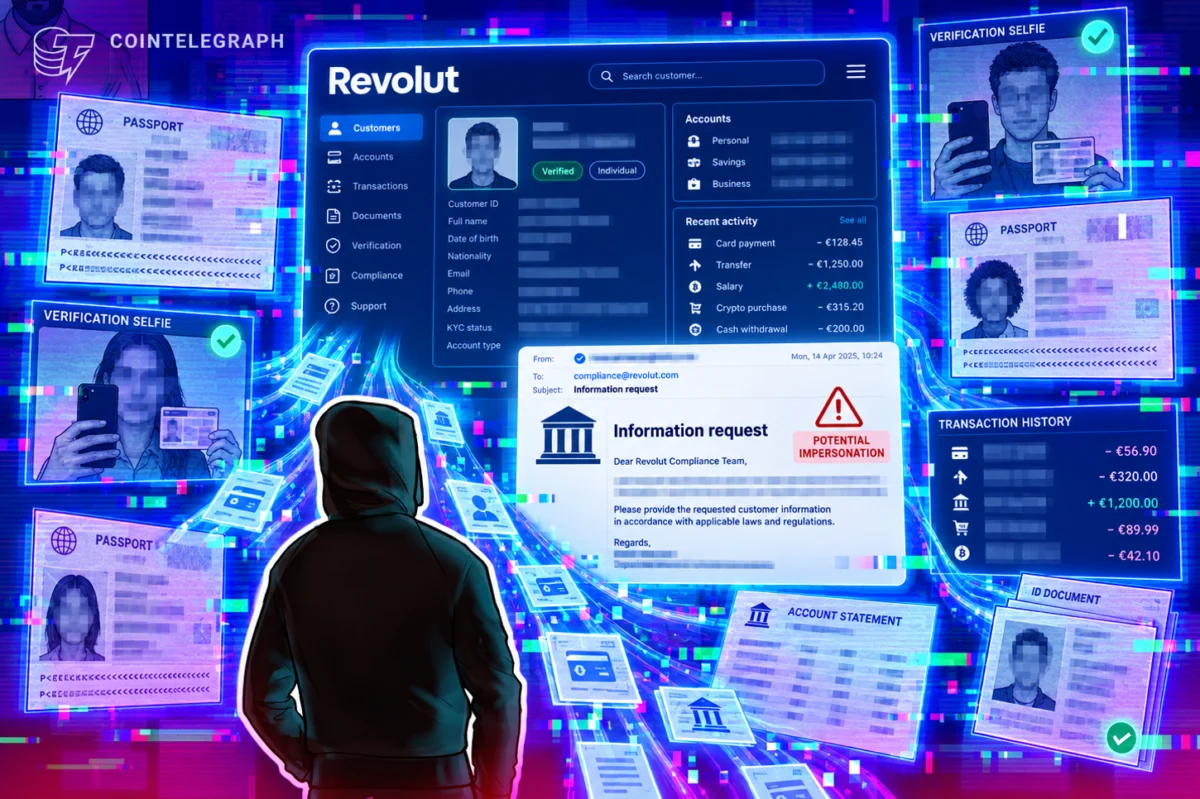
Financial technology giant Revolut has confirmed a significant data breach that exposed sensitive customer information, including passport copies, verification selfies, and detailed transaction histories. The breach occurred after an unauthorized third party successfully exploited a sophisticated phishing scheme, impersonating a legitimate government agency through a spoofed email domain. The incident, which came to light following a report by International Cyber Digest on X (formerly Twitter), has raised serious concerns about the security protocols of fintech companies and the efficacy of Know Your Customer (KYC) regulations.
The Genesis of the Breach: A Deceptive Government Impersonation
The incident unfolded when Revolut received a series of fraudulent requests for customer data. These requests, originating from an email address that convincingly mimicked a legitimate government agency’s domain, managed to bypass the company’s initial authentication checks. According to a statement released by Revolut on Saturday, the perpetrators employed a "sophisticated external impersonation scam." The company spokesperson elaborated that the unauthorized third party "utilised a legitimate government agency domain email to submit fraudulent requests for information."
While the initial authentication processes were seemingly robust enough to pass the spoofed domain, Revolut’s internal systems eventually flagged the requests as inauthentic. The exact timeline of the breach is still being pieced together, but it is understood that the fraudulent requests were processed before the deception was fully uncovered. Upon detection, Revolut acted swiftly to block the malicious email address and initiated contact with the relevant government agency to alert them of the misuse of their domain. Furthermore, the company engaged with enforcement agencies and financial regulators to report the incident and cooperate with any ensuing investigations.
Customers whose data was compromised were notified on Friday, according to reports. Revolut emphasized that its core systems and customer funds remain unaffected by the breach. "We have contacted the limited number of impacted individuals directly to inform them and provide support," a company spokesperson stated. This reassurance, however, does little to assuage the anxieties of those whose personal and financial data has been accessed by unknown actors.
The Scope and Nature of Compromised Data
The compromised data is particularly sensitive, encompassing highly personal identification documents and detailed financial activity. Copies of passports, which serve as primary identification for many individuals, were among the leaked information. This poses a significant risk of identity theft, allowing malicious actors to potentially open new accounts, apply for credit, or engage in other fraudulent activities using the victims’ identities.
In addition to identity documents, verification selfies, which are typically used by financial institutions to confirm a user’s identity during onboarding or for high-risk transactions, were also accessed. These images, when combined with other personal data, can further facilitate sophisticated impersonation schemes.
Perhaps most concerning for many users is the exposure of full transaction histories. This detailed financial data provides a granular view of an individual’s spending habits, income sources, and financial relationships, offering a treasure trove of information for further exploitation, including targeted scams, blackmail, or even insider trading if the compromised users are high-profile individuals.
Crypto sleuth ZachXBT, a prominent figure in the cryptocurrency community known for investigating illicit activities, reportedly suggested that the incident was limited in scope and primarily targeted high-net-worth users. While this might offer some solace to the broader user base, it does not diminish the severity of the breach for those directly affected.
Reactions and Criticisms: The KYC Debate Reignited
The Revolut data breach has predictably ignited a heated debate on social media, particularly on X, regarding the necessity and effectiveness of mandatory Know Your Customer (KYC) regulations in the financial sector. Many users expressed outrage and concern over the fact that their sensitive data was leaked, even after undergoing rigorous verification processes.
Marc Zeller, a notable figure in the cryptocurrency space, voiced his dismay on X, stating that he woke up to find all his data leaked by Revolut. He articulated a widely shared sentiment: "Sharp reminder that KYC hasn’t produced meaningful upside and has put many in harm’s way." This sentiment reflects a growing disillusionment among some users who believe that KYC, while intended to prevent illicit activities like money laundering, inadvertently creates a centralized repository of sensitive data that becomes a prime target for hackers.
The argument posits that by mandating the collection and storage of extensive personal information, financial institutions, including fintechs, become custodians of data that, if breached, can have devastating consequences for individuals. Critics argue that the current KYC framework forces users to trust multiple entities with their most sensitive information, increasing the overall attack surface.
Revolut’s Response and Security Measures
In the immediate aftermath of the breach detection, Revolut implemented several measures to mitigate further damage and enhance security. The company spokesperson confirmed that the unauthorized email address used in the phishing attack was immediately blocked. Furthermore, Revolut proactively alerted the relevant government agency whose domain was impersonated, ensuring they were aware of the misuse and could take appropriate action.
The company also engaged with law enforcement agencies and financial regulators, signaling a commitment to transparency and cooperation in addressing the incident. This multi-pronged approach aims to not only contain the immediate fallout but also to prevent similar attacks in the future.
Revolut’s statement explicitly mentioned that "Revolut systems and customer funds are unaffected." This is a critical point, as it suggests that the breach was confined to the exfiltration of data rather than a compromise of the company’s operational infrastructure or direct access to customer accounts for financial theft. However, the long-term implications of compromised personal data, such as identity theft, remain a significant concern.
Broader Implications and Future Considerations
The Revolut data breach serves as a stark reminder of the persistent and evolving threats in the digital landscape. The sophistication of the attack, utilizing a legitimate government domain to bypass security, highlights the increasing ingenuity of cybercriminals. This incident underscores the need for financial institutions to continuously evolve their security protocols and invest in advanced threat detection mechanisms.
The debate surrounding KYC is likely to intensify following this event. While KYC is a regulatory requirement designed to combat financial crime, its implementation and the subsequent storage of vast amounts of sensitive data present inherent risks. This breach could prompt a re-evaluation of how KYC data is collected, stored, and protected, potentially leading to calls for more decentralized or privacy-preserving verification methods.
Furthermore, the incident raises questions about the responsibility of third-party service providers and the potential for vulnerabilities within supply chains. If the government domain itself was compromised or if there were any weaknesses in its security that allowed for such effective spoofing, it would indicate a broader systemic issue.
The fact that the breach was reportedly aimed at high-net-worth individuals also suggests a targeted approach by cybercriminals seeking to maximize their gains. This could lead to increased scrutiny of how financial institutions cater to and protect their more affluent clientele.
Revolut’s commitment to notifying affected customers and providing support is a standard but crucial step. However, the long-term impact of this data leak will depend on the perpetrators’ actions and the ability of individuals to mitigate the risks of identity theft and fraud. The company will likely face increased regulatory scrutiny and pressure from its customer base to demonstrate enhanced security measures.
Conclusion: A Call for Vigilance and Innovation
The Revolut data breach is a significant event that has exposed vulnerabilities in the digital financial ecosystem. It highlights the ongoing arms race between cybersecurity professionals and cybercriminals, where sophisticated social engineering tactics can bypass even advanced technological defenses. While Revolut has taken steps to address the immediate situation, the incident serves as a wake-up call for the entire fintech industry and regulatory bodies.
The focus moving forward will likely be on strengthening authentication protocols, improving threat intelligence, and exploring innovative solutions for data protection and identity verification. The debate over KYC will continue, pushing for a balance between regulatory compliance and individual privacy. Ultimately, the Revolut breach underscores the critical need for continuous vigilance, adaptive security strategies, and a collective effort to safeguard sensitive customer data in an increasingly interconnected world. The trust placed in financial institutions by their customers is paramount, and incidents like these can have a lasting impact on that trust.