George Chandra Eka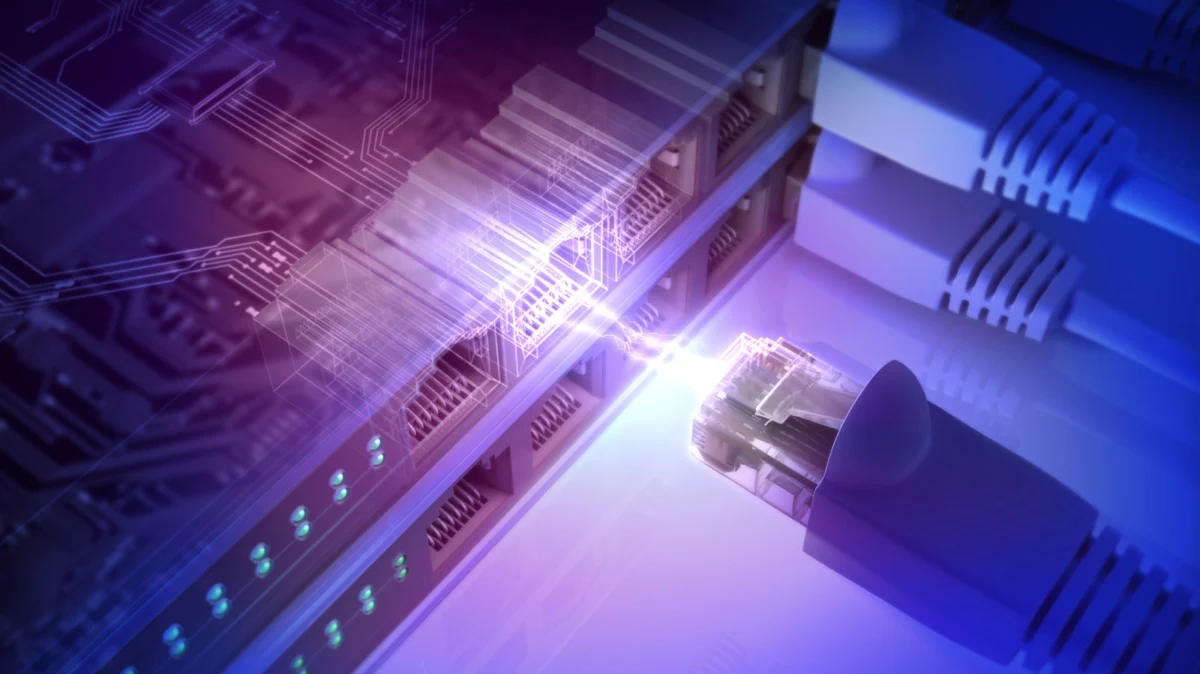
The reliability and speed of a wired internet connection, a cornerstone of modern digital infrastructure, are fundamentally governed by the specifications of the Ethernet cable employed, particularly its length and category. While a common understanding exists that Ethernet cables have a maximum effective range, the nuances of this limitation, including the precise point at which performance degradation occurs, are often overlooked. The widely accepted maximum standard length for twisted-pair Ethernet cabling, such as Cat5e, Cat6, and Cat6a, is 100 meters (approximately 328 feet), a benchmark established by the Institute of Electrical and Electronics Engineers (IEEE) and TIA/EIA standards to ensure consistent and dependable data transmission. This seemingly arbitrary number is, in fact, the product of extensive engineering considerations designed to mitigate signal degradation caused by factors like attenuation, crosstalk, and propagation delay, which intensify with increased cable length.
The Foundation of Ethernet Standards: The 100-Meter Benchmark
The 100-meter (328-foot) standard for twisted-pair Ethernet cabling is not an arbitrary guideline but a carefully calculated limit derived from the physical properties of copper wire and the requirements for reliable data communication. This specification, primarily codified within the IEEE 802.3 Ethernet standards and TIA/EIA-568 commercial building telecommunications cabling standards, ensures that a signal transmitted from one active network device can reach another with sufficient strength and integrity to be accurately interpreted. The 100-meter limit is designed to encompass the entire channel length, which in a structured cabling environment typically includes up to 90 meters (295 feet) of horizontal, solid-core permanent cabling and up to 10 meters (33 feet) of stranded patch cables at either end, connecting to network devices and wall outlets. This allowance accounts for the inherent signal loss and interference that accumulate over distance, guaranteeing that even at the maximum length, the signal-to-noise ratio remains within acceptable parameters for the specified data rate.
For standard Gigabit Ethernet (1000BASE-T), a robust Cat5e or Cat6 cable can reliably maintain its 1 Gbps speed over the full 100-meter span. However, as network speeds escalate to 10 Gigabit Ethernet (10GBASE-T) and beyond, the relationship between cable length and performance becomes more intricate. Higher frequencies used for faster data rates are more susceptible to attenuation and various forms of crosstalk, meaning that certain cable categories might not sustain their peak performance over the entire 100-meter distance when operating at their highest specified speeds. This distinction underscores the critical importance of selecting the appropriate cable category based not only on desired speed but also on the required length of the run.
Evolution of Ethernet Cabling: A Chronology of Categories
The development of Ethernet cabling categories represents a chronological advancement driven by the increasing demand for higher data transmission speeds and improved signal integrity. Each new category introduces enhancements in cable construction, twisting patterns, and sometimes shielding, to support greater bandwidth and combat electromagnetic interference more effectively.
-
Early Categories (Cat1-Cat4): These older categories are largely obsolete for modern data networking. Cat1 was designed for basic voice communication (analog telephone lines), while Cat2, Cat3, and Cat4 supported early data networks with speeds up to 10 Mbps and 16 Mbps, respectively. They operated at much lower frequencies and lacked the necessary specifications for contemporary high-speed data.
-
Category 5e (Cat5e): Introduced in the late 1990s, Cat5e (Enhanced Category 5) quickly became the industry standard for Fast Ethernet (100BASE-T) and, crucially, Gigabit Ethernet (1000BASE-T). It supports data rates of up to 1 Gbps over the full 100-meter length, operating at a bandwidth of 100 MHz. Its widespread adoption was due to its cost-effectiveness and ability to reliably deliver Gigabit speeds, making it suitable for most home and small office networks.
-
Category 6 (Cat6): Emerging in the early 2000s, Cat6 was designed to support higher frequencies, up to 250 MHz, and offers improved specifications for crosstalk and system noise compared to Cat5e. While it fully supports 1 Gbps over 100 meters, its notable feature is its ability to support 10 Gigabit Ethernet (10GBASE-T) over shorter distances. Specifically, 10 Gbps performance on Cat6 is reliable up to approximately 55 meters (180 feet). Beyond this length, the signal degradation, particularly from alien crosstalk (interference from adjacent cables), can compromise 10 Gbps performance, causing it to revert to 1 Gbps or experience errors. This limitation made Cat6 a transitional solution for 10 Gbps.
-
Category 6a (Cat6a): (Augmented Category 6) was developed to fully address the requirements of 10 Gigabit Ethernet over the entire 100-meter length. Introduced around 2008, Cat6a cables operate at a higher frequency bandwidth of 500 MHz and incorporate design improvements, often including thicker insulation or internal splines, to minimize alien crosstalk. This makes Cat6a the recommended choice for reliable 10 Gbps deployments in environments requiring longer runs.
-
Category 7 (Cat7) and 7a (Cat7a): Predominantly an ISO/IEC standard rather than a TIA/EIA one, Cat7 and Cat7a are designed for even higher performance. Cat7 supports 10 Gbps over 100 meters at 600 MHz, while Cat7a extends this to 1000 MHz. A key distinguishing feature of Cat7/7a is its individual shielding for each twisted pair, in addition to an overall cable shield (S/FTP), providing superior protection against crosstalk and EMI. While technically capable, their proprietary GG45 or TERA connectors (though compatible with RJ45) and higher cost have limited their widespread adoption in North America compared to Cat6a.
-
Category 8 (Cat8): The latest twisted-pair standard, Cat8 is designed for extremely high-speed data center applications. It supports 25 Gigabit Ethernet (25GBASE-T) and 40 Gigabit Ethernet (40GBASE-T) over much shorter distances, typically up to 30 meters (98 feet), operating at a bandwidth of 2000 MHz. Cat8 cables are always shielded (S/FTP or F/UTP) and require specific connectors (RJ45 compatible) to handle these frequencies and speeds effectively. They are not intended for general long-distance networking but for server-to-switch connections within racks.
| Cable Category | Max Speed (Standard Length) | Max Bandwidth | Max Length for 1 Gbps | Max Length for 10 Gbps | Max Length for 25/40 Gbps | Key Feature/Application |
|---|---|---|---|---|---|---|
| Cat5e | 1 Gbps | 100 MHz | 100 meters | N/A | N/A | Cost-effective Gigabit Ethernet |
| Cat6 | 1 Gbps (10 Gbps short) | 250 MHz | 100 meters | 55 meters | N/A | Transitional 10 Gbps, improved noise |
| Cat6a | 10 Gbps | 500 MHz | 100 meters | 100 meters | N/A | Full-length 10 Gigabit Ethernet |
| Cat7/7a | 10 Gbps (future-proof) | 600/1000 MHz | 100 meters | 100 meters | N/A | Individually shielded pairs, higher freq |
| Cat8 | 25/40 Gbps | 2000 MHz | N/A | N/A | 30 meters | Data center, ultra-high speed, short runs |
Technical Underpinnings: Factors Influencing Signal Integrity
The reliable transmission of data over an Ethernet cable is a complex interplay of electrical phenomena. Beyond mere length, several technical factors critically impact signal integrity:
-
Attenuation: This refers to the loss of signal strength (voltage) as it travels along the cable. Attenuation increases with both cable length and frequency. At longer distances, the electrical resistance of the copper wires converts some of the signal’s energy into heat, causing the signal to weaken. Higher data rates, which use higher frequencies, experience greater attenuation, making it a primary limiting factor for long, high-speed runs.
-
Crosstalk: This is the unwanted coupling of signals between adjacent wire pairs within the same cable.
- Near-End Crosstalk (NEXT): Occurs when the signal transmitted on one pair induces a signal on an adjacent pair at the same end of the cable.
- Far-End Crosstalk (FEXT): Occurs when the signal transmitted on one pair induces a signal on an adjacent pair at the opposite end of the cable.
- Alien Crosstalk (AXT): A more severe form of crosstalk, especially problematic for 10 Gbps and faster speeds, where interference occurs between signals in different cables bundled together. Advanced cable designs (e.g., Cat6a with larger twisting patterns, internal splines, or thicker insulation) are specifically engineered to mitigate crosstalk.
-
Impedance Matching: Ethernet cables are designed with a characteristic impedance of 100 ohms (±15%). Maintaining consistent impedance throughout the cable and at connection points is crucial. Mismatches can cause signal reflections, where portions of the signal bounce back towards the source, leading to data errors and reduced effective throughput. Connectors and termination quality play a significant role here.
-
Propagation Delay and Skew:
- Propagation Delay: The time it takes for a signal to travel from one end of the cable to the other. Longer cables naturally have higher propagation delays.
- Propagation Delay Skew: The difference in propagation delay between the fastest and slowest wire pairs within the same cable. Since data is transmitted across multiple pairs simultaneously, significant skew can cause bits from different pairs to arrive at the receiver at slightly different times, making it difficult for the receiver to correctly reassemble the data stream. High-quality cables minimize skew.
-
Shielding (UTP vs. STP/FTP):
- Unshielded Twisted Pair (UTP): The most common type, where individual wire pairs are twisted but not shielded. Relies on the twisting to cancel out EMI.
- Shielded Twisted Pair (STP/FTP/S/FTP): Incorporates metallic shielding (foil or braid) around individual pairs or the entire cable. This shielding provides superior protection against external electromagnetic interference (EMI) and reduces signal emissions from the cable itself, which is vital in noisy environments or for high-frequency applications like Cat7/7a and Cat8. While effective, shielding requires proper grounding and can make cables stiffer and more challenging to install.
Beyond the Limit: Strategies for Extended Network Runs
When the physical distance between two network devices exceeds the 100-meter limit for copper Ethernet, or when the performance requirements demand absolute immunity to electrical interference, alternative solutions must be employed. Relying on an extra-long, non-standard copper cable beyond its rated distance is generally ill-advised, as it leads to unpredictable performance, frequent errors, and potential network instability.
-
Ethernet Switches and Repeaters: For runs slightly exceeding the 100-meter limit, an active network device like an Ethernet switch or repeater can be deployed at an intermediate point. These devices regenerate the electrical signal, effectively creating two separate 100-meter segments. A switch also provides additional ports, enabling the expansion of the network. This method is cost-effective for modest extensions but adds points of failure and power requirements.
-
Fiber Optic Cabling: For significant distances, very high bandwidth requirements, or environments prone to severe electromagnetic interference, fiber optic cabling is the superior solution. Fiber optic cables transmit data using light pulses through glass or plastic strands, rather than electrical signals over copper. This offers several advantages:
- Immense Distance: Fiber can transmit data reliably over kilometers (e.g., 2 km for multi-mode, tens of kilometers for single-mode), far exceeding copper’s limitations.
- Immunity to EMI: Since light is not affected by electromagnetic fields, fiber optic cables are completely immune to electrical interference and ground loop issues.
- Higher Bandwidth: Fiber inherently supports much higher data rates, making it future-proof for evolving network speeds.
Fiber doesn’t connect directly to copper Ethernet ports. To integrate fiber into a copper-based network, media converters or fiber-capable switches are necessary. A media converter translates electrical Ethernet signals into optical signals and vice-versa, allowing a fiber segment to be seamlessly inserted into a copper network. Fiber-capable switches have dedicated SFP (Small Form-Factor Pluggable) or SFP+ ports that accept fiber transceivers.
-
Power over Ethernet (PoE) Considerations: For devices that receive both data and power over a single Ethernet cable (e.g., IP cameras, VoIP phones, wireless access points), the length of the run introduces an additional layer of complexity. While the 100-meter data transmission limit generally applies, the power delivery aspect of PoE is more sensitive to cable length and quality. Longer runs lead to increased voltage drop due to cable resistance. If the voltage drop is too significant, the powered device (PD) may not receive sufficient power to operate correctly, even if data transmission is stable. For PoE applications, it is crucial to use cables with appropriate gauge (e.g., 23 AWG for Cat6, thicker than 24 AWG for Cat5e) to minimize resistance and ensure adequate power delivery over the specified distance, especially for higher power PoE standards (PoE+, UPoE). Careful planning and adherence to manufacturer specifications for both the PoE switch and the powered device are essential.
Expert Recommendations and Best Practices
Industry experts, including network engineers and standards bodies like TIA/EIA, consistently advocate for adherence to established cabling standards and best practices to ensure optimal network performance and longevity.
- Match Cable to Application: A common pitfall is "over-cabling" – using a cable category far exceeding current or foreseeable needs. For instance, deploying Cat8 for a network that will only ever utilize 1 Gbps speeds is an unnecessary expense. For most residential and small business applications running 1 Gbps or even 2.5/5 Gbps (over shorter distances with newer equipment), Cat5e or Cat6 remains perfectly adequate. For new installations requiring reliable 10 Gbps over full runs, Cat6a is the recommended minimum.
- Quality of Cable and Components: The quality of the cable itself, including its copper purity, twist consistency, and jacket material, significantly impacts performance. Equally important are the quality of connectors (RJ45 plugs, keystone jacks) and the termination process. Poorly terminated cables are a frequent cause of network issues, regardless of cable category or length.
- Proper Installation Techniques: Cable management is not just for aesthetics. Avoiding sharp bends (which can distort twisted pairs and affect impedance), excessive pulling tension (which can stretch copper and alter twist rates), and routing cables away from sources of electromagnetic interference (e.g., power lines, fluorescent lights) are critical. Adherence to bend radius guidelines (typically four times the cable diameter) is essential.
- Testing and Certification: For professional installations, especially in commercial or data center environments, certifying the installed cabling is paramount. Cable certifiers can perform a suite of tests (wire map, length, attenuation, NEXT, FEXT, return loss, propagation delay, skew) to verify that the installed cabling meets the performance specifications of its category. This provides assurance of reliable operation and simplifies troubleshooting.
- Planning for Scalability: While matching the cable to current needs is important, considering future upgrades can save significant re-cabling costs. If there’s a reasonable expectation of upgrading to 10 Gbps or higher within the lifespan of the cabling, investing in Cat6a or even fiber optic infrastructure from the outset can be a prudent decision.
Implications Across Sectors: From Home Networks to Data Centers
The considerations of Ethernet cable length and category have varied implications across different sectors, reflecting diverse performance demands and infrastructure scales.
- Residential Users: For the average homeowner, most Ethernet runs are relatively short (e.g., connecting a gaming console to a router, a PC to a wall jack). In these scenarios, a standard 10-, 25-, or 50-foot Cat5e or Cat6 cable will rarely cause speed degradation. The focus here is typically on convenience, ease of installation, and ensuring the cable supports the ISP’s advertised speed. However, for users attempting to wire a larger house or outbuilding, understanding the 100-meter limit and the benefits of Cat6a for future 10 Gbps needs becomes relevant.
- Small Businesses and Offices: These environments often involve longer runs to connect workstations, servers, and wireless access points across multiple rooms or floors. Proper planning with Cat6a is crucial for ensuring a reliable 10 Gbps backbone, supporting numerous users and bandwidth-intensive applications. The potential for alien crosstalk in bundled cables makes Cat6a a wise choice over Cat6 for such deployments.
- Enterprise and Data Centers: In these high-stakes environments, network performance is critical. Data centers rely on extremely high-speed interconnections (10 Gbps, 25 Gbps, 40 Gbps, 100 Gbps, and beyond) between servers, switches, and storage area networks. Here, Cat6a for 10 Gbps runs, and increasingly Cat8 for shorter 25/40 Gbps links within racks, are standard. However, the backbone infrastructure and inter-rack connections are almost exclusively fiber optic, leveraging its superior bandwidth and distance capabilities. Meticulous cable management, stringent testing, and redundancy are paramount.
- Industrial Applications: In industrial settings, where machinery generates significant electromagnetic interference, shielded Ethernet cables (STP/FTP) are often preferred, regardless of length, to ensure data integrity. Ruggedized cables designed to withstand harsh environmental conditions (temperature extremes, moisture, vibrations) are also common.
The Future of Wired Connectivity
The landscape of wired connectivity continues to evolve, driven by the insatiable demand for bandwidth. While wireless technologies like Wi-Fi 6 and Wi-Fi 7 offer unparalleled convenience, wired Ethernet remains the gold standard for stability, security, and raw speed. Emerging standards like 2.5GBASE-T and 5GBASE-T (NBASE-T), designed to run over existing Cat5e and Cat6 cabling respectively, offer a cost-effective upgrade path for many organizations without requiring a complete cable plant overhaul. However, for true next-generation speeds (e.g., 100 Gbps, 400 Gbps), fiber optic cabling will continue to be the dominant medium for backbone infrastructure, while advanced copper solutions like Cat8 will serve specialized, short-reach applications in data centers. The enduring relevance of twisted-pair Ethernet for edge devices, combined with the continuous innovation in cable technology and transmission standards, underscores the critical importance of understanding these fundamental specifications for optimal network design and performance in an increasingly interconnected world.