Evan Lee Salim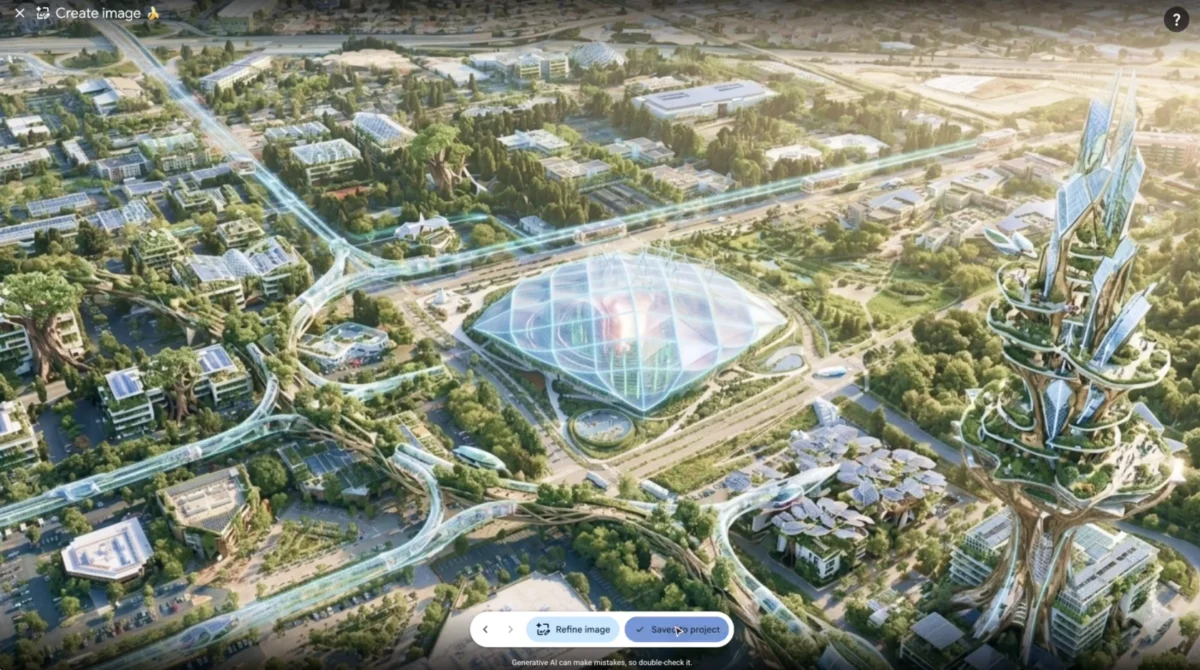
Barely 24 hours after its highly anticipated launch, Google has made the unprecedented decision to retract a new artificial intelligence image generation feature, Nano Banana 2, from its widely used satellite imagery mapping application, Google Earth. The feature, intended by Google to foster "creative geographical exploration," faced immediate and severe criticism from journalists, researchers, and digital ethics experts who warned of its profound potential for generating and disseminating geospatial misinformation on an unprecedented scale. The swift reversal underscores the ongoing challenges and intense scrutiny faced by technology giants as they integrate powerful generative AI capabilities into platforms traditionally relied upon for factual accuracy.
The controversial feature was first announced and rolled out on Thursday, July 31, 2026, at approximately 12:47 PM PDT, according to Google’s official blog post. This update allowed users to interact with Google Earth through prompt-based commands, leveraging Google’s advanced AI image generator, Nano Banana 2, to overlay fabricated images onto real satellite maps. The initial vision, as articulated by Google, was to empower users to visualize hypothetical scenarios, explore creative concepts, or even prototype urban development ideas in a novel, interactive manner. For instance, a user might prompt the AI to "show a futuristic eco-city built on the Amazon basin" or "imagine ancient Roman ruins atop Mount Everest," with the AI then rendering a plausible (though entirely synthetic) image directly within the Google Earth interface. The company presented it as a tool for imagination, pushing the boundaries of how individuals could engage with and interpret geographical data.
However, the celebratory tone from Google was short-lived. Almost instantaneously, a chorus of critics from various fields began to voice alarm. The core of their concern revolved around the inherent nature of the tool: it permitted the seamless superimposition of virtually any AI-generated image onto real-world geographical contexts. This capability, critics argued, transformed Google Earth from a trusted repository of objective geographical data into a potential conduit for "geospatial slop" – a deluge of fabricated visual information that could easily be mistaken for reality.
One of the most vocal early reactions came from a BBC journalist, who succinctly captured the widespread skepticism with a sarcastic post on X (formerly Twitter) on Thursday, July 31, 2026, stating, "There’s no way that this new AI image generation feature on Google Earth, one of the most reliable sources of visual evidence for journalists and researchers, could possibly be abused to spread misinformation online." This tweet, which quickly garnered significant traction, highlighted the direct conflict between the feature’s potential and Google Earth’s established reputation. For years, Google Earth has served as an indispensable resource for fact-checkers, human rights organizations, investigative journalists, and academic researchers globally, providing verifiable satellite imagery crucial for documenting events ranging from natural disasters and conflict zones to deforestation and urban sprawl. The introduction of an AI tool capable of inserting non-existent elements into this trusted visual database was seen as fundamentally undermining its evidentiary value.
By Friday, August 1, 2026, the intense public and expert scrutiny had evidently compelled Google to re-evaluate its decision. In a statement released shortly after 12:00 PM PDT, Google announced the immediate rollback of the Nano Banana 2 integration. "We’ve seen geospatial professionals using this feature for a range of useful purposes, however we’ve also seen people sharing screenshots of generated imagery that appear to violate our policies," the company stated via its official NewsFromGoogle X account. The statement further elaborated, "We’re rolling back this feature in Google Earth while we work on implementing stronger guardrails." This rapid retraction, occurring less than 24 hours after the feature’s launch, underscores the severity of the perceived risks and the speed with which public and professional opinion can impact product development in the age of AI.
The Indispensable Role of Google Earth and the Threat to its Integrity
Google Earth, since its public launch in 2005 (following Google’s acquisition of Keyhole Inc. in 2004), has evolved into a cornerstone of digital geography. It offers users a virtual globe, combining satellite imagery, aerial photography, and GIS data to provide a comprehensive, interactive view of Earth. Its applications extend far beyond casual exploration, becoming a critical tool for diverse professional fields. Urban planners utilize it for site analysis and development proposals, environmental scientists monitor climate change impacts and biodiversity, emergency services plan disaster response, and humanitarian organizations track refugee movements and aid distribution. The platform’s credibility rests on its commitment to presenting actual, verifiable geographical data.
The integration of an AI image generator, especially one as powerful as Nano Banana 2, introduced an unprecedented layer of potential ambiguity. While Google might have envisioned creative applications, critics quickly recognized that the same technology could be weaponized. The ability to generate seemingly realistic images of non-existent events or structures directly onto a trusted map interface creates a potent tool for disinformation campaigns. This is particularly alarming given the current global climate, where misinformation and disinformation already pose significant threats to democratic processes, public health, and social cohesion.
The Broader Landscape of Generative AI and Misinformation
The controversy surrounding Google Earth’s AI feature is not an isolated incident but rather a symptom of a larger, evolving challenge presented by generative artificial intelligence. AI image generators, such as Nano Banana 2, Midjourney, DALL-E, and Stable Diffusion, have made tremendous strides in recent years, capable of producing highly realistic and often indistinguishable images from textual prompts. What once required advanced graphic design skills and specialized software like Photoshop can now be achieved by anyone with access to an internet connection and a basic understanding of prompts.

This democratization of image creation has profound implications for digital literacy and verification. The original article rightly points out that "You don’t have to be a Photoshop whiz anymore to create semi-credible disinformation; you just need access to an AI image generator, which Google sells, as do many other AI firms." This shift fundamentally alters the landscape of visual evidence. Where photographs and satellite imagery were once largely considered reliable, the ease of generating synthetic media now necessitates a heightened degree of skepticism and advanced verification techniques.
Specific Scenarios of Potential Abuse
The concerns raised by critics were not abstract. The practical implications of Google Earth’s AI feature, left unchecked, could have been severe:
- Political Disinformation: Fabricating images of large crowds at political rallies, nonexistent polling irregularities, or even military buildups in sensitive regions. For instance, a malicious actor could generate an image of a fabricated protest movement in a foreign country, complete with AI-generated crowds superimposed over satellite imagery, to destabilize political situations.
- Environmental Scams and Propaganda: Creating fake images of environmental damage in areas protected by industry, or conversely, fabricating images of successful ecological restoration projects that do not exist, to manipulate public opinion or policy.
- Property and Real Estate Fraud: Generating images of non-existent infrastructure (e.g., new roads, parks, schools) near a property to inflate its perceived value, or creating misleading visual representations of land use.
- Conspiracy Theories and False Narratives: Crafting visual "evidence" for elaborate conspiracy theories, such as alien landing sites, hidden government bases, or proof of historical revisionism, all presented within the seemingly authoritative context of Google Earth.
- Crisis and Disaster Misinformation: During natural disasters, generating fake images of devastation in unaffected areas or, conversely, downplaying damage in critical zones, leading to misallocation of resources or public panic.
These scenarios highlight the critical importance of maintaining the integrity of platforms like Google Earth, which have become de facto primary sources for millions globally.
The Challenge of "Guardrails" and Responsible AI Development
Google’s commitment to "implementing stronger guardrails" signals an acknowledgment of the feature’s inherent risks and the need for more robust ethical frameworks. The development of effective guardrails for generative AI is a complex and evolving field. These might include:
- Advanced Content Moderation: More sophisticated AI models trained to detect and flag AI-generated content, especially that which violates policy.
- Digital Watermarking and Provenance Tools: Embedding invisible or visible markers within AI-generated images to indicate their synthetic origin. The Coalition for Content Provenance and Authenticity (C2PA) is one such initiative working on open technical standards for media provenance.
- Stricter Prompt Filtering: Enhancing the AI’s ability to refuse to generate content based on prompts that are politically sensitive, harmful, or explicitly designed to create misinformation.
- User Verification and Accountability: Implementing systems that tie AI-generated content to verified user identities, making it harder for anonymous bad actors to operate.
- Contextual Disclaimers: Clearly labeling all AI-generated content within Google Earth as synthetic, with prominent warnings about its non-factual nature.
The rapid rollback by Google also reflects a growing trend in the tech industry where new AI features are launched, face immediate ethical or safety challenges, and are subsequently withdrawn or heavily modified. Companies like OpenAI and Meta have also grappled with similar issues, from AI chatbots generating problematic responses to image generators creating offensive content. This iterative process, while necessary for progress, also highlights the nascent stage of responsible AI deployment and the difficulty in anticipating all potential misuses of powerful new technologies.
Looking Ahead: The Future of Verification and Digital Trust
The Google Earth incident serves as a stark reminder of the delicate balance between technological innovation and societal responsibility. As AI capabilities continue to advance at an exponential rate, the onus on developers and platform providers to prioritize ethical considerations and robust safety measures will only intensify. The public, too, must adapt, developing enhanced critical thinking skills and an understanding of the mechanisms behind synthetic media.
For journalists, researchers, and public institutions, the incident underscores the urgent need to invest in new verification tools and methodologies. Relying solely on visual evidence, even from traditionally trusted sources, without additional corroboration, is becoming increasingly perilous. The future of digital trust hinges on a multi-pronged approach involving advanced AI detection, transparent provenance standards, rigorous content moderation, and a globally informed populace capable of discerning reality from advanced fabrication. Google’s swift, albeit belated, action on its Nano Banana 2 feature is a testament to the powerful and necessary role that public scrutiny plays in shaping the ethical trajectory of artificial intelligence.