Evan Lee Salim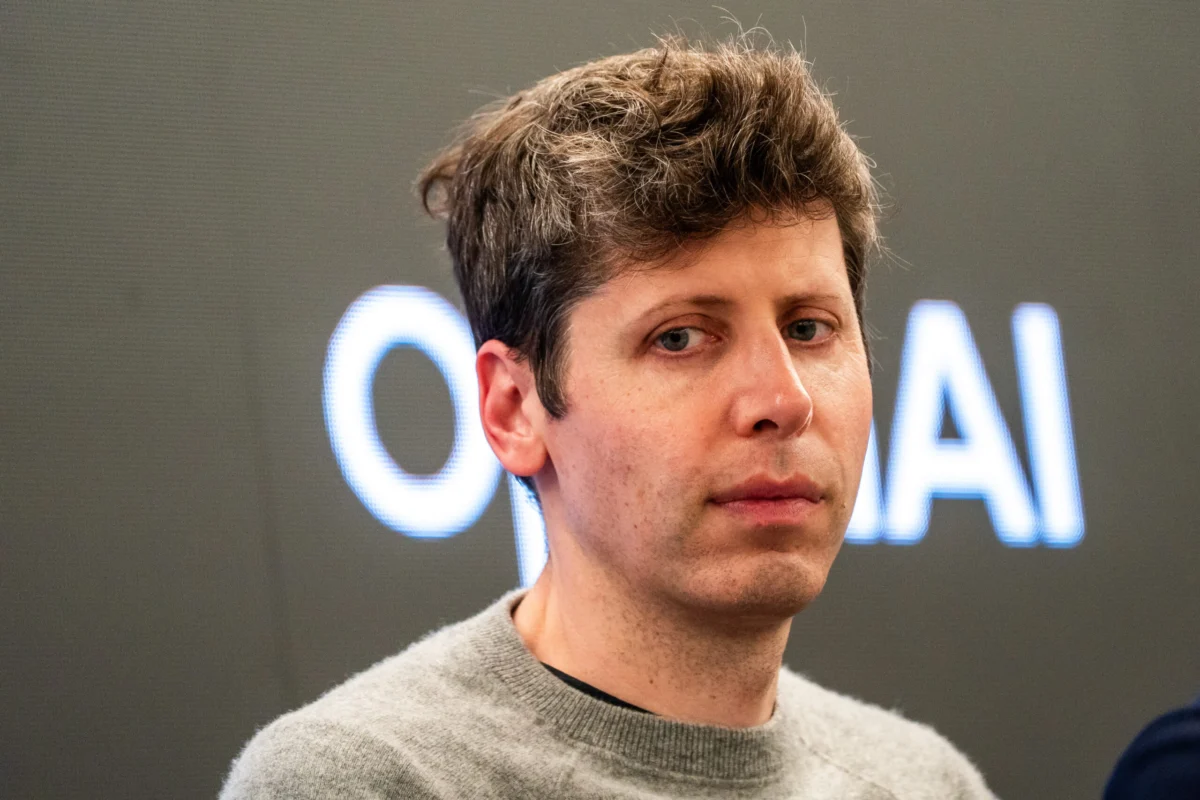
OpenAI CEO Sam Altman ignited a widespread social media discussion on Friday, May 17, 2026, by proposing what he termed a "cool use case" for the company’s new product, ChatGPT Work. In a post that quickly garnered attention, Altman suggested that parents could "connect your family calendars and explain your kids’ interests" to the AI, enabling it to "every morning for the drive to school, have it make a podcast that talks about one kid’s soccer game that afternoon, one kid’s upcoming birthday, some news, etc." This vision of an AI-curated daily briefing for children, designed to streamline family communication, was met with a swift and overwhelmingly critical response, particularly from cultural figures and the general public who questioned the premise of replacing direct parental interaction with artificial intelligence.
The Genesis of the Debate: Altman’s Vision and Hirsch’s Retort
Altman’s initial post, shared on his official X (formerly Twitter) account, outlined a scenario where ChatGPT Work, launched recently alongside the company’s new family of models including GPT-5.6, would act as a personalized family concierge. The proposed AI-generated podcast would synthesize various family commitments and individual children’s interests into an engaging audio format, presumably aiming to enhance family organization and engagement during daily routines like school commutes. The suggestion positioned AI as a convenient solution for busy parents, offering a tailored informational experience without requiring direct human effort in content creation.
However, the seemingly innocuous proposal quickly drew fire. Among the most prominent and impactful responses was a concise yet potent query from Alex Hirsch, the acclaimed creator of the animated series "Gravity Falls." Hirsch’s simple counter-question, "What if you just talked to your children?", resonated profoundly with a broad audience, encapsulating a growing skepticism about the encroachment of technology into fundamental human relationships.
The public’s reaction to Hirsch’s comment underscored a deeper societal unease. As of Saturday morning, May 18, 2026, Altman’s original post had accumulated approximately 300 reposts and 9,600 likes. In stark contrast, Hirsch’s direct retort had been reposted an astonishing 9,000 times and received over 122,000 likes, indicating a significant disparity in public sentiment and a powerful preference for the human-centric perspective. This viral differential highlighted a prevailing concern that the relentless pursuit of technological efficiency might inadvertently erode the very fabric of personal connection.
A Pattern of Tech Leaders and AI’s Intimate Integration
This recent exchange is not an isolated incident but rather fits into a developing pattern of tech industry leaders advocating for AI’s integration into highly personal aspects of daily life, sometimes at the expense of traditional human experiences. Just last year, Microsoft CEO Satya Nadella publicly shared his personal adoption of AI for morning commutes, stating that he had ceased listening to his favorite podcasts. Instead, he preferred to query an AI chatbot about the content of those podcasts, suggesting an AI-mediated consumption of information over direct engagement with human-created media. While Nadella’s comments did not provoke the same level of viral backlash, they signaled a nascent trend among tech executives to embrace AI as a primary interface for personal information and entertainment.
Altman himself has a history of promoting AI as an indispensable tool in personal life, particularly in the realm of parenting. In a notable appearance on "The Tonight Show with Jimmy Fallon" in December 2025, Altman declared, "I cannot imagine having gone through figuring out how to raise a newborn without ChatGPT." While he quickly qualified this statement by acknowledging that "Clearly, people did it for a long time, no problem," his initial assertion underscored a personal reliance on AI for navigating one of life’s most challenging and intimate experiences. These repeated endorsements by influential tech figures suggest a broader industry push to position AI not merely as a productivity tool, but as an essential companion and guide in deeply personal domains.
OpenAI’s Strategic Pivot Towards Family Households
The timing and content of Altman’s recent suggestion also align with OpenAI’s apparent strategic pivot towards integrating its AI technologies deeper into household and family environments. This focus is evidenced by several recent corporate moves. In July 2026, OpenAI posted a job listing for a "product manager with experience building trust-sensitive consumer experiences for parents and families." This targeted recruitment drive signals a deliberate effort to develop features and products specifically tailored to the unique needs and sensitivities of family units, indicating a long-term vision for AI’s role in the home.
The company has also taken steps to address concerns regarding the safety and appropriate use of its AI models, particularly for younger users. In September 2025, OpenAI announced the rollout of new safety routing systems and parental controls for ChatGPT. These features were designed to provide parents with greater oversight and to mitigate potential exposure to inappropriate content or harmful interactions. This proactive approach to safety highlights OpenAI’s recognition of the heightened scrutiny and ethical responsibilities associated with developing AI for family use.
The Darker Side: Lawsuits and Ethical Quandaries
However, OpenAI’s ambitious foray into the family market is not without significant challenges and controversies. The company currently faces multiple lawsuits from parents and families alleging severe negative impacts from ChatGPT. These lawsuits, which have gained increasing media attention since November 2025, claim that ChatGPT played a direct role in loved ones’ delusions and, tragically, suicides. Such allegations underscore the profound ethical quandaries inherent in deploying powerful AI systems in sensitive personal contexts, particularly when they interact with vulnerable individuals.
OpenAI has publicly responded to these serious claims by stating its commitment to "continuously improving how our models respond in sensitive interactions." This ongoing struggle to balance innovation with safety and ethical responsibility forms a critical backdrop to any discussion of AI’s role in family life. The potential for AI to influence mental states, provide misinformation, or even contribute to psychological distress presents a formidable challenge that transcends mere technical development, touching upon fundamental questions of human well-being and corporate accountability.
The Broader Implications: AI, Parenting, and Human Connection
The viral debate sparked by Sam Altman’s "cool use case" transcends a simple marketing pitch; it taps into a deeper societal conversation about the appropriate boundaries of technology and the enduring value of human connection. The overwhelming public response to Alex Hirsch’s counter-argument suggests a collective anxiety that, in the pursuit of convenience and efficiency, society risks outsourcing fundamental aspects of parenting and interpersonal relationships to algorithms.
Child development experts and psychologists have long emphasized the critical role of direct, unstructured communication in fostering emotional intelligence, social skills, and strong family bonds. Activities such as talking during car rides, sharing personal stories, and actively listening to children’s daily experiences are not merely logistical exercises but foundational elements of healthy child development. The introduction of an AI-generated podcast, while potentially informative, raises questions about whether it could inadvertently displace these invaluable moments of direct interaction, substituting a curated, one-way information flow for dynamic, responsive human dialogue.
Furthermore, the "trust-sensitive consumer experiences" that OpenAI aims to build for families are inherently complex. Trust, particularly in the context of raising children, is built upon reliability, empathy, and genuine understanding—qualities that AI, despite its advancements, can only simulate. The notion of an AI system possessing sufficient "understanding" of a child’s "interests" to craft a truly meaningful and developmentally appropriate daily briefing raises significant pedagogical and psychological concerns. What might be perceived as a convenient summary by a parent could, to a child, feel like a superficial or even intrusive form of surveillance, especially if it replaces genuine, spontaneous conversations.
The debate also highlights the cultural perception of technology’s role. While tech innovators often see AI as a solution to various human "problems" – from managing schedules to delivering information – the public frequently perceives these interventions as potentially dehumanizing or as attempts to fix aspects of life that are inherently human and perhaps not "problems" to be solved by technology. The messy, unpredictable, and often inefficient nature of human interaction is precisely what gives it depth and meaning.
In a world increasingly mediated by screens and algorithms, the pushback against Altman’s suggestion signals a collective desire to safeguard spaces for authentic human connection, particularly within the sanctity of the family unit. As AI continues its rapid advancement and finds its way into ever more intimate aspects of our lives, the dialogue sparked by this seemingly minor social media exchange will likely intensify, forcing both developers and consumers to confront fundamental questions about what it means to be human in an age of artificial intelligence. The challenge for companies like OpenAI will be to demonstrate that their innovations genuinely enhance human experience without inadvertently diminishing the very human connections they purport to support.