Chandra Wibowo
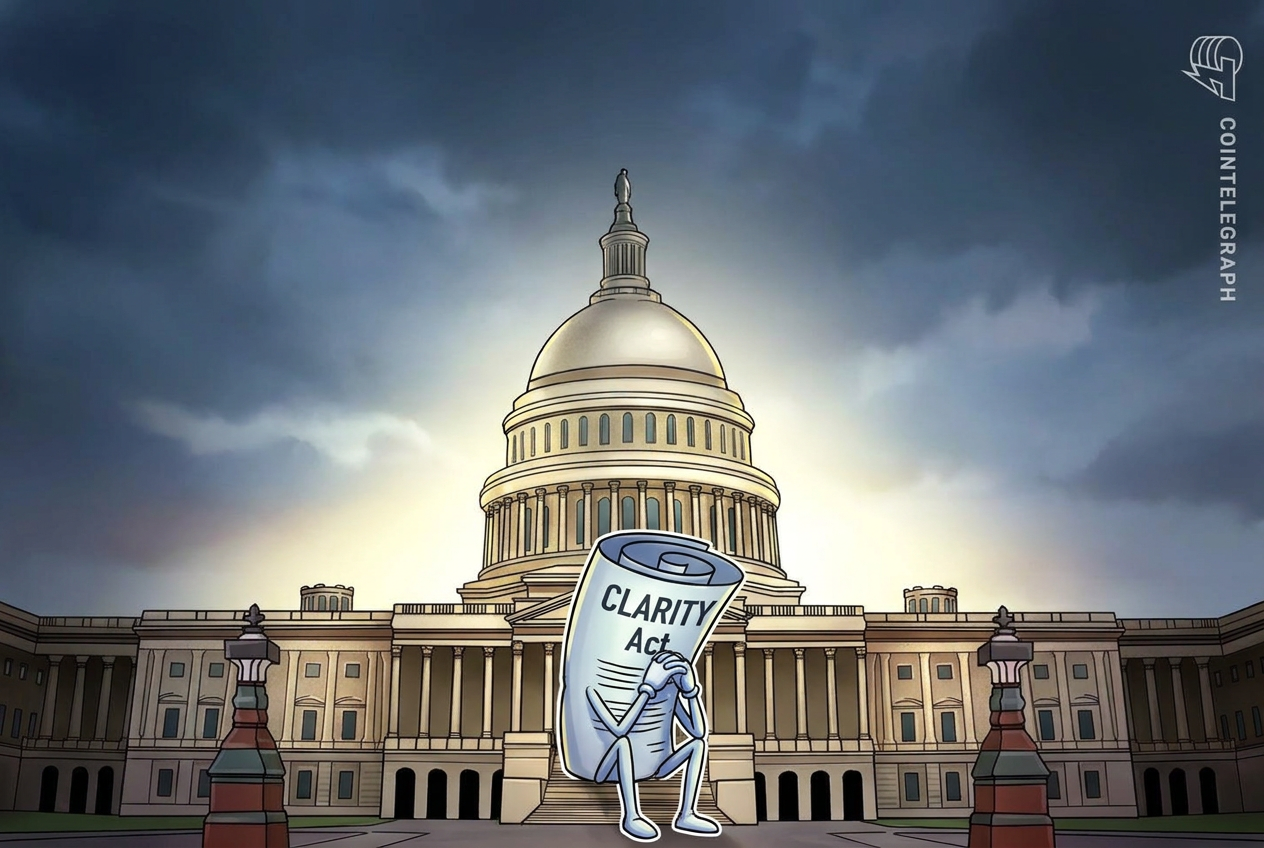
Despite a significant setback in the U.S. Senate this week, bipartisan momentum may still propel the cryptocurrency market structure bill, known as the CLARITY Act, into a potential vote during the upcoming post-election "lame-duck" session of Congress. Adrian Wall, managing director of the Digital Sovereignty Alliance, revealed that senators from both major political parties are actively exploring strategies to advance the legislation before the current congressional term concludes.
Wall disclosed in an interview on Cointelegraph’s "Chain Reaction" show on X (formerly Twitter) that he has engaged in direct conversations with senators who are contemplating a renewed push for the CLARITY Act. "There is an appetite to put this forward even during the lame duck period of Congress," Wall stated, while acknowledging the inherent difficulties. "Is it easy? No. It’s going to be very complicated. It’s a long shot." He emphasized that these discussions have originated directly from senators, rather than from congressional staff, suggesting a higher level of senatorial commitment to exploring this avenue. "I’ve heard it directly from senators on both sides… saying they have a strategy to engage the other side and see if there’s a last chance to do it," Wall elaborated.
This renewed hope emerges in the immediate aftermath of Tuesday’s failed cloture vote in the Senate, which prevented the CLARITY Act from advancing. The legislation fell short of the 60 votes required to overcome procedural hurdles and proceed to a full debate and vote. Wall characterized Tuesday’s vote as a "huge blow" but maintained that it does not signify the definitive end of the legislative effort. He further posited that should another attempt during the lame-duck session prove unsuccessful, the incoming Congress could still "pick up the pen" and reintroduce crypto market structure legislation in the next term.
The Digital Sovereignty Alliance, where Wall serves as managing director, is a non-profit advocacy organization dedicated to engaging with lawmakers and regulators on the complex landscape of digital asset policy. Their involvement underscores the persistent efforts within the industry and policy circles to establish a clear and comprehensive regulatory framework for cryptocurrencies in the United States.
The Road to the CLARITY Act and Its Senate Stumble
The CLARITY Act, formally known as the "Consumer and Innovator Legal Protection Act," represents a significant attempt by lawmakers to address the regulatory ambiguities surrounding digital assets. The bill aims to provide clarity on the classification of various digital assets, delineate the authority of different regulatory bodies such as the Securities and Exchange Commission (SEC) and the Commodity Futures Trading Commission (CFTC), and establish rules for market participants.
The need for such legislation has become increasingly apparent as the digital asset market has matured and experienced periods of rapid growth and significant volatility. Without a clear regulatory roadmap, businesses operating in the crypto space have faced uncertainty, hindering innovation and investment. Proponents of the CLARITY Act argue that a well-defined legal framework would not only protect consumers and investors but also foster a more stable and competitive market, attracting further institutional adoption and technological development.
However, the path to legislative consensus has been fraught with challenges. The CLARITY Act has navigated various committees and undergone amendments, reflecting the diverse perspectives and concerns among policymakers regarding the risks and opportunities presented by cryptocurrencies. The failure of the cloture vote on Tuesday exemplifies the deep divisions that persist, with differing views on the appropriate level of regulatory oversight, the definition of securities versus commodities for digital assets, and the potential impact on existing financial regulations.
Supporting Data and Context:
The U.S. digital asset market is a significant and growing sector. While precise figures fluctuate, the total market capitalization of cryptocurrencies has, at various times, reached trillions of dollars globally. In the U.S. alone, millions of individuals are estimated to own digital assets. This substantial economic activity underscores the urgency of establishing clear regulatory guidelines.
The debate over the CLARITY Act is intertwined with broader discussions about the future of finance and the role of digital innovation. For instance, the Bitcoin Coinbase Premium, a metric indicating the difference between the price of Bitcoin on the Coinbase exchange and its global average price, has shown sensitivity to regulatory news. Reports indicated that this premium experienced a monthly low following the CLARITY Act vote, suggesting that regulatory uncertainty can indeed impact U.S. demand and market sentiment. This economic indicator provides tangible evidence of how legislative developments, or lack thereof, can have a discernible effect on market dynamics.
Furthermore, the ongoing tension between the SEC and the CFTC over jurisdiction has been a central theme in the crypto regulatory debate. The CLARITY Act sought to address this by proposing a clearer division of responsibilities, a move that has been met with both support and opposition from various stakeholders. The SEC, under its current leadership, has largely adopted a stance that many digital assets fall under existing securities laws, leading to enforcement actions against crypto firms. Conversely, the CFTC has expressed a desire for greater authority over digital commodities. The CLARITY Act’s proposed framework was an attempt to bridge this jurisdictional gap, a critical element for providing certainty to the industry.
The "Lame-Duck" Session: A Final Frontier for Legislation?
The "lame-duck" session of Congress refers to the period between the general election and the inauguration of a new president and Congress. This can be a critical time for legislative action, as outgoing members may feel less constrained by electoral considerations and more inclined to tackle contentious issues or finalize unfinished business. However, it can also be a period of heightened political maneuvering and uncertainty.
For the CLARITY Act, a lame-duck session presents both an opportunity and a significant challenge. The opportunity lies in the potential for a renewed focus on legislation that has garnered some bipartisan interest. Senators who championed the bill may see this period as their final chance to secure its passage before a new congressional session begins, potentially with a different composition of members and shifting legislative priorities.
The challenges, however, are substantial. The limited time available, coupled with the need to secure agreement across party lines and potentially overcome any remaining procedural objections, makes success a difficult proposition. The fact that the CLARITY Act failed to advance during regular proceedings suggests that significant hurdles remain. Nevertheless, the reported bipartisan interest, as highlighted by Adrian Wall, indicates that there is a segment of senators who believe a pathway to passage might still exist.
Reactions and Analysis from Related Parties (Inferred)
While specific official statements from senators directly involved in reconsidering the CLARITY Act were not immediately available following the failed vote, the nature of legislative negotiations often involves discreet discussions and strategic planning. The "appetite" for advancing the bill, as described by Wall, suggests that proponents are actively seeking common ground and exploring compromise.
From the perspective of the cryptocurrency industry, the potential for a lame-duck vote would likely be met with cautious optimism. Industry leaders and advocacy groups have consistently called for regulatory clarity, and the passage of a comprehensive market structure bill would be a significant development. However, given the complexity of the legislation and the diverse interests within the crypto ecosystem, any renewed effort would likely involve ongoing engagement to ensure the bill’s provisions are practical and conducive to innovation.
Regulators, such as the SEC and CFTC, would undoubtedly be closely monitoring any developments. Their perspectives on the CLARITY Act’s proposed jurisdictional allocations and regulatory frameworks would continue to play a crucial role. The SEC, in particular, has been a vocal proponent of its existing authority over digital assets deemed securities. Any legislative attempt to alter this dynamic would likely involve continued dialogue and potential pushback, depending on the specifics of the proposed legislation.
Broader Impact and Implications of Regulatory Clarity
The passage of a comprehensive crypto market structure bill like the CLARITY Act would have profound implications for the digital asset industry, financial markets, and the broader U.S. economy.
For the Digital Asset Industry:
- Enhanced Legal Certainty: A clear regulatory framework would reduce ambiguity for startups and established companies, allowing them to plan and invest with greater confidence. This could spur innovation and the development of new products and services.
- Increased Institutional Adoption: Greater regulatory certainty is a key prerequisite for many institutional investors to allocate capital to digital assets. A well-defined legal environment could unlock significant institutional investment.
- Reduced Enforcement Risk: The current landscape is characterized by frequent enforcement actions by regulators. A clear set of rules would help prevent inadvertent violations and create a more predictable environment for businesses.
- Global Competitiveness: Establishing a robust regulatory framework in the U.S. could position the country as a leader in digital asset innovation, attracting talent and investment from around the world.
For Financial Markets:
- Integration with Traditional Finance: A clear regulatory path could facilitate the integration of digital assets into traditional financial systems, potentially leading to new investment vehicles and market efficiencies.
- Consumer and Investor Protection: Well-defined rules regarding disclosure, market conduct, and custody of assets would enhance protections for retail investors.
For the U.S. Economy:
- Economic Growth and Job Creation: A thriving digital asset sector, underpinned by clear regulation, can contribute to economic growth and create high-skilled jobs.
- Technological Advancement: The blockchain and distributed ledger technology that underpins cryptocurrencies has applications beyond finance, and regulatory clarity could foster broader adoption of these innovations.
Conversely, continued regulatory ambiguity could lead to a divergence of regulatory approaches, increased litigation, and the potential for the U.S. to fall behind other jurisdictions that have moved more decisively in establishing regulatory frameworks for digital assets. The ongoing debate over the CLARITY Act, and the potential for its revival in the lame-duck session, highlights the critical juncture at which the U.S. finds itself in shaping the future of digital finance. The coming weeks will be crucial in determining whether this legislative effort can overcome its past obstacles and deliver the much-needed clarity to the rapidly evolving crypto market.