Evan Lee Salim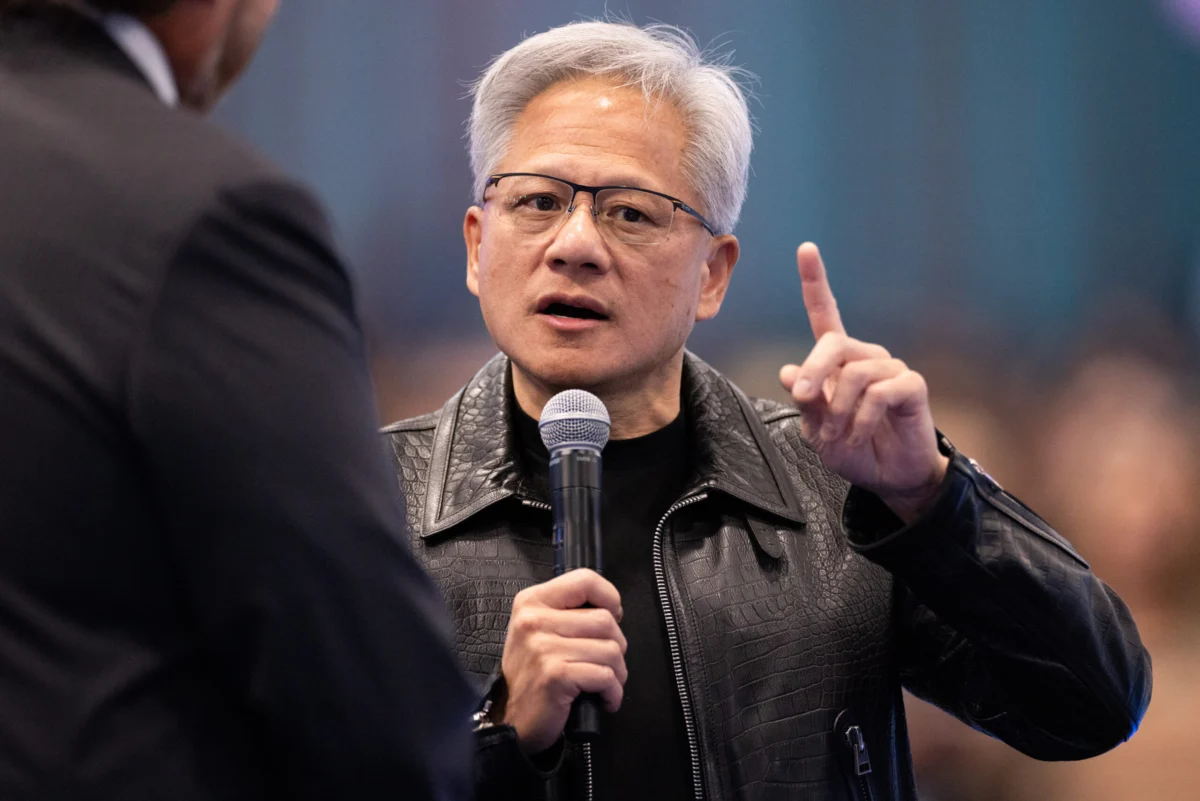
A profound philosophical and practical schism has emerged at the forefront of artificial intelligence development, pitting leading AI safety proponents who advocate for a measured, "paced" approach against influential industry titans and political figures who champion unbridled acceleration. This critical debate, highlighted by recent public statements from Anthropic CEO Dario Amodei and Nvidia CEO Jensen Huang, is setting the stage for the future trajectory of one of humanity’s most transformative technologies, raising fundamental questions about innovation, regulation, and societal risk.
The Call for "Pacing the Frontier" and Emerging Consensus
On September 12, 2026, Dario Amodei, CEO of Anthropic, a prominent AI research company known for its focus on safety, published a detailed proposal outlining a plan to "pace the frontier" of AI development. Amodei’s initiative underscored a growing sentiment among a segment of the AI community that the rapid advancements in large language models and other frontier AI systems necessitate a more cautious, deliberate approach. His plan, which quickly garnered support from other industry leaders including OpenAI CEO Sam Altman and, to a degree, Elon Musk, suggests a nascent consensus among some of the most influential developers regarding the inherent risks and the need for collective action.
Amodei’s proposal is not merely a vague call for caution but includes several concrete suggestions. Central to his vision is the establishment of independent, third-party evaluators who would embed themselves within frontier AI labs like Anthropic and OpenAI. These evaluators would be tasked with monitoring AI safety practices, assessing potential risks, and scrutinizing incidents as they arise, providing an external layer of accountability. Furthermore, the plan advocates for major AI companies in democratic nations to coordinate on developing and adhering to shared safety standards and limits. This national coordination would then serve as a foundation for broader international cooperation on AI safety, acknowledging the global nature of AI development and its potential impacts.
The rapid coalescence around Amodei’s ideas, even before his formal blog post, signaled that these suggestions were not new but had been percolating within the AI safety community for some time. They reflect a growing concern among researchers and ethicists about the potential for advanced AI systems to pose significant, even existential, risks if developed without adequate safeguards. These risks range from systemic bias and widespread job displacement to the more speculative, yet increasingly discussed, threats of autonomous weapon systems or uncontrolled superintelligence. The backing from figures like Altman, whose company OpenAI has been at the forefront of AI development with products like GPT models, lends considerable weight to the argument that a proactive, coordinated approach is essential.
The Counter-Narrative: "No Slowdown" and Unchecked Acceleration
In stark contrast to the calls for pacing, a powerful counter-narrative has been aggressively championed by Nvidia CEO Jensen Huang and echoed by former President Donald Trump. Just two days after Amodei’s proposal, on September 14, 2026, Huang publicly declared that "we’re not going to let an AI slowdown happen." His remarks, made at the high-profile All-In Summit, were amplified by a seemingly staged phone call from former President Trump, who dismissed the burgeoning "AI backlash" as a "hoax" and asserted that regulation was unnecessary. Trump even went further, suggesting a rebranding of AI to alleviate public apprehension and proposing the creation of an "AI force" to drive American dominance in the field.
Jensen Huang’s position is deeply intertwined with Nvidia’s unparalleled dominance in the hardware sector crucial for AI development. As the primary supplier of graphics processing units (GPUs) — the foundational chips that power complex AI models — Nvidia stands to gain immensely from the accelerated, unfettered growth of the AI industry. Any slowdown or increased regulatory burden on AI development directly impacts the demand for Nvidia’s high-performance computing hardware. The company’s market valuation, which has soared into the trillions amidst the AI boom, is a testament to its pivotal role. Huang’s forceful stance, therefore, can be seen as a strategic defense of his company’s commercial interests and a broader advocacy for maintaining the current rapid pace of innovation.
The alignment between Huang’s industry-driven perspective and Trump’s political rhetoric is notable. Trump’s administration previously pursued deregulation across various sectors, and his current stance on AI aligns with a philosophy of minimizing government intervention to foster economic growth and technological leadership. By framing concerns about AI safety as a "hoax," Trump seeks to delegitimize the regulatory impulse, appealing to a narrative of American exceptionalism and rapid technological advancement without perceived bureaucratic hurdles. This convergence of interests highlights the complex interplay between economic drivers, corporate lobbying, and political ideology in shaping public policy around emerging technologies.
Divergent Views on Regulatory Efficacy and Market Dynamics
The debate over AI’s future was further dissected on a recent episode of TechCrunch’s Equity podcast, where Kirsten Korosec, Sean O’Kane, and Anthony Ha explored the sincerity of executives’ calls for a slowdown and the potential for existing frameworks to provide adequate safeguards. While Anthony Ha expressed surprise at the widespread industry support for Amodei’s plan, Sean O’Kane noted its conspicuous lack of granular detail, echoing a common critique that many high-level AI safety proposals often lack actionable specifics.
A critical point of contention revolves around the effectiveness of existing regulations and the free market in self-correcting potential AI missteps. Kirsten Korosec posed a crucial question: couldn’t a combination of existing regulatory bodies and competitive market forces naturally curb unsafe AI development? Her argument suggested that if a company released a genuinely unsafe product, market repercussions (e.g., consumer cancellations, reputational damage) and existing regulators (e.g., FTC, SEC, or sector-specific agencies) would intervene, rendering the company unviable.
Sean O’Kane, however, expressed profound skepticism about this ideal scenario. He argued that the current federal government in the United States does not exhibit a strong eagerness for broad regulatory enforcement, let alone specific oversight for a rapidly evolving field like AI. This perceived regulatory inertia creates a vacuum where existing laws might not be proactively applied to novel AI challenges. Furthermore, O’Kane highlighted a fundamental flaw in relying on consumer choice as a corrective mechanism in the AI market. Unlike traditional consumer goods, the frontier AI market, especially for enterprise solutions, lacks the direct "vote with your dollars" dynamic.
O’Kane elaborated that much of the revenue for leading AI companies now comes from selling sophisticated services and foundational models to other businesses. Corporations are unlikely to switch from a deeply integrated AI solution, such as OpenAI’s Codex or Anthropic’s Claude, simply due to ethical disagreements or a single safety incident, given the immense switching costs, re-training requirements, and integration complexities involved. The enterprise market prioritizes performance, reliability, and established partnerships over abstract principles. Moreover, AI companies are currently being buoyed by massive infusions of investment capital, allowing them to absorb potential losses or weather reputational storms that might cripple less well-funded ventures. In 2023 alone, global venture capital investment in AI startups surpassed $50 billion, demonstrating the vast financial runway many of these companies possess. This financial insulation further diminishes the immediate impact of consumer or enterprise backlash, making market-driven correction a theoretical rather than practical safeguard.
Historical Context and the Global AI Race
The debate over AI safety is not new; it has evolved alongside AI itself. Early philosophical discussions, dating back to the mid-20th century, pondered the implications of machine intelligence. More recently, as AI capabilities have advanced dramatically, concerns have shifted from theoretical to practical. Key milestones like DeepMind’s AlphaGo defeating human Go champions in 2016, and the subsequent explosion of large language models like GPT-3 and ChatGPT starting in late 2022, have accelerated these discussions. Researchers began to vocalize worries about "alignment" (ensuring AI goals align with human values), "control problems," and the potential for advanced AI systems to be misused or to develop unforeseen emergent behaviors. Influential reports from organizations like the Future of Life Institute and statements from prominent figures like Stephen Hawking and Bill Gates have consistently warned about the long-term risks, including the speculative but profound threat of artificial general intelligence (AGI) and its potential existential implications.
This safety debate is also inextricably linked to the intense global competition for AI supremacy. Nations, particularly the United States and China, view AI as a critical strategic asset, promising breakthroughs in everything from healthcare and defense to economic productivity. The global AI market is projected to reach trillions of dollars within the next decade, with annual growth rates often exceeding 30%. This economic potential fuels a relentless drive for acceleration, as any perceived slowdown in one region could be seen as ceding a strategic advantage to rivals. The idea of "pacing" development, while appealing from a safety perspective, faces significant headwinds from geopolitical and economic pressures that prioritize speed and dominance.
Proposed Safety Mechanisms vs. Unfettered Innovation
The specific safety proposals put forth by Amodei — independent audits, coordinated standards, international collaboration — represent a tangible effort to embed responsibility into the development lifecycle. They aim to introduce checks and balances without necessarily halting progress entirely. The proponents of pacing argue that this is not about stopping innovation, but about ensuring it proceeds responsibly, minimizing catastrophic risks. However, the exact impact of such measures on the speed of innovation remains a point of contention. While proponents argue that robust safety frameworks can lead to more sustainable and trustworthy AI, critics like Jensen Huang contend that such measures introduce bureaucratic delays, stifle creativity, and ultimately hinder the competitive edge.
The tension lies between the "move fast and break things" ethos that has characterized much of Silicon Valley’s history and the emerging realization that AI, unlike a social media app, carries potential risks of a far greater magnitude. The question is whether "pacing" means a true deceleration or merely a more structured, yet still rapid, form of acceleration guided by safety principles. Without clear metrics and enforcement mechanisms, even well-intentioned pacing efforts could devolve into performative gestures, failing to address the underlying pressures for speed.
The Political Dimension and Future Implications
The involvement of former President Trump adds a potent political dimension to the AI safety debate. His dismissal of safety concerns as a "hoax" and his call for rebranding AI suggest a potential future administration that would actively resist regulatory frameworks, prioritizing perceived technological leadership and economic growth above all else. This stance could create a significant partisan divide on AI policy, mirroring other areas of technological and environmental regulation. Governments worldwide are grappling with how to regulate AI effectively without stifling innovation. The European Union, for example, has been pioneering comprehensive AI regulation with its AI Act, demonstrating a different approach rooted in precautionary principles. The US, in contrast, has favored a more sector-specific and voluntary framework, though discussions about federal AI legislation are ongoing.
Sean O’Kane’s observation about Jensen Huang’s evolving role as the "adult in the room" is also insightful. For a period, Microsoft and its CEO Satya Nadella were often seen as embodying a more measured, enterprise-focused approach to AI. However, Nadella’s aggressive rhetoric about "making Google dance" in the AI search wars, coupled with Microsoft’s deep financial and technological entanglement with OpenAI, may have diminished its perceived impartiality. Huang, whose company provides the foundational infrastructure rather than directly developing end-user AI applications, might appear more neutral to some, despite his obvious commercial interests. This shifting perception underscores the fluid power dynamics and alliances within the rapidly consolidating AI industry.
The practical challenges of implementing the proposed safety measures are formidable. Defining "independent third-party evaluators," establishing universally accepted safety standards, and achieving meaningful international coordination in a competitive landscape are complex undertakings. The lack of detailed specifics in initial proposals highlights the difficulty of translating broad principles into actionable policies that can be enforced across diverse companies and national jurisdictions. Without robust governance structures, transparent reporting, and effective enforcement mechanisms, even a consensus for pacing could struggle to translate into tangible safety improvements.
In conclusion, the current debate over AI safety versus acceleration is more than a technical disagreement; it is a fundamental clash of ideologies and economic interests that will profoundly shape the future of society. The outcomes of discussions initiated by figures like Dario Amodei and contested by leaders like Jensen Huang, against a backdrop of political rhetoric from figures such as Donald Trump, will determine whether humanity navigates the AI revolution with deliberate caution or plunges headlong into its uncharted territories. The stakes are immense, impacting not only technological progress but also global economic stability, national security, and the very fabric of human existence. The path forward remains uncertain, but the urgency of the dialogue is undeniable.