
 Vera Intan Clara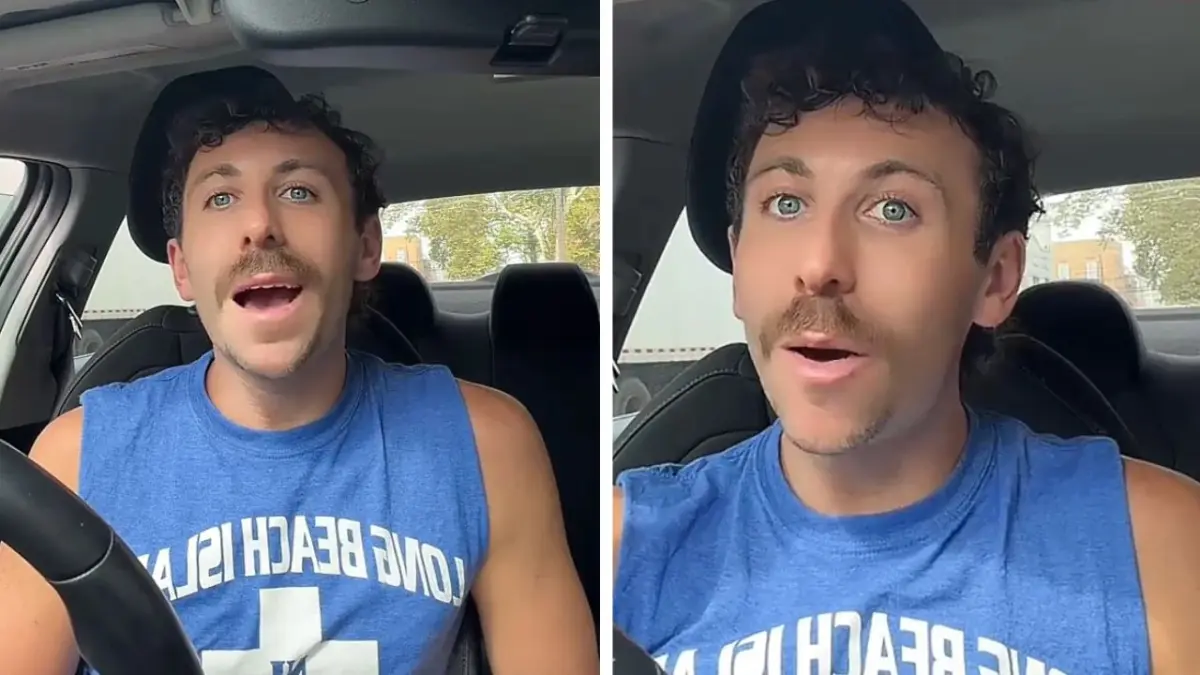
A recent video shared on TikTok by creator @jakedylan___ has ignited a widespread discussion about the realities and perceived benefits of working from home, particularly concerning employee autonomy and productivity. Posted on October 1st, the video quickly garnered significant attention, accumulating 240,900 views as the creator detailed an unconventional daily schedule that blends professional duties with extensive personal activities, all while ostensibly on the clock for an eight-hour shift. This candid revelation has resonated with many, prompting both envy and critical examination of the evolving landscape of remote work.
The creator’s narrative begins with an explanation of his company’s policy shift. Initially, his workplace embraced a hybrid model, allowing employees to work remotely on Mondays, Wednesdays, and Fridays. However, the company subsequently transitioned to a fully remote operational structure. This move, intended to offer greater flexibility, appears to have been interpreted by @jakedylan___ as an opportunity to integrate a wide array of personal pursuits into his workday, raising questions about the efficacy of remote supervision and the boundaries of work-life integration.
A Day in the Life: A Detailed Chronology of Remote Work
The TikTok creator meticulously outlines his typical remote workday, which commences with a relatively late log-in time. At 10:30 a.m. his time, he logs into his work systems. A key factor influencing this schedule is his boss’s location in Hawaii, which means the supervisor does not log in until 2 p.m. Pacific Standard Time, effectively creating a substantial window of unsupervised activity for @jakedylan___. This geographical disparity in working hours forms the foundation of his highly flexible routine.
Immediately after logging in and performing perfunctory checks on Slack and his phone, the creator embarks on a series of personal engagements. His mid-morning routine includes attending a yoga class, followed by a grocery shopping excursion. He further elaborates on participating in what he describes as "yoga sculpt Matt Reformer’s party, Faygo class" – a descriptor that suggests a combination of fitness and social activities, or perhaps a uniquely named exercise class. By the time he returns home from these activities, it is already time for lunch. This segment of his day, spanning several hours, is conducted entirely during his designated work shift, prompting reflection on traditional notions of being "at work."
The concept of a "working lunch" is then introduced by the creator, who states, "So they basically make us take a working lunch." During this period, he indicates that he would be outside, responding to work emails, conducting a weekly roundup of tasks, and attending a "team bonding strategy meeting." This suggests that even when engaging in work-related tasks, his physical location remains outside a conventional office or home workspace.
The afternoon schedule continues with a peculiar structure. From 2 p.m. to 3 p.m., the team’s activity is described as "just talk," implying a period of informal communication or perhaps low-intensity discussions. This is followed by a "team meditation" session from 3 p.m. to 4 p.m. Intriguingly, @jakedylan___ reveals that during this meditation, employees are permitted to turn off their cameras, a privilege he avails himself of to once again step out of his home. He dedicates a mere ten minutes, from 4 p.m. to 4:10 p.m., to concentrated work, after which he declares himself "finished" with his core duties. The remainder of his official workday, leading up to his 5 p.m. log-out, is spent on meal preparation, which he frames as "still working."
Despite this highly autonomous and flexible workday, the creator expresses annoyance at instances where his boss contacts him at 8:30 p.m. his time, well after his official log-off. He laments, "Then I’m working overtime at that moment. It’s truly not for everyone, marketing," highlighting a common challenge of remote work: the blurring of professional and personal boundaries, often extending work hours beyond traditional expectations. This sentiment is particularly striking given the extensive personal time he integrates into his official work hours.
Paradoxically, after detailing a routine that pushes the boundaries of conventional work-life integration, @jakedylan___ praises his company for its generous employee benefits. He mentions that the company provides employees with 64 "mental health days" and "seven weeks of unlimited PT" (presumably referring to Paid Time Off). These benefits underscore a progressive corporate culture that prioritizes employee well-being, potentially fostering the very environment of trust and autonomy that allows for such flexible interpretations of work hours.
The Evolving Landscape of Remote Work: Context and Background
The phenomenon described by @jakedylan___ is not an isolated incident but rather a vivid illustration of the ongoing evolution in work culture, dramatically accelerated by the COVID-19 pandemic. Before 2020, remote work was largely a niche benefit, primarily adopted by tech companies or specific roles. The global health crisis, however, forced an unprecedented and rapid adoption of work-from-home models across virtually all industries capable of it. Millions of employees transitioned from traditional offices to home setups overnight, necessitating a rapid rethink of management strategies, communication tools, and productivity metrics.
In the post-pandemic era, companies have grappled with finding a sustainable balance. Some have embraced fully remote models, recognizing benefits like reduced overhead costs, access to a wider talent pool irrespective of geographical location, and increased employee satisfaction. Others have opted for hybrid models, attempting to combine the collaborative benefits of in-person interaction with the flexibility of remote work. A third group has pushed for a full return-to-office, citing concerns over maintaining company culture, fostering innovation, and ensuring accountability.
The creator’s experience sits firmly within the fully remote paradigm, where the emphasis often shifts from presenteeism to outcome-based performance. In such environments, the challenge for employers lies in establishing clear expectations for deliverables and measurable results, rather than monitoring hours spent at a desk. For employees, this shift can offer unparalleled flexibility, empowering them to manage their time in ways that better suit their personal lives, as demonstrated by @jakedylan___. However, it also introduces complexities, such as the potential for work to bleed into personal time, or, conversely, for personal tasks to permeate work hours.
Supporting Data and Industry Trends
Numerous studies have attempted to quantify the impact of remote work on productivity and employee well-being. A 2021 study by Stanford University economist Nicholas Bloom, for instance, found that fully remote work can lead to a 10% decrease in productivity compared to in-office work, primarily due to communication challenges and increased distraction. Conversely, other research, such as a 2020 study by Prodoscore, suggested a 47% increase in productivity for remote employees. These contradictory findings highlight the nuanced and varied experiences across different companies, roles, and individual employees. The "productivity paradox" in remote work often depends on factors like job type, management style, company culture, and individual self-discipline.
The concept of "quiet quitting," where employees fulfill their job descriptions but do not go above and beyond, and "acting your wage," where effort is directly proportional to compensation, provides a relevant lens through which to view @jakedylan___’s routine. His approach—fulfilling basic tasks within a minimal timeframe while integrating extensive personal activities—could be seen as a practical application of these trends, where employees redefine their engagement with work to align with their personal priorities, especially when direct supervision is minimal.
Time zone differences, as highlighted by the creator’s boss being on Hawaiian time, are a significant operational challenge for globally distributed remote teams. Companies often struggle to synchronize schedules, leading to asynchronous communication and, as in @jakedylan___’s case, extended periods where some team members operate without direct oversight. Effective strategies for managing time zone differences include establishing core collaboration hours, leveraging asynchronous communication tools, and setting clear expectations for response times.
The generous mental health days and unlimited PTO offered by @jakedylan___’s company are indicative of a growing trend among progressive employers to prioritize employee well-being. A 2023 survey by the Society for Human Resource Management (SHRM) found that an increasing number of companies are offering enhanced mental health benefits and flexible leave policies. Such benefits are often seen as crucial for attracting and retaining talent, particularly in competitive markets like marketing, and can foster a culture of trust and autonomy. However, the creator’s annoyance at late-night calls underscores that even with generous benefits, the blurring of work-life boundaries remains a pervasive issue in remote settings.
Statements and Reactions from Related Parties (Inferred)
While no official statement from @jakedylan___’s company is available, the policies described (fully remote, generous mental health days, unlimited PTO) suggest a corporate philosophy that likely values employee autonomy and well-being. Such companies often operate on a results-oriented management model, trusting employees to manage their time as long as deliverables are met. The challenge for these organizations is to ensure that this trust is not exploited and that all employees maintain a consistent level of engagement and contribution.
HR professionals and industry experts generally advocate for clear communication and transparent expectations in remote work environments. For instance, many advise companies to establish explicit guidelines on working hours, availability, and communication protocols, especially when dealing with time zone differences. "The key is to focus on outcomes rather than hours," notes Dr. Emily Chang, a workplace psychologist specializing in remote teams. "But this requires robust performance metrics and regular check-ins to ensure accountability and prevent disengagement." The potential for some employees to integrate personal activities as extensively as @jakedylan___ does underscores the importance of these frameworks.
The comments section of @jakedylan___’s TikTok video provides a microcosm of broader employee sentiment regarding remote work. One commenter enthusiastically wrote, "I love being wfh. I did 9 loads of laundry today," directly echoing the creator’s ability to multitask personal chores with work. Another expressed nostalgia for a similar role: "This used to be my job AND my highest paying position. I miss it terribly." A third commenter highlighted the persistent challenge of boundary-setting, even with significant perks: "Fully remote, 25% bonus, 15% company stock purchase, 29 days of PTO, and I still get annoyed when I hear that damn Teams notification and I’m in the middle of something important like organizing my closet lol." These reactions underscore a widespread appreciation for the flexibility of remote work, often coupled with a shared frustration over the intrusive nature of digital communication and the difficulty of truly disconnecting.
Broader Impact and Implications
The scenario presented by @jakedylan___ carries significant implications for corporate culture, management practices, and the future of work itself. If such extensive integration of personal activities into work hours becomes widespread, it could fundamentally alter the employer-employee relationship.
From a corporate culture perspective, an environment where employees operate with such high levels of unsupervised autonomy might foster a sense of individual freedom but could potentially dilute team cohesion and collective identity. While progressive companies strive for trust, there is a fine line between empowering employees and inadvertently promoting a culture where engagement is minimal. For instance, if "team meditation" is primarily used as an opportunity to step away, its intended purpose of fostering collective well-being or focus is undermined.
Ethical considerations also come into play. Is it ethical to be "on the clock" and compensated for an eight-hour day while dedicating significant portions of that time to personal errands and leisure? While many argue that as long as work gets done, the "how" and "when" are irrelevant in a results-oriented environment, others contend that it blurs the lines of accountability and fairness to colleagues who might maintain more traditional work patterns. This debate highlights the evolving social contract between employers and employees in the digital age.
The future of management will undoubtedly be shaped by these trends. Traditional oversight models are increasingly obsolete in fully remote settings. Managers are compelled to shift towards coaching, empowering, and performance-based evaluation. This necessitates clearer objective setting, more robust performance review systems, and perhaps more frequent, but less intrusive, check-ins to ensure alignment and productivity. Tools that track activity might be implemented, but these often face employee resistance due to privacy concerns and the perception of micromanagement.
Furthermore, the implications extend to policy development. Companies may need to revisit and clarify their remote work policies to address issues like expected availability, core working hours, and the acceptable integration of personal tasks. While flexibility is highly valued, unchecked autonomy can lead to inconsistencies and potential inequities within a workforce.
The TikTok creator’s story serves as a potent snapshot of the ongoing societal experiment in how and where we work. It underscores the profound shifts in employee expectations regarding flexibility and work-life balance, juxtaposed against the enduring corporate need for productivity and accountability. As companies continue to navigate the complexities of remote and hybrid models, finding a sustainable equilibrium that respects both employee autonomy and organizational goals will remain a critical challenge.
The Daily Dot could not independently verify the events described in the TikTok. The details above reflect @jakedylan___’s account as shared on TikTok.








