
 Vera Intan Clara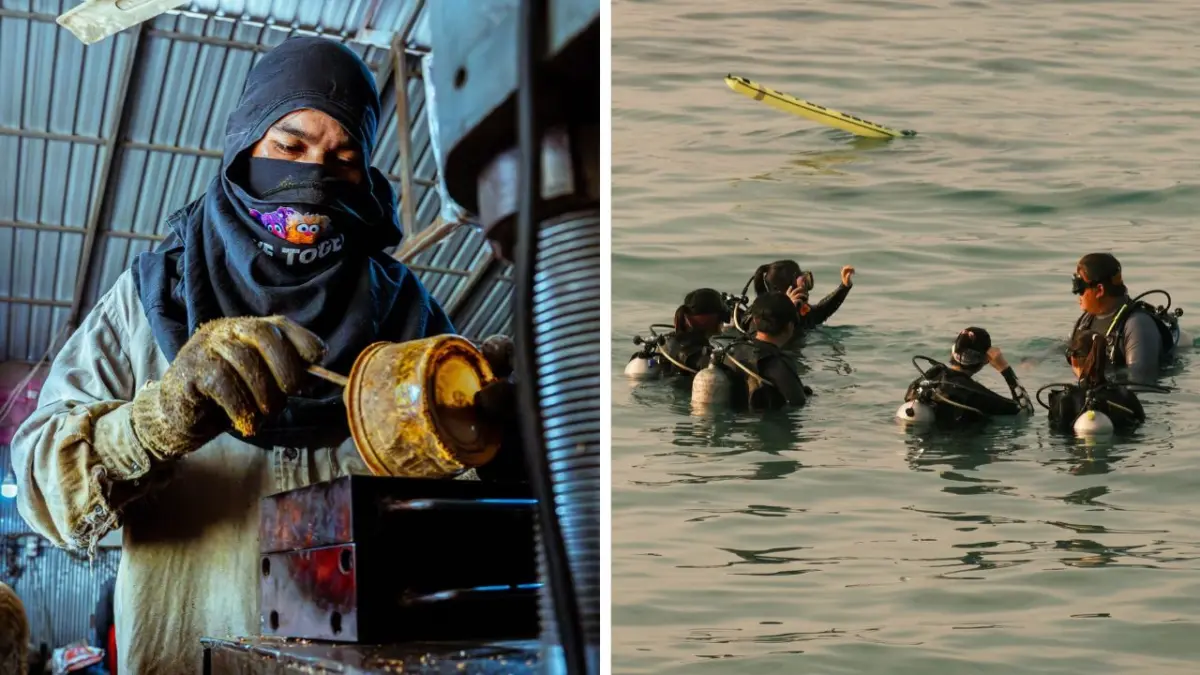
The digital landscape, particularly platforms like Reddit, frequently serves as a vast repository for human experience, sometimes unearthing narratives that resonate with profound, unsettling truth. A recent post on the popular subreddit r/AskReddit, shared on October 7 and titled "What is the scariest story you know is 100% true?", swiftly captivated thousands, garnering over 1,800 views within a short period and igniting a fervent discussion. This thread became a chilling compendium of real-life horrors, far removed from fiction, showcasing the diverse and often brutal ways in which life can unexpectedly turn catastrophic. Among the myriad submissions, three stories stood out for their visceral impact and the deep-seated fears they tapped into: a horrific industrial accident, a baffling case of sudden unexplained death, and a harrowing diving disaster marked by corporate negligence. While the original Reddit posts offer raw, unverified accounts, the underlying themes and, in some cases, real-world events they reference, warrant a deeper journalistic exploration into the contexts, implications, and the inherent human fascination with genuine terror.
The Molten Horror of Tampa: Antonia Navarrete’s Tragic End
One of the most harrowing accounts shared on the Reddit thread recounted the death of Antonia Navarrete, a 21-year-old power plant worker in Tampa, Florida, on only his fourth day on the job. The commenter detailed a catastrophic failure at an unnamed power plant where a unit was operating without a crucial water tank designed to catch and cool molten slag – a glassy byproduct of combustion – due to a blockage. This seemingly minor issue escalated into a deadly hazard.
Background on Industrial Power Plants and Slag:
Power plants, particularly those burning coal or biomass, produce slag as part of their operational process. This molten material, often exceeding 1,000 degrees Fahrenheit (538 degrees Celsius), is typically directed into water-filled tanks to solidify and cool, making it safe for disposal. Any disruption to this cooling process, especially a blockage, can lead to a dangerous accumulation of superheated material. Industrial safety protocols, often mandated by agencies like the Occupational Safety and Health Administration (OSHA), are meticulously designed to prevent such occurrences, emphasizing regular maintenance, hazard assessments, and strict lockout/tagout procedures to ensure equipment is de-energized and secured before maintenance work begins.
The Catastrophic Incident:
According to the Reddit account, the plant dispatched a team of five workers to clear the blockage. Critically, these workers were reportedly unaware of the perilous situation above them: molten slag was building up, uncooled, directly overhead. The commentator described the horrifying moment the slag burst through, spreading "forty feet, half a foot thick." Among the victims was Antonia Navarrete, who had reportedly taken a job at TECO (Tampa Electric Company) as a maintenance worker for $12 an hour, a wage that starkly contrasts with the extreme risks inherent in such an environment.
A Final, Desperate Plea:
The most gut-wrenching detail of the account was Navarrete’s final moments. On his fourth day, as the tragedy unfolded, he reportedly called his mother. The call went to voicemail, recording his last, agonizing words: "Mom! Help me! Mom! I’m burning! Call the cops! Mom!" In the background, amidst his screams, the chilling hiss of steam could be heard by his family until the sounds abruptly ceased. This detail underscores the immediate and agonizing nature of his death, leaving an indelible mark of trauma on his loved ones.
Implications and Broader Context:
While the specific incident described on Reddit requires independent verification, industrial accidents involving molten materials are not unprecedented. They highlight critical concerns regarding workplace safety, adequate training, risk assessment, and emergency protocols in hazardous environments. The narrative serves as a stark reminder of the human cost when safety procedures fail or are overlooked. Industrial fatalities, though decreasing over decades due to stringent regulations, still occur, often stemming from preventable causes such as confined space incidents, falls, or exposure to hazardous energy. The story of Antonia Navarrete, if accurate, would likely trigger a comprehensive investigation by regulatory bodies, examining the plant’s safety culture, maintenance practices, and emergency response capabilities, aiming to prevent future tragedies.
The Unseen Predator: Sudden Unexplained Death
Another deeply unsettling narrative from the r/AskReddit thread concerned a seemingly inexplicable death: a young man, aged 19 or in his early 20s, the son of a commenter’s mother’s friend, who died in his sleep "for no apparent reason." The Reddit user emphasized the complete absence of any medical explanation: "No drugs in his system, no injuries, no signs of trauma or suffocation, no known or unknown pre-existing illnesses, nothing."
Understanding Sudden Unexplained Death (SUD):
This account touches upon the terrifying reality of Sudden Unexplained Death (SUD), also known as Sudden Unexpected Death Syndrome (SUDS) or Sudden Adult Death Syndrome (SADS) when referring to adults. These terms are used when a person, often young and seemingly healthy, dies suddenly and unexpectedly, and a thorough autopsy and toxicological screening fail to identify a cause. Medically, these are diagnoses of exclusion.
Potential Underlying Causes:
While the Reddit post states "nothing" was found, modern medical science continues to uncover subtle, often undiagnosed, conditions that can lead to SUD. These include:
- Genetic Heart Conditions: Conditions like Long QT Syndrome, Brugada Syndrome, Catecholaminergic Polymorphic Ventricular Tachycardia (CPVT), and Hypertrophic Cardiomyopathy (HCM) can cause fatal arrhythmias (irregular heartbeats) without any structural abnormalities visible during a standard autopsy. These conditions are often hereditary and can remain dormant or asymptomatic until a sudden, fatal event.
- Epilepsy: Sudden Unexpected Death in Epilepsy (SUDEP) is a recognized, though rare, cause of death in individuals with epilepsy, where no other cause of death is found.
- Undetected Infections or Inflammations: In very rare cases, rapidly progressing infections or inflammatory conditions might not leave obvious signs on initial examination.
The Psychological Impact of the Unexplained:
The Reddit user articulated the profound fear such a story evokes: "The thought that you can be young, perfectly normal, perfectly healthy, and still randomly die in your sleep, is terrifying to me." This sentiment resonates deeply because it confronts one of humanity’s most primal fears: the loss of control and the unpredictability of life. Unlike accidents or diseases with clear causes, SUD leaves families grappling with an agonizing lack of answers, making closure incredibly difficult. The absence of a discernible cause can lead to prolonged grief, anxiety, and a sense of vulnerability among surviving family members.
Medical Advancements and Awareness:
Increased awareness and advancements in cardiac pathology and genetics are slowly shedding light on some SUD cases. Post-mortem genetic testing (molecular autopsy) is becoming more common, sometimes identifying genetic mutations linked to arrhythmogenic conditions that would otherwise go undetected. This ongoing research offers a glimmer of hope for understanding and potentially preventing some of these tragic deaths in the future, often through screening of family members who might carry the same genetic predisposition.
The Paria Diving Disaster: A Tale of Trapped Hope and Corporate Controversy
The third compelling story that surfaced in the Reddit thread detailed the 2022 Paria diving disaster, a real-world tragedy that garnered international attention for its harrowing circumstances and the controversy surrounding rescue efforts. The commenter’s brief account spoke of "multiple men working a diving crew were sucked into an oil pipeline while working on it," their survival of the initial vortex, their subsequent entrapment, the oil company’s alleged obstruction of rescue attempts, the miraculous survival of one diver, and the tragic deaths of the remaining four.
Background of the Incident:
This incident occurred on February 25, 2022, at the Paria Fuel Trading Company Limited’s facility in Pointe-à-Pierre, Trinidad and Tobago. A team of five professional divers from LMCS Ltd. was conducting maintenance work on a 30-inch subsea pipeline, approximately 60 feet below the surface. Their task involved isolating a section of the pipeline to perform repairs. The catastrophic event occurred when a differential pressure phenomenon, often referred to as a "delta P" incident, caused a powerful suction force that pulled the divers into the pipeline.
The Chronology of Disaster and Desperate Hope:
- Initial Incident (February 25, 2022): Christopher Boodram, Kazim Ali Jr., Fyzal Kurban, Rishi Nagassar, and Yusuf Henry were performing underwater maintenance. A sudden and immense suction force, believed to be caused by a pressure differential, pulled all five divers into the pipeline.
- Entrapment: Despite the terrifying ordeal, the divers survived the initial suction, finding themselves trapped deep within the dark, narrow confines of the pipeline. They managed to find an air pocket, providing a temporary reprieve and a glimmer of hope.
- The Rescue Attempt Controversy: News of the disaster quickly reached the surface. Relatives, fellow divers, and independent experts immediately mobilized, eager to mount a rescue operation. However, according to numerous reports and later testimony, Paria Fuel Trading Company Limited, the pipeline owner, allegedly obstructed these rescue efforts. The company cited safety concerns, fearing that further attempts to enter the pipeline could endanger rescuers or compromise the integrity of the facility. This decision sparked outrage among the families and the public, who believed precious time was being lost.
- Christopher Boodram’s Survival: In a remarkable display of courage and resilience, Christopher Boodram, one of the trapped divers, managed to navigate his way back through the pipeline, crawling for an arduous period until he reached an opening. He was subsequently rescued by relatives and other divers who defied the company’s orders. His survival offered a desperate hope that the others could also be saved.
- Tragic Outcome for the Others: Despite Boodram’s miraculous escape, the other four divers – Kazim Ali Jr., Fyzal Kurban, Rishi Nagassar, and Yusuf Henry – remained trapped. They continued to communicate with each other in their confined air pocket, praying and comforting one another, until their air supply eventually diminished, or they succumbed to other factors within the hostile environment. Their bodies were recovered days later, confirming the tragic loss of life.
Official Responses and Broader Implications:
The Paria diving disaster led to widespread condemnation and calls for accountability in Trinidad and Tobago.
- Commission of Enquiry: The Trinidad and Tobago government launched a Commission of Enquiry (CoE) to investigate the incident thoroughly. The CoE’s mandate was to ascertain the facts, determine culpability, and recommend measures to prevent similar occurrences. The findings, when released, are expected to provide a definitive account of the events and the decisions made.
- Corporate Responsibility: The incident ignited a fierce debate about corporate responsibility, emergency response protocols in the oil and gas sector, and the balance between safety concerns for rescuers and the urgent need to save lives. Critics argued that Paria’s actions demonstrated a callous disregard for human life and a prioritization of asset protection over human rescue.
- Legal and Ethical Questions: The disaster raised significant legal questions regarding negligence, occupational safety breaches, and potential criminal liability. It also prompted ethical discussions on the duties of corporations in crisis situations, particularly when the lives of contractors are at stake.
- Impact on the Diving Industry: The incident sent shockwaves through the commercial diving industry, prompting a re-evaluation of safety standards, emergency procedures, and communication protocols for high-risk underwater operations, particularly those involving pipelines and pressure differentials.
The Reddit account, though brief, accurately captures the essence of this profound tragedy: men trapped in a dark, small pipe, unsure of the air they were breathing, praying and comforting each other until their last breath, while controversy raged above them regarding their rescue.
The Enduring Power of True Narratives in the Digital Age
The r/AskReddit thread, through these and countless other submissions, highlights how digital platforms have become vital conduits for sharing deeply personal, often traumatic, experiences. While the internet’s inherent anonymity allows for the proliferation of unverified accounts, it also creates a unique space for collective storytelling, where the raw emotional impact of a "true" narrative can resonate profoundly. The human fascination with tales of terror, particularly those rooted in reality, stems from a primal desire to understand danger, to process fear, and perhaps, to feel a vicarious sense of survival.
As noted by the original publication, The Daily Dot, the identities and experiences described by Reddit users cannot be independently verified, underscoring a crucial journalistic caveat. However, the themes these stories touch upon – industrial negligence, the fragility of life, and the devastating consequences of unforeseen events or human error – are universally understood. The Antonia Navarrete story serves as a grim reminder of the daily risks faced by industrial workers. The account of sudden unexplained death speaks to the inherent vulnerabilities of the human body and the limits of medical understanding. And the Paria diving disaster stands as a stark testament to the critical importance of robust safety protocols, swift and decisive emergency responses, and unwavering corporate accountability. These narratives, irrespective of their digital origin, serve as potent reminders of the unpredictable nature of existence and the enduring power of human stories, both harrowing and heroic, to inform, caution, and provoke introspection.








