Galang Taruna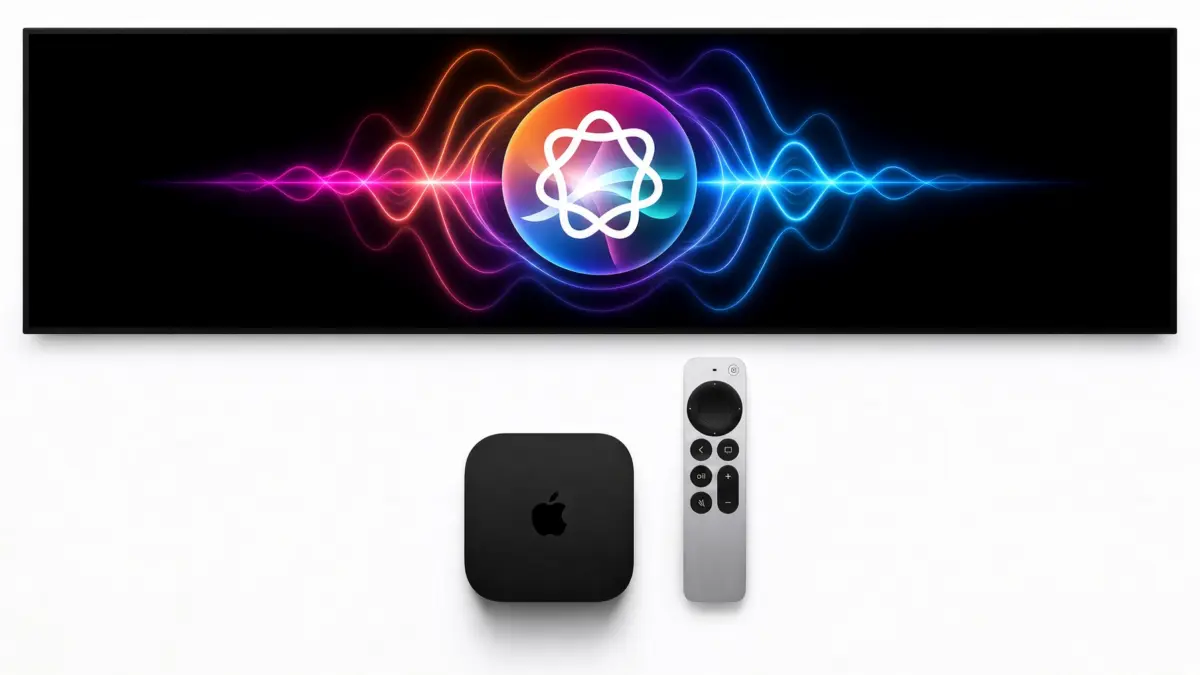
Apple has officially confirmed that its advanced artificial intelligence capabilities, dubbed Siri AI, will extend beyond its latest Apple TV 4K model to include the second-generation (2021) and third-generation (2022) Apple TV 4K devices. This strategic expansion, announced on Tuesday, October 13, 2026, comes as the tech giant rolls out its revamped voice assistant in a limited beta phase, exclusively in English, across eight non-European Union countries. The new 2026 Apple TV 4K, priced at 349 euros in France, will also feature these enhanced AI functions, though European consumers face delays due to ongoing regulatory scrutiny.
The Unveiling of the New Apple TV 4K and Unexpected Compatibility
The announcement on October 13, 2026, marked Apple’s first update to its flagship streaming box since 2022, introducing a new Apple TV 4K model designed to spearhead its home entertainment offerings. This latest iteration boasts improved processing power and potentially enhanced audio-visual capabilities, solidifying its position in the competitive streaming device market, which includes rivals like Roku, Amazon Fire TV, and Google TV. However, the most significant revelation was not just the new hardware but the company’s commitment to bringing its next-generation AI features to a broader user base.
Industry observers and early rumors, particularly from outlets like 9to5Mac, had widely anticipated that the sophisticated computational demands of Siri AI would necessitate the purchase of the newest Apple TV 4K model. This expectation was based on the premise that generative AI functionalities typically require substantial processing power, often optimized for the latest chip architectures. Therefore, Apple’s confirmation that Siri AI will also run in beta on the second-generation Apple TV 4K (released in 2021) and the third-generation Apple TV 4K (released in 2022) came as a pleasant surprise for many existing owners. This move underscores Apple’s commitment to supporting its installed user base and potentially extending the lifecycle of its hardware, fostering greater customer loyalty within its ecosystem. It also implies a remarkable optimization of the Siri AI software, allowing it to function effectively on slightly older, though still powerful, A-series chips found in these previous models.
Siri AI: A Generational Leap for Home Entertainment
The "Siri AI" in question refers to the comprehensive overhaul of Apple’s virtual assistant, deeply integrated with the broader "Apple Intelligence" framework unveiled at the Worldwide Developers Conference (WWDC) on June 8, 2026. This reimagined Siri moves beyond its traditional role as a command-and-control interface, evolving into a more intuitive, context-aware, and proactive assistant powered by generative AI. On the Apple TV, this translates into a significantly enhanced user experience.
The core functionalities of Siri AI on the television platform are designed to transform content discovery and interaction. Users can now engage in natural language conversations to search for films, TV shows, and other media. For instance, instead of rigid commands, a user might ask, "Show me action movies suitable for a family with teenagers," or "Find me documentaries about space exploration released in the last two years." The assistant is engineered to understand nuances, follow up on previous questions, and maintain conversational context, making media discovery feel more organic and less like querying a database.
Furthermore, Siri AI integrates seamlessly with ongoing playback. If a user is watching a movie, they can ask questions without interrupting the viewing experience, with answers appearing in a discreet overlay. Examples provided by Apple include inquiries such as "Where was Pluribus filmed?" or "Is this movie appropriate for a 15-year-old?" This ability to retrieve contextual information on the fly, coupled with its understanding of age ratings and geographical data, marks a substantial upgrade from the previous iteration of Siri, which largely focused on basic controls like play/pause, volume adjustment, and simple content searches. The full-screen display for initial searches and the subtle in-playback overlays represent a thoughtful design approach to minimize disruption while maximizing utility.
The Geographic Divide: EU Roadblocks and Global Rollout Strategy
Despite these significant advancements, the global rollout of Siri AI is marked by a distinct geographical divide. The initial beta launch is limited to eight countries where English is a primary language: the United States, the United Kingdom, Canada, Australia, New Zealand, India, Singapore, and South Africa. Conspicuously absent from this list are any countries within the European Union, a restriction that has persisted since the initial announcement of Siri AI at WWDC 2026.
This exclusion stems from what Apple has described as "glacial relations" with Brussels, primarily due to the stringent regulatory environment in the EU, particularly the Digital Markets Act (DMA). The DMA, which came into full effect earlier in 2026, designates large tech companies like Apple as "gatekeepers," imposing strict rules aimed at fostering competition, ensuring interoperability, and safeguarding user data privacy. Apple has expressed concerns that complying with certain provisions of the DMA could compromise the security and privacy of its users, particularly regarding how Apple Intelligence processes data.
The core issue revolves around data handling and interoperability. Apple’s on-device AI processing, combined with its Private Cloud Compute for more complex tasks, is designed with a strong emphasis on privacy. However, the EU’s regulations may require Apple to open up its ecosystem and data to third-party services in ways that the company believes could undermine its security architecture and proprietary AI models. The EU, on the other hand, is steadfast in its mission to prevent monopolistic practices and ensure a level playing field for all market participants. This regulatory deadlock has effectively put a hold on the launch of Apple Intelligence features, including Siri AI, for millions of European users, leading to a fragmented global experience for Apple’s most cutting-edge software. The situation highlights the growing tension between technological innovation and regulatory oversight in major economic blocs.
Progress in French and Other Languages: A Glimmer of Hope
While the full Siri AI experience remains unavailable in the EU, there are encouraging signs of progress for French-speaking users. The French language is making strides within Apple’s AI ecosystem, albeit not yet with the full generative AI capabilities. Notably, the French language is now available on Mac via the beta version 27.2, which developers in Europe can already test. This indicates that Apple is actively working on localizing its AI models and interfaces for different languages, preparing for a broader rollout once regulatory hurdles are cleared.
Furthermore, Canadian French is slated to arrive on Apple’s HomeView, its first smart connected screen, through a free software update. This demonstrates Apple’s commitment to supporting regional linguistic variations and expanding the reach of its smart home devices. Even the new Apple TV 4K, despite not yet offering Siri AI in French, is equipped with far-field microphones that already understand the language of Molière. These microphones currently serve the "classic" Siri functions, such as controlling playback or launching apps, suggesting that the hardware foundation for future French Siri AI integration is already in place. These developments hint that once the regulatory framework allows, Apple may be able to deploy Siri AI in French relatively quickly, leveraging the groundwork already being laid.
Technical Requirements and User Experience Integration
To leverage the advanced capabilities of Siri AI on an Apple TV, users must meet specific technical prerequisites. The Apple TV itself must be running tvOS 27.2, which is currently in beta. More crucially, the home owner, as configured in the Home app, must possess an iPhone or iPad that is compatible with Apple Intelligence and updated to the latest operating system version. Additionally, Siri AI must be activated on this paired iOS/iPadOS device in a supported language – currently, English. This multi-device dependency underscores Apple’s ecosystem approach, where different devices work in concert to deliver a seamless and powerful user experience.
The integration of Siri AI into the Apple TV experience promises to be transformative. When invoked, the assistant displays in full screen for primary interactions, such as searching for content. This immersive interface allows for complex queries and follow-up questions in a natural conversational flow. For secondary interactions, like answering questions during a movie, Siri AI employs a compact overlay, ensuring minimal disruption to the content being viewed. This thoughtful design aims to balance functionality with an unobtrusive user experience, allowing information to be retrieved quickly without pulling the user entirely out of their entertainment.
Broader Implications for Apple’s Ecosystem and Future Monetization
The expansion of Siri AI to older Apple TV 4K models carries significant implications for Apple’s broader ecosystem strategy. By extending advanced AI features to existing hardware, Apple encourages users to remain within its ecosystem, even if they are not upgrading to the latest device immediately. This approach fosters customer satisfaction and reinforces the value proposition of Apple’s interconnected products and services. It also demonstrates Apple’s confidence in its hardware’s longevity and its software’s ability to run efficiently across different generations.
The introduction of Siri AI also intensifies the competition in the voice assistant market. While Google Assistant and Amazon Alexa have long been staples in smart homes, Apple’s deep integration of AI with its entire device ecosystem – from iPhones and Macs to Apple Watches and Apple TVs – presents a formidable challenge. The focus on privacy, on-device processing, and context-awareness could differentiate Siri AI from its rivals, appealing to users who prioritize data security and a more personalized experience.
However, the article also notes a critical detail regarding the future of Siri AI: "functions that pass through Apple’s servers are limited each day, and expanded access will become paid." This indicates a potential shift in Apple’s monetization strategy for its AI services. While basic on-device AI functionalities might remain free, more demanding, server-dependent generative AI features could eventually be offered as a premium subscription. This model could generate a new revenue stream for Apple, offsetting the significant investment in AI research and infrastructure. It also raises questions about user adoption and the perceived value of these advanced features if they come with an additional cost, particularly in a market where many AI services are currently free or ad-supported.
The Future of AI on Apple TV: A Connected and Intelligent Home
The introduction of Siri AI on Apple TV 4K models is a significant step towards a more intelligent and interconnected home entertainment experience. It positions the Apple TV not just as a content consumption device, but as a central hub for AI-powered interactions within the living room. As AI technology continues to advance, we can anticipate even more sophisticated integrations, such as proactive content recommendations based on user mood or historical viewing patterns, enhanced smart home controls through natural language, and personalized content experiences tailored to individual household members.
The eventual resolution of the regulatory deadlock with the European Union will be crucial for the global success of Siri AI. Once the framework for data privacy and interoperability is mutually agreed upon, Apple can unleash its full AI capabilities across the continent, further solidifying its position in the smart home and entertainment markets. The journey of Siri AI, from its initial limited beta to a potentially widespread, paid-tier service, will undoubtedly shape the future of how we interact with our technology and consume media in our homes.