Evan Lee Salim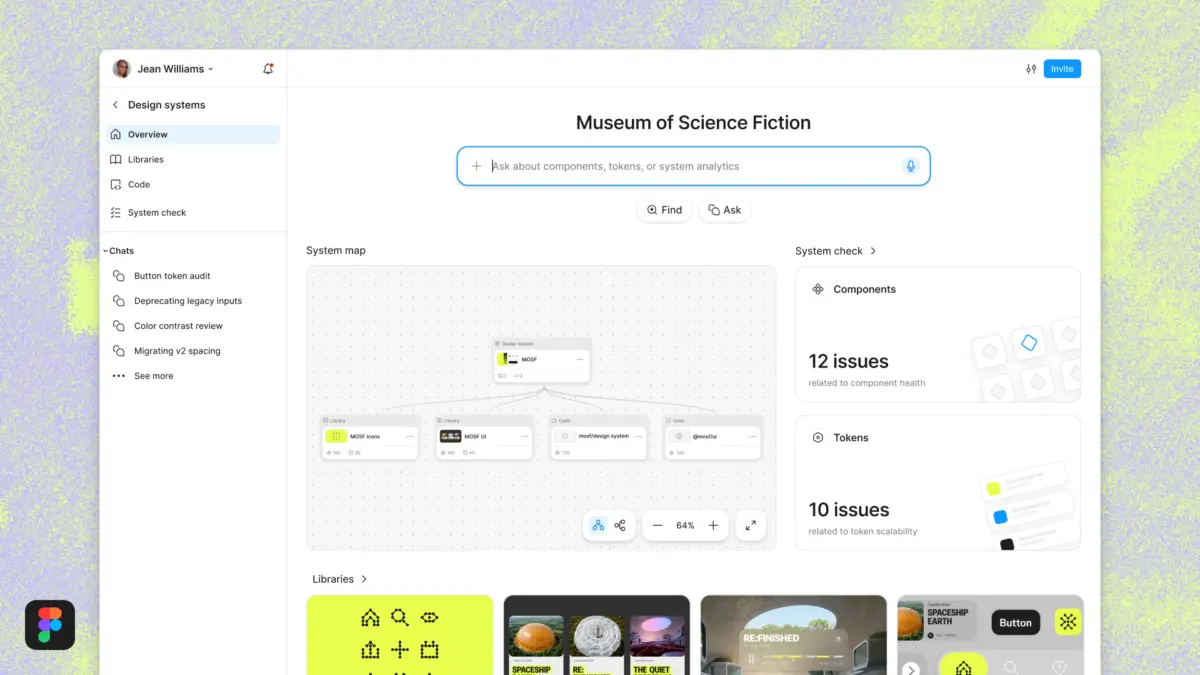
In a pivotal series of announcements made at its first-ever Config event held in India, design platform Figma revealed significant advancements aimed at revolutionizing how companies define their design language, integrate design with code libraries, and manage content, particularly in an increasingly AI-driven landscape. The flagship announcement, a new Markdown-based editor dubbed Figma Specs, is poised to become a central pillar for establishing and enforcing brand design rules, a crucial step for both human teams and burgeoning AI agents operating within the design ecosystem. These innovations underscore Figma’s strategic push to solidify its position as the indispensable hub for software teams, from initial concept to final deployment.
Figma Specs: A New Standard for Design System Documentation
At the heart of Figma’s latest offerings is Figma Specs, an innovative Markdown editor designed to simplify the intricate process of defining and documenting a company’s design language. This feature represents a significant leap forward in standardizing design systems, offering a clear, concise, and universally accessible reference point for all stakeholders involved in the design and development lifecycle. The introduction of Figma Specs addresses a long-standing challenge in the industry: maintaining consistency and coherence across complex design projects, especially as teams scale and external collaborators or AI tools become integrated.
Figma Specs documents can function either as standalone files within Figma or exist seamlessly alongside design canvases, providing unprecedented flexibility. This dual functionality ensures that critical design specifications are always within reach, whether a designer is deep in creative work or a developer is reviewing implementation guidelines. Beyond mere text editing, Figma Specs offers robust integration capabilities, allowing users to reference other Figma elements directly. This includes embedding specific elements from the canvas, incorporating FigJam diagrams for collaborative brainstorming, linking to code layers for technical specifications, and showcasing finalized designs. This interconnectedness transforms static documentation into a dynamic, living design system that evolves with the product.
The strategic intent behind Figma Specs extends to providing a comprehensive context for design. Teams can now consolidate design libraries, code libraries, and exhaustive guidelines within a single, centralized system. This holistic approach is particularly vital in the era of artificial intelligence, where the non-deterministic nature of AI outputs can pose challenges to brand consistency. By offering a defined set of rules and references, Figma aims to "steer" both its own and third-party AI agents toward more predictable outcomes, ensuring that AI-generated designs adhere strictly to established brand parameters. This move positions Figma as a proactive leader in managing the creative output of AI, ensuring it augments human creativity rather than undermining brand integrity.
Enhancing the Design-Code Workflow with Public Beta for Code Layers
Further solidifying its commitment to bridging the gap between design and development, Figma announced the public beta availability of its Code Layers feature. This functionality, which was initially unveiled in private beta in June, allows designers to embed actual code directly into their designs on the canvas. The implications are profound, enabling the creation of more interactive and functional prototypes that closely mimic the final product, thereby streamlining the handoff process to engineers.
Code Layers empowers designers to experiment with animations, interactions, and responsive layouts with unprecedented fidelity, moving beyond static mockups to truly dynamic representations. The public beta rollout signifies Figma’s confidence in the feature’s readiness for a wider audience, inviting a broader community of users to test its capabilities and provide feedback. Crucially, Code Layers integrates with Figma’s AI agent, allowing users to leverage AI to convert design elements into code or to modify existing code within a prototype. This symbiotic relationship between design, code, and AI accelerates iteration cycles, enabling teams to explore more design possibilities and refine product experiences with greater efficiency.

Loredana Crisan, Figma’s chief design officer, articulated the broader vision behind these integrations, telling TechCrunch, "We see Figma as the place where software teams come to decide what they build and ship. And so for that, I think one of the key things to keep in mind about what AI has changed and what it made available is the ability to build. There are 17-times more lines of code being produced today than in the past. But when you’re looking at releases, only 1.3-times more releases. A lot of that code actually is not necessarily built to ship, but really built to discover what the product is. It’s built to design.” Crisan’s insightful observation highlights a critical paradigm shift: AI’s proliferation is leading to an explosion of exploratory code, code that is generated not for immediate shipping but for rapid prototyping and iterative design discovery. Figma’s new tools are designed to manage this surge, providing the infrastructure to channel this creative overflow into structured, shippable products.
Deeper Integration with Payload Headless CMS
Figma’s strategic vision also extends to content management, with the announcement of deeper integration with Payload, the open-source headless Content Management System (CMS) it acquired last year. This integration, specifically with Figma Make, aims to streamline the generation of dynamic websites and facilitate direct content management from within the Figma ecosystem.
The acquisition of Payload in the previous year was a clear signal of Figma’s ambition to expand beyond pure design into the broader product development workflow. Headless CMS platforms like Payload offer immense flexibility by decoupling content from its presentation layer, allowing developers to deliver content to any frontend framework or device. By integrating Payload with Figma Make, the company is enabling a more cohesive workflow where design decisions can directly influence content structure and vice versa. This means designers can prototype with real content, and developers can pull design system components and content directly from a unified source, drastically reducing friction and potential errors in the development pipeline.
The market response to Payload since its acquisition has been robust, with Figma reporting a sixfold increase in downloads over the last 12 months. This growth underscores the industry’s demand for flexible, developer-friendly content solutions that can integrate seamlessly with modern design and development stacks. The enhanced integration positions Figma as a more comprehensive platform for end-to-end product creation, from initial wireframes and design system definition to interactive prototyping and content-driven website deployment.
Figma’s Expanding Footprint and Strategic Bet on India
The decision to host its inaugural Config event in India is not merely a geographical expansion but a strategic affirmation of the country’s growing importance in the global technology and design landscape. Figma established its first office in India late last year, building out local teams for sales, partnerships, go-to-market strategies, and product support. This investment reflects a deep commitment to serving and growing with the Indian market.
India represents Figma’s largest user base outside the United States, a testament to the country’s thriving startup ecosystem, burgeoning tech talent, and rapid digital transformation. The company proudly notes that its platform is utilized by 40% of India’s top 100 companies listed on the Bombay Stock Exchange, indicating widespread adoption among leading enterprises. This significant market penetration provides Figma with a strong foundation to further expand its reach and tailor its offerings to the unique needs of Indian designers and developers.
The Indian market’s dynamism, characterized by rapid innovation and a large pool of design and engineering talent, makes it an ideal environment for Figma to test, refine, and roll out its cutting-edge features. The insights gathered from this diverse and active user base will be invaluable in shaping the future direction of Figma’s product development, particularly concerning AI-driven tools and collaborative workflows.

Broader Implications for the Design and Development Landscape
The announcements from Config India carry significant implications for the broader design and development industry. Figma’s introduction of Figma Specs marks a potential paradigm shift in how design systems are documented and enforced. By providing a structured yet flexible framework for defining design language, Figma is empowering organizations to achieve unprecedented levels of consistency, which is critical for scaling design operations and maintaining brand integrity across numerous touchpoints. This move is particularly timely as AI tools become more pervasive, necessitating clear guidelines to ensure automated outputs align with human-defined aesthetics and principles.
The advancements in Code Layers, moving from private to public beta, further blur the traditional boundaries between design and engineering. By enabling designers to work more directly with code and leverage AI for code generation, Figma is fostering a more integrated and collaborative workflow. This can lead to faster iteration cycles, reduced friction in the design-to-development handoff, and ultimately, higher quality products delivered to market more quickly. It also empowers designers with a deeper understanding of technical constraints and possibilities, fostering a more holistic approach to product creation.
Figma’s strategic integration of Payload CMS highlights its ambition to become a comprehensive platform that supports the entire product lifecycle, from initial ideation and design to content management and deployment. This end-to-end capability makes Figma an even more compelling solution for teams looking to consolidate their tools and streamline their workflows, potentially challenging traditional boundaries between design tools, development environments, and content management systems.
Furthermore, Figma’s proactive approach to integrating and "steering" AI within the design process positions it as a leader in defining the future of AI-assisted creativity. By acknowledging the non-deterministic nature of AI and providing tools to guide its output, Figma is building a framework for responsible and effective AI adoption in creative fields. This focus on controlled AI generation is crucial for maintaining creative control and ensuring that AI serves as a powerful assistant rather than an unpredictable disruptor.
The company’s sustained investment in the Indian market also signifies a recognition of global talent and market potential. As more companies adopt remote and distributed work models, platforms like Figma that foster seamless collaboration across geographies become increasingly vital. By strengthening its presence in key international markets, Figma is not only expanding its user base but also building a global community that contributes to its innovation ecosystem.
In conclusion, Figma’s Config India announcements represent a bold step forward in evolving the design and development landscape. By introducing Figma Specs, advancing Code Layers, deepening Payload integration, and strategically embracing AI with guardrails, Figma is not merely adding features; it is fundamentally redefining the toolkit and methodologies for building the next generation of digital products. These innovations collectively aim to make the process of design more defined, more integrated, more intelligent, and ultimately, more efficient for teams worldwide.