
 George Chandra Eka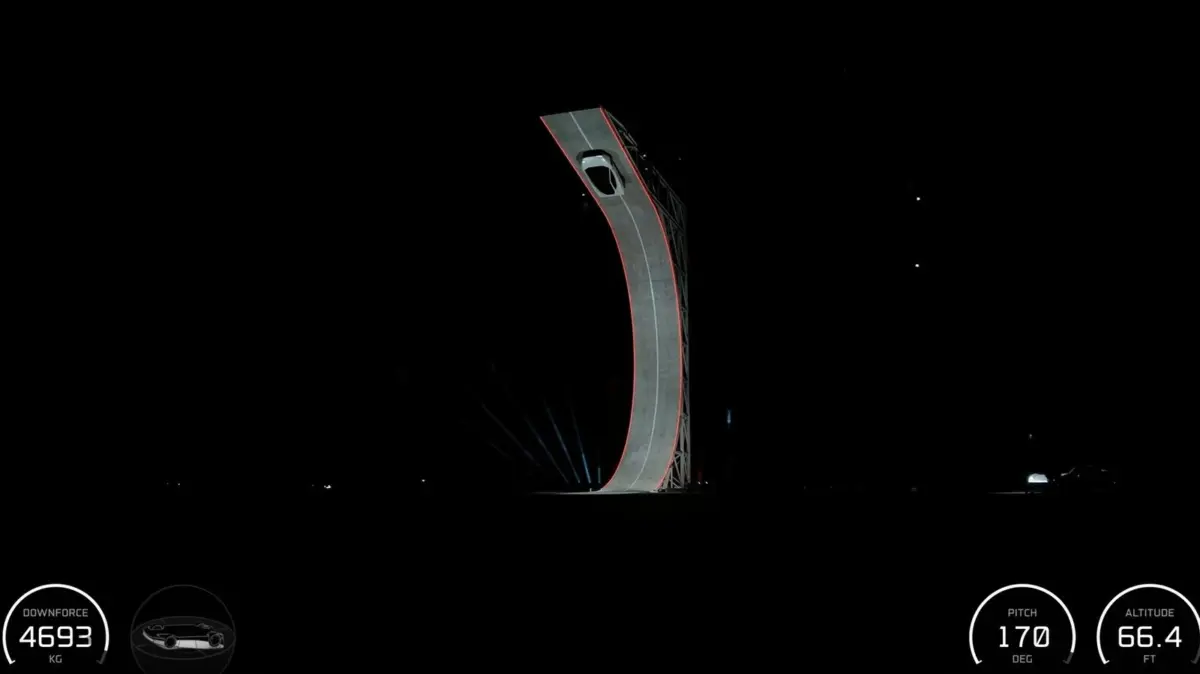
The highly anticipated launch event for Tesla’s next-generation Roadster captivated a global audience, showcasing a series of audacious stunts that pushed the boundaries of automotive engineering and generated intense discussion across the industry. Held during the unveiling of the Tesla Semi truck, the Roadster’s dramatic entrance and subsequent demonstrations were designed to solidify its status not just as an electric vehicle, but as a hypercar capable of redefining performance expectations. The event was a masterclass in spectacle, featuring maneuvers that included the vehicle defying gravity by hanging inverted, executing daring jumps over multiple cars, and performing a final, controlled aerial flip before a soft landing, purportedly enabled by advanced cold-gas thruster technology borrowed from SpaceX.
The Unveiling Event: A Spectacle of Innovation
The unveiling, which took place on what appeared to be an ordinary evening for a truck launch, quickly transformed into a high-octane display of futuristic automotive potential. Tesla CEO Elon Musk, known for his dramatic product presentations, ensured the Roadster’s reveal was nothing short of cinematic. The atmosphere was charged with anticipation, a hallmark of Tesla events, as attendees and millions watching online awaited what many speculated would be the fastest production car ever conceived. The Roadster’s dramatic reveal was strategically positioned to overshadow the already significant announcement of the Tesla Semi, underscoring the company’s dual ambition in both commercial and high-performance passenger vehicle markets. This dual unveiling strategy served to highlight Tesla’s comprehensive vision for sustainable transportation, from heavy-duty logistics to elite sports car performance, all powered by electricity.
Defying Gravity: The Roadster’s Daring Stunts
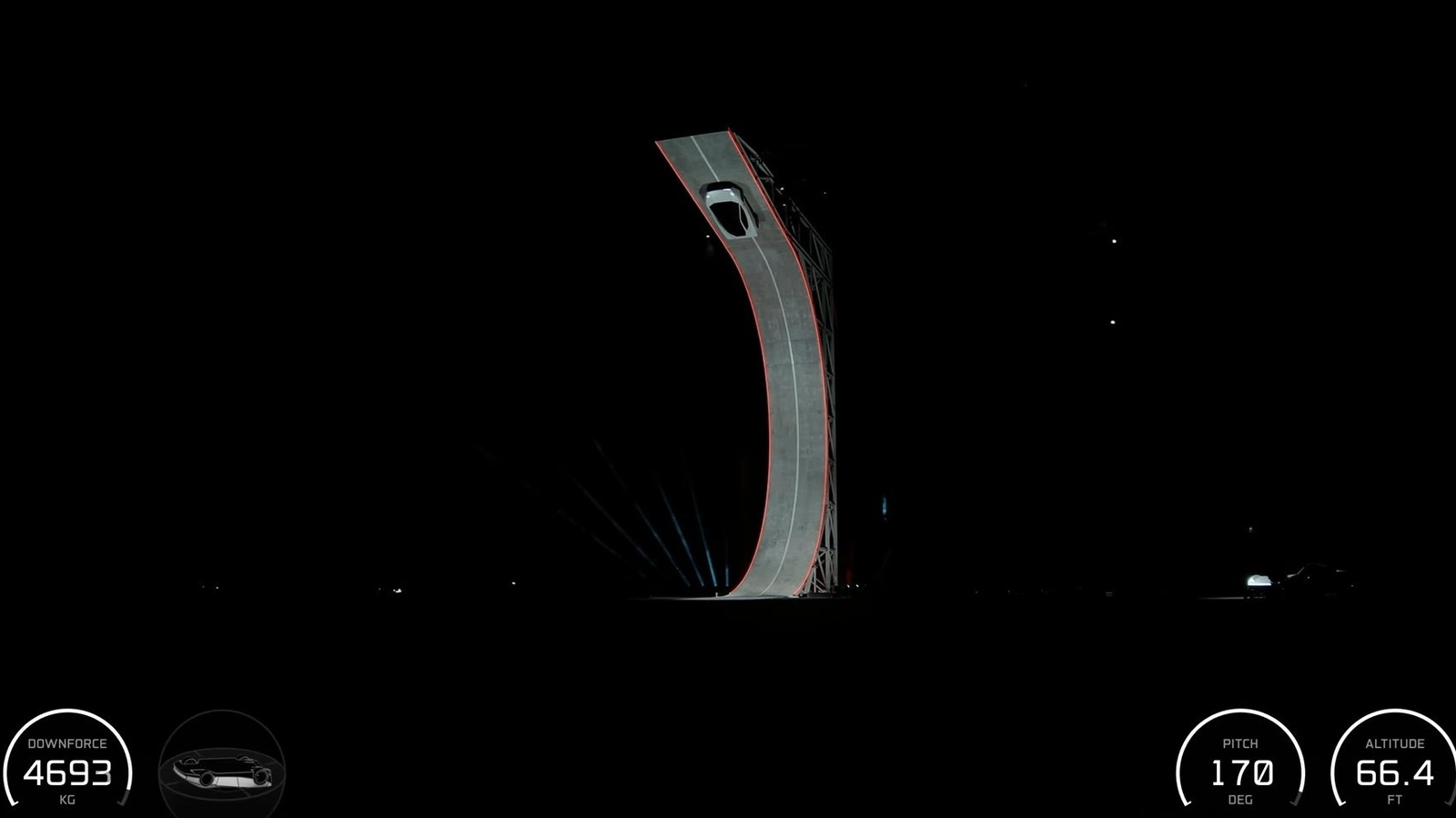
The series of stunts performed by the Roadster were the undisputed highlight of the evening, each designed to visually demonstrate the vehicle’s extraordinary capabilities. The initial appearance saw the sleek, low-slung Roadster emerge from the base of a specially constructed C-shaped ramp. In a move that drew gasps from the audience, the vehicle ascended the ramp, driving vertically upwards until it reached the apex. There, it paused, completely perpendicular to the ground, hanging upside down for several seconds. This maneuver was repeated, amplifying the disbelief and awe. The visual implication was clear: this was a car capable of manipulating its environment in ways previously unimaginable for a road-legal vehicle. Tesla later hinted that this inverted hold was facilitated by a specialized "suction" system, an option available on certain high-tier reservation models.
Following its second vertical ascent, instead of simply reversing down, the Roadster executed a breathtaking leap from the top of the ramp. As it cleared the edge, the vehicle performed a controlled roll in mid-air, righting itself before descending. This seemingly impossible feat of aerial control and soft landing was attributed directly to the integration of cold-gas thrusters, a technology directly inspired by SpaceX, Musk’s aerospace venture. The demonstration continued with the Roadster effortlessly clearing a line of several parked vehicles, showcasing its immense power and precision handling. The grand finale involved the car performing a stationary jump, rotating completely in the air, and then gently settling back onto the ground. These stunts, captured and shared extensively across social media, instantly went viral, sparking both widespread excitement and intense debate about their practical application and underlying technology.
SpaceX Synergy: The Cold-Gas Thruster System
The most revolutionary aspect of the Roadster’s stunt show, and arguably its most significant technological claim, revolved around the integration of cold-gas thrusters. This system, drawing directly from SpaceX’s expertise in spacecraft propulsion and attitude control, represents an unprecedented leap in automotive engineering. Cold-gas thrusters typically operate by expelling a highly compressed inert gas, such as nitrogen or helium, through nozzles to generate bursts of thrust. In space applications, these are crucial for precise maneuvering, docking procedures, and maintaining orbital stability.
For the Roadster, the application of such technology suggests several potential functions. Primarily, it appears to enable rapid changes in vector thrust, which could enhance cornering stability, provide short bursts of acceleration or deceleration, or, as demonstrated, facilitate controlled aerial maneuvers. While a car equipped with these thrusters is unlikely to achieve sustained flight, the ability to generate directed thrust could revolutionize aspects of vehicle dynamics, emergency braking, and even active safety systems. For instance, a sudden burst of thrust could potentially counteract a skid, aid in evasive maneuvers, or even provide a momentary lift to clear obstacles, albeit within very specific and controlled environments. The mere suggestion of this technology in a production car highlights Tesla’s ambition to blur the lines between ground and aerospace engineering, leveraging the synergistic capabilities within Musk’s ecosystem of companies. The concept has, however, naturally invited scrutiny from automotive engineers and regulatory bodies alike, who question the practicalities, safety implications, and legal frameworks for such advanced systems on public roads.
Unprecedented Performance Benchmarks
Beyond its theatrical stunts, the next-generation Roadster was unveiled with a staggering set of performance claims that, if realized, would redefine the benchmarks for production vehicles. Tesla announced that the base model of the Roadster would accelerate from 0 to 60 miles per hour in a mere 1.9 seconds, a figure that places it firmly in hypercar territory and makes it one of the fastest accelerating cars ever conceived. The quarter-mile time was projected at 8.8 seconds, an equally impressive statistic. Furthermore, the Roadster is claimed to achieve a top speed exceeding 250 miles per hour, challenging established internal combustion engine hypercars like the Bugatti Chiron and Koenigsegg Jesko.
Perhaps even more remarkable for an electric vehicle of this performance caliber is the projected range. Tesla stated the Roadster would offer an estimated 620 miles on a single charge, a monumental achievement attributed to its massive 200 kWh battery pack. This range would not only alleviate "range anxiety" often associated with EVs but would also surpass the range of many conventional gasoline-powered sports cars. These figures represent a holistic assault on the traditional perception of electric vehicles, proving that electrification does not necessitate a compromise on either extreme performance or long-distance usability. These aggressive performance targets, however, also contribute to the ongoing debate about the feasibility and practical implications of such power in a road-legal vehicle.
Market Positioning and Reservation Structure
Tesla’s strategy for the new Roadster positions it as an ultra-exclusive, high-performance halo product, designed to showcase the pinnacle of the company’s engineering prowess and push the boundaries of electric vehicle technology. This positioning is reflected in its tiered reservation and pricing structure, catering to different levels of exclusivity and technological integration.
At the base level, prospective owners could secure a reservation for the standard Roadster with an initial deposit of $5,000, followed by an additional $45,000 within 10 days, bringing the total reservation cost to $50,000. This secures a place in line for a vehicle expected to retail at a significant price point, though the full base price was not explicitly stated in the initial announcements, it’s inferred to be in the hundreds of thousands.
For those seeking even greater exclusivity and performance, Tesla offered a version that explicitly incorporated the "suctions" enabling the inverted hang and the "accelerator thrusters" for enhanced performance. The reservation for this advanced variant was significantly higher, priced at $250,000. This tier directly links the demonstrated stunt capabilities to a tangible product offering, albeit at a premium.
The pinnacle of the Roadster lineup, the version capable of the most extreme maneuvers, including the full "jump up and hover" capability, was designated for an elite clientele. Reservations for this ultimate variant were strictly invite-only, signaling its extreme exclusivity and potentially limited production run. This "invite-only" approach is often employed for ultra-high-end luxury or performance vehicles, creating an aura of prestige and scarcity that further enhances the product’s desirability among the wealthiest enthusiasts. This multi-tiered strategy allows Tesla to maximize both early revenue through deposits and maintain a high-end brand image while targeting different segments of the luxury performance market.
Industry Reception and Technological Scrutiny
The unveiling of the next-generation Roadster, particularly its audacious stunts and performance claims, elicited a polarized response from the automotive industry, media, and the public. On one hand, there was undeniable excitement and admiration for Tesla’s bold vision and technological ambition. The viral spread of the stunt videos cemented the Roadster’s image as a futuristic marvel, sparking enthusiasm among EV proponents and tech enthusiasts. Many saw it as a definitive statement that electric vehicles were not only viable but superior in terms of performance to their internal combustion counterparts.
However, the claims, especially those concerning the cold-gas thrusters and "hovering" capabilities, were met with considerable skepticism from a significant portion of automotive engineers, industry analysts, and even some segments of the general public. Questions arose regarding the practical feasibility, safety implications, and regulatory challenges of equipping a road-legal car with such advanced propulsion systems. Critics pointed out that while short bursts of thrust might be possible, sustained "hovering" or significant aerial maneuvers would require immense energy and complex control systems that are far beyond current automotive norms and would likely face severe regulatory hurdles for road use.
Analysts also highlighted Tesla’s history of making ambitious product claims and subsequently experiencing delays or adjustments to specifications upon actual production. While Tesla has ultimately delivered on many of its promises, the timeline and the exact features often evolve. This historical context fueled a cautious approach among many observers, who adopted a "believe it when we see it" stance regarding some of the Roadster’s more extraordinary capabilities. Despite the skepticism, the debate itself served Tesla’s purpose: generating immense publicity and positioning the Roadster as a vanguard of future automotive technology.
Broader Implications for the Automotive Landscape
The next-generation Roadster, irrespective of whether all its most ambitious claims are fully realized in mass production, carries profound implications for the broader automotive landscape.
Redefining Electric Vehicle Performance: Above all, the Roadster aims to shatter the remaining stereotypes about electric vehicles being less capable or exciting than gasoline-powered cars. By claiming performance figures that rival or exceed the world’s fastest hypercars, it solidifies the EV’s position at the apex of automotive performance, sending a clear message to traditional automakers that the future of high-speed motoring is electric.
The Halo Effect: As a "halo product," the Roadster serves a critical strategic purpose for Tesla. Its groundbreaking performance and futuristic features elevate the entire Tesla brand, attracting attention and generating desire that can trickle down to its more mainstream models like the Model 3 and Model Y. It reinforces Tesla’s image as an innovator and leader in electric vehicle technology, crucial for maintaining its competitive edge.
Future of Automotive Technology: Even if the thruster-enabled "jump and hover" remains an ultra-exclusive or even experimental feature, the underlying technologies, such as advanced battery management, extreme power delivery, and sophisticated vehicle dynamics control, are likely to influence future automotive development. Concepts like active aerodynamic control, advanced stability systems using micro-thrusters, or even entirely new paradigms of vehicle interaction with the environment could emerge from such audacious explorations.
Competition Response: The Roadster’s aggressive performance targets are likely to spur intensified competition from both established luxury brands and emerging EV startups. Companies like Porsche, Mercedes-AMG, and Rimac are already investing heavily in high-performance EVs. The Roadster’s unveiling forces them to accelerate their own development cycles and potentially push their own performance boundaries to remain competitive in the rapidly evolving electric hypercar segment.
In conclusion, the launch of Tesla’s next-generation Roadster was more than just a product unveiling; it was a statement of intent. Through a blend of audacious stunts, revolutionary technological claims, and a visionary approach to performance, Tesla has once again positioned itself at the forefront of automotive innovation. While the full realization and widespread adoption of its most extreme features remain subject to future developments and regulatory challenges, the Roadster has undeniably sparked a new conversation about the potential of electric vehicles and the future of personal transportation. It stands as a powerful symbol of Tesla’s ambition to not just electrify the automotive world, but to fundamentally redefine what a car can be.







