Sonny Valindra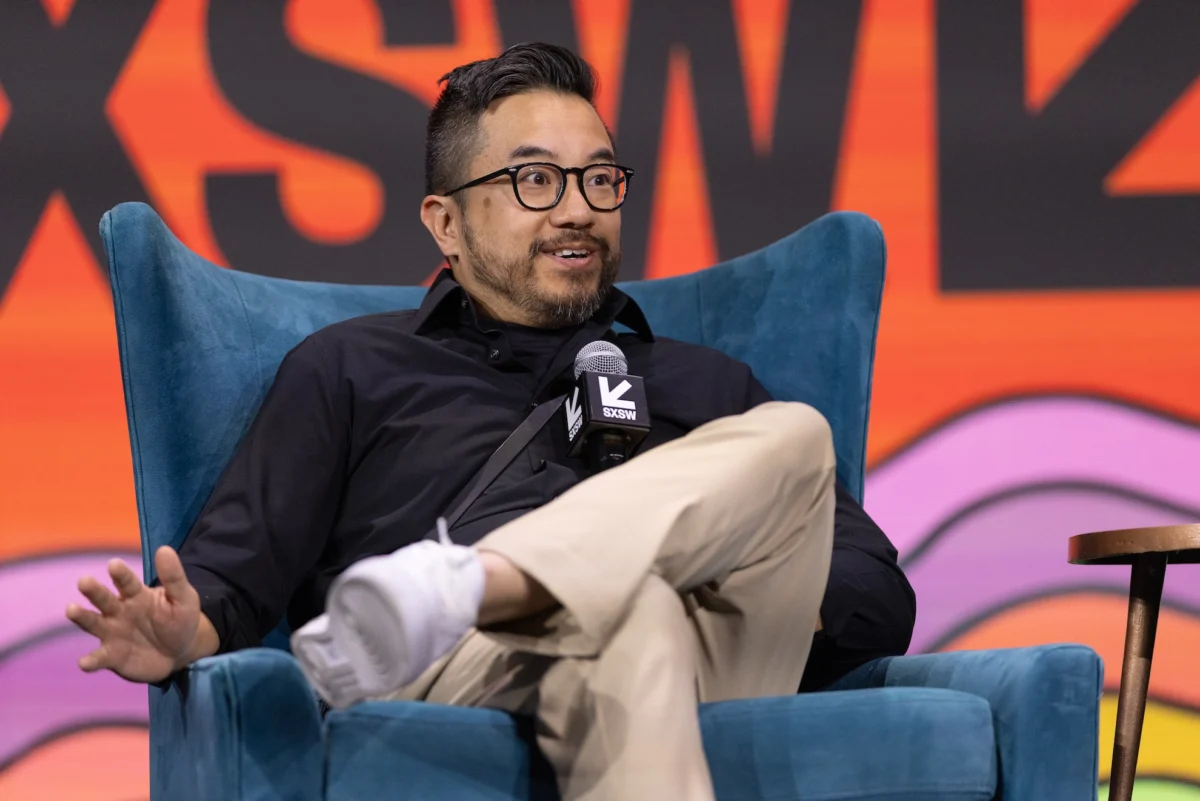
AUSTIN, TX – In a candid and electrifying address at SXSW, Garry Tan, the CEO of the renowned startup accelerator Y Combinator, revealed a state of intense, almost manic, dedication to the burgeoning field of AI agents. Tan described experiencing what he humorously termed "cyber psychosis," a condition characterized by a drastic reduction in sleep and an overwhelming excitement for the potential of AI collaborators. This fervent embrace of AI has not only captivated audiences but also ignited a significant discourse within the tech community regarding the true impact and potential pitfalls of such rapid technological integration.
During an on-stage interview with fellow venture capitalist Bill Gurley on Saturday, Tan admitted to subsisting on a mere four hours of sleep per night, a stark contrast to his previous experiences as a startup founder. "I have cyber psychosis," Tan stated, "but I think a third of the CEOs that I know have it as well." While delivered with a jesting tone, the comment underscored the profound impact AI agents are having on his work and, by extension, on the entrepreneurial landscape he so closely influences. The mention of "AI-induced psychosis" also brings to the fore discussions around the mental health implications of relentless technological immersion, a topic that has gained traction in recent years with emerging research into the psychological effects of advanced digital environments.
Tan drew a poignant parallel between his current AI-driven fervor and the early days of his own startup, Posterous, which he sold to Twitter in 2012. He recalled the immense effort and resources required to scale that venture, including significant venture capital investment, a dedicated team, and even reliance on prescription drugs like modafinil to sustain the demanding startup hustle culture. "Once you try it, you’ll realize: It’s like I was able to re-create my startup that took $10 million in VC capital and 10 people, and I worked on that for two years, and I took anti-narcoleptics – I remember, you know, sort of being on modafinil," he explained. This recollection served to highlight the perceived exponential leap in productivity and creative output that AI agents are now enabling, suggesting a new paradigm shift that negates the need for such artificial stimulants.
The genesis of Tan’s current AI obsession lies in his deep engagement with AI agents, which he views as transformative tools. He elaborated on how this engagement has become a natural driver of his wakefulness: "I don’t need modafinil with this revolution. Like, I’m up. I slept at 4 a.m. I woke up at 8 a.m. I wanted to sleep more, but I couldn’t because: Let’s see what’s going on with the 10 workers. I’ve got like three different projects going right now." This vivid description paints a picture of an entrepreneur operating at the cutting edge, where the capabilities of AI agents are being leveraged to an unprecedented degree, allowing for a highly accelerated and multi-faceted approach to innovation.
The Genesis of ‘gstack’: Open-Sourcing an AI Workflow
Tan’s excitement reached a peak on March 12, 2026, just two days prior to his SXSW appearance, when he publicly shared his custom-built Claude Code (CC) setup on GitHub under an open-source MIT license. This repository, which he dubbed "gstack," comprises six "opinionated" Claude Code skills. In the context of AI development, skills are pre-defined prompts and instructions that guide an AI model, such as Claude, to perform specific roles or tasks effectively. These skills are typically stored in special "skill.md" files, allowing for modularity and reusability within a larger AI workflow.
"I’ve been having such an amazing time with Claude Code, I wanted you to be able to have my exact skill setup," Tan announced via a post on X (formerly Twitter). The gstack repository quickly garnered significant attention, offering a direct pathway for developers and entrepreneurs to replicate Tan’s optimized AI interaction framework. The immediate availability of this resource underscored Tan’s belief in the democratizing power of open-source technology and his desire to accelerate AI adoption across the startup ecosystem.
The initial release of gstack was accompanied by a tweet that provided a direct link to the GitHub repository and emphasized its ease of installation and team-sharing capabilities. "gstack is available now at [GitHub link]," Tan posted. "Open source, MIT license, let me know if it works for you. It’s just one paste to install it on your local Claude Code, and it’s a 2nd one to install it in your repo for your teammates." This straightforward approach to sharing his innovation further amplified its reach and adoption.
Since its initial release, Tan has continuously expanded the gstack repository, adding new skills and functionalities. The GitHub repository has evolved to list 13 skills, with Tan frequently sharing updates and new developments on his social media channels, suggesting a dynamic and rapidly evolving tool. This ongoing development indicates a commitment to refining the AI workflow based on real-world usage and emerging AI capabilities.
Demonstrating ‘God Mode’: The Workflow of gstack
Tan provided a practical demonstration of gstack’s efficacy by outlining a hypothetical scenario for evaluating a startup idea or a new feature. The workflow leverages different AI agents, each tailored with specific skills:
- CEO Persona: The first skill involves prompting Claude to act as a CEO, providing an opinion on the viability and strategic fit of a proposed startup idea or feature.
- Engineer Persona: Subsequently, another skill prompts Claude to function as an engineer, translating the validated concept into functional code.
- Code Reviewer Persona: A critical step involves using a third skill where Claude, acting as a code reviewer, meticulously examines its own generated code for bugs, security vulnerabilities, and potential issues.
- Additional Roles: The gstack system also incorporates skills for design, documentation, and other essential development processes, effectively simulating a multi-disciplinary startup team within the AI environment.
This simulated organizational structure, where AI agents adopt distinct professional roles, is central to gstack’s purported effectiveness. It moves beyond simple command-and-response interactions to a more nuanced and collaborative AI-driven development process.
Reception and Controversy: Hype vs. Substance
The unveiling of gstack was met with immediate and widespread enthusiasm, quickly going viral on X and trending on Product Hunt. The repository achieved remarkable traction, accumulating nearly 20,000 stars on GitHub and over 2,200 "forks" – a clear indication of widespread interest and active engagement from the developer community.
However, this widespread acclaim was not universal. Shortly after the release, Tan posted a tweet relaying a testimonial from a CTO friend who described gstack as "god mode," capable of identifying subtle security flaws, such as a cross-site scripting (XSS) attack, that even experienced engineering teams might overlook. The CTO predicted that gstack would become a standard for over 90% of new code repositories.
This testimonial, while intended to highlight gstack’s power, triggered a wave of criticism and skepticism. Some industry figures questioned the veracity and implications of such a claim. One founder on X responded, "(1) Garry should be embarrassed for tweeting this. (2) If it’s true, that CTO should be fired immediately." This sentiment suggested that a tool revealing such critical flaws should have been addressed internally first, rather than being presented as a novel discovery.
Further fueling the debate, vlogger Mo Bitar released a video titled "AI is making CEOs delusional," critiquing gstack as essentially a collection of prompts that developers already had the ability to create themselves using Claude Code. The common complaint echoed by many was that Tan’s perceived innovation was not unique and that established Claude Code users likely possessed similar or superior custom prompt configurations.
On Product Hunt, a commenter succinctly voiced this sentiment: "Garry, let’s be clear and honest: if you weren’t the CEO of YC, this wouldn’t be on PH." This statement directly challenged the notion that gstack’s prominence was due to its intrinsic merit rather than Tan’s influential position within the tech industry. The controversy highlighted a recurring tension in the tech world: the line between genuine groundbreaking innovation and the amplification of existing trends through powerful endorsements and marketing.
Expert Analysis and the Future of AI Collaboration
To gauge the true value of gstack, an independent analysis was conducted, consulting with AI experts and the AI models themselves. Claude, the AI behind Claude Code, offered a glowing endorsement, calling gstack "a mature, opinionated system built by someone who actually uses it heavily" and "one of the better examples of Claude Code skill design out there."
Other leading AI models provided more nuanced, yet largely positive, assessments. ChatGPT described gstack as a set of "reasonably sophisticated prompt workflows, but they’re not ‘magical.’" The AI emphasized that "The real insight here is that AI coding works best when you simulate an engineering org structure. Not when you just ask: ‘build this feature.’" This analysis suggests that gstack’s strength lies not in novel AI capabilities but in its effective structuring of AI interactions to mimic human organizational dynamics.
Gemini echoed this sentiment, labeling the setup as "sophisticated" and characterizing gstack as a "’Pro’ configuration." Gemini further clarified that gstack’s value proposition is less about simplifying coding and more about enhancing the accuracy and correctness of the code produced.
This expert analysis suggests that while gstack may not represent a fundamental breakthrough in AI technology itself, it offers a sophisticated and practical framework for leveraging existing AI capabilities more effectively. The consensus points towards the significance of structured prompting and the simulation of collaborative workflows as key to unlocking the full potential of AI in development.
In a follow-up post on X on Monday, Tan reiterated his deep-seated enthusiasm for AI-assisted coding. He reflected on his past reliance on modafinil to fuel his entrepreneurial drive and contrasted it with his current AI-powered productivity. "I took modafinil just to stay awake longer to be able to turn the momentary crystalline structures I had in my brain into lines of code before sleep or human distraction turned it to grains of sand," he wrote. "I love coding but I love coding with AI even more. I speak it listens and we create. I see the structure and it is built. There is no more powerful an experience to me than that."
Tan’s statements, coupled with the significant engagement gstack has received, underscore a pivotal moment in the evolution of software development. The incident highlights the potent blend of genuine technological advancement, enthusiastic advocacy, and the inevitable controversies that accompany disruptive innovation. While the debate over gstack’s uniqueness may persist, its impact on accelerating discussions around AI-powered workflows and the future of human-AI collaboration is undeniable. Tan’s "cyber psychosis," whether literal or metaphorical, reflects a broader trend of intense engagement with AI that is reshaping how we conceive of work, creativity, and productivity in the 21st century. Tan himself did not respond to multiple requests for comment following his SXSW appearance.