admin
admin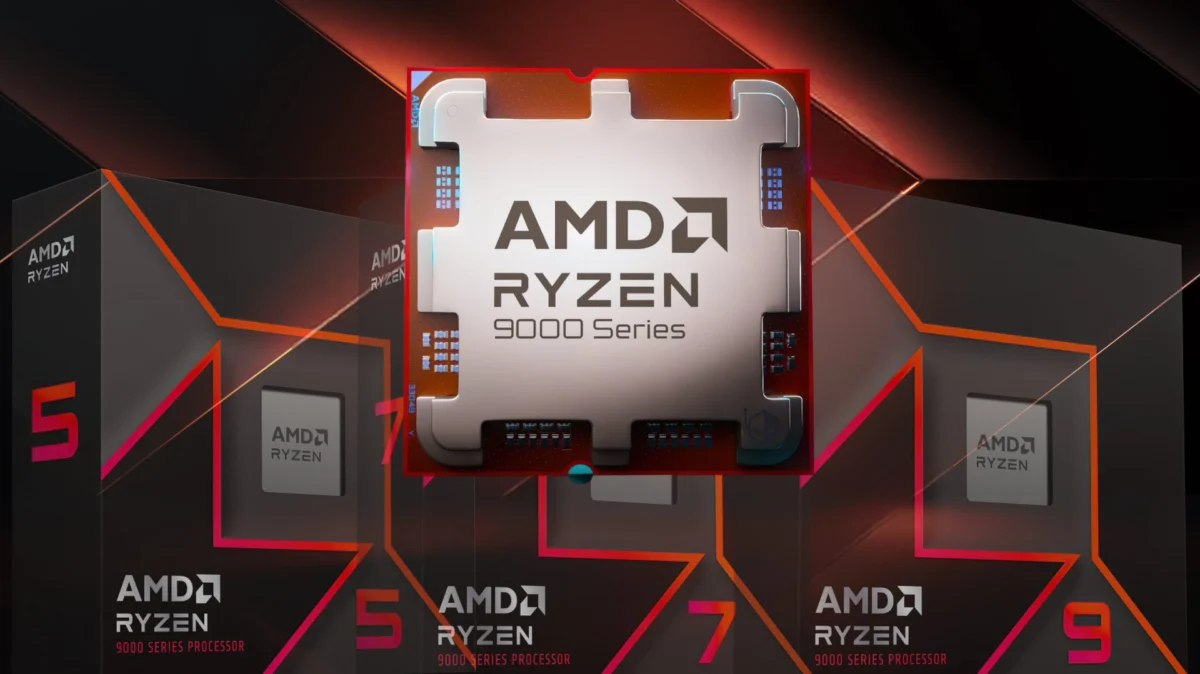
Advanced Micro Devices (AMD) is reportedly preparing a strategic expansion of its "Granite Ridge" desktop processor family to bolster its mid-range and high-performance offerings. According to emerging industry leaks, the company is developing two new Zen 5-based processors: the Ryzen 7 9750X and the Ryzen 5 9650X. These components are positioned as high-power refreshes of the existing Ryzen 9000 series, specifically designed to address the evolving competitive landscape shaped by Intel’s upcoming Core Ultra 200S "Plus" series. The most notable shift in these new SKUs is the transition to a native 120W Thermal Design Power (TDP) envelope, representing a significant increase over the initial launch specifications of their predecessors.
Technical Specifications and Performance Targets
The Ryzen 7 9750X and Ryzen 5 9650X represent a push for higher sustained clock speeds and improved multi-threaded performance out of the box. By increasing the power budget to 120W, AMD aims to unlock the full potential of the Zen 5 architecture, which was criticized by some enthusiasts during its initial launch for being overly conservative with power consumption and thermal limits.
The Ryzen 7 9750X: High-Clock 8-Core Performance
The Ryzen 7 9750X is set to feature 8 cores and 16 threads, utilizing a single Core Complex Die (CCD) based on the 4nm process node. The technical data suggests a base clock of 4.2 GHz and a boost clock reaching up to 5.6 GHz. When compared to the original Ryzen 7 9700X, this refresh offers a substantial 400 MHz increase in base clock and a 100 MHz improvement in peak boost frequency.
The cache configuration remains consistent with the Zen 5 design, providing 32 MB of L3 cache and 8 MB of L2 cache for a total of 40 MB of high-speed memory. However, the move to a 120W TDP is the defining characteristic of this model. While the Ryzen 7 9700X launched with a 65W TDP—later adjusted via BIOS updates to support a 105W mode—the 9750X is engineered to operate at 120W by default, ensuring higher sustained frequencies during heavy workloads such as video rendering and complex computational tasks.
The Ryzen 5 9650X: Redefining the Mid-Range
For the mainstream segment, the Ryzen 5 9650X offers 6 cores and 12 threads. This processor features a base clock of 4.3 GHz and a boost clock of 5.5 GHz. Similar to its 8-core sibling, it sees a 400 MHz jump in base clock and a 100 MHz increase in boost clock over the Ryzen 5 9600X. The cache hierarchy includes 32 MB of L3 and 6 MB of L2, totaling 38 MB.
The adoption of the 120W TDP for a 6-core processor indicates that AMD is prioritizing frequency stability. By allowing the 9650X to draw more power, the chip can maintain its 5.5 GHz boost clock across more cores for longer durations, closing the gap between the mid-range Ryzen 5 and the higher-tier Ryzen 7 in gaming scenarios where per-core speed is often more critical than total core count.
Chronology of the Ryzen 9000 Series Evolution
The development of the Ryzen 7 9750X and Ryzen 5 9650X follows a turbulent release cycle for the Zen 5 architecture. To understand the necessity of these refreshes, one must look at the timeline of the AM5 platform’s recent history:
- August 2024: The Zen 5 Launch. AMD released the Ryzen 9000 series (9950X, 9900X, 9700X, and 9600X). While the IPC (Instructions Per Clock) gains were evident, the 9700X and 9600X were initially limited to a 65W TDP, which many reviewers felt constrained their performance in productivity benchmarks.
- September 2024: AGESA Firmware Updates. In response to market feedback, AMD and motherboard partners released AGESA 1.2.0.2, which officially introduced a 105W TDP mode for the Ryzen 7 9700X and Ryzen 5 9600X. This provided a noticeable performance boost but required manual user intervention in the BIOS.
- Late 2024: The X3D Dominance. The launch of the Ryzen 7 9800X3D solidified AMD’s lead in gaming, but the standard "non-X3D" parts faced stiff competition from Intel’s remaining 14th Gen stock and the initial rumors of the Core Ultra 200S series.
- March 2026 (Projected): The Refresh Cycle. According to the latest leaks from sources such as "chi11eddog," AMD is expected to finalize the 9750X and 9650X to provide a "factory-tuned" high-power option that does not require user-side TDP adjustments, effectively replacing the 9700X and 9600X in the retail spotlight.
Competitive Landscape: AMD vs. Intel Refreshes
The timing of these refreshes is not coincidental. Intel is reportedly preparing its own mid-generation update for the LGA 1851 platform, tentatively titled the Core Ultra 200S "Plus" series. Specifically, the Core Ultra 7 270K Plus and Core Ultra 5 250K Plus are expected to feature higher E-core counts and clock speed optimizations.
AMD’s decision to move to 120W for its mid-range parts is a direct response to Intel’s "Plus" strategy. Intel’s Arrow Lake architecture focuses heavily on efficiency and multi-threaded throughput via its Skymont E-cores. By raising the floor of the Ryzen 9000 series with the 9750X and 9650X, AMD is ensuring that its 8-core and 6-core parts remain competitive in "bursty" workloads and gaming, where the Zen 5’s "Lion Cove" rivals might otherwise take the lead.
Market Positioning and Pricing Strategy
As AMD prepares to introduce these new models, a shift in the current product stack is anticipated. Historically, when AMD introduces "XT" or "50" refreshes, the original models see a price reduction while the new models occupy the original Manufacturer’s Suggested Retail Price (MSRP) tiers.

Current market data shows the Ryzen 7 9700X retailing for approximately $299 USD, while the Ryzen 5 9600X is positioned around $199 USD. It is highly probable that the Ryzen 7 9750X will launch at the $329-$349 range, effectively pushing the 9700X down to a permanent sub-$300 category. Similarly, the Ryzen 5 9650X would likely take the $249 spot, making the 9600X an aggressive entry-level option for the AM5 platform at under $200.
This pricing strategy allows AMD to capture two distinct consumer types:
- The Value-Oriented Builder: Users who will opt for the 9700X or 9600X at discounted rates, leveraging the 105W BIOS mode for near-refresh performance.
- The Performance-First Consumer: Users who want the highest possible clocks out of the box with guaranteed stability at 120W without needing to navigate BIOS settings.
Analysis of Technical Implications
The move to a native 120W TDP for 6 and 8-core processors has several technical implications for the PC building community.
Thermal Management
A 120W TDP translates to a higher Package Power Tracking (PPT) limit, likely around 162W. This necessitates more robust cooling solutions. While the 65W 9700X could be adequately cooled by a mid-range air cooler, the 9750X will likely require high-end dual-tower air coolers or 240mm/280mm All-In-One (AIO) liquid coolers to maintain its 5.6 GHz boost clock under sustained load.
Motherboard Compatibility
The AM5 platform remains the home for these new chips. Most existing B650, X670, and the newer X870 motherboards are well-equipped to handle 120W processors, as they were designed to support the 170W Ryzen 9 9950X. However, users of entry-level A620 motherboards may need to verify VRM (Voltage Regulator Module) thermal limits, as these boards were often optimized for 65W TDP components.
Architectural Efficiency
The Zen 5 architecture features a wider execution engine and improved branch prediction. However, these features are power-hungry when pushed to high frequencies. The 120W limit allows the 9750X and 9650X to utilize the full width of the Zen 5 pipeline without hitting power-related throttling, which was a bottleneck in the early 65W implementations of the 9000 series.
Broader Impact on the Semiconductor Industry
The introduction of the Ryzen 7 9750X and Ryzen 5 9650X signals a broader trend in the semiconductor industry: the "Power-for-Performance" trade-off. As process nodes become more expensive and frequency gains become harder to achieve, both AMD and Intel are increasingly relying on expanded power envelopes to squeeze out incremental performance gains.
For AMD, this refresh is a way to bridge the gap until the eventual release of the Zen 6 architecture. By refining the binning process and offering higher-TDP versions of existing silicon, they can maintain market share in the desktop segment without the massive R&D costs of a completely new architecture. This also keeps the AM5 platform relevant and vibrant, fulfilling AMD’s promise of long-term support for the socket.
Conclusion and Outlook
The Ryzen 7 9750X and Ryzen 5 9650X represent AMD’s commitment to iterating on the Zen 5 architecture to meet the demands of modern computing. While not a revolutionary leap in technology, these 120W refreshes provide the necessary clock speed headroom to compete with Intel’s refreshed Core Ultra lineup.
For consumers, these parts offer a simplified choice: high-performance, high-clock processors that leverage the full maturity of the AM5 ecosystem. As the industry moves toward the expected March 2026 launch window, further details regarding final MSRP and bundled software features are likely to emerge. For now, the "Granite Ridge" refresh stands as a testament to the ongoing "arms race" in the desktop CPU market, where power, frequency, and value remain the primary battlegrounds.