Evan Lee Salim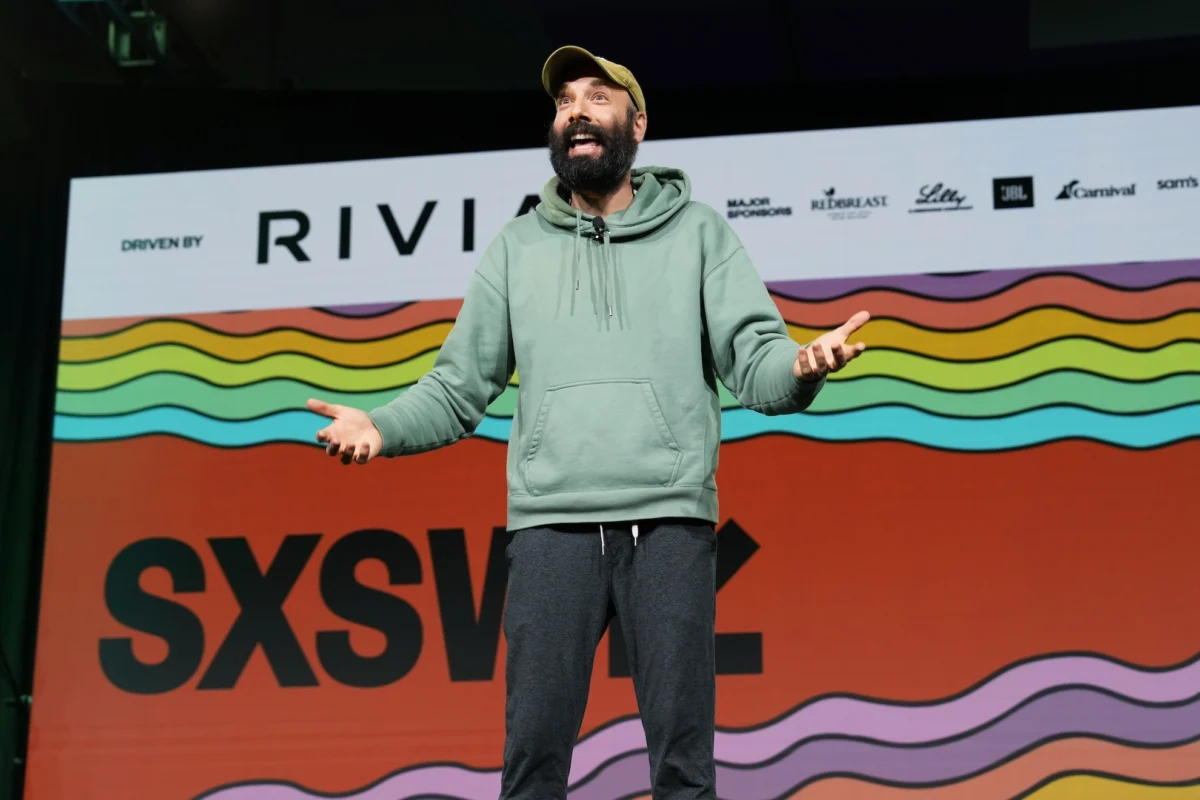
Austin, Texas – Jack Conte, the co-founder and CEO of Patreon, delivered a forceful address at the annual South by Southwest (SXSW) conference in Austin, Texas, advocating for mandatory compensation for creators whose work is utilized to train artificial intelligence (AI) models. Conte, himself a musician and a long-time champion of the creator economy, articulated a nuanced position: he is not inherently anti-AI or anti-technology, but he vehemently opposes the current practice of AI companies leveraging vast amounts of creative content without remuneration, often under the guise of "fair use."
Conte, who presides over a platform designed to enable direct fan-to-creator payments, framed the advent of AI as the latest in a series of disruptive technological shifts that creators have navigated throughout the digital age. From the music industry’s pivot from physical sales to digital downloads on iTunes, and subsequently to subscription streaming services, to the evolution of video content from traditional formats to the vertical dominance of platforms like TikTok, creators have consistently adapted. While acknowledging the inevitability of such changes, Conte stressed that adaptation should not come at the expense of fair compensation for intellectual property.
The "Bogus" Fair Use Argument: A Core Contention
A central pillar of Conte’s argument at SXSW revolved around his assertion that the "fair use" defense, frequently invoked by AI developers to justify the ingestion of copyrighted material for training purposes, is fundamentally flawed and "bogus." He highlighted a perceived hypocrisy in the industry: while AI companies claim a blanket right to use publicly available creative works without payment, they simultaneously engage in multi-million-dollar licensing deals with large corporate rights holders and publishers.
"It’s bogus because while they claim it’s fair to use the work of creators as training data, they do multimillion-dollar deals with rights holders and publishers like Disney and Condé Nast and Vox and Warner Music," Conte stated, referencing a prepared text that he characterized as a "manifesto." His rhetorical question underscored the core of his critique: "If it’s legal to just use it, why pay? Why pay them and not creators — not the millions of illustrators and musicians and writers — whose work has been consumed by these models to build hundreds of billions of dollars of value for these companies?"
This distinction, Conte argued, exposes the selective application of the fair use doctrine. If the legal interpretation of fair use truly permitted unrestricted access to copyrighted material for training, there would be no logical or legal imperative for AI firms to enter into costly agreements with major media conglomerates. The fact that such deals are commonplace, he suggested, indicates an implicit recognition of intellectual property rights that is currently being denied to individual creators and smaller entities.
Patreon’s Stake in the Creator Economy
Patreon, founded by Conte and Sam Yam in 2013, emerged from Conte’s personal frustration as a musician struggling to earn a sustainable income from his digital content. The platform’s mission has always been to empower creators by providing tools for direct monetization through fan subscriptions, thereby fostering a more predictable and stable revenue stream outside of traditional advertising or royalty models. As such, Conte’s advocacy for creator compensation in the AI era is deeply aligned with Patreon’s foundational principles and its community of hundreds of thousands of artists, writers, podcasters, and other digital creators.
The creator economy, which Patreon significantly contributes to, has seen explosive growth over the past decade. Estimates vary, but reports often place its market size in the hundreds of billions of dollars, with millions of individuals globally relying on platforms and direct audience engagement for their livelihoods. This ecosystem is particularly vulnerable to the uncompensated use of creative works by AI models, as the very output these models generate often directly competes with the original human creations, or diminishes the perceived value of human artistry.
A Broader Context: AI’s Rapid Ascent and Legal Challenges
The debate surrounding AI and intellectual property has intensified dramatically over the past few years, coinciding with the rapid advancements and widespread public accessibility of generative AI models. Tools capable of producing text, images, audio, and video from simple prompts have revolutionized various industries, but have also ignited a fierce ethical and legal battle.
Many AI models, particularly large language models (LLMs) and generative art models, are trained on vast datasets often scraped from the internet without explicit permission or compensation to the original creators. This practice has led to a flurry of lawsuits from artists, authors, and news organizations, alleging copyright infringement and unfair competition. These legal challenges, which are still largely in their early stages, seek to define the boundaries of fair use in the context of AI training data and establish new frameworks for creator compensation.
Some AI developers argue that training models constitutes a "transformative use" of copyrighted material, akin to how a human learns from existing art before creating something new. They contend that the output of AI models is sufficiently different from the input data to warrant protection under fair use. However, critics, including Conte, point to the commercial scale of these operations and the direct economic threat to creators as reasons why this argument falls short. The multi-billion-dollar valuations of leading AI companies further underscore the massive economic value being derived from this uncompensated data.
Historical Parallels and the Evolution of Creative Industries
Conte’s reference to previous technological disruptions offers a valuable historical lens. Each major shift – from vinyl to cassette, CD to MP3, download to streaming, broadcast to YouTube, and now AI – has forced creative industries to re-evaluate business models, intellectual property rights, and compensation structures. The initial phases of these transitions were often marked by significant friction, legal battles, and economic uncertainty for creators.
For instance, the rise of digital music distribution and peer-to-peer file sharing in the late 1990s and early 2000s led to widespread piracy and a dramatic decline in music sales, profoundly impacting artists and record labels. It took years of legal battles, the emergence of legitimate digital storefronts like iTunes, and eventually, the widespread adoption of streaming services like Spotify to establish new, albeit often contentious, compensation mechanisms for musicians. Similarly, the shift to digital photography and online content creation democratized publishing but also created new challenges around intellectual property and fair remuneration for photographers and writers.
Conte views the AI revolution through this historical lens, asserting that while change is inevitable and even exciting for some, it must be managed in a way that protects the foundational value of human creativity. His message at SXSW was not one of Luddism, but rather a call for proactive and equitable policy-making that acknowledges the labor and intellectual property embedded in creative works.
Implications for Policy, Platforms, and the Future of Creativity
Conte’s powerful statement at SXSW carries significant implications for legislative bodies, technology platforms, and the creative community worldwide. It adds a prominent voice to the growing chorus demanding greater accountability and compensation from AI developers.
From a policy perspective, the debate is pushing lawmakers to consider new legislation or interpretations of existing copyright law that specifically address AI training data. Potential solutions could include:
- Mandatory Licensing Schemes: Requiring AI companies to license data for training, similar to how music rights are managed.
- Data Royalty Mechanisms: Implementing systems where creators receive royalties when their work contributes to AI model training or generates outputs.
- Opt-Out/Opt-In Frameworks: Giving creators more control over whether their work can be used for AI training.
- Extended Producer Responsibility: Placing the burden on AI developers to ensure ethical sourcing of training data.
For platforms like Patreon, this conversation is existential. As aggregators of creative content and champions of creator livelihoods, they are uniquely positioned to advocate for their communities. Conte’s remarks suggest that Patreon could play a role in negotiating collective licensing agreements or developing new tools to track and compensate creators for AI-related usage of their work. This could transform Patreon from solely a subscription platform to an intellectual property steward in the AI age.
Ultimately, Conte’s vision for the future of creativity is one of enduring human ingenuity, despite technological advancements. He concluded his talk on a hopeful note, expressing his conviction that human beings will continue to create and appreciate the work of other humans for a long time to come. He distinguished true artistry from the predictive nature of AI models, stating, "Great artists don’t play back what already exists. They stand on the shoulders of giants. They push culture forward." This underscores the belief that while AI can mimic and synthesize, the unique spark of human innovation, intention, and cultural relevance remains irreplaceable and, crucially, deserving of fair value. The challenge now is to translate this value into equitable compensation structures in a rapidly evolving technological landscape.