Lina Irawan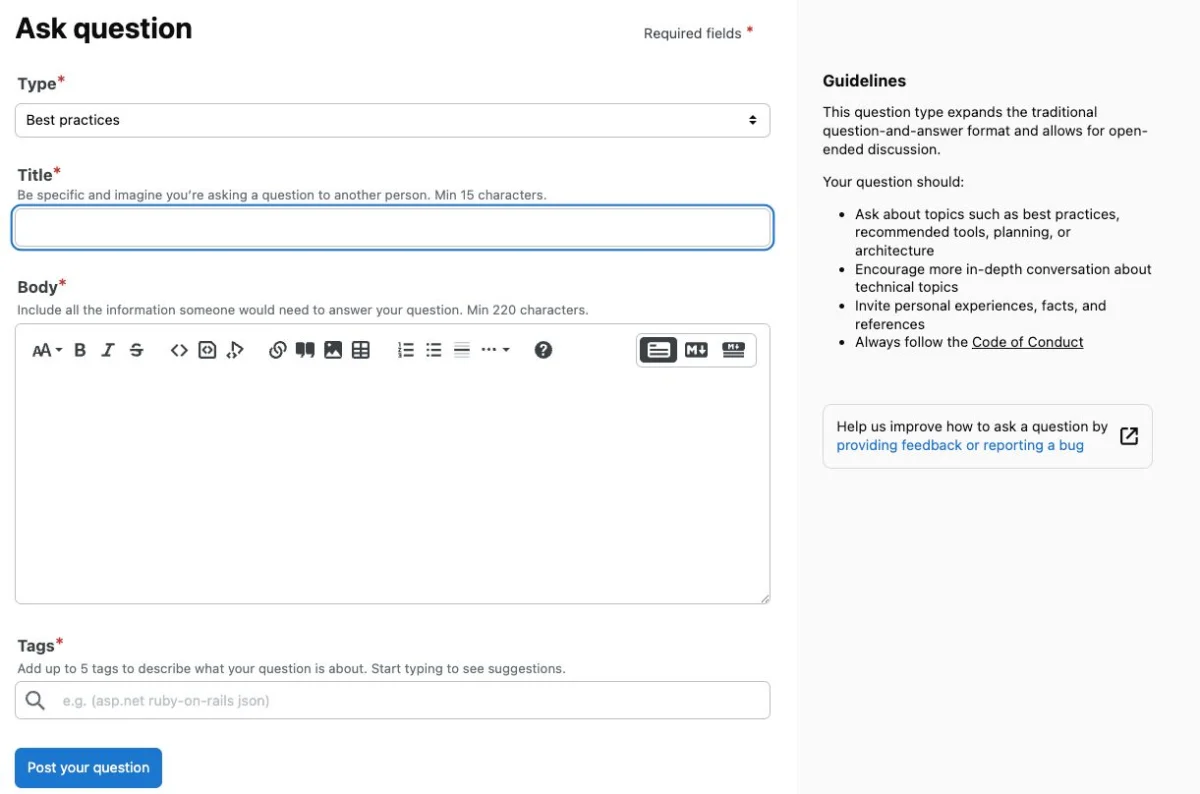
Stack Overflow, the world’s preeminent knowledge-sharing platform for developers and technologists, has officially entered a transformative phase with the launch of its redesigned beta interface and a fundamental shift in its content moderation philosophy. In a comprehensive March update, the organization announced that it is moving beyond its traditional "single right answer" model to embrace a more nuanced, experience-based approach to technical inquiry. This strategic evolution is accompanied by the integration of advanced AI capabilities and a revamped community recognition system designed to reward high-impact contributions.
A Paradigm Shift in Content Strategy: The Rise of Opinion-Based Questions
For nearly two decades, Stack Overflow has been defined by a rigorous adherence to objective, factual inquiries. Questions that were deemed "subjective" or "opinion-based" were historically flagged for closure to maintain a repository of verifiable truths. However, on February 19, 2026, the platform enacted a significant policy shift by expanding its opinion-based questions experiment to its entire global user base.
This transition acknowledges a fundamental reality in modern software engineering: technical solutions are rarely binary. While a syntax error has a factual correction, choosing between architectural patterns or evaluating the scalability of different frameworks often requires professional judgment and peer perspectives. By allowing for experience-based recommendations and insights, Stack Overflow aims to support the way technologists actually work in real-world environments.
The expansion of this experiment is intended to reduce the "barrier to entry" for new users who may have previously struggled with the site’s strict formatting requirements. By welcoming broader content types, the platform seeks to capture the "tribal knowledge" of senior developers—insights that are often lost in purely factual documentation. Users can now expect a more conversational tone where peer perspectives are not just tolerated but encouraged as a means of reaching faster, more nuanced solutions.
Chronology of Platform Evolution: February–March 2026
The current overhaul is the result of a multi-stage rollout designed to test site stability and community sentiment. The timeline of these developments provides a clear view of Stack Overflow’s strategic direction:
- Early February 2026: The organization announced the "Community Asks Sprint," a concentrated effort to address long-standing user requests regarding site gamification and challenge structures.
- February 19, 2026: The opinion-based question experiment, previously limited to a small alpha group, was officially opened to all registered users.
- Late February 2026: Four new custom badges were introduced specifically for the "Challenges" section of the site to incentivize creative problem-solving.
- February 25, 2026: Stack Overflow released a detailed preview of its visual and structural redesign, signaling a move toward a more modern, AI-integrated user experience.
- March 2026: The beta version of the redesigned site became available for public testing, incorporating the most recent updates to the "AI Assist" toolset.
The Redesign: A Human-Centric Interface Powered by AI
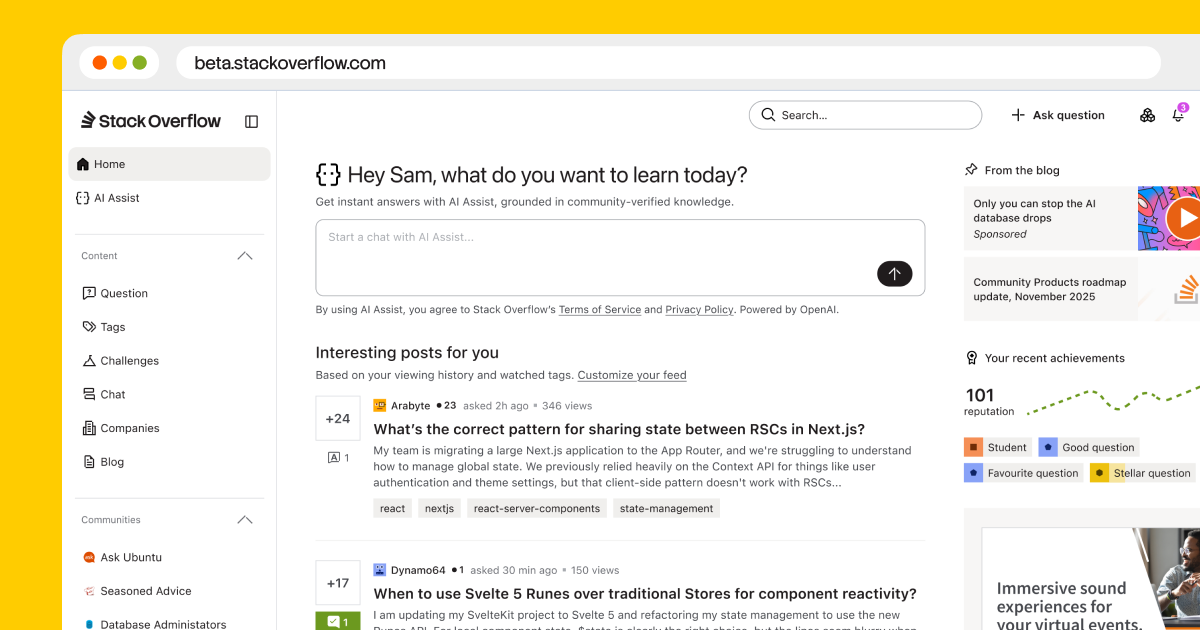
The beta version of the new Stack Overflow represents the most significant visual and functional update in the platform’s history. The redesign is built on three core pillars: updating the look and feel, refining engagement mechanics, and streamlining content creation.
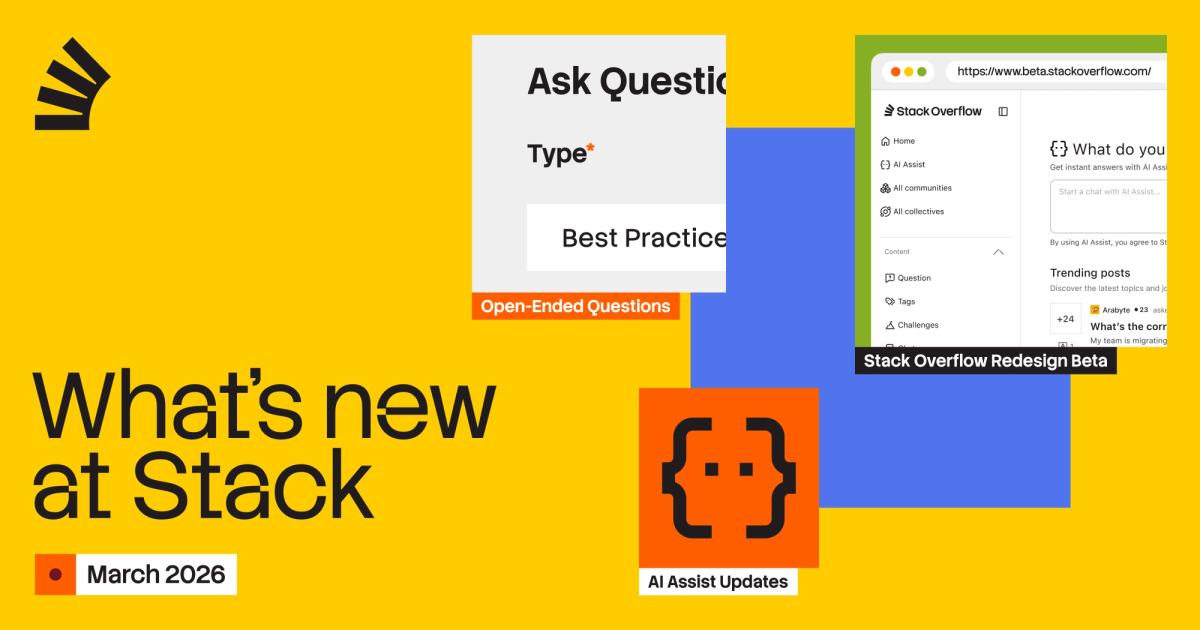
Central to this new experience is the "AI Assist" feature. While Stack Overflow has historically been cautious about AI-generated content due to accuracy concerns, the new interface integrates AI as a collaborative tool rather than a replacement for human interaction. The organization stated that its goal is to build a space for technical conversation centered on "human-to-human connection," with AI serving as a supplementary force to accelerate information retrieval and formatting.
Notably, many of the most recent enhancements to AI Assist are exclusive to the redesigned beta experience. While users can currently toggle between the "classic" view and the beta site, the platform’s technical roadmap suggests that future innovations will be concentrated on the new interface. This move encourages the community to migrate toward the beta environment (beta.stackoverflow.com) to provide the necessary feedback and bug reports required for a stable global rollout.
Data-Driven Recognition: The Populist Badge and Community Challenges
Stack Overflow’s reputation system remains the backbone of its quality control. In February, the platform placed a spotlight on the "Populist" badge, a rare and prestigious honor that highlights the evolving nature of technical knowledge.
The Populist badge is awarded when a user’s answer becomes the highest-scoring response on a question, outscoring an already "accepted" answer by more than double (provided the accepted answer has a score of at least 10). In February 2026, only 21 community members earned this badge. The significance of this data point lies in what it represents: the continuous refinement of knowledge. These 21 individuals provided solutions that were so superior to the original "correct" answers—often because the original solution became outdated or a more efficient methodology was discovered—that the community overwhelmingly shifted its support to the new information.
Furthering its commitment to engagement, the platform also introduced four new custom badges tied to "Challenges on Stack Overflow." These include:
- The Coder Badge: For winners of standard coding challenges.
- The Hacker Badge: Awarded for innovative or unconventional solutions.
- The Virtuoso Badge: Reserved for those demonstrating exceptional mastery in specific challenge categories.
- The Creator Badge: Awarded to users who author challenges, either by invitation or through the "Challenges Sandbox."
The "Challenges Sandbox" serves as a community-driven incubator where users can propose and refine challenge ideas, ensuring that the platform’s competitive elements remain relevant to current industry trends.
Official Responses and Strategic Implications
While the platform’s leadership has emphasized that these changes are designed to make Stack Overflow more "welcoming" and "nuanced," the transition has sparked significant discussion within the developer community. Initial feedback from the meta-discussion forums suggests a divide between "traditionalist" users, who value the site’s historical focus on objective data, and "progressive" users, who welcome the flexibility of opinion-based discussions.
Internal statements from Stack Overflow suggest that the UI and guideline refinements will continue in the coming weeks. The organization is actively seeking feedback via Qualtrics surveys to ensure that the "AI Assist" features do not dilute the quality of the site’s human-vetted knowledge base.
The implications of these changes are twofold. First, by incorporating AI more deeply into the UI, Stack Overflow is positioning itself to compete with AI-native search engines and coding assistants like GitHub Copilot and ChatGPT. Second, by allowing opinion-based content, the platform is evolving into a professional social network for developers, moving closer to the functionality of platforms like Reddit or LinkedIn, but with a specialized focus on technical rigor.
Broader Impact on the Developer Ecosystem
The shift at Stack Overflow is indicative of a broader trend in the technology sector where the "source of truth" is becoming more distributed. As software systems grow in complexity, the "one right answer" becomes increasingly elusive. Stack Overflow’s willingness to adapt its core identity suggests a recognition that the future of technical support lies in a hybrid model: one that combines the speed of AI with the nuanced experience of human experts.
For the global developer community, these updates mean a more accessible platform where the context of a solution is as important as the code itself. The redesign aims to reduce the "cognitive load" of navigating the site, while the new badge system ensures that even as the site becomes more conversational, high-quality, "populist" contributions are still identified and rewarded.
As the beta period continues, the industry will be watching closely to see if Stack Overflow can maintain its status as the "Gold Standard" of technical accuracy while opening its doors to the more subjective, human elements of software development. The coming months will likely see further adjustments to the UI and a potential overhaul of the site’s moderation guidelines to accommodate this new era of open-ended technical discourse.