Sonny Valindra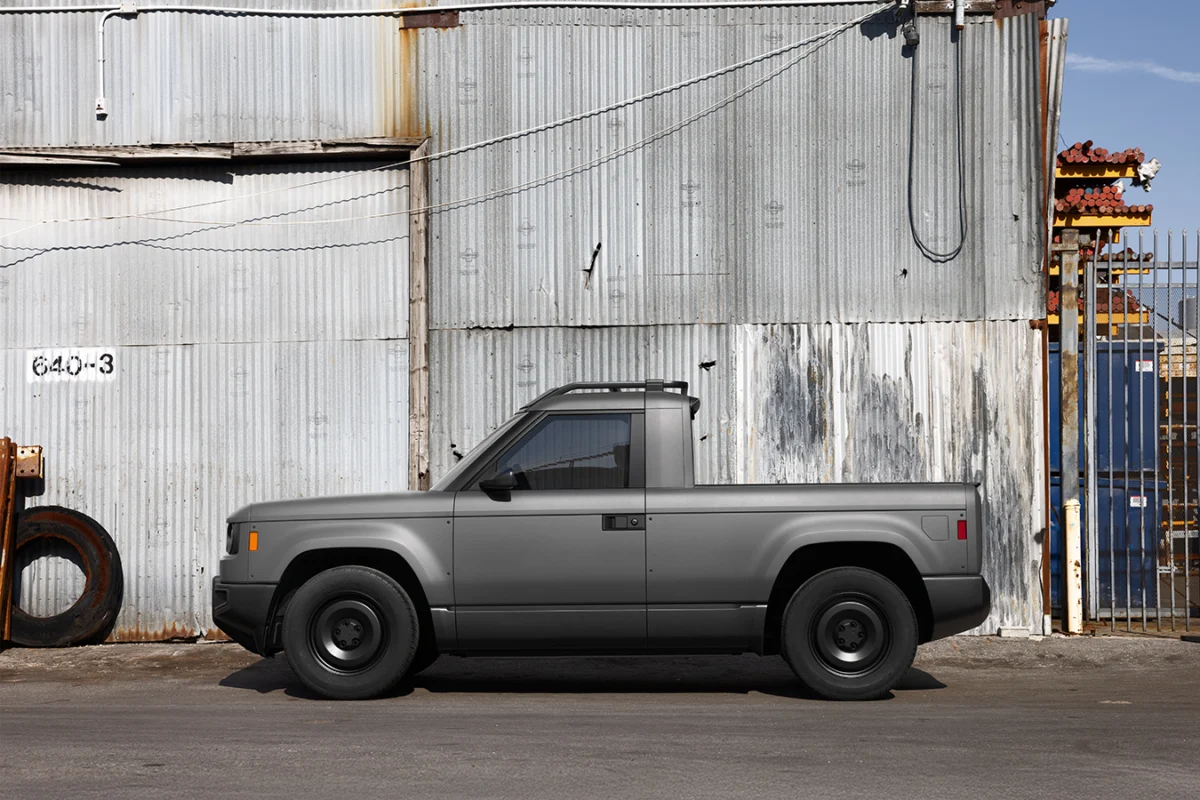
Los Angeles, CA – April 8, 2025 – Slate Auto, the ambitious electric vehicle startup with significant backing from Amazon founder Jeff Bezos, has announced a substantial $650 million Series C funding round. This latest infusion of capital propels the company closer to its stated goal of commencing production of its inaugural affordable electric pickup trucks by the close of 2026. The successful fundraising underscores investor confidence in Slate Auto’s disruptive strategy within a rapidly evolving automotive landscape.
The significant funding round was spearheaded by TWG Global, a prominent investment firm helmed by Mark Walter, the chief executive of Guggenheim Partners and a co-owner of the Los Angeles Dodgers, alongside investor Thomas Tull. While Slate Auto’s press release lauded its "visionary investors" for their support, specific details regarding other participants in this funding round were not disclosed. This Series C brings Slate Auto’s total raised capital to an impressive approximately $1.4 billion, signaling a robust trajectory for the company’s development.
This latest financial milestone builds upon a foundation of earlier investment from notable entities. Previously, Slate Auto garnered support from General Catalyst, Jeff Bezos’s family office, the venture capital firm Slauson & Co., and former Amazon executive Diego Piacentini. The early involvement of these influential investors, as first reported by TechCrunch, highlighted a strategic alignment with individuals and firms experienced in scaling technology-driven enterprises.
The strong connection to Amazon is a defining characteristic of Slate Auto. Beyond the personal investment from its founder, the company’s leadership team is heavily populated with former Amazon executives. Co-founder Jeff Wilke, who previously served as Amazon’s Consumer CEO, has instilled a culture and operational framework deeply influenced by his tenure at the e-commerce giant. Key departmental heads overseeing mobility, user experience/user interface, e-commerce, fleet sales, and human resources all bring prior experience from Amazon. The recent appointment of Peter Faricy, former Amazon Marketplace VP, as CEO further solidifies this Amazonian lineage, a move designed to accelerate the transition from reservation to production. Chris Barman, a seasoned veteran from Chrysler, has transitioned to the role of President of Vehicles, maintaining his crucial involvement in product development.
Navigating a Turbulent EV Market
Slate Auto’s Series C funding arrives at a pivotal and somewhat challenging juncture for the electric vehicle market in the United States. A confluence of factors has created headwinds for EV adoption and production. Notably, many established automakers have begun to scale back their ambitious EV rollout plans. This recalibration is partly attributed to the expiration of the $7,500 federal tax credit for new electric vehicles last year, a significant incentive that had bolstered consumer demand. Furthermore, the broader market has witnessed a slowdown, with Tesla, the undisputed leader in EV sales, experiencing a decline in overall sales for two consecutive years. Newer entrants to the EV space, such as Rivian and Lucid Motors, have encountered significant hurdles in achieving production scale, despite efforts to introduce more accessible models this year.
Slate Auto’s Differentiated Market Strategy
Against this backdrop of market recalibration and challenges for established players and newcomers alike, Slate Auto is charting a distinctly different course. Founded in 2022, the company has deliberately positioned itself at the absolute entry-level of the electric vehicle market. Its core offering is a fundamentally designed, bare-bones electric pickup truck, with an anticipated starting price in the mid-$20,000 range. This pricing strategy directly targets a segment of the automotive market largely underserved by current EV offerings, which often command premium prices.
The company’s approach to customization also reflects its focus on affordability and modularity. Customers will have the option to enhance their trucks with various upgrades for an additional cost. A particularly noteworthy option is an SUV conversion kit, priced at approximately $5,000, which offers added versatility and expands the vehicle’s utility. This tiered pricing model allows customers to tailor their purchase to their specific needs and budget, a strategy that could prove highly effective in attracting a broad consumer base.
Evolving Pricing and Strong Reservation Numbers
The pricing strategy for Slate Auto’s electric pickup has seen some evolution. Initial plans targeted a starting price around $27,000. Following its emergence from stealth mode in 2025, the company actively promoted a starting price "under $20,000" when factoring in the federal tax credit. However, with the recent changes to federal incentives, the company is now preparing to announce its final pricing in June. Despite these adjustments and the loss of the federal tax credit, Slate Auto has demonstrably generated substantial consumer interest. The company has amassed an impressive figure of over 160,000 refundable reservations for its electric vehicle.
The substantial volume of reservations highlights a significant unmet demand for affordable electric transportation solutions. The company’s recent decision to appoint Peter Faricy as CEO was, in part, driven by the strategic imperative to effectively convert these reservations into confirmed, paid orders. This transition from reservation holder to paying customer is a critical step in the company’s path to commercial viability.
Manufacturing Infrastructure and Future Outlook
To support its production ambitions, Slate Auto is making substantial investments in its manufacturing capabilities. The company is reportedly dedicating several hundred million dollars to renovate a former printing factory located in Indiana. This facility is slated to become the primary site for the production of its electric vehicles. The choice of a dedicated manufacturing site, rather than relying solely on contract manufacturing, suggests a long-term commitment to controlling its production process and quality.
The success of Slate Auto’s strategy hinges on its ability to execute its production plan efficiently and to deliver on its promise of an affordable, functional electric pickup truck. The company’s strong financial backing, combined with a leadership team steeped in the operational expertise of a major technology company like Amazon, provides a solid foundation. However, the automotive industry is notoriously capital-intensive and complex, presenting ongoing challenges.
The broader implications of Slate Auto’s approach could be significant for the EV market. By focusing on affordability, the company has the potential to democratize EV ownership, bringing electric transportation within reach of a much larger segment of the population. This could accelerate the overall transition away from internal combustion engine vehicles, not just among early adopters and affluent consumers, but across a wider socioeconomic spectrum. The company’s success could also pressure established automakers to reconsider their EV pricing strategies and potentially accelerate the development of more budget-friendly electric models.
As Slate Auto prepares to enter production by the end of 2026, its journey will be closely watched by industry analysts, competitors, and consumers alike. The company’s ability to navigate the complexities of manufacturing, supply chain management, and consumer adoption, while maintaining its commitment to affordability, will ultimately determine its impact on the future of electric mobility. The substantial capital raised, coupled with its unique market positioning and experienced leadership, positions Slate Auto as a compelling contender in the race to electrify personal transportation.