Evan Lee Salim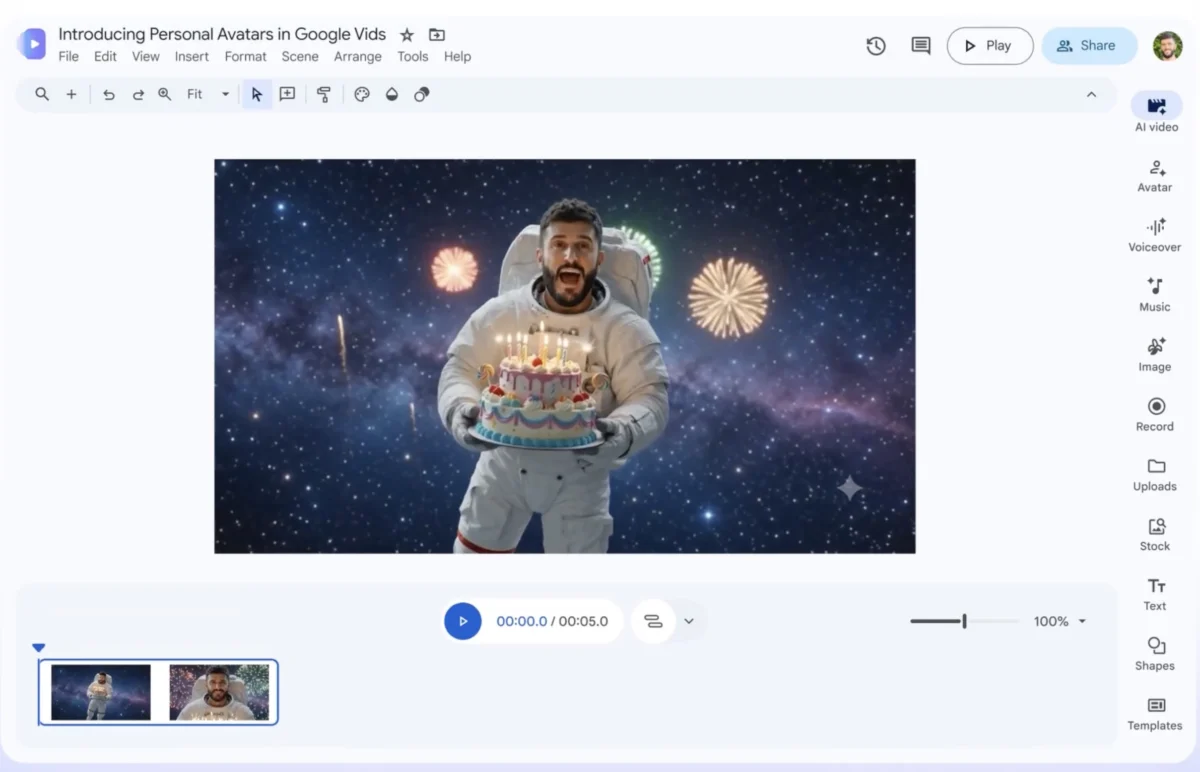
In a significant move set to redefine the landscape of AI-powered video creation, Google announced on Thursday, July 16, 2026, substantial updates to its Google Vids platform. These enhancements include the introduction of personalized digital avatars, allowing users to star in their own AI-generated videos, and the deep integration of Google’s advanced multi-modal AI model, Gemini Omni. The announcement positions Google Vids not merely as an AI-assisted workplace presentation tool but as a comprehensive, all-in-one video creation platform, directly challenging a burgeoning market previously impacted by the recent shutdown of OpenAI’s much-hyped Sora.
Revolutionizing Personalized Video Creation with AI Avatars
At the core of Google Vids’ latest evolution is the ability for users to create a custom digital avatar that closely mimics their own appearance and voice. This innovative feature leverages a simple process: users upload a selfie and a voice recording, which the system then utilizes to generate a lifelike digital representation. This personalized avatar can subsequently be deployed in AI-generated videos, enabling individuals to feature themselves in professional or creative content without the need for extensive filming or production. This development addresses a growing demand for personalized and scalable video content, particularly within corporate communications, educational materials, and marketing campaigns.
Google has also proactively addressed the critical ethical and security considerations inherent in generative AI technologies, particularly those involving human likeness. The new AI avatars in Google Vids are meticulously tied to the account holder’s Google account, ensuring a direct link between the creator and their digital representation. Furthermore, each avatar-generated video will be invisibly watermarked with SynthID, Google’s advanced digital watermarking technology designed to identify AI-generated content. This measure is crucial for combating potential misuse, such as the creation of deepfakes or the unauthorized impersonation of individuals. Access to these personal avatars is also strategically limited to users aged 18 or older and confined to specific geographic regions, underscoring Google’s commitment to responsible AI deployment and adherence to regulatory standards. This stands in stark contrast to earlier iterations of generative video tools, where the lack of robust identification mechanisms raised significant concerns about authenticity and potential for malicious content.
Gemini Omni: Elevating Video Generation and Editing Capabilities
Beyond personalized avatars, Google Vids is significantly bolstered by the integration of Gemini Omni, Google’s sophisticated multi-modal AI model. This integration marks a pivotal advancement, allowing users to create complex and nuanced videos through a combination of written prompts and uploaded reference images. Gemini Omni intelligently processes these diverse inputs, synthesizing them to produce AI videos that align closely with the user’s creative vision. This multi-modal approach unlocks a new level of creative flexibility, moving beyond simple text-to-video generation to incorporate visual nuances and stylistic references provided by the user.
The capabilities of Gemini Omni extend further into the realm of video editing. Users can now leverage the AI to perform advanced modifications on videos recorded on their phones, such as seamlessly swapping out backgrounds, correcting lighting imperfections, or adding dynamic visual effects. A particularly noteworthy feature is the introduction of step-by-step edits. This iterative editing process allows users to make incremental changes to their video projects as they progress, eliminating the frustration of having to restart from scratch after each modification. This conversational editing paradigm drastically streamlines the creative workflow, making the process more intuitive and less time-consuming for both novice and experienced video creators.
Strategic Context: Navigating a Dynamic AI Video Landscape
The timing of Google’s announcement is particularly salient, coming just months after the highly publicized shutdown of OpenAI’s Sora on March 24, 2026. Sora, which captivated the tech world with its hyper-realistic video generation capabilities following its initial demonstration in late 2025, faced challenges related to scalability, ethical concerns, and operational complexities that ultimately led to its discontinuation. Its brief but impactful presence, however, ignited immense interest in the potential of generative AI for video. Google’s aggressive push with Vids, therefore, can be seen as a strategic move to fill the void left by Sora and to capitalize on the sustained market appetite for advanced AI video tools.
Google Vids’ evolution from an "AI-assisted workplace presentation tool" into an "all-in-one video creation platform" signals a broader strategic intent to embed AI deeply within the Google Workspace ecosystem. By making Vids an integral part of Workspace, Google is explicitly positioning it as an indispensable business tool. This includes applications ranging from crafting engaging company updates and producing professional training videos to developing compelling marketing collateral. The platform’s newfound capabilities, particularly personalized avatars and conversational edits, propel it into direct competition with a cohort of specialized AI video startups that have emerged in recent years. Companies such as HeyGen, Synthesia, Captions, and D-ID have carved out niches by offering AI-generated avatars, text-to-video capabilities, and automated video production. Google Vids, however, aims to differentiate itself through its seamless integration within a widely adopted productivity suite, the robust capabilities of Gemini Omni, and Google’s extensive cloud infrastructure.
A Brief Chronology of AI in Video Generation:
The journey of AI in video creation has been marked by rapid advancements and evolving challenges:
- Early 2020s: Initial AI tools focused on automated editing, basic content recognition, and simple effects.
- Mid-2020s: Emergence of generative AI models capable of creating short video clips from text prompts. Companies like Synthesia and HeyGen began offering AI avatars for corporate videos, streamlining production.
- Late 2025/Early 2026: OpenAI unveils Sora, showcasing unprecedented realism and complexity in generative video, sparking both awe and ethical debates regarding deepfakes and misinformation.
- March 24, 2026: OpenAI announces the shutdown of Sora, citing various operational and ethical hurdles, leaving a significant gap in the high-end generative video market.
- May 19, 2026: Google publicly details Gemini Omni, highlighting its multi-modal capabilities across various data types, including text, image, and video, signaling its intent for broader integration.
- July 16, 2026: Google announces the major overhaul of Google Vids, incorporating personal AI avatars and Gemini Omni, directly targeting the professional and enterprise video creation market.
This timeline illustrates a rapid iteration cycle in the AI video space, with Google now making a decisive move to establish leadership following Sora’s withdrawal.
Broader Implications and Market Impact
The enhancements to Google Vids carry significant implications for various sectors and the broader digital economy. The democratization of high-quality video production is perhaps the most immediate impact. Historically, creating professional-grade videos required substantial investments in equipment, software, and human expertise. AI tools like Google Vids drastically lower these barriers, enabling small businesses, individual content creators, educators, and internal corporate departments to produce sophisticated video content efficiently and cost-effectively. Industry analysts project a continued surge in demand for video content across all platforms, with AI tools becoming indispensable for meeting this demand without commensurate increases in budget or personnel. The ability to quickly generate personalized training modules, localized marketing campaigns, or internal communications with an authentic human touch, replicated through an AI avatar, offers unprecedented scalability.
Furthermore, Google’s move strengthens its competitive stance against other tech giants and specialized AI firms. By tightly integrating Vids within Google Workspace, the company leverages its existing ecosystem of productivity tools, making it a natural extension for millions of businesses and individual users. This strategy aims to create a sticky product experience, encouraging users to remain within the Google ecosystem for their entire workflow, from document creation to video production. The battle for AI supremacy is increasingly being fought not just on raw model performance but on the seamless integration and practical application of AI within widely used platforms.
However, the rapid advancement of AI avatars and generative video also necessitates a robust ongoing discussion about ethics and governance. While Google has implemented measures like SynthID and account linking, the potential for misuse, such as sophisticated phishing attacks, identity theft, or the propagation of misinformation, remains a concern. The invisible watermarking is a step towards content provenance, but the broader societal understanding and regulatory frameworks around AI-generated media are still in nascent stages. Google’s regional and age restrictions for avatar creation are prudent initial steps, reflecting a cautious approach to deploying powerful generative capabilities. The industry as a whole, along with policymakers, will need to continually adapt and evolve standards to ensure responsible innovation.
Looking Ahead: The Future of AI-Powered Storytelling
The updates to Google Vids represent more than just a product refresh; they signify a fundamental shift in how organizations and individuals will approach video creation. By combining personalized AI avatars with the multi-modal intelligence of Gemini Omni, Google is empowering users to tell their stories, convey information, and connect with audiences in novel and highly efficient ways. This development underscores Google’s unwavering commitment to AI innovation and its strategic vision for infusing intelligence across its product suite. As AI continues its inexorable march into every facet of digital life, platforms like Google Vids are at the forefront, shaping the future of content creation and communication in an increasingly AI-driven world. The competitive landscape will undoubtedly intensify, pushing the boundaries of what AI can achieve in visual storytelling, while simultaneously demanding heightened vigilance regarding ethical deployment and societal impact.