Vera Intan Clara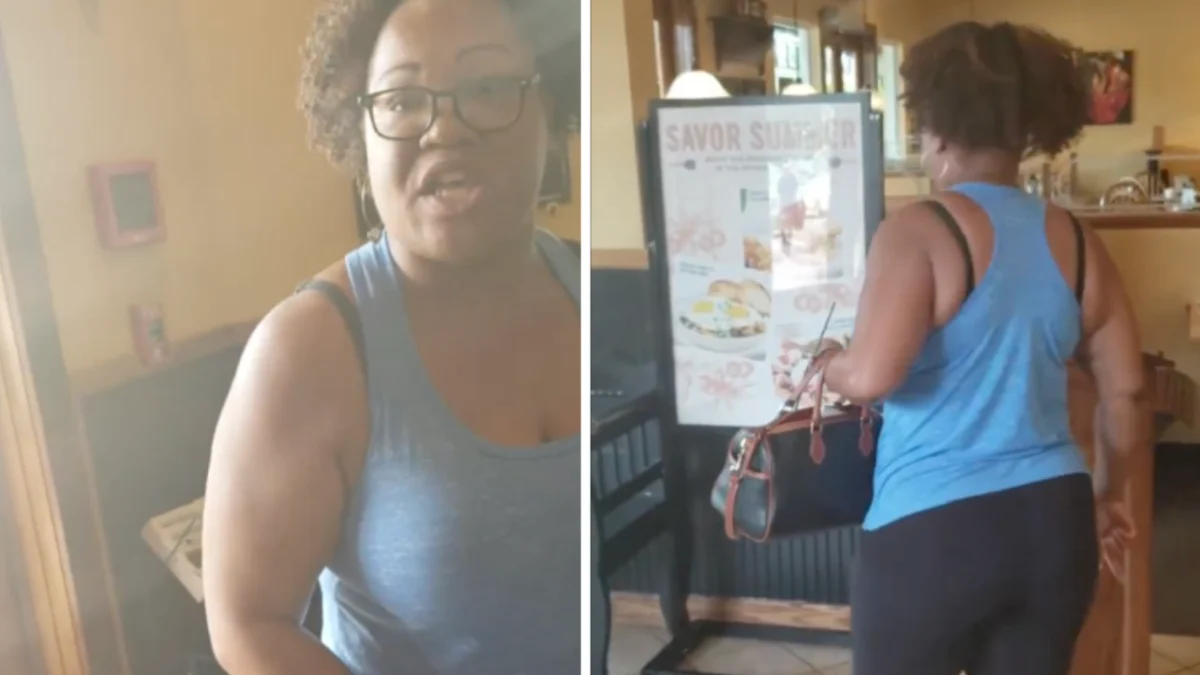
A recent video circulated widely across X, formerly Twitter, has sparked extensive public discourse regarding customer conduct, the pressures faced by service industry employees, and the profound impact of adult behavior on children. The footage captures a woman engaged in a heated altercation at a restaurant, vociferously demanding change for a soda purchase, while her young children stand nearby, observing the unfolding scene. The incident, which rapidly garnered millions of views and prompted thousands of reactions, has become a flashpoint for discussions on respect, emotional regulation, and the responsibilities of parenthood in public spaces.
The widely shared video, posted by the account "@ClownWorld" on August 6, 2026, depicts a tense exchange already in progress. The woman, whose identity remains undisclosed, is seen confronting a male restaurant employee, who appears to be recording the interaction. Her demands for her change are punctuated by a rising tone and increasingly aggressive language, including expletives. Despite the employee’s polite attempts to de-escalate the situation and assure her that he would retrieve her change, she persists in her verbal assault. "Give me my change," she repeatedly yells, even as the employee calmly responds, "Yes, ma’am," requesting a moment to comply. The footage does not provide context for the initial disagreement, leaving viewers to speculate about the catalyst for the intense confrontation.
Chronology of the Confrontation as Captured on Video
The incident, as pieced together from the viral video, unfolds in a series of escalating verbal exchanges. The recording begins in media res, suggesting the dispute had already reached a significant level of intensity. The woman is immediately seen and heard demanding her change with considerable volume. The employee, identifiable by his uniform, attempts to placate her, asking for a brief moment to process the transaction. This request, however, seems to further agitate the customer.
As the interaction continues, the woman’s language deteriorates. She is heard using the "f-word" repeatedly, directing it towards the employee, despite his continued calm demeanor and apologies. Her attention briefly shifts to the act of being filmed. "Why you videoing something?" she challenges, only to dismiss her own question moments later, stating, "Video whatever you want to video, but give me my change." This moment highlights a potential power dynamic, where the woman, while initially questioning the recording, quickly reasserts her primary demand, seemingly unfazed by the public nature of the documentation.
Further into the video, the woman escalates her threats, claiming a long history of loyalty to the establishment before declaring her permanent boycott. "I will not be back to this restaurant. You know how many times we’ve been to this restaurant? And to be insulted by this man about a soda, we will not be back," she proclaims. This statement suggests a perceived slight or insult that preceded the recorded portion of the interaction, though the nature of this perceived offense remains unknown. She then attempts to demonstrate her financial capability, seemingly to underscore the perceived triviality of the dispute over a small amount of change. "You’re going crazy about a drink," she yells, immediately contradicting her own point by adding, "Let me show you how much money I have in my purse. If I have to pay, I can pay you for a drink. A $2 drink!" This contradictory statement, emphasizing both the insignificance of the item and her ability to pay for it, further illustrates the emotional nature of her outburst rather than a purely financial concern. Throughout these exchanges, the employee maintains a remarkably composed posture, repeatedly offering apologies and attempting to resolve the situation, a level of professionalism that many online commentators lauded.
The Broader Context: Challenges in the Service Industry
This incident is not isolated but rather reflects a growing trend of public confrontations and verbal abuse directed at service industry workers. Front-line employees, particularly in food service and retail, often bear the brunt of customer frustrations, sometimes stemming from issues entirely beyond their control. According to a 2023 survey by the National Retail Federation, over two-thirds of retail workers reported experiencing verbal abuse from customers in the past year, a figure that has steadily climbed. Such interactions contribute significantly to employee stress, burnout, and high turnover rates within these sectors.
Industry experts suggest that factors such as economic pressures, increased societal stress, and the perceived anonymity of public spaces can contribute to a decline in civility. Restaurant employees are typically trained in de-escalation techniques, but these are often challenged by customers who are already highly agitated. The decision by the employee to record the interaction, while potentially a means of self-protection or documentation for management, also raises questions about privacy and the ethics of filming in public commercial spaces, even as it provides crucial evidence in such disputes. For restaurant management, incidents like this pose a difficult balancing act: ensuring customer satisfaction while protecting their staff from undue harassment. While the original article notes the inability to independently verify the initial cause of the dispute, the restaurant industry standard practice is to resolve customer complaints swiftly and politely, often empowering staff to make minor concessions to prevent escalation.
The Impact on Children: A Central Concern
Perhaps the most distressing aspect of the viral video for many viewers was the presence of the woman’s young children, who were visible bystanders throughout the tirade. The online reaction overwhelmingly focused on the potential long-term psychological and behavioral implications for these children. Child development specialists emphasize the critical role of observational learning, where children model the behaviors they witness in adults, particularly their primary caregivers.
Studies in developmental psychology, such as those conducted by Albert Bandura on social learning theory, demonstrate that children are highly susceptible to learning aggressive behaviors by observing them. When children witness a parent screaming, swearing, and showing disrespect towards others, especially over a relatively minor issue, it can normalize such reactions as appropriate coping mechanisms for frustration or disagreement. This can lead to a range of negative outcomes, including:
- Normalization of Aggression: Children may internalize that yelling and aggressive language are acceptable ways to express anger or resolve conflicts.
- Impaired Emotional Regulation: They may struggle to develop healthy strategies for managing their own emotions, leading to similar outbursts in their own lives.
- Anxiety and Fear: Witnessing parental conflict can create an unstable and frightening environment for children, potentially leading to anxiety, stress, or even trauma.
- Erosion of Respect for Authority: Observing a parent disrespect service workers or other figures of authority can undermine a child’s understanding of social hierarchies and mutual respect.
As one X user poignantly commented, "Kids learn by example, and moments like this stick with them. No disagreement is worth teaching your child that this is how adults handle frustration." Another expressed deep concern, writing, "Some kids are born with two strikes against them. I really feel bad for the children. I pray they grow up and have a good life, despite the train wreck role model." These sentiments underscore a broader societal concern about parental responsibility and the duty to provide children with positive behavioral models.
Public Reaction and Online Discourse
The video quickly became a trending topic on X, drawing a wide spectrum of reactions, predominantly critical of the woman’s behavior. The virality of such content on social media platforms like X is often driven by a collective sense of indignation or shared experience, allowing a rapid and widespread judgment to form.
Key themes emerging from the online commentary included:
- Hypocrisy and Lack of Respect: Many users highlighted the inconsistency of the woman demanding "her change" and respect while simultaneously demonstrating profound disrespect towards the employee. Comments such as, "Demanding respect when giving absolutely none. Tired of people with this attitude towards the world," were common, reflecting a general fatigue with perceived entitlement.
- Support for Service Workers: A significant portion of the comments expressed solidarity with the restaurant employee, commending his composure under pressure and acknowledging the difficult nature of customer-facing roles. This sentiment often extended to broader discussions about the need for greater public empathy and patience towards service staff.
- Calls for Intervention: The visible presence of children prompted several users to suggest more serious interventions, including contacting child protective services. While these calls are often made in the heat of online reaction and may not be actionable without further context, they reflect the depth of concern for the children’s welfare.
- Humor and Sarcasm: Some users resorted to humor, often sarcastic, to express their disapproval. The woman’s threat to never return to the restaurant, for instance, was met with comments like, "Somehow, I don’t think they will mind if she never returns," implying that her departure would be a relief for the establishment.
- Contextual Ambiguity: Despite the strong reactions, a minority of users acknowledged the lack of full context, echoing the original article’s point that "the footage does not show what happened before the recording began, leaving the full context of the dispute unclear." This nuanced perspective, however, was largely overshadowed by the visceral reaction to the woman’s overt aggression.
The rapid dissemination and intense reaction to the video exemplify how social media has become a powerful, albeit often unverified, platform for public shaming and the enforcement of perceived social norms. While it offers a mechanism for holding individuals accountable for public behavior, it also risks creating a court of public opinion based on incomplete information.
Implications for Public Discourse and Behavior
This incident contributes to a growing body of viral content that documents public outbursts, often labeled as "Karen" incidents or similar pejoratives. These videos collectively paint a picture of increasing impatience, entitlement, and a breakdown of civil discourse in everyday interactions. The normalization of filming such events by bystanders and participants alike raises complex ethical questions about privacy in public spaces versus the desire for accountability.
For businesses, these viral moments underscore the importance of robust staff training in customer service and de-escalation, as well as clear policies for handling disruptive customers. For the wider public, the debate generated by such videos serves as a recurring reminder of the importance of emotional intelligence, respect, and the profound impact of individual actions on those around us, particularly the most impressionable among us – children. While the full story behind the soda change confrontation may never be known, its viral afterlife continues to prompt critical reflection on the state of public decorum and the examples adults set for future generations.