Evan Lee Salim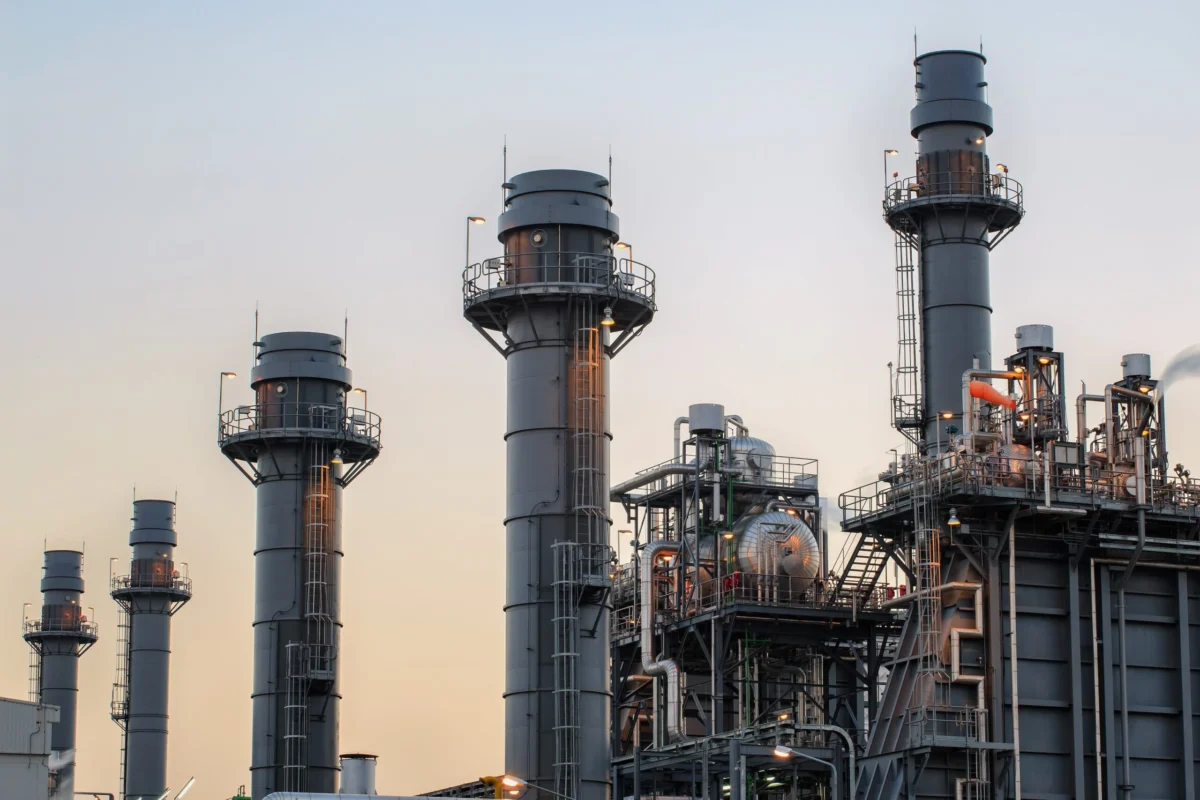
Amazon is embarking on a controversial project in Pecos County, Texas, with plans for a vast data center complex that includes an on-site natural gas-fired power plant. This facility, according to an investigation by The New York Times, has the potential to become the single largest source of climate pollution in the United States, raising significant questions about Amazon’s corporate sustainability commitments and the broader environmental footprint of the burgeoning artificial intelligence (AI) industry.
The Scale of the Project and Its Environmental Impact
The proposed power plant, integral to Amazon’s new data center operations, is permitted to release an staggering 33 million tons of carbon dioxide (CO2) annually. This figure is not only unprecedented for a single power facility in the U.S. but also dwarfs the emissions of many smaller nations and vastly surpasses the output of typical large-scale power plants. To put this into perspective, 33 million tons of CO2 is roughly equivalent to the annual emissions of over 7 million passenger vehicles or the total annual emissions of countries like Sri Lanka or Denmark. The sheer scale of these projected emissions immediately positions the project at the forefront of national environmental concerns, particularly as global efforts intensify to curb greenhouse gas output.
The decision to power this critical infrastructure with natural gas, a fossil fuel, directly contradicts the prevailing global trend towards decarbonization and reliance on renewable energy sources. While natural gas is often touted as a "bridge fuel" due to lower CO2 emissions compared to coal when burned, its full lifecycle impact, including methane leakage during extraction and transport, can be substantial. Methane is a potent greenhouse gas, far more effective at trapping heat in the atmosphere than CO2 over a shorter timescale. The reliance on such a large-scale natural gas plant underscores the immense energy demands of modern data centers, particularly those designed to support advanced AI applications.
The Unrelenting Energy Appetite of Data Centers and AI
Data centers are the unseen backbone of the digital world, housing the servers, storage systems, and networking equipment that power cloud computing, streaming services, and the internet itself. Their energy consumption is prodigious and growing rapidly. Globally, data centers already account for approximately 1% to 1.5% of total electricity demand, a figure projected to rise significantly in the coming years. This growth is largely driven by the exponential expansion of AI technologies, which require immense computational power for training complex models and processing vast datasets.
AI workloads are notoriously power-hungry. Training a single large AI model can consume as much electricity as several homes use in a year. As AI capabilities become more sophisticated and integrated into everyday applications, the demand for high-performance computing infrastructure will only intensify, placing unprecedented strain on existing energy grids and necessitating new power generation solutions. This surge in demand has led many tech giants, including Amazon, Google, and Microsoft, to explore and invest in substantial energy projects to ensure reliable and affordable power for their expanding data center portfolios. The challenge lies in meeting this demand sustainably.
Amazon’s Climate Pledge: A Growing Contradiction?
In 2019, Amazon co-founded The Climate Pledge, a bold initiative committing the company to achieve net-zero carbon emissions across its operations by 2040 – a decade ahead of the Paris Agreement’s target. The pledge was heralded as a landmark commitment by one of the world’s largest corporations, setting a high bar for corporate environmental responsibility. However, recent developments, particularly the Pecos County project, cast a long shadow over the company’s ability to meet this ambitious goal.
Amazon’s own sustainability reports have indicated a concerning trend. Last year (referring to 2025, relative to the 2026 reporting period of the original article), the company reported a 16% increase in its carbon emissions. This upward trajectory is precisely the "wrong direction" for a company that has publicly committed to aggressive decarbonization. The spokesperson’s statement that "the world looks different now than when we co-founded the climate pledge" while simultaneously claiming "our commitment hasn’t changed" highlights a palpable tension between the company’s stated environmental goals and its operational realities. This narrative suggests that the unforeseen, rapid expansion of AI and its associated energy demands may be forcing a re-evaluation of strategies, if not the core commitment itself. Critics argue that such a significant investment in fossil fuel infrastructure, designed for decades of operation, fundamentally undermines the spirit and letter of the 2040 net-zero pledge.
The Texas Energy Landscape and Grid Stability
Texas, a state synonymous with energy production, presents a unique backdrop for this project. As the largest energy producer and consumer in the United States, Texas operates its own independent electricity grid, managed by the Electric Reliability Council of Texas (ERCOT). While Texas has made significant strides in renewable energy, particularly wind and solar power, natural gas remains the dominant fuel source, accounting for a substantial portion of the state’s electricity generation.
The ERCOT grid has faced considerable challenges, notably during Winter Storm Uri in February 2021, which resulted in widespread power outages, tragic loss of life, and billions of dollars in economic damage. This event underscored the critical need for reliable and resilient power generation. For large-scale industrial consumers like data centers, energy reliability is paramount, as even brief interruptions can lead to massive financial losses and service disruptions. Amazon’s decision to build an on-site natural gas plant could be seen as an attempt to ensure energy security and independence from the broader grid’s vulnerabilities, while also potentially providing power at a stable cost, as highlighted by the Amazon spokesperson’s claim that it "won’t raise electricity costs for Texas families." However, this approach prioritizes reliability and cost control through fossil fuels, potentially at the expense of environmental sustainability.
Broader Industry Context and the "Greenwashing" Debate
Amazon is not alone in facing the energy dilemma posed by AI. Other major tech companies are also grappling with the escalating power needs of their data centers. Reports indicate that several AI companies are backing the development of massive natural gas plants to support their burgeoning infrastructure. This trend suggests a potential industry-wide pivot towards fossil fuels to meet immediate energy demands, raising questions about the sincerity and feasibility of corporate climate pledges across the tech sector.
Environmental advocacy groups are likely to view this development with deep skepticism, potentially accusing Amazon of "greenwashing" – presenting an environmentally responsible public image while engaging in practices that contradict those claims. The construction of a plant of this magnitude could set a dangerous precedent, normalizing the expansion of fossil fuel infrastructure by tech companies, even as the global scientific consensus urges a rapid transition away from them.
Statements and Reactions
While Amazon’s spokesperson confirmed the project and reiterated their commitment to The Climate Pledge, framing the on-site generation as a way to avoid increased electricity costs for Texas residents, this explanation is unlikely to appease environmental organizations.
- Environmental Advocates: Groups like the Sierra Club, Greenpeace, and the Environmental Defense Fund are expected to issue strong condemnations, highlighting the project’s incompatibility with climate goals and calling for greater transparency and accountability from Amazon. They would likely argue that Amazon, with its vast resources, should be investing in large-scale renewable energy solutions, battery storage, and grid modernization, rather than doubling down on fossil fuels. Concerns would also be raised about the potential for methane leakage from the natural gas supply chain feeding the plant.
- Local Communities: Residents of Pecos County and surrounding areas may express mixed reactions. While the data center and power plant could bring economic benefits in terms of jobs and tax revenue, there would also be legitimate concerns about local air quality, water usage (data centers consume significant amounts of water for cooling), and the overall environmental impact on the region. Environmental justice advocates might point to the disproportionate impact on often underserved communities located near industrial facilities.
- Energy Policy Experts: Experts might acknowledge the complex trade-offs involved, balancing energy security, economic growth, and environmental protection. They might emphasize the need for robust carbon capture technologies or a clearer pathway to decarbonization for such large-scale facilities, even if initially powered by natural gas. Some might argue that the project highlights the urgent need for accelerated investment in grid-scale renewable energy and storage solutions to meet future demand without increasing reliance on fossil fuels.
- Investors: Shareholders with environmental, social, and governance (ESG) mandates might scrutinize Amazon’s decision, potentially leading to questions during earnings calls or proxy votes about the company’s long-term sustainability strategy and its impact on brand reputation and regulatory risk.
Implications for Global Climate Goals
The implications of Amazon’s Pecos County project extend far beyond Texas. If one of the world’s most valuable companies, a signatory to a leading climate pledge, proceeds with such a carbon-intensive project, it sends a troubling signal to the international community. It could undermine the credibility of corporate climate commitments, making it harder for governments and international bodies to enforce climate regulations and achieve the targets set forth in the Paris Agreement. The cumulative effect of multiple tech giants adopting similar strategies could significantly derail global efforts to limit warming to 1.5 degrees Celsius, leading to more severe and frequent climate-related disasters.
Ultimately, the Amazon data center in Pecos County represents a critical juncture for corporate sustainability. It forces a stark confrontation between the insatiable energy demands of the digital future, particularly AI, and the urgent imperative to decarbonize the global economy. How Amazon and the broader tech industry navigate this challenge will have profound consequences for the environment, local communities, and the future of climate action. The world is watching to see if innovation can truly lead to a sustainable future, or if the pursuit of technological advancement will come at an unacceptable environmental cost.