Sonny Valindra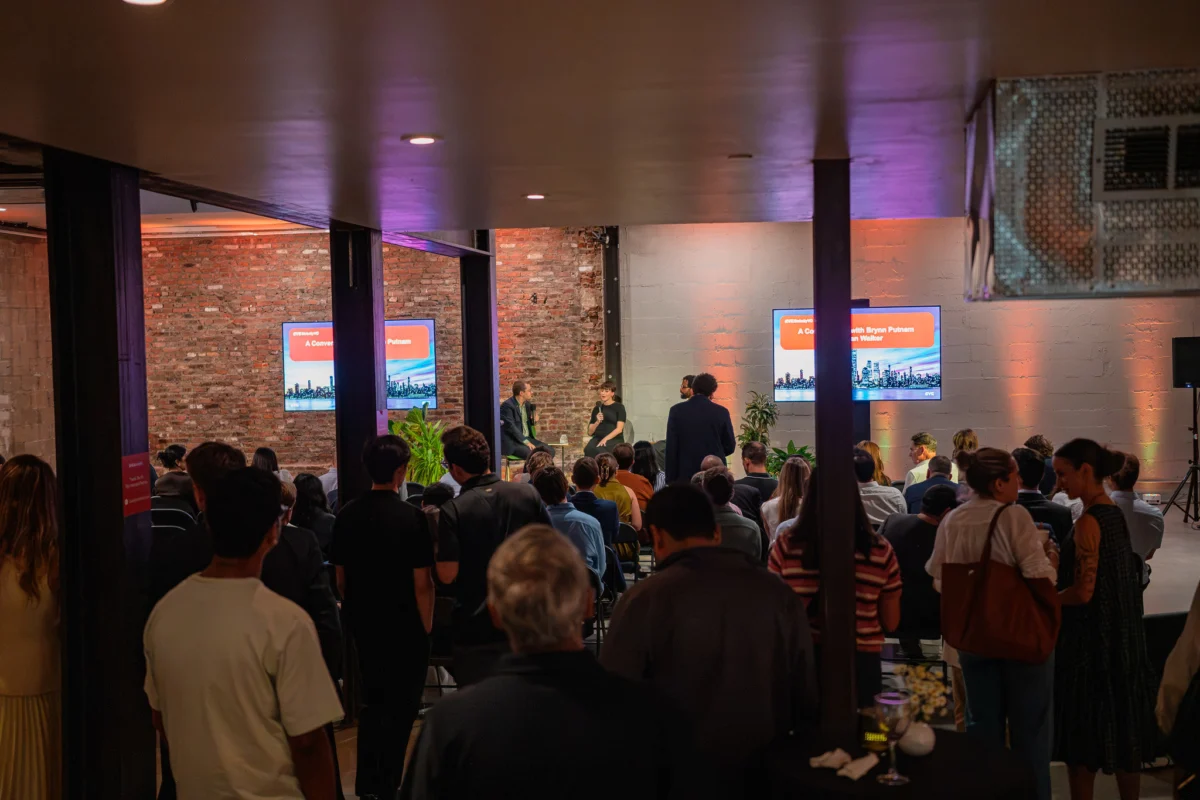
The entrepreneurial landscape is witnessing a fascinating pivot, a departure from the purely digital realm that has dominated for years. This shift is most vividly illustrated by the bold new ventures of Brynn Putnam and Tristan Walker, two founders who have already achieved the rare feat of building companies so compelling that they were acquired by industry giants. Their success with Mirror and Walker & Company Brands, respectively, has not led them to rest on their laurels. Instead, they are embarking on ambitious new projects, each driven by a shared, yet dramatically different, north star: fostering genuine, in-person human connection.
From Digital Echoes to Analog Reunions: A New Entrepreneurial Imperative
Brynn Putnam, a former professional ballerina, revolutionized home fitness with Mirror, a sleek, connected device that transformed living rooms into personal studios. Her vision for Mirror was deeply personal, born from the demands of her own life as a pregnant entrepreneur juggling physical studios and a desire to bring her fitness routine home. She leveraged technology to focus on "myself, my body, my fitness, my reflection." The immense success of Mirror, culminating in its acquisition by Lululemon for a reported $500 million less than three years after its launch, showcased the potent demand for engaging at-home experiences.
Tristan Walker, whose entrepreneurial journey began with an internship at Twitter during his Stanford business school days, carved a significant niche in the consumer goods market with Walker & Company Brands. This popular men’s grooming line, designed with a focus on the needs of people of color, was acquired by Procter & Gamble five years after its inception, reportedly in the range of $20 million to $40 million. Walker’s ability to identify underserved markets and build brands with genuine resonance cemented his reputation as a shrewd and impactful entrepreneur.
Now, both Putnam and Walker are once again at the forefront of innovation, but their current endeavors represent a deliberate move away from the solitary engagement that often defines our digital lives. Their new ventures, while superficially disparate, are united by a profound recognition of a growing societal need: the desire to bring people together, physically, in the same room.
Board: Reimagining Play for Shared Experiences
Brynn Putnam’s latest venture, Board, is a testament to this renewed focus on tangible, shared interaction. The company has developed a 24-inch touchscreen table that ingeniously recognizes both physical game pieces and user gestures. Unlike a traditional screen designed for individual consumption, Board is explicitly engineered for group play. The interface is intuitive, allowing individuals of varying ages and technical proficiencies to engage seamlessly. The underlying philosophy is to bridge generational and skill divides through a shared, tactile experience.
The design principle behind Board is elegantly simple yet profoundly impactful. For instance, placing a physical spaceship on the table might trigger a specific action within a game, while a virtual knife could perform a cutting motion. This approach eliminates the steep learning curve often associated with complex digital interfaces, making it accessible for a child and a grandparent to enjoy the same game together without a shared prerequisite in digital literacy. Putnam’s pivot from Mirror, a product born from a desire for personal optimization, to Board, a platform designed for collective enjoyment, reflects a broader evolution in her entrepreneurial thinking. As a mother of five in a blended family, she encountered firsthand the challenge of finding products that could facilitate shared activities across a wide spectrum of ages and abilities. "How can we use tech to create a shared experience?" became the driving question, leading to a strategic reimagining of technology’s role. It’s not a retreat from digital, but rather a strategic application of technology to foster connection rather than isolation.
Heirloom Craft: Reviving Artisanal Skills and Community
Tristan Walker’s new endeavor, Heirloom Craft, is taking a radically different, yet equally connection-oriented, approach. The company is strategically acquiring and scaling fine craft trade schools, beginning with a renowned leatherworking school in San Francisco. This particular school boasts a distinguished heritage, having been founded by the first American artisan-ambassador for Hermès, a brand synonymous with exceptional craftsmanship and legacy. Walker’s overarching vision for Heirloom Craft is to revitalize and promote artisanal skills that have been historically undervalued and, in many cases, eroded by decades of globalized production and a societal shift away from manual expertise.
Walker’s motivation for founding Heirloom Craft stems from a deep-seated concern about the impact of artificial intelligence on knowledge work and the subsequent potential for further social fragmentation. He expressed anxiety that AI could "steal knowledge work" and further pull people apart. His commitment is to build ventures that actively work to bring people back together. This sentiment resonates with a growing awareness that technological advancement, while offering immense benefits, can also inadvertently diminish human interaction and the transmission of practical skills.
Walker articulated his belief that the United States has, over the past half-century, largely forgotten how to effectively transmit mastery across generations. This decline is attributed to the offshoring of production and a pervasive societal devaluation of manual skills, leading to apprenticeships being perceived as a fallback option for those unable to pursue a traditional four-year college education. Heirloom Craft is a deliberate wager on a reversal of this trend. Walker cited compelling data, suggesting that a significant portion of Gen Z and Gen Alpha express a disinterest in pursuing a four-year degree. He revealed that over half of the current capacity at Heirloom’s San Francisco location is filled not by career-changers or retirees, but by young tech professionals actively seeking a "phones-down creative outlet." This indicates a burgeoning demand for tangible, skill-based experiences that offer an antidote to the often disembodied nature of digital work.
The Growing Imperative of Social Connection
The timing of these ventures is far from coincidental. In June of the preceding year, the World Health Organization’s Commission on Social Connection took a landmark step by formally classifying loneliness as a defining global health challenge. The commission estimated that approximately one in six people worldwide are affected by loneliness, a condition linked to an alarming estimated 870,000 deaths annually. This stark statistic underscores the profound societal implications of diminishing social bonds.
Furthermore, data from a recent Harris Poll survey, sponsored by Marriott Bonvoy, reveals a significant societal shift in priorities. Two-thirds of Americans indicated that they are prioritizing experiences, such as travel, over material purchases in the current year. This preference for experiential consumption is coupled with a growing dissatisfaction with the homogeneity of the retail landscape, with the same percentage of respondents noting that retail shopping today feels "too generic, with all retailers looking and feeling the same." This collective yearning for authenticity and meaningful engagement creates a fertile ground for businesses that offer genuine connection.
A Broader Trend: Entrepreneurs Reconnecting with Community
Putnam and Walker are not alone in this burgeoning movement. Several other prominent entrepreneurs are channeling their expertise into ventures focused on rebuilding social fabric. Andy Dunn, the founder of Bonobos, has evolved his five-year-old company, Pie. Initially conceived as a friend-matching app, Pie has transformed into what Dunn describes as a "social life operating system," centered around "Community Homes." These are permanent digital hubs designed to facilitate recurring social groups, such as run clubs or watch parties, thereby fostering sustained, in-person interaction.
Audrey Gelman, formerly of The Wing, a co-working space designed for women, is also navigating this space. Following the closure of The Wing during the pandemic amidst accusations of inequitable staff treatment, Gelman has found a new avenue to foster community. Her current venture, the Six Bells Countryside Inn, an 11-room guesthouse in the Hudson Valley, hosts monthly murder-mystery dinners. These immersive events, featuring actors who integrate with guests, create a dynamic and engaging environment. The contrived mysteries serve as a catalyst for genuine interaction, reportedly leading to guests lingering long after the event, exchanging contact information and forging new connections. A New York Times feature highlighted how visitors to the inn routinely extend their evenings, deepening their engagement with fellow guests.
Personal Journeys Fueling Entrepreneurial Shifts
The motivations behind these new ventures are deeply rooted in both personal experiences and a broader societal awareness. At a recent TechCrunch StrictlyVC evening event in New York City, Brynn Putnam candidly shared how Mirror was conceived from the demands of her own life. Her journey as a mother of five and the challenges of managing a growing family highlighted the absence of products that could facilitate shared activities across different age groups and abilities. This personal realization fueled her pivot to Board, emphasizing the potential of technology to unite rather than divide.
Similarly, Tristan Walker’s anxieties about the future of work and community in the age of AI have been a significant driver for Heirloom Craft. His concern about the erosion of human connection and the transmission of valuable skills is a deeply personal one, prompting him to seek entrepreneurial solutions that actively counteract these trends.
The Financial Landscape of Connection
While the concept of "togetherness" is gaining traction, the financial investment in this emerging category is still relatively nascent compared to established tech sectors. Brynn Putnam’s Board has raised $35 million from venture capitalists over its three-year existence. Andy Dunn’s Pie has secured $24 million, while Audrey Gelman’s Six Bells has garnered approximately $3.8 million. Heirloom Craft, founded just 11 months ago, has not yet disclosed its funding.
A notable outlier in this landscape is Adam Neumann, co-founder of WeWork. His new residential real estate venture, Flow, which is also marketed around the premise of combating loneliness through physical space, has raised an impressive sum exceeding $450 million, primarily from Andreessen Horowitz. This substantial investment dwarfs the funding secured by the other ventures discussed, indicating a significant appetite for large-scale solutions addressing social isolation.
The Scalability Challenge and the Power of Proven Founders
The fundamental question remains whether "togetherness" can evolve into a distinct and substantial investment category. While fostering community and connection is undoubtedly beneficial for society, its scalability is often more complex than that of software-centric businesses. The ability to consistently attract strangers to engage with one another, while socially rewarding, presents a different set of logistical and operational challenges.
What is undeniably compelling about this new wave of ventures is the caliber of the founders behind them. Putnam, Walker, Dunn, Gelman, and Neumann are all entrepreneurs who have previously demonstrated the ability to build successful, brand-driven businesses. This track record lends significant confidence to investors, who recognize their expertise in understanding market needs and executing effectively. Having accurately predicted market trends in the past, their current focus on in-person connection suggests a keen foresight into the evolving desires of consumers. The coming years will reveal whether this collective bet on the enduring human need for genuine connection will resonate as strongly with a broader customer base as their previous successful endeavors. The success of these ventures will not only be measured in financial returns but also in their tangible impact on strengthening the social fabric of our communities.