Vera Intan Clara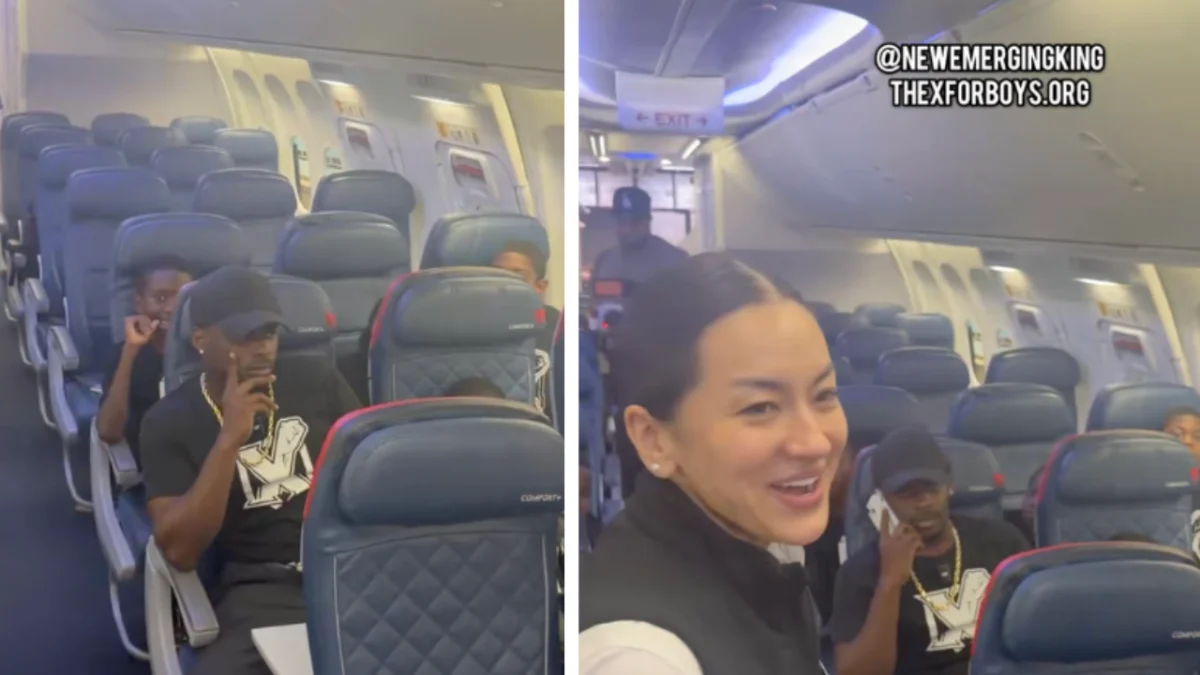
A video circulating widely on X (formerly Twitter), posted by user King Randall, I. (@NewEmergingKing) on July 30, 2026, depicts a seemingly disruptive passenger refusing to comply with flight attendants’ instructions, only to reveal the entire interaction as a carefully orchestrated skit designed to educate children about airline safety and passenger conduct. The incident, though simulated, has ignited significant discussion online regarding the importance of respecting flight crew, adhering to safety protocols, and the broader challenges faced by the aviation industry in managing passenger behavior.
The Simulated Confrontation: A Detailed Account
The viral video opens with a scenario all too familiar to seasoned travelers and flight crew: a passenger exhibiting non-compliance with pre-flight safety instructions. The man, portrayed as an "extremely rude passenger," is shown refusing to buckle his seatbelt, a fundamental requirement before any aircraft can commence pushback for departure. Simultaneously, he demands a beverage, seemingly oblivious to the standard airline policy that service typically begins only once the aircraft has reached a safe cruising altitude, or at least after takeoff procedures are complete. A flight attendant patiently explains these regulations, emphasizing the necessity of buckling up and cooperating with staff for the safety of all onboard.
As the staged confrontation progresses, the man continues to escalate his non-compliance. He declines to stow his carry-on bag in the overhead compartment, prompting the flight attendant to reiterate the critical importance of keeping aisle ways clear. This particular instruction is not merely for passenger comfort or convenience but is a vital safety measure, ensuring unobstructed pathways for emergency evacuations. In a real-world scenario, blocked aisles can significantly impede the rapid egress of passengers during an emergency, potentially leading to severe consequences. After repeated requests, the man eventually places his bag overhead, but his defiance persists regarding the seatbelt.
He steadfastly refuses to secure his seatbelt, offering a casual explanation that he had "just gotten on the flight," implying that the rules did not yet apply to him. The flight attendant gently but firmly explains that the seatbelt must be fastened before the plane can even begin its pushback from the gate, a non-negotiable step in the pre-flight checklist. Undeterred, the passenger then proceeds to open his tray table, intending to watch a movie. The flight attendant clarifies that tray tables must remain stowed during critical phases of flight—taxi, takeoff, and landing—for safety reasons, primarily to prevent injuries during unexpected turbulence or rapid deceleration, and to ensure passengers can exit their seats quickly. Despite the explanation, the man remains determined to keep his tray table open for entertainment.
The dramatic peak of the skit occurs when the man pulls out his phone, declaring his intention to "call corporate" – a common, albeit often futile, threat made by genuinely unruly passengers. It is at this juncture that the video takes its unexpected turn, revealing the carefully constructed nature of the scene. The "flight" is clearly not a real commercial operation; instead, it is a simulated environment created specifically to educate a group of children about proper inflight conduct. Following the conclusion of the skit, the "unruly passenger" stands up and directly engages the children, asking them to identify what he did wrong during the simulated flight.
Pedagogical Intent and Execution
The primary motivation behind King Randall I.’s video, as stated in the accompanying caption, was to use the "extremely rude passenger" scenario to "teach our boys a lesson." The caption further underscored the crucial role of flight attendants: "Flight attendants aren’t there to inconvenience you—they’re there to keep you safe. Respect the crew, follow instructions, and make everyone’s flight better." The video shows the children, seated as passengers, actively participating in a debriefing session, answering questions about the man’s actions and discussing how he should have listened to the staff and crew who are responsible for passenger safety.
This approach exemplifies experiential learning, a pedagogical strategy where participants learn by doing or by observing and reflecting on an experience. By presenting a vivid, albeit staged, example of non-compliance and its potential ramifications, the video aims to instill a deep understanding of aviation rules and the rationale behind them. For children, witnessing such a scenario unfold and then dissecting it can be far more impactful than simply being told a list of rules. It transforms abstract regulations into concrete, relatable situations, fostering a sense of responsibility and empathy for flight crew. The presence of a large camera in the background, visible to viewers, further reinforces that the video’s intent was not sensationalism for "clicks and likes," but rather its designated role as an educational tool.
Understanding Aviation Safety Protocols
The simulated infractions in the video highlight several fundamental aviation safety protocols that are non-negotiable for all passengers. Each rule is meticulously designed to mitigate risks and ensure the well-being of everyone on board.
- Seatbelt Compliance: The requirement to keep seatbelts fastened during taxi, takeoff, landing, and whenever the seatbelt sign is illuminated is paramount. This prevents passengers from being thrown from their seats during unexpected turbulence, which can occur without warning, or during sudden decelerations. According to the Federal Aviation Administration (FAA), turbulence is a leading cause of injuries to passengers and flight attendants, and fastening seatbelts significantly reduces this risk.
- Stowage of Carry-on Luggage: Ensuring all carry-on items are properly stowed in overhead bins or under the seat in front is crucial for two main reasons. Firstly, it keeps aisles clear, allowing for rapid and unobstructed movement during an emergency evacuation. In an evacuation scenario, every second counts, and bags blocking pathways can lead to delays, injuries, and even fatalities. Secondly, unsecured items can become dangerous projectiles during turbulence or a hard landing, potentially injuring passengers and crew.
- Tray Table and Seatback Positions: The instruction to stow tray tables and return seatbacks to their upright position during takeoff and landing phases is another critical safety measure. An open tray table can impede a passenger’s ability to exit their seat quickly in an emergency, and in the event of a sudden impact, it can cause injuries. Similarly, a reclined seatback can hinder the evacuation of the passenger behind it, creating a domino effect that slows down the overall evacuation process.
Flight attendants, often perceived primarily as service providers, are first and foremost safety professionals. They undergo rigorous training in emergency procedures, first aid, security protocols, and passenger management. Their instructions are not arbitrary but are derived from extensive aviation regulations and best practices, all aimed at maintaining a secure environment for air travel. Disregarding their directives compromises not only individual safety but also the safety of everyone on the aircraft.
The Broader Context: Unruly Passenger Incidents
The staged scenario in King Randall I.’s video resonates deeply with a persistent and growing concern within the aviation industry: the rise of unruly passenger incidents. While the video was a simulation, it reflects real-world challenges faced by flight crews daily.
Data from various aviation authorities underscore the seriousness of this issue. For instance, the FAA reported a significant surge in unruly passenger incidents during and immediately after the COVID-19 pandemic, largely attributed to mask mandates and increased stress levels. Although numbers have somewhat receded from their peak, they remain elevated compared to pre-pandemic levels. The International Air Transport Association (IATA) also regularly publishes statistics on unruly passenger behavior, indicating thousands of reported incidents globally each year, ranging from verbal abuse and non-compliance with safety instructions to physical altercations. These incidents often lead to flight diversions, which are costly for airlines, inconvenience hundreds of passengers, and can even result in legal action, including substantial fines and criminal charges for the perpetrators.
The causes of unruly behavior are multifaceted, often stemming from a combination of factors such as alcohol consumption, stress related to travel, misunderstandings of rules, or a general disregard for authority. The consequences extend beyond immediate disruptions, impacting crew morale, passenger comfort, and overall flight safety. Flight attendants, in particular, bear the brunt of these interactions, leading to increased stress and burnout within the profession. This context makes educational initiatives like Randall’s video all the more relevant and valuable.
Public Discourse and Social Media’s Role
The video’s release on X immediately sparked a wide range of reactions. Initially, some viewers, accustomed to viral videos of genuine passenger conflicts, may have been convinced that they were witnessing another real-life incident of air rage. This initial perception highlights the prevalent issue of unruly passengers and how quickly such content can garner attention. However, as the video’s educational intent became clear towards the end, the tone of online discourse shifted dramatically.
Many users expressed strong support for the creative approach, praising Randall for his innovative method of teaching. "THIS is BRILLIANT. A sad but necessary lesson in our culture today. Good on you, King," wrote one user, encapsulating the sentiment of many who saw the video as addressing a critical societal need. Another commenter, identifying as an airline pilot, chimed in with professional validation: "Thank God for you! I’m an airline pilot and really appreciate your teaching basic safety to your peeps!" Such endorsements from within the aviation industry underscore the practical value and resonance of the lesson.
The video serves as a powerful example of how social media, despite its potential for spreading misinformation or sensationalism, can also be leveraged as an effective platform for public education and positive social messaging. By creating engaging and memorable content, creators can reach a vast audience and address important issues in a way that traditional educational methods might not. The virality of the video ensured that its message about respecting crew and adhering to safety instructions reached far beyond the immediate group of children involved in the skit, contributing to a broader public discourse on airline etiquette and safety.
Expert Perspectives and Broader Implications
While The Daily Dot was unable to independently verify the specific circumstances surrounding the video beyond what was shared on X, the underlying themes touch upon widely recognized principles in aviation safety and child development.
Aviation safety experts consistently emphasize that passenger compliance is a cornerstone of safe air travel. They would likely commend any initiative that aims to educate the public, especially younger generations, on the importance of these rules. Early education on flight safety can foster a culture of respect and responsibility among future travelers, potentially reducing the incidence of unruly behavior in the long run.
Child psychologists and educational experts often highlight the efficacy of active, experiential learning and role-playing in teaching complex social rules and safety protocols. Children learn best when they can visualize and interact with scenarios, making the lessons more memorable and impactful. The staged scenario provides a safe space for children to observe consequences, understand the ‘why’ behind rules, and practice appropriate responses. This method not only teaches specific rules but also cultivates critical thinking and empathy.
For the airline industry, such creative educational content offers a supplementary tool in their ongoing efforts to manage passenger behavior. Airlines invest significant resources in crew training, passenger awareness campaigns, and implementing strict policies for non-compliance. A video like Randall’s, by prompting self-reflection and discussion, can complement these formal efforts by reaching individuals in a more informal, engaging manner, potentially influencing attitudes and behaviors before passengers even step foot on an aircraft.
The video’s impact extends beyond immediate reactions, carrying implications for how society views and prepares for air travel. It subtly reminds parents and guardians of their role in educating children about travel etiquette and the importance of respecting authority figures, particularly those responsible for safety in confined environments like an aircraft cabin. In an era where air travel is increasingly accessible, ensuring that passengers, from a young age, understand their responsibilities is paramount to maintaining safety, efficiency, and a pleasant experience for everyone.
In conclusion, King Randall I.’s staged airplane confrontation, dated July 30, 2026, and shared on X, transcends a simple viral moment. It serves as a powerful and creative educational tool, addressing the critical need for passenger adherence to safety protocols and respect for flight crew. By transforming a potentially tense scenario into an interactive lesson for children, the video not only highlights specific aviation rules but also contributes to a vital public discourse on responsible air travel, ultimately fostering a safer and more harmonious environment for all who fly.