Sonny Valindra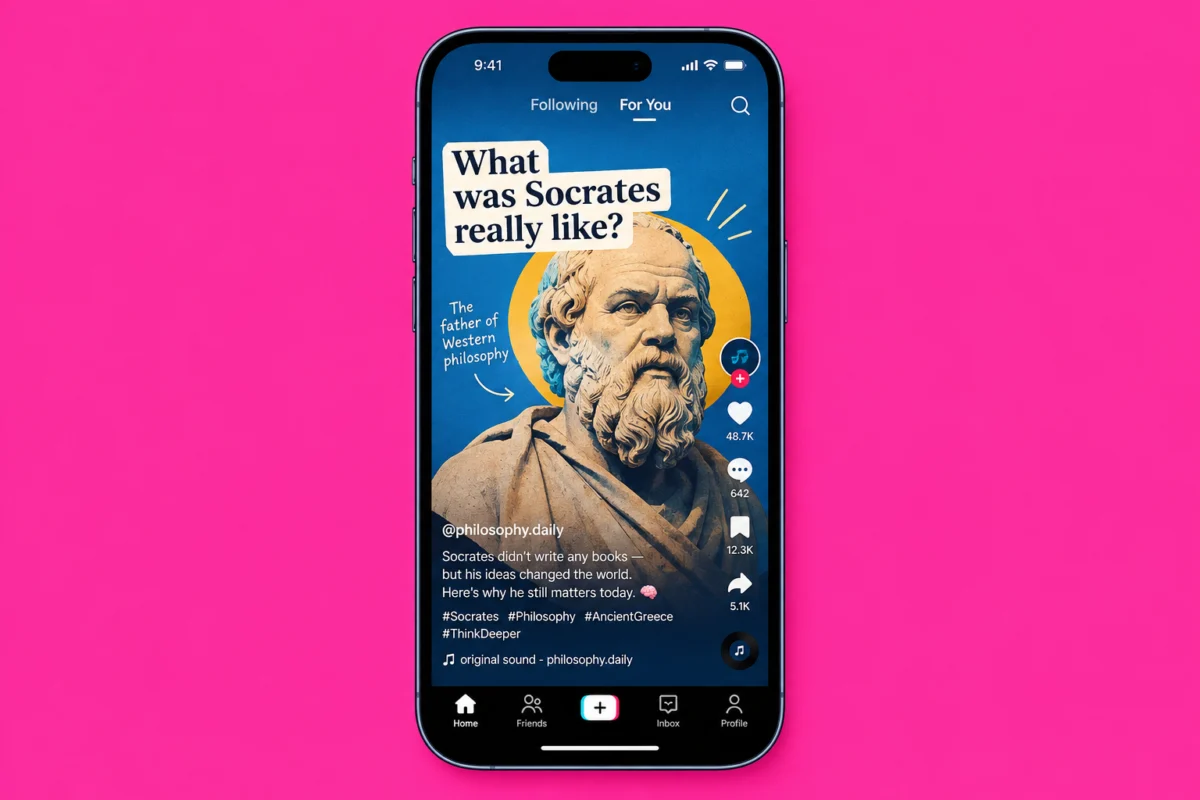
The pervasive lament regarding the modern mind’s supposed inability to focus, often attributed to the endless scroll of digital content, is a familiar refrain in today’s society. Critics frequently point to the addictive nature of "doomscrolling" as a primary culprit, hindering our capacity to engage with traditional forms of deep learning, such as reading a book or diligently studying for examinations. However, a burgeoning startup, ScrollEd, is challenging this prevailing narrative, proposing not an end to scrolling, but a fundamental re-evaluation of what content populates those endless feeds. The Palo Alto-based company is making a significant bet on this premise, participating in the highly competitive TechCrunch Disrupt Startup Battlefield 200 competition with an innovative approach: transforming static academic texts into dynamic, scrollable experiences designed to meet students where they are.
The ScrollEd Proposition: Turning Textbooks into TikTok-Like Experiences
ScrollEd’s core innovation lies in its proprietary application, which possesses the capability to convert virtually any text-based file—from dense academic PDFs to traditional textbooks—into a user interface that closely mirrors the engaging, vertical feed format popularized by platforms like Instagram Reels and TikTok. This reimagining of digital content delivery presents a novel solution to the challenge of engaging younger generations with material that traditionally demands sustained attention.
The app’s functionality is designed to be intuitive and immersive. As users scroll upwards, new topics or sections of content are presented in a dynamic fashion. The content itself is not merely text on a screen; instead, it is rendered through a sophisticated AI engine that can generate a multifaceted presentation. This can include AI-generated video summaries, synthesized audio narration, enhanced textual excerpts, or even interactive quizzes designed to reinforce comprehension. For users seeking to delve deeper into a particular subject, a sideways scroll offers an avenue to explore sub-topics or related information, with a comprehensive quiz often serving as a concluding assessment for a given module.
Addressing the "Short-Form" Challenge in Education
Utsav Gupta, co-founder of ScrollEd, articulated the company’s mission to TechCrunch, emphasizing the seismic shift in how younger demographics consume information. "The younger generation is increasingly going short form, vertical feed only (especially the 18 year olds we’ve spoken to!), and this poses challenges for any kind of media that requires depth," Gupta stated. He elaborated on their strategy: "We want to meet them where they are… We just have to be deliberate about how we use it and choose not to maximize engagement on the platform."
This deliberate approach extends to the very nature of learning. Gupta explained the underlying philosophy: "A short video can make you curious; following that curiosity can mean searching for another explanation or leaving the app. We wanted going deeper to be as easy as moving to the next video." This vision directly confronts the perceived limitations of short-form content by integrating pathways for deeper exploration within the same familiar scrolling paradigm. The aim is to leverage the inherent engagement of vertical feeds not as a distraction from learning, but as a gateway to it.
The Genesis of ScrollEd: A Personal Dissatisfaction Fuels Innovation
The entrepreneurial journey of ScrollEd began this year, bootstrapped by Utsav Gupta and his co-founder and wife, Rebecca Neff. Their inspiration stemmed from a shared personal experience: a growing sense of dissatisfaction after engaging in prolonged periods of "doomscrolling" before bed. This shared realization sparked a quest to find a more constructive and enriching digital experience. Both Gupta and Neff are deeply embedded in the academic and technological spheres, providing them with unique insights into the challenges of digital learning. Gupta is pursuing studies in AI and human purpose at Stanford University, while Neff is a computer science student at the University of Pennsylvania. Their respective academic pursuits provide a strong foundation for developing an AI-driven educational platform.
Market Positioning and Launch Strategy
ScrollEd is strategically targeting a diverse range of clients. Its primary market segments include educational institutions seeking to modernize their curriculum delivery, corporate training programs aiming to enhance employee learning and development, and individual consumers who are actively seeking more meaningful and engaging digital content. As Gupta humorously remarked, they are targeting those who "just want something better to scroll on."
The company is set to officially launch its consumer-facing business at the TechCrunch Disrupt event, a prominent technology conference known for showcasing emerging startups. This participation underscores ScrollEd’s ambition to "disrupt" not just traditional education but also the prevailing social media and short-form content landscape.
A Freemium Model and Institutional Partnerships
ScrollEd is adopting a freemium business model to maximize accessibility and user acquisition. This model includes a free tier for consumers, providing access to a curated feed of educational content. For more advanced features and an ad-free experience, users can opt for a paid "ScrollEd Pro" subscription. Beyond individual users, the company is also offering annual institutional licenses. These licenses enable educational and corporate entities to deliver their proprietary materials through the ScrollEd platform. In return for utilizing the platform, institutions gain access to valuable data analytics, including insights into user engagement patterns, lesson progress, and other key performance indicators, which can inform pedagogical strategies and content development.
Future Trajectory and Technological Ambitions
Looking ahead, ScrollEd has outlined a clear roadmap for its development. In the immediate future, the company will concentrate on bolstering its consumer launch, expanding its library of educational content, and refining its source-checking workflow to ensure the accuracy and credibility of the information presented. Simultaneously, ScrollEd is actively developing pilot programs for institutional partners, seeking to gather real-world feedback and optimize the platform for diverse educational settings.
A significant long-term objective is the development of sophisticated infrastructure designed to empower educators. This infrastructure will eventually enable educators to precisely assess individual learner progress and dynamically adapt educational content to meet the unique needs and learning styles of each student. Gupta articulated this ambitious vision: "The ambition is a social network that’s better for you." This overarching goal positions ScrollEd not merely as an educational tool but as a fundamental reimagining of digital interaction, prioritizing personal growth and well-being.
Context: TechCrunch Disrupt and the Startup Ecosystem
The participation of ScrollEd in the TechCrunch Disrupt Startup Battlefield 200 places it within a prestigious ecosystem of emerging technology companies. TechCrunch Disrupt is a renowned annual event that serves as a crucial platform for startups to gain visibility, attract investment, and connect with industry leaders. The Startup Battlefield competition, in particular, is a high-stakes arena where promising companies present their innovations to a panel of expert judges and a global audience. This year’s event, scheduled to take place from October 13-15 in downtown San Francisco, is expected to draw significant attention from venture capitalists, tech journalists, and potential adopters, offering ScrollEd a prime opportunity to showcase its transformative approach to digital learning.
The broader context of the event highlights the ongoing search for solutions that can bridge the gap between rapidly evolving digital consumption habits and the enduring need for deep, meaningful learning. As digital natives increasingly gravitate towards short-form, visually driven content, startups like ScrollEd are at the forefront of exploring how these trends can be harnessed for positive educational outcomes, rather than being viewed solely as impediments to traditional learning. The success of such ventures hinges on their ability to offer compelling, engaging, and demonstrably effective alternatives to established digital habits, thereby shaping the future of how knowledge is acquired and disseminated in the 21st century.