Vera Intan Clara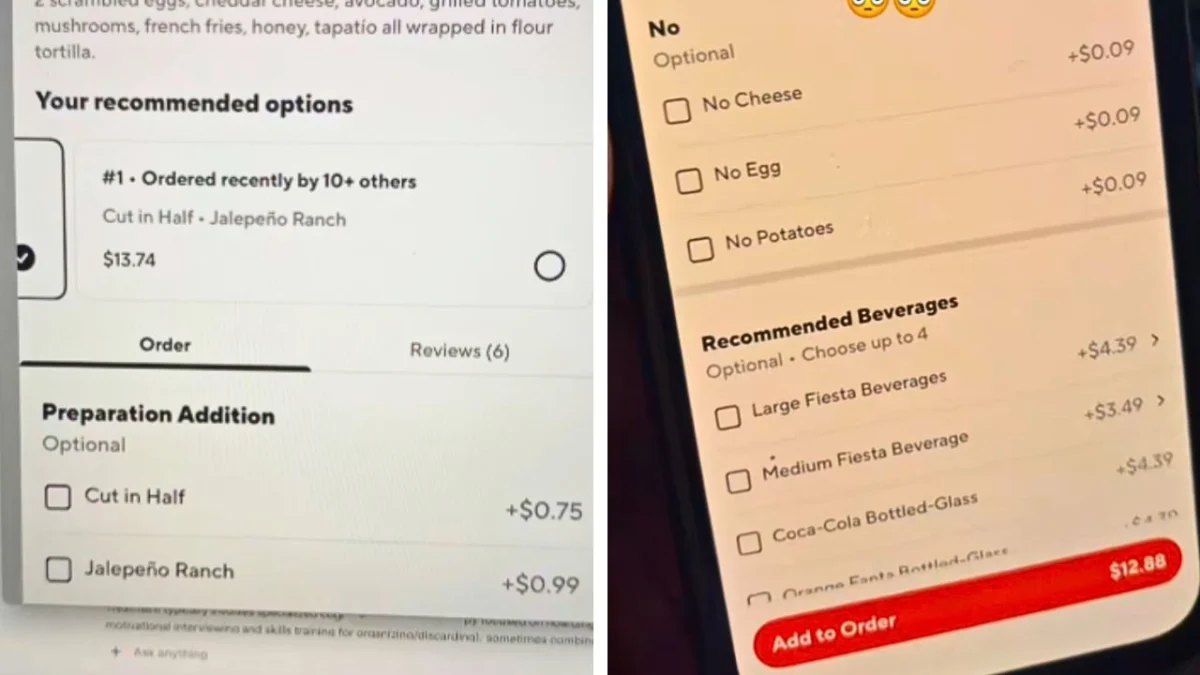
A recent viral video circulated widely on X (formerly Twitter) has ignited a fierce debate among consumers and industry observers, highlighting an emerging trend of restaurants charging patrons for basic ingredient removals and food customizations when ordering through the DoorDash platform. The clip, posted by @WallStreetApes and viewed over 40,000 times, showcases an order screen where customers face an additional $0.09 fee for requests like "No Cheese" or "No Egg," alongside a separate instance of a $0.75 charge to simply "cut in half" a burrito. This revelation has sparked significant frustration, raising questions about pricing transparency, the operational economics of food delivery, and the evolving relationship between consumers, restaurants, and third-party platforms.
The Spark: A Viral Outcry Over Micro-Fees
The video, which quickly gained traction across social media, brought to the forefront a pricing strategy that many consumers find counterintuitive and unfair. The narrator of the video expresses incredulity, stating, "Bro, they’re (…) charging to remove [customizations] on the… burrito. Imagine you’re allergic to cheese… Charging to remove items from food is pretty wild." The overlay text succinctly captures the core grievance: "DoorDash charging to remove [customizations] now." The additional charge for cutting a burrito in half, a seemingly trivial request, further fueled the outrage, prompting the narrator to exclaim, "American businesses have lost their minds." This incident underscores a growing sensitivity among consumers to what they perceive as "nickel-and-dime" charges, especially when such fees seem to penalize requests for less product or basic convenience. The implication that customers might have to pay extra for allergy-related modifications adds a layer of ethical concern to the economic debate, raising questions about accessibility and safety for those with dietary restrictions.
DoorDash’s Clarification: Merchant Autonomy and Platform Structure
In response to the public outcry, DoorDash has clarified its position, stating that the charges seen in the viral video are not set by the platform itself. According to DoorDash’s merchant menu management system, restaurants retain full control over their menus, including the pricing of add-ons, modifications, and deletions. This means that individual restaurant partners are empowered to configure their inventory and menu settings to include charges for various customization options. Consequently, the cost of removing ingredients on DoorDash is not uniform but varies significantly from one establishment to another, reflecting each restaurant’s unique operational costs and pricing strategies. This clarification shifts the responsibility for these specific fees directly onto the individual restaurant partners, positioning DoorDash as a facilitator rather than the originator of the charges. However, it also places DoorDash in the challenging position of managing public perception when such merchant-set fees generate widespread consumer dissatisfaction on its platform.
Understanding the Restaurant Perspective: The Economics of Customization
While consumers often view ingredient removal as a cost-saving measure for restaurants, the reality of food service economics presents a more complex picture. Restaurants operate on notoriously thin profit margins, often ranging from 3% to 7% for full-service establishments, even before accounting for the substantial commission fees charged by delivery platforms, which can be upwards of 15-30%.
The Fine Margins of Food Service
The restaurant industry is characterized by high overheads, including rising food costs, labor shortages, increasing minimum wages, rent, utilities, and insurance. Every ingredient, every minute of labor, and every procedural deviation contributes to the overall cost structure. In an era of escalating operational expenses, restaurants are under immense pressure to find creative ways to maintain profitability without significantly increasing menu prices, which can deter customers. Micro-fees, while small individually, can aggregate to provide a crucial buffer against these rising costs.
Beyond "Less": The Cost of Special Requests
From a restaurant’s standpoint, even "removing" an ingredient can incur costs beyond simply not adding it.
- Operational Complexity: Special requests, even deletions, break the standard workflow of the kitchen. A "No Cheese" order might require a separate preparation area or a distinct sequence in the assembly line to prevent cross-contamination, especially if allergy-related. This can slow down service, increase the potential for errors, and demand extra attention from kitchen staff.
- Inventory and Waste: While removing an ingredient might seem to save money, it doesn’t necessarily reduce overall ingredient purchasing. Moreover, if an ingredient is pre-portioned or part of a bulk preparation, its removal for one order might not lead to a direct, immediate saving and could even contribute to waste if not managed carefully.
- Labor Costs: The time taken for a chef or line cook to read, interpret, and execute a special request, even a removal, is labor time. In a fast-paced kitchen, every second counts, and deviations from standard recipes require additional focus and potentially more skilled labor. The $0.75 charge for cutting a burrito, for instance, reflects a minimal but real labor cost for an additional step.
- Opportunity Cost: The time spent on complex customizations for one order is time not spent on fulfilling standard, higher-margin orders.
- Platform Fees: Restaurants also incur fees on the entire order value, including any customization charges, paid to the delivery platform. This means a restaurant might charge $0.09, but only retain a fraction of that after platform commissions.
By implementing small fees for customization, restaurants aim to partially offset these hidden operational complexities and maintain their already slender profit margins. This approach allows them to offer a highly personalized service that consumers increasingly expect, without absorbing the entire financial burden themselves.
The Broader Context: The Evolving Landscape of Food Delivery
The incident with DoorDash and customization fees is not an isolated event but rather a symptom of the broader economic pressures and evolving dynamics within the burgeoning food delivery industry.
Explosive Growth and Market Dominance
The food delivery sector has witnessed explosive growth over the past decade, accelerated significantly by the COVID-19 pandemic. According to industry reports, the global online food delivery market was valued at over $150 billion in 2021 and is projected to exceed $300 billion by 2028, with platforms like DoorDash, Uber Eats, and Grubhub dominating major markets. DoorDash, in particular, holds a significant market share in the United States, often exceeding 50% in major metropolitan areas. This dominance has reshaped consumer habits, making on-demand food delivery a staple for millions. However, this convenience comes at a cost, both for the consumer and the restaurants that rely on these platforms for increased reach and sales.
The Gig Economy and Layered Fee Structures
The business model of these delivery platforms is largely built on the gig economy, utilizing independent contractors for delivery. To sustain this model and achieve profitability, platforms have introduced a multi-layered fee structure that extends beyond just the menu price. This includes:
- Delivery Fees: A charge for the delivery service itself, often variable based on distance and demand.
- Service Fees: A percentage-based fee applied to the subtotal of the food order, ostensibly for platform maintenance and customer support.
- Small Order Fees: Imposed when an order falls below a certain monetary threshold.
- Surge Pricing/Busy Area Fees: Additional charges during peak demand periods.
- Driver Tips: While optional, a strong social expectation.
The introduction of customization fees by restaurants, enabled by the platforms’ merchant tools, can be seen as another layer in this complex pricing ecosystem. It reflects a continuous effort by all stakeholders—platforms, restaurants, and drivers—to extract value and cover costs in a highly competitive, yet often low-margin, service industry. This trend aligns with broader patterns in the digital economy where micro-transactions and optional add-ons have become common strategies for revenue generation.
A Chronology of Increasing Fees and Consumer Pushback
The evolution of delivery fees has not been without controversy.
- Early 2010s: Initial growth phase, often subsidized by venture capital, with lower fees to attract users.
- Mid-2010s: As platforms matured, delivery fees became standard, along with service fees.
- Late 2010s/Early 2020s: Introduction of surge pricing, small order fees, and a greater emphasis on driver tipping. Regulatory scrutiny began concerning commission caps during the pandemic.
- Mid-2020s: The emergence of explicit charges for specific customizations, like those seen in the DoorDash video, marks a new frontier in granular pricing. This trend is likely influenced by inflationary pressures post-pandemic, forcing restaurants to re-evaluate every cost center.
Each new fee category has typically been met with consumer pushback, highlighting the ongoing tension between the convenience offered by these services and the total cost incurred by the end-user.
Public Reaction and Consumer Sentiment
The viral video and subsequent discussion on X illuminated a deep well of consumer frustration, extending beyond just the specific charges to a broader critique of the food delivery ecosystem.
Waves of Frustration and Calls for Alternatives
Commenters on X voiced a range of grievances and proposed solutions. Many expressed outright rejection of the entire delivery model: "Never used it, never will. Get (…) out of the house and pick it up." Others advocated for self-sufficiency: "Cook your own food. Problem solved!" These sentiments reflect a growing fatigue with the accumulating costs associated with convenience.
Some users pointed to perceived discrepancies across platforms, with one claiming, "You can do this for free on Uber Eats," suggesting a potential shift in consumer behavior towards platforms that offer more perceived value or fewer hidden charges. Another commenter asserted, "If you order on DoorDash, you get what you get. Never done it, never will," indicating a hardening stance against the platform for some. There was also concern for the delivery drivers, with one person noting, "Those drivers are definitely not gonna get a bigger tip," underscoring the interconnectedness of various fees and their potential impact on driver earnings, which are heavily reliant on tips.
Erosion of Trust and Perceived Value
The charges for ingredient removal, especially for seemingly trivial requests or allergy-related needs, are perceived by many as an attempt to "charge for nothing" or even "charge for less." This can significantly erode consumer trust and diminish the perceived value of the service. When a customer feels they are being unfairly charged, it can lead to resentment and a reluctance to use the service again, even if the fee is minimal. The psychological impact of a $0.09 charge for "No Cheese" is disproportionately larger than its monetary value, as it triggers a sense of being exploited.
The Allergy Dilemma and Ethical Considerations
The narrator’s specific mention of allergies resonated strongly with many. For individuals with severe food allergies, customization is not a preference but a necessity for health and safety. Charging for such essential modifications raises ethical questions about whether platforms and restaurants are inadvertently penalizing vulnerable consumers. While restaurants must cover the costs of meticulous allergen management, imposing a direct fee for removal, especially one that might be misinterpreted as a profit-grab, can be particularly contentious. Many users were vocally against these "increasingly common à la carte charges," highlighting a broader dissatisfaction with unbundling services that were once considered standard inclusions.
Implications for the Industry and Future Outlook
The controversy surrounding customization fees carries significant implications for DoorDash, restaurants, and the wider food delivery industry.
Consumer Behavior Shifts and Market Competition
If these fees become more widespread, they could lead to noticeable shifts in consumer behavior. Some consumers may reduce their reliance on food delivery apps, opting instead for direct restaurant pickup, cooking at home, or even dining in. This could particularly affect discretionary orders, as consumers become more price-sensitive. The competitive landscape among delivery platforms might also intensify, with platforms that offer more transparent or inclusive pricing potentially gaining an edge. Restaurants that opt out of such fees might market this as a differentiator to attract customers.
Restaurant-Platform Dynamics and Transparency
The incident also highlights the delicate balance in the relationship between delivery platforms and their restaurant partners. While DoorDash emphasizes merchant autonomy, it also has a vested interest in maintaining a positive user experience on its platform. Widespread negative sentiment generated by merchant-set fees could indirectly harm DoorDash’s brand reputation. This might prompt DoorDash to encourage greater transparency from its partners regarding fee structures or to implement features that clearly delineate platform fees from restaurant-specific charges. Restaurants, in turn, will need to carefully weigh the potential revenue from such fees against the risk of alienating their customer base. Clear communication from restaurants about the rationale behind these fees could help mitigate some of the consumer backlash.
Potential for Regulatory Scrutiny
The growing complexity of delivery app pricing models, coupled with consumer frustration, could attract increased scrutiny from consumer protection agencies. Regulators might push for greater transparency in how fees are displayed, ensuring that consumers are fully aware of all charges before confirming an order. There could be calls for standardized definitions of fees and clearer disclosure mechanisms, particularly concerning charges related to health and safety (like allergy accommodations). The "à la carte" nature of these charges could lead to discussions about whether certain basic customizations should be included in the base price, or if the digital interface adequately informs consumers of all costs.
The Search for Sustainable Models
Ultimately, the debate over customization fees is part of a larger, ongoing challenge for the food delivery ecosystem: finding a sustainable economic model that satisfies all stakeholders. Restaurants struggle with profitability, platforms contend with high operational costs and intense competition, and consumers demand convenience without exorbitant expense. As the market matures, all parties will need to innovate and adapt. This could involve new subscription models, loyalty programs, or more sophisticated AI-driven pricing strategies that dynamically adjust based on real-time costs and demand, while striving to maintain consumer trust and perceived value. The viral DoorDash clip serves as a potent reminder that even minor fees, when perceived as unfair or illogical, can trigger significant public backlash and force a re-evaluation of current business practices in the rapidly evolving world of food delivery.