admin
admin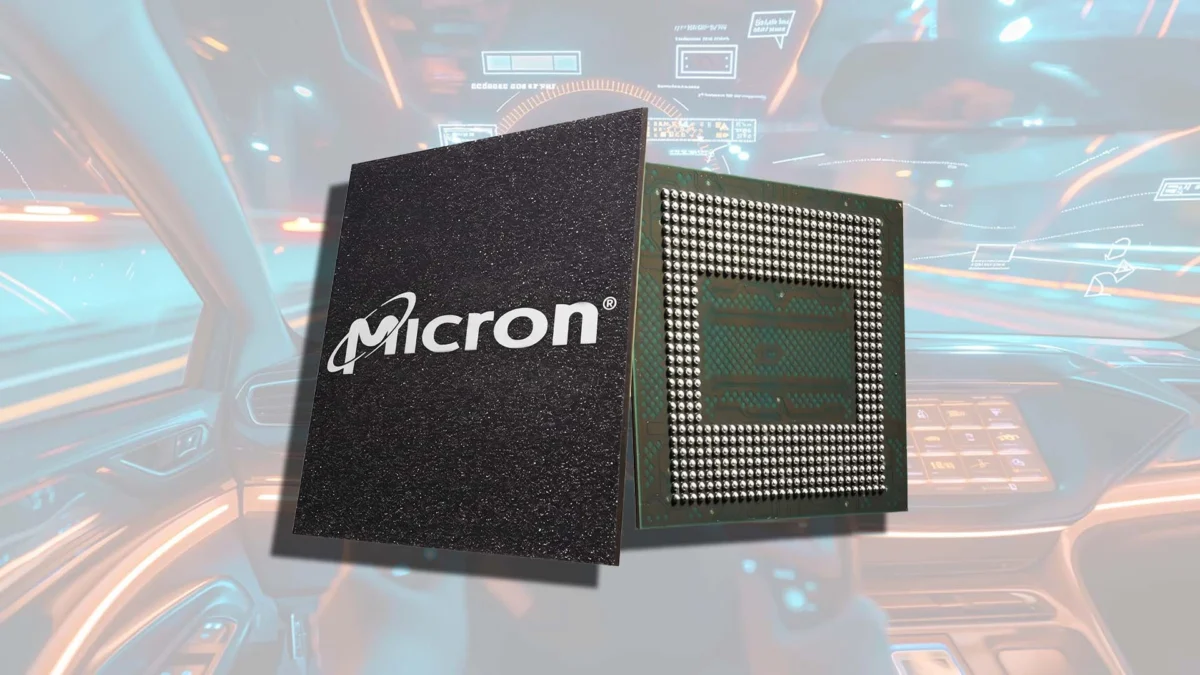
The global semiconductor landscape is currently defined by a dual-track demand cycle, where the insatiable appetite for Artificial Intelligence (AI) hardware competes for manufacturing capacity with the increasingly sophisticated needs of the automotive industry. Micron Technology, having recently ascended to a premier valuation status on the back of the AI boom, has moved to stabilize its market position and secure its long-term growth trajectory through the formation of a comprehensive Strategic Customer Agreement (SCA). This initiative is designed to balance the company’s output between high-margin AI data center components and the critical, albeit more complex, requirements of the automotive sector.
The SCA marks a significant shift in Micron’s operational strategy. While the high-performance memory demand for AI applications—specifically High Bandwidth Memory (HBM) and DDR5 DRAM—offers rapid financial returns, the company has recognized that long-term market leadership requires a presence in more durable, albeit slower-moving, sectors. By entering into formal supply chain agreements with 16 strategic customers, seven of whom are major players in the automotive space, Micron is positioning itself as a foundational pillar of the modern industrial economy.
The Automotive Pivot: Balancing AI Profits with Industrial Stability
The decision to prioritize automotive customers comes at a time when the sector is facing a potential supply crunch that threatens the broader economy. Unlike the consumer electronics market, which operates on rapid cycles of obsolescence, the automotive industry requires long-term reliability and rigorous certification. Modern vehicles have evolved into "data centers on wheels," necessitating vast amounts of DRAM and NAND storage to power advanced driver assistance systems (ADAS), high-definition infotainment, and autonomous driving features.
Micron’s involvement in the automotive supply chain is not merely a commercial endeavor but a stabilizing force for the American workforce. Industry data suggests that the preservation of approximately one million jobs in the United States is directly or indirectly tied to the health of the automotive manufacturing pipeline. By ensuring a steady flow of memory components to key suppliers such as Qualcomm, Visteon, and Harmon, Micron is effectively mitigating the risk of production halts that could lead to widespread layoffs.
However, this commitment comes with inherent challenges. The automotive sector is notorious for its strict requirements; parts certification is a time-consuming and complex process that can take years to finalize. Furthermore, the financial rewards in the automotive sector are often smaller and realized over a longer period compared to the immediate, high-margin sales seen in the AI and data center markets. Despite these factors, Micron’s leadership, headed by CEO Sanjay Mehrotra, views these partnerships as essential "fall-back" markets that will sustain the company when the current AI-driven DRAM demand eventually stabilizes.
Chronology of Micron’s Strategic Expansion and Market Evolution
The path to Micron’s current strategic positioning has been marked by several key milestones over the past two years:
- Late 2022 – Early 2023: The semiconductor industry faced a post-pandemic correction, leading to an oversupply of memory chips. Micron and its competitors, Samsung and SK Hynix, adjusted production levels to stabilize prices.
- Mid-2023: The explosion of generative AI, led by platforms like ChatGPT, created a sudden and massive demand for HBM3 and HBM3E memory. Micron shifted significant resources toward AI-centric production.
- Early 2024: Reports surfaced regarding a "RAMpocalypse," a term used to describe a sharp increase in DRAM prices and a perceived supply shortage. This led to a U.S. federal class-action lawsuit alleging collusion among major memory manufacturers.
- Mid-2024: Micron announced its Strategic Customer Agreement (SCA) to formalize its relationships with 16 key partners, ensuring supply security for non-AI sectors, particularly automotive.
- Current Period: Micron continues to expand its domestic footprint with a $250 million investment in U.S. facilities, aiming to align with national security interests and industrial policy.
Supporting Data: The Rising Memory Density in Modern Vehicles
The necessity of Micron’s SCA is underscored by the rapidly increasing memory requirements in the automotive sector. A decade ago, a standard vehicle required minimal memory for basic engine control units (ECUs). Today, the landscape has changed drastically:
- ADAS and Autonomy: Level 2 and Level 3 autonomous features require high-speed DRAM to process sensor data from cameras, radar, and LiDAR in real-time. Estimates suggest that Level 4 autonomous vehicles may require up to 30 times more memory than standard vehicles.
- Infotainment Systems: Modern "digital cockpits" utilize memory-intensive operating systems to support 4K displays, integrated navigation, and smartphone mirroring, often requiring 8GB to 16GB of dedicated DRAM.
- Safety Standards: Automotive memory must meet AEC-Q100 standards and ISO 26262 functional safety requirements, necessitating a specialized manufacturing approach that Micron has spent years refining.
By securing partnerships with Qualcomm (a leader in automotive cockpits and connectivity), Visteon (a specialist in digital instrument clusters), and Harmon (a subsidiary of Samsung focused on connected car technology), Micron has successfully embedded itself into the core of the next-generation vehicle architecture.

Navigating the Legal and Political Landscape: The RAMpocalypse Lawsuit
While Micron’s strategic moves are framed as market-driven, they occur against a backdrop of significant legal and political pressure. The company is currently a defendant in a U.S. federal class-action lawsuit. The plaintiffs allege that Micron, along with Samsung and SK Hynix, purposely manipulated supply levels to artificially inflate DRAM prices, creating a market condition colloquially known as the "RAMpocalypse."
Analysts suggest that Micron’s recent maneuvers could serve a dual purpose. On one hand, they ensure business continuity; on the other, they may act as a strategic buffer against legal and regulatory scrutiny. The $250 million investment in U.S.-based manufacturing is a tangible commitment to the domestic economy that aligns with the goals of the CHIPS and Science Act.
Furthermore, the emphasis on protecting one million American jobs in the automotive sector carries significant political weight. By positioning itself as a "savior" of the domestic automotive supply chain, Micron may be seeking to foster goodwill with federal regulators and the administration. This strategy could potentially mitigate the fallout from the ongoing lawsuit, with some observers suggesting that the company’s contributions to national industrial stability might result in more lenient treatment or serve as a "get out of jail free" card in the eyes of policymakers.
Official Responses and Executive Outlook
In a recent interview, Micron CEO Sanjay Mehrotra emphasized the company’s commitment to long-term stability over short-term spikes. "We are progressing with long-term agreements with our customers to continue our winning streak," Mehrotra stated. He indicated that the SCA is a proactive measure to ensure that when DRAM demand and supply eventually reach an equilibrium in the coming years, Micron will have a diversified and loyal customer base to fall back on.
Industry analysts at DigiTimes have noted that Micron’s focus on the automotive sector is a "calculated chess move." While AI provides the current momentum, the automotive sector provides the "moat." The complexity of the automotive supply chain makes it difficult for competitors to displace an established partner once certification is achieved. Consequently, Micron’s current "sacrifices" in terms of lower margins are seen as a down payment on future market dominance.
Broader Impact and Implications for the Global Supply Chain
The implications of Micron’s SCA extend beyond the company’s balance sheet. It signals a shift in the broader semiconductor industry toward "sovereign" and "sector-specific" supply chains. As geopolitical tensions continue to influence trade, companies like Micron are under pressure to prove their value to their home nations.
For the automotive industry, Micron’s commitment provides a much-needed sigh of relief. The "chip famine" of 2021-2022, which saw millions of vehicles stripped of features or left unfinished on factory lots, remains a fresh memory for executives. Micron’s strategic alliance offers a blueprint for how other component manufacturers might stabilize the market through formal, long-term commitments rather than relying on the volatility of the spot market.
Ultimately, Micron’s strategy is a high-stakes balancing act. The company must continue to innovate at the cutting edge of AI to satisfy its investors while simultaneously managing the slow, methodical requirements of the automotive world. If successful, Micron will not only maintain its trillion-dollar valuation trajectory but will also cement its role as an indispensable architect of the modern technological and industrial era. Whether these moves will be enough to shield the company from the "Sword of Damocles" represented by the federal lawsuit remains to be seen, but for now, Micron is playing its cards with precision.