Sonny Valindra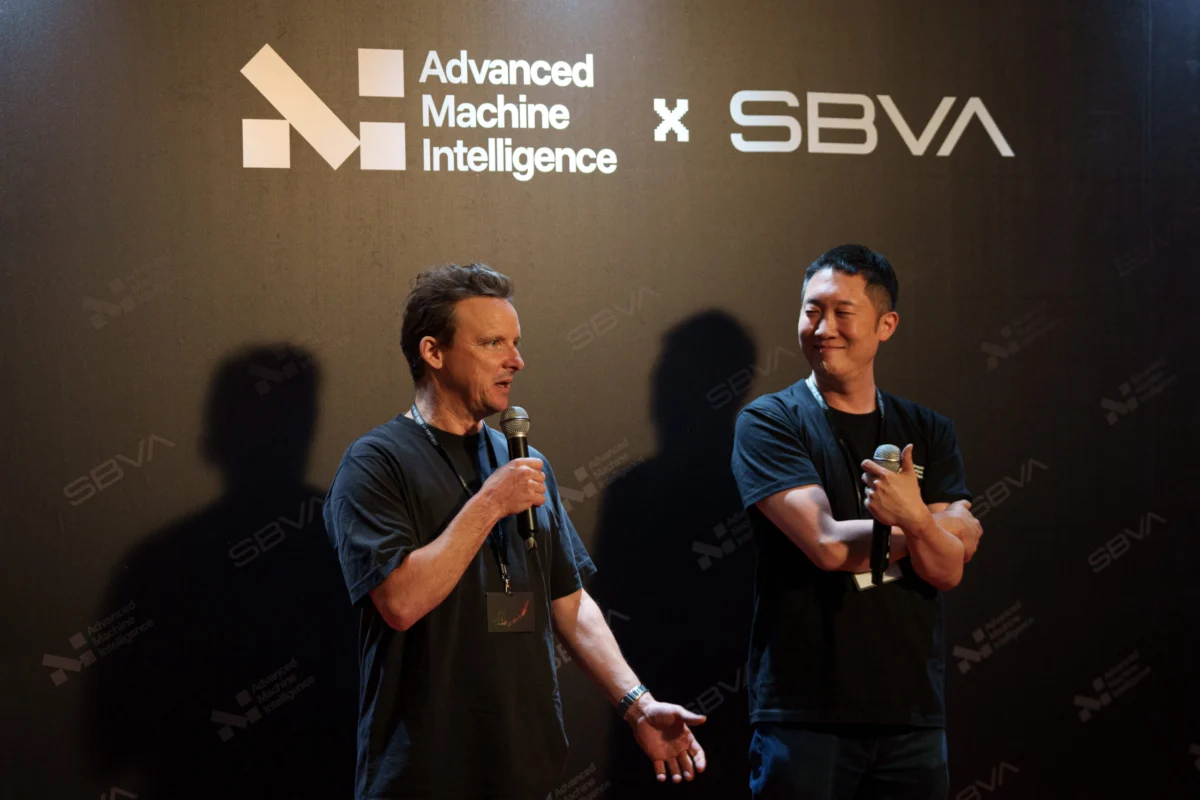
Alexandre LeBrun, the chief executive of AMI Labs, a startup co-founded by AI luminary Yann LeCun, is deliberately steering clear of the hyped terminology that has permeated the artificial intelligence industry. While many of his peers are quick to label their advancements as "Artificial General Intelligence" (AGI) or "superintelligence," LeBrun’s company, which is focused on developing "world models," eschews these grand pronouncements. In a recent interview with TechCrunch, LeBrun emphasized AMI Labs’ commitment to a more grounded approach, stating, "We never used the word AGI. And I just noticed that nobody is using it anymore; they switched to superintelligence." He further articulated his skepticism regarding the prevalent labels: "Next time we’ll switch to something else. There’s no good definition. What is superintelligence? I don’t know. It’s not a very useful word."
This deliberate linguistic stance comes from a founder at the forefront of a new wave in AI development. LeBrun’s comments were made during his visit to Seoul last week for the International Conference on Machine Learning (ICML). The conference, a premier gathering for researchers and practitioners in machine learning, provided a backdrop for AMI Labs’ strategic outreach. LeBrun was actively engaged in scouting for potential industrial partners in robotics, manufacturing, and electronics, as well as global collaborators and leading researchers. Despite being pre-product, AMI Labs is already making significant inroads, signaling its ambition to bridge the gap between theoretical AI and practical, real-world applications.
The Promise of World Models in a Physical Realm
At the core of AMI Labs’ mission is the development of "world models." Unlike large language models (LLMs), which excel at predicting the next word in a sequence, world models are designed to predict the next state of the physical world. LeBrun elaborated on this distinction: "A large language model (LLM) predicts the next word or text, and a world model predicts the next state. Nudge a glass off the table, and you already know it will tip and spill; that’s the intuition a world model is meant to capture: predicting the next state of the world." This capability is crucial for AI systems that need to interact with and understand their physical surroundings.
LeBrun views world models not as a replacement for LLMs but as a complementary technology. He drew a parallel to the human brain, which possesses distinct regions for language processing and reasoning. "LLMs will remain the most efficient tools for processing language while world models will provide context and real-world understanding," he explained. This synergistic approach is expected to unlock AI’s potential in domains where current LLMs fall short, particularly in environments that "touch the real world."
Addressing the Limitations of Current Robotics
A significant area where world models are poised to make a transformative impact is robotics. LeBrun highlighted the current limitations of robotic systems, describing them as "completely static" and operating with AI that is "really dumb in the physical world." Even rudimentary advancements, such as making robots "aware of the context" of their environment, would represent a "very big difference for the world." He cited a cautionary tale of a robot performing at a public event, dancing and engaging in kung fu moves, which unfortunately approached and kicked a child. Such incidents underscore the critical need for AI systems that possess a deeper understanding of their surroundings and can operate safely and appropriately.
"The hardware is very advanced; progress in hardware in the last few months is incredible, but there’s no brain," LeBrun stated, emphasizing the imbalance between hardware capabilities and the intelligence governing robotic actions. The development of context-aware AI, powered by world models, is seen as a vital step toward rectifying this deficiency, enabling robots to navigate complex physical environments with greater safety and efficacy.
Healthcare: A Personal Connection and a Real-World Need
LeBrun’s perspective on the necessity of real-world understanding in AI is also informed by his background. His previous venture, Nabla, was an AI health startup. He likened current AI systems in healthcare to a doctor trained solely on textbooks, lacking the crucial element of practical experience gained through residency. While LLMs might offer some utility in medical contexts, LeBrun believes they address only a fraction of healthcare needs, estimating their scope at "only 1% of healthcare." The vast majority, he contends, relies on "real-world experience."
This analogy highlights AMI Labs’ core philosophy: AI that operates in the physical world requires training and validation within that world. LeBrun stressed that world models cannot be effectively built or trained solely within laboratory settings. "We need access to the real world," he asserted, explaining that partnering with industries that operate in these environments is the most efficient path forward.
Strategic Pivot to Asia: Leveraging Industrial Prowess and Early Adoption
AMI Labs’ focus on securing real-world data and partnerships has led LeBrun to strategically engage with the Asian market, particularly South Korea. He identified two primary drivers for this focus: South Korea’s advanced industrial ecosystem and its established track record as an early adopter of new technologies.
"Korea has advanced industries in robotics, semiconductors, and manufacturing; the hardware-heavy sectors that the first wave of AI barely touched," LeBrun observed. These are precisely the sectors where AMI Labs aims to deploy its world model technology. The presence of sophisticated factories, advanced robotics, and cutting-edge chip manufacturing provides fertile ground for testing and refining AI systems that interact with the physical world.
The second critical factor is South Korea’s demonstrated agility in embracing technological shifts. "Korea was the fastest adopter of the internet 25 years ago," LeBrun noted, referencing the country’s rapid integration of internet technologies in the late 1990s and early 2000s. This combination of a robust industrial base and a forward-thinking approach to technological adoption makes South Korea a uniquely attractive market for AMI Labs. "It’s that combination, a deep industrial base plus a willingness to embrace AI fast, that he calls ‘unique,’ and the reason ‘we want to be here from day one.’"
South Korea’s Commitment to AI and Physical Computing
LeBrun’s engagement with South Korea is supported by key figures in the region. JP Lee, CEO of SBVA and an investor in AMI Labs, has actively encouraged the company’s presence in the country. Lee expressed his belief that while South Korea has made significant strides in developing LLMs, with government funding supporting local sovereign models that are "well enough" for general tasks, there is a parallel imperative to invest in "physical AI."
Lee pointed to Seoul’s ambitious plan, announced in June, to mobilize approximately $880 billion for advancements in chips, AI data centers, and physical AI. This initiative, comprising three declared pillars, aligns with AMI Labs’ objectives. "They should coexist," Lee stated, advocating for a balanced approach that nurtures both language-based and physical AI capabilities.
Furthermore, Lee highlighted that South Korea’s value to foreign firms extends beyond its hardware prowess. The country boasts a vibrant ecosystem of local developers who are known for their rapid adoption and adaptation of new tools, a characteristic that has fueled the rise of homegrown internet giants like Naver and Kakao. This dynamic environment offers AMI Labs a unique opportunity to collaborate and innovate.
AMI Labs: Ambitious Vision, Unveiled Future
Despite the significant backing and the high-profile association with Yann LeCun, AMI Labs is still in its nascent stages. The startup, which LeCun co-founded after his departure from Meta, secured a substantial $1.03 billion in funding in March, achieving a pre-money valuation of $3.5 billion. However, LeBrun remains tight-lipped about a specific product launch timeline. "We’ll make a surprise when we’re ready," he commented, suggesting a strategic approach to market entry characterized by careful development and a significant reveal when the technology is mature.
This cautious yet ambitious outlook underscores AMI Labs’ commitment to building AI that not only pushes the boundaries of intelligence but also demonstrably benefits the real world, moving beyond the often-unsubstantiated claims of AGI and superintelligence. The company’s focus on tangible applications in robotics, manufacturing, and healthcare, coupled with its strategic engagement with the technologically advanced and rapidly adopting South Korean market, positions it as a notable player in the evolving landscape of artificial intelligence. The journey from concept to widespread deployment for world models is expected to be a protracted one, but AMI Labs appears poised to navigate this path with a clear vision, grounded in the realities of the physical world.